Kirjojen hintavertailu. Mukana 12 595 353 kirjaa ja 12 kauppaa.
Kirjailija
Robert Jan Van Pelt
Kirjat ja teokset yhdessä paikassa: 8 kirjaa, julkaisuja vuosilta 2002-2022, suosituimpien joukossa The Case for Auschwitz. Vertaile teosten hintoja ja tarkista saatavuus suomalaisista kirjakaupoista.
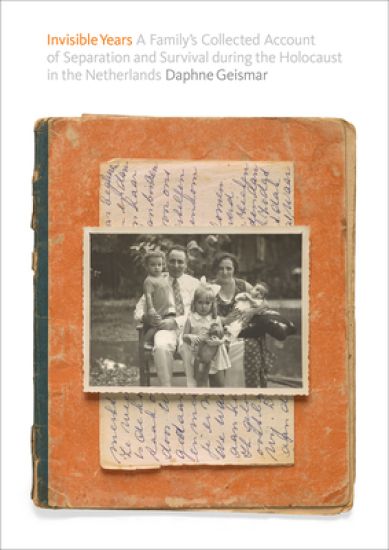
The Holocaust memoir of a Dutch family who evaded arrest and deportation by the Nazis. Told through letters, diaries, and interviews, and illustrated with photographs throughout, this detailed account brings a new perspective to one of history’s most horrific chapters. During the Second World War, as the Nazis tightened their grip on the Netherlands, the Jewish population was slowly restricted from public life—everything from owning a bike to having a job was forbidden. Sensing the murderous consequences of deportation, Daphne Geismar’s family—her parents, grandparents, aunts, and uncles—decided to separate and go into hiding. Parents and children were torn apart, living for years in isolation behind a church organ, below floorboards, or even in plain sight. While timelines and notes provide context, we hear the voices of young Mirjam, sent by her parents to live with a family of strangers; Judith whose braids were cut to make her look less Jewish; Nathan, taken in and given false papers by a Dutch soldier. Ordinary people whose collective story is one of resilience and resistance, survival and compassion. “This is an important book because many people don’t know what took place in the Netherlands during the Nazi occupation....[The] fascinating story also highlights the courage of the rescuers involved in that dangerous undertaking. It is a story that must be told to inspire others never to give up even when it seems all is lost.”—Mordecai Paldiel, Former Director, Righteous Among Nations, Yad Vashem For readers of history and memoirs, this family’s story, Invisible Years, challenges readers to follow this example of resistance to inhumanity.
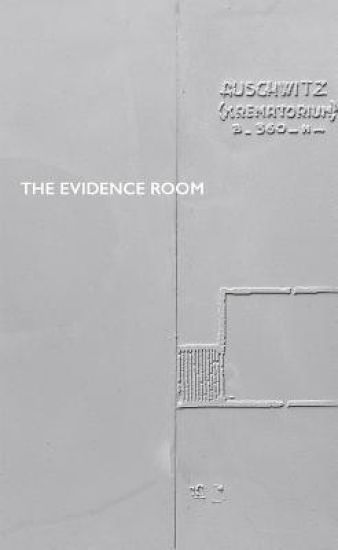
Internationally renowned and award-winning historian Dr. Robert Jan van Pelt's The Evidence Room is a chilling exploration of the role architecture played in constructing Auschwitz - arguably the Nazis' most horrifying facility. The Evidence Room is both a companion piece to, and an elaboration of, an exhibit at the 2016 Venice Architecture Biennale, based on van Pelt's authoritative testimony against Holocaust denial in a 2000 libel suit argued before the Royal Courts of Justice in London.
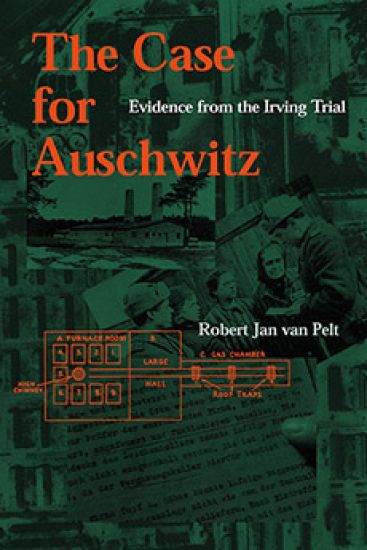
From January to April 2000 historian David Irving brought a high-profile libel case against Penguin Books and Deborah Lipstadt in the British High Court, charging that Lipstadt's book, Denying the Holocaust (1993), falsely labeled him a Holocaust denier. The question about the evidence for Auschwitz as a death camp played a central role in these proceedings. Irving had based his alleged denial of the Holocaust in part on a 1988 report by an American execution specialist, Fred Leuchter, which claimed that there was no evidence for homicidal gas chambers in Auschwitz. In connection with their defense, Penguin and Lipstadt engaged architectural historian Robert Jan van Pelt to present evidence for our knowledge that Auschwitz had been an extermination camp where up to one million Jews were killed, mainly in gas chambers. Employing painstaking historical scholarship, van Pelt prepared and submitted an exhaustive forensic report that he successfully defended in cross-examination in court.
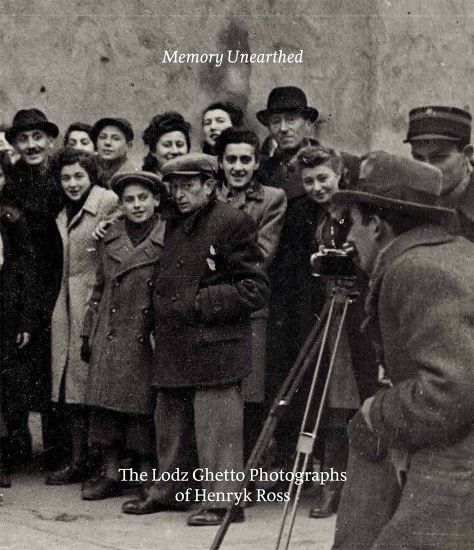
From 1941 to 1944, the Polish Jewish photographer Henryk Ross (1910-1991) was a member of an official team documenting the implementation of Nazi policies in the Lodz Ghetto in Poland. Covertly, he captured on film scores of both quotidian and intimate moments of Jewish life. In 1944, he buried thousands of negatives in an attempt to save this secret record. After the war, Ross returned to Poland to retrieve them. Although some were destroyed by nature and time, many negatives survived. Memory Unearthed presents a selection of the nearly 3,000 surviving images-along with original prints and other archival material including curfew notices and newspapers-from the permanent collection at the Art Gallery of Ontario. Ross's images offer a startling and moving new representation of one of humanity's greatest tragedies. Striking for both their historical content and artistic quality, his photographs have a raw intimacy and emotional power that remain undiminished.
As persecution, war, and deportation savaged their communities, Jews tried to flee Nazi Europe through both legal and clandestine routes. In this riveting tale of Jewish refugees during and after the Nazi era, Deborah Dwork and Robert Jan van Pelt thread together official papers and personal accounts to weave the history of refugees lives into the history of the Holocaust. "
A chronicle of events beginning in the Middle Ages through the modern era reveals the unfolding of Nazism and how it brought about the Holocaust, negotiating the division between the histories of its perpetrators and the victims and their families. Reprint. 15,000 first printing.
From January to April 2000 historian David Irving brought a high-profile libel case against Penguin Books and Deborah Lipstadt in the British High Court, charging that Lipstadt's book, Denying the Holocaust (1993), falsely labeled him a Holocaust denier. The question about the evidence for Auschwitz as a death camp played a central role in these proceedings. Irving had based his alleged denial of the Holocaust in part on a 1988 report by an American execution specialist, Fred Leuchter, which claimed that there was no evidence for homicidal gas chambers in Auschwitz. In connection with their defense, Penguin and Lipstadt engaged architectural historian Robert Jan van Pelt to present evidence for our knowledge that Auschwitz had been an extermination camp where up to one million Jews were killed, mainly in gas chambers. Employing painstaking historical scholarship, van Pelt prepared and submitted an exhaustive forensic report that he successfully defended in cross-examination in court.