Kirjojen hintavertailu. Mukana 12 595 353 kirjaa ja 12 kauppaa.
Kirjailija
Robert Johnston
Kirjat ja teokset yhdessä paikassa: 37 kirjaa, julkaisuja vuosilta 2002-2025, suosituimpien joukossa Reviewing Leadership – A Christian Evaluation of Current Approaches. Vertaile teosten hintoja ja tarkista saatavuus suomalaisista kirjakaupoista.
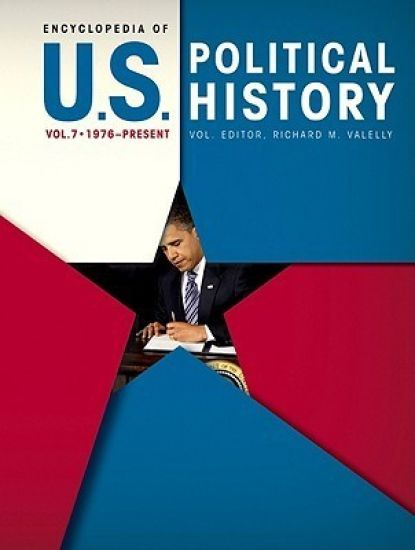
Unparalleled coverage of U.S. political development through a unique chronological framework Encyclopedia of U.S. Political History explores the events, policies, activities, institutions, groups, people, and movements that have created and shaped political life in the United States. With contributions from scholars in the fields of history and political science, this seven-volume set provides students, researchers, and scholars the opportunity to examine the political evolution of the United States from the 1500s to the present day. With greater coverage than any other resource, the Encyclopedia of U.S. Political History identifies and illuminates patterns and interrelations that will expand the reader’s understanding of American political institutions, culture, behavior, and change. Focusing on both government and history, the Encyclopedia brings exceptional breadth and depth to the topic with more than 100 essays for each of the critical time periods covered. With each volume covering one of seven time periods that correspond to key eras in American history, the essays and articles in this authoritative encyclopedia focus on the following themes of political history: The three branches of governmentElections and political partiesLegal and constitutional historiesPolitical movements and philosophies, and key political figuresEconomicsMilitary politicsInternational relations, treaties, and alliancesRegional histories Key Features Organized chronologically by political erasReader’s guide for easy-topic searching across volumesMaps, photographs, and tables enhance the textSigned entries by a stellar group of contributors VOLUME 1 ?Colonial Beginnings through Revolution ?1500–1783 ?Volume Editor: Andrew Robertson, Herbert H. Lehman College ?The colonial period witnessed the transformation of thirteen distinct colonies into an independent federated republic. This volume discusses the diversity of the colonial political experience—a diversity that modern scholars have found defies easy synthesis—as well as the long-term conflicts, policies, and events that led to revolution, and the ideas underlying independence. VOLUME 2 ?The Early Republic ?1784–1840 ?Volume Editor: Michael A. Morrison, Purdue University No period in the history of the United States was more critical to the foundation and shaping of American politics than the early American republic. This volume discusses the era of Confederation, the shaping of the U.S. Constitution, and the development of the party system. VOLUME 3 ?Expansion, Division, and Reconstruction ?1841–1877 ?Volume Editor: William Shade, Lehigh University (emeritus) ?This volume examines three decades in the middle of the nineteenth century, which witnessed: the emergence of the debate over slavery in the territories, which eventually led to the Civil War; the military conflict itself from 1861 until 1865; and the process of Reconstruction, which ended with the readmission of all of the former Confederate States to the Union and the "withdrawal" of the last occupying federal troops from those states in 1877. VOLUME 4 ?From the Gilded Age through the Age of Reform ?1878–1920 ?Volume Editor: Robert Johnston, University of Illinois at Chicago With the withdrawal of federal soldiers from Southern states the previous year, 1878 marked a new focus in American politics, and it became recognizably modern within the next 40 years. This volume focuses on race and politics; economics, labor, and capitalism; agrarian politics and populism; national politics; progressivism; foreign affairs; World War I; and the end of the progressive era. VOLUME 5 ?Prosperity, Depression, and War ?1921–1945 ?Volume Editor: Robert Zieger, University of Florida Between 1921 and 1945, the U.S. political system exhibited significant patterns of both continuity and change in a turbulent time marked by racist conflicts, the Great Depression, and World War II. The main topics covered in this volume are declining party identification; the "Roosevelt Coalition"; evolving party organization; congressional inertia in the 1920s; the New Deal; Congress during World War II; the growth of the federal government; Franklin D. Roosevelt’s presidency; the Supreme Court’s conservative traditions; and a new judicial outlook. VOLUME 6 ?Postwar Consensus to Social Unrest ?1946–1975 ?Volume Editor: Thomas Langston, Tulane University This volume examines the postwar era with the consolidation of the New Deal, the onset of the Cold War, and the Korean War. It then moves into the 1950s and early 1960s, and discusses the Vietnam war; the era of John F. Kennedy; the Cuban Missile Crisis; the Civil Rights Act; Martin Luther King and the Voting Rights Act; antiwar movements; The War Powers Act; environmental policy; the Equal Rights Amendment; Roe v. Wade; Watergate; and the end of the Vietnam War. VOLUME 7 ?The Clash of Conservatism and Liberalism ?1976 to present ?Volume Editor: Richard Valelly, Swarthmore College ?The troubled Carter Administration, 1977–1980, proved to be the political gateway for the resurgence of a more ideologically conservative Republican party led by a popular president, Ronald Reagan. The last volume of the Encyclopedia covers politics and national institutions in a polarized era of nationally competitive party politics and programmatic debates about taxes, social policy, and the size of national government. It also considers the mixed blessing of the change in superpower international competition associated with the end of the Cold War. Stateless terrorism (symbolized by the 9/11 attacks), the continuing American tradition of civil liberties, and the broad change in social diversity wrought by immigration and the impact in this period of the rights revolutions are also covered.
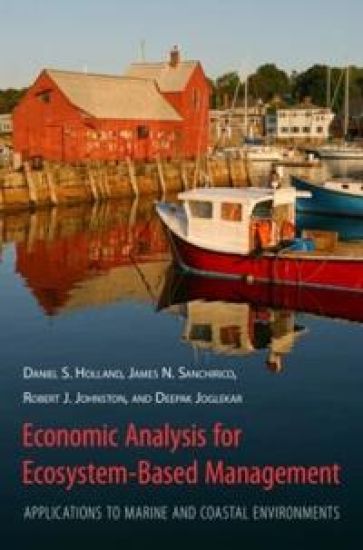
Ocean and coastal management regimes are increasingly subject to competing demands from stakeholders. Regulations must not only address fishing, recreation, and shipping, but also sand and gravel mining, gas pipelines, harbor/port development, offshore wind and tidal energy facilities, liquefied natural gas terminals, offshore aquaculture, and desalinization plants. The growing variety and intensity of ocean and coastal uses increases the call for a more holistic, comprehensive, and coordinated management approach that recognizes the often complex relationships between natural and human systems. For both economist and non-economist audiences, this book describes ways in which economic analysis can be an important tool to inform and improve ecosystem-based management (EBM). Topics include modeling economic impacts, benefit-cost analysis, spatial considerations in EBM, incentives and human behaviors, and accounting for uncertainty in policy analysis. Throughout the book the authors elucidate the different kinds of insights which can be gained from the use of different economic tools. In this rigorous and accessible work, the authors defy the conventional stereotype that economic perspectives necessarily favor the greatest commercial development. Instead, they demonstrate how comprehensive economic analyses consider the full range of potential services offered by marine and coastal ecosystems, including the conservation of biodiversity and creation of recreational opportunities.
Ocean and coastal management regimes are increasingly subject to competing demands from stakeholders. Regulations must not only address fishing, recreation, and shipping, but also sand and gravel mining, gas pipelines, harbor/port development, offshore wind and tidal energy facilities, liquefied natural gas terminals, offshore aquaculture, and desalinization plants. The growing variety and intensity of ocean and coastal uses increases the call for a more holistic, comprehensive, and coordinated management approach that recognizes the often complex relationships between natural and human systems. For both economist and non-economist audiences, this book describes ways in which economic analysis can be an important tool to inform and improve ecosystem-based management (EBM). Topics include modeling economic impacts, benefit-cost analysis, spatial considerations in EBM, incentives and human behaviors, and accounting for uncertainty in policy analysis. Throughout the book the authors elucidate the different kinds of insights which can be gained from the use of different economic tools. In this rigorous and accessible work, the authors defy the conventional stereotype that economic perspectives necessarily favor the greatest commercial development. Instead, they demonstrate how comprehensive economic analyses consider the full range of potential services offered by marine and coastal ecosystems, including the conservation of biodiversity and creation of recreational opportunities.
Christian theatre has rich roots, from ancient Hebrew dramas to medieval plays, but where does it fit in today's media-saturated society?Performing the Sacred is a fascinating dialogue between a theologian and theatre artist, offering the first full-scale exploration of theatre and theology. The authors illuminate the importance of live performance in a virtual world, of preserving the ancient art form of storytelling by becoming the story. Theologically, theatre reflects Christianity's central doctrines--incarnation, community, and presence--enhancing the human creative experience and simultaneously engaging viewers on multiple levels.This Engaging Culture series title will be a key volume for those interested in theatre as well as drama practitioners, worship leaders, and culture makers.
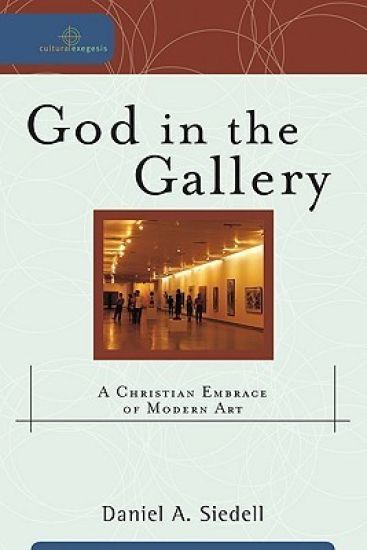
Is contemporary art a friend or foe of Christianity? Art historian, critic, and curator Daniel Siedell, addresses this question and presents a framework for interpreting art from a Christian worldview in God in the Gallery: A Christian Embrace of Modern Art. As such, it is an excellent companion to Francis Schaeffer's classic Art and the Bible. Divided into three parts--"Theology," "History," and "Practice"--God in the Gallery demonstrates that art is in conversation with and not opposed to the Christian faith. In addition, this book is beautifully enhanced with images from such artists as Andy Warhol, Jackson Pollock, Enrique Martínez Celaya, and others. Readers of this book will include professors, students, artists, and anyone interested in Christianity and culture.
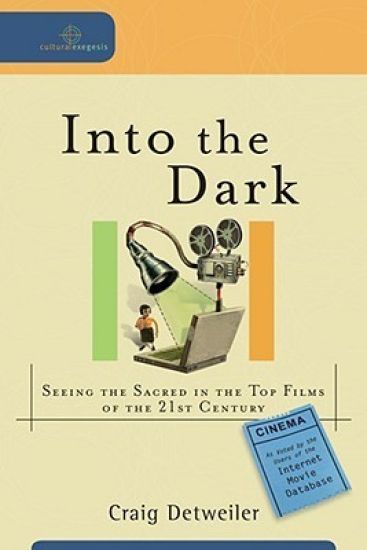
In this book, Craig Detweiler examines forty-five films from the twenty-first century that resonate theologically--from the Lord of the Rings trilogy to Little Miss Sunshine--offering groundbreaking insight into their scriptural connections and theological applications.Detweiler writes with the eye of a filmmaker, leads Hollywood and religion initiatives at Fuller Seminary, and even came to faith through cinema. In this book, he unpacks the "theology of everyday life," exploring the Spirit of God in creation, redemption, and "general revelation" through sometimes unlikely filmmakers. It's the first authoritative book that dissects up-to-date movies selected by the popular Internet Movie Database. This book is recommended for teachers, students, pastors, film fans, and those interested in the intersection of Christianity and culture.
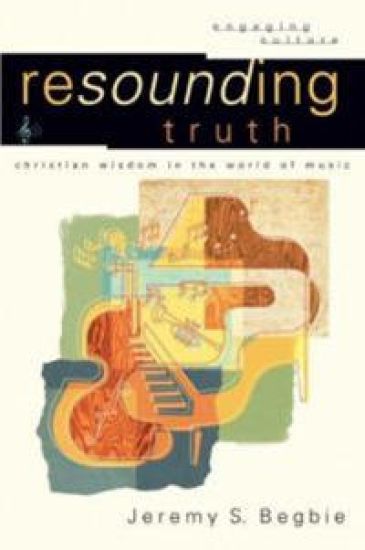
Christianity Today 2008 Book Award (Theology/Ethics)Even fallen humans compose beautiful symphonies, music that touches emotions as nothing else can. Resounding Truth shows Christians how to uncover the Gospel message found in the many melodies that surround us. Theologian and musician Jeremy Begbie believes our divinely-inspired imagination reveals opportunity for sincere, heartfelt praise. With practical examples, lucid explanations, and an accessible bibliography, this book will help music lovers discover how God's diversity shines through sound. Begbie helps readers see the Master of Song and experience the harmony of heavenly hope.
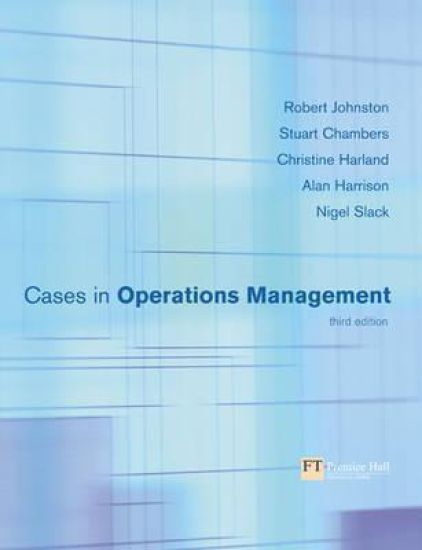
This text begins with an introduction to analysing operations management cases. Each of the subsequent parts deals with a key area of operations management and begins with an expanded introduction, allowing the book to serve as a stand-alone text for introductory operations management courses.