
Kirjailija
Robert Kolb
Kirjat ja teokset yhdessä paikassa: 60 kirjaa, julkaisuja vuosilta 1984-2026, suosituimpien joukossa The Augsburg Confession. Vertaile teosten hintoja ja tarkista saatavuus suomalaisista kirjakaupoista.
60 kirjaa
Kirjojen julkaisuhaarukka 1984-2026.

Staging Luther
Annis N. Shaver; Ian A. MacPhail-Fausey; Clara G. Hendrickson; Robert Kolb
AUGSBURG FORTRESS PUBLISHERS
2023
sidottu
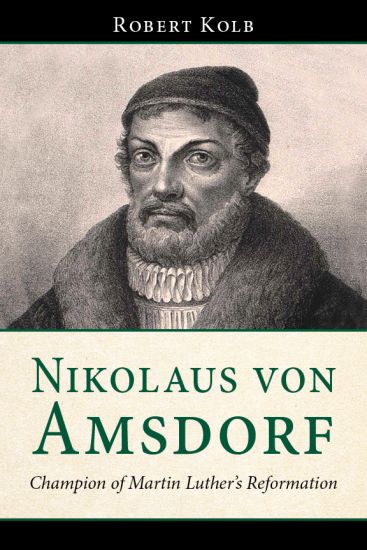
Martin Luther called him "a theologian by nature." He was Luther's close friend and contemporary-born three weeks after Luther but living two decades longer. He was the only nobleman in Luther's inner circle and one of the first Evangelical bishops. Known by his colleagues as a "fierce enemy of all corruption and adulteration of true Lutheran, Evangelical truth," his contributions during the theological controversies after Luther's death shaped numerous articles of the Formula of Concord. Yet few people today have ever heard of Nikolaus von Amsdorf, let alone his influence on Lutheran theology.In this thoroughly revised and updated edition of the 1978 book Nikolaus von Amsdorf: Popular Polemics in the Preservation of Luther's Legacy, Robert Kolb opens the life and work of Amsdorf to readers of all experiences and backgrounds. Dr. Kolb reveals how this mostly unknown champion of Luther's Reformation helped set the future of Lutheran theology on its course, prioritizing above all the radically simple and clear Gospel Luther proclaimed: salvation by grace alone through faith in Christ alone.
Philip Melanchthon
Robert Kolb; Nicole Kuropka; Irene Dingel; Timothy J. Wengert
Vandenhoeck Ruprecht GmbH Co KG
2012
sidottu
These twelve essays by international scholars investigate Melanchthons theological activities as teacher, confessor of the faith, and defender of his doctrine and ecclesiastical policies as they developed within the context of his service of society and church. In the past quarter century Melanchthon researchers have scrutinized older, mostly negative, interpretations of the Preceptor Germaniae. The editors present in this volume precisely focused appraisals of "Master Philip" in his role as theologian at the university and in the service of his own prince and others. By carefully placing his use of Aristotle, his understanding of the nature of training for pastoral ministry, his biblical exegesis in context, by analyzing four of his attempts to formulate Wittenberg teaching in public confession, by assessing how his own writings took on normative character for the church, and by tracing his thinking on the free will and the Lords Supper in the midst of controversy, these authors offer carefully etched portraits of Melanchthon as Preceptor ecclesiae. This volume contributes to the expansion of our understanding of Melanchthon as key figure in the Wittenberg Reformation and the currents of controversy that have long surrounded the interpretation of his contributions. These twelve essays by international scholars investigate Melanchthons theological activities as teacher, confessor of the faith, and defender of his doctrine and ecclesiastical policies as they developed within the context of his service of society and church. In the past quarter century Melanchthon researchers have scrutinized older, mostly negative, interpretations of the Preceptor Germaniae. The editors present in this volume precisely focused appraisals of "Master Philip" in his role as theologian at the university and in the service of his own prince and others. By carefully placing his use of Aristotle, his understanding of the nature of training for pastoral ministry, his biblical exegesis in context, by analyzing four of his attempts to formulate Wittenberg teaching in public confession, by assessing how his own writings took on normative character for the church, and by tracing his thinking on the free will and the Lords Supper in the midst of controversy, these authors offer carefully etched portraits of Melanchthon as Preceptor ecclesiae. This volume contributes to the expansion of our understanding of Melanchthon as key figure in the Wittenberg Reformation and the currents of controversy that have long surrounded the interpretation of his contributions.

Martin Luther's thought continues to challenge people throughout the world in the twenty-first century. His paradigmatic shift in defining God and what it means to be human left behind a foundation for viewing human creatures that was anchored in Aristotle's anthropology. Luther defined the Revealed God in terms of his mercy and love for human beings, based not on their merit and performance but rather on his unconditioned grace. He placed 'fearing, loving, and trusting God above all else' at the heart of his definition of being human. This volume places the development and exposition of these key presuppositions in Luther's thinking within the historical context of late medieval theology and piety as well as the unfolding dynamics of political and social change at the dawn of the modern era. Special attention is given the development of a 'Wittenberg way' of practicing theology under Luther's leadership. It left behind a dependence on allegorical methods of biblical interpretation for a 'literal-prophetic' approach to Scripture. More importantly, it placed the distinction between the 'gospel' as God's unmerited gift of identity as his children and the 'law', the expression of God's expectations for the performance of his children in good works, at the heart of all interpretation of the Bible. This presuppositional framework for practicing theology reflects Luther's personal experience and his deep commitment to pastoral care of common Christians as well as his reading of the biblical text. It is supported by his distinction of two kinds of human righteousness (passive in God's sight, active in relationship to others), his distinction of two realms or dimensions of human life, and his theology of the cross. The volume unfolds Luther's maturing thought on the basis of this method.
Martin Luther's thought continues to challenge people throughout the world in the twenty-first century. His paradigmatic shift in defining God and what it means to be human left behind a foundation for viewing human creatures that was anchored in Aristotle's anthropology. Luther defined the Revealed God in terms of his mercy and love for human beings, based not on their merit and performance but rather on his unconditioned grace. He placed 'fearing, loving, and trusting God above all else' at the heart of his definition of being human. This volume places the development and exposition of these key presuppositions in Luther's thinking within the historical context of late medieval theology and piety as well as the unfolding dynamics of political and social change at the dawn of the modern era. Special attention is given the development of a 'Wittenberg way' of practicing theology under Luther's leadership. It left behind a dependence on allegorical methods of biblical interpretation for a 'literal-prophetic' approach to Scripture. More importantly, it placed the distinction between the 'gospel' as God's unmerited gift of identity as his children and the 'law', the expression of God's expectations for the performance of his children in good works, at the heart of all interpretation of the Bible. This presuppositional framework for practicing theology reflects Luther's personal experience and his deep commitment to pastoral care of common Christians as well as his reading of the biblical text. It is supported by his distinction of two kinds of human righteousness (passive in God's sight, active in relationship to others), his distinction of two realms or dimensions of human life, and his theology of the cross. The volume unfolds Luther's maturing thought on the basis of this method.
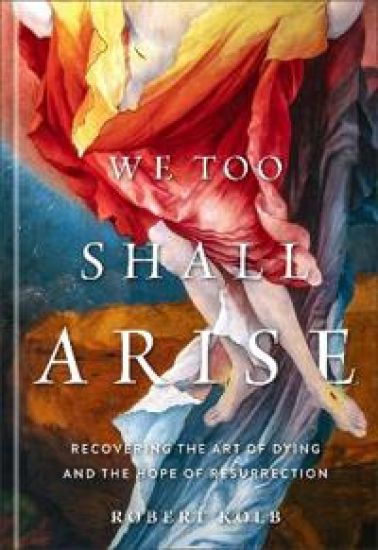
We Too Shall Arise: Recovering the Art of Dying and the Hope of Resurrection
Robert Kolb
Baker Books
2026
sidottu
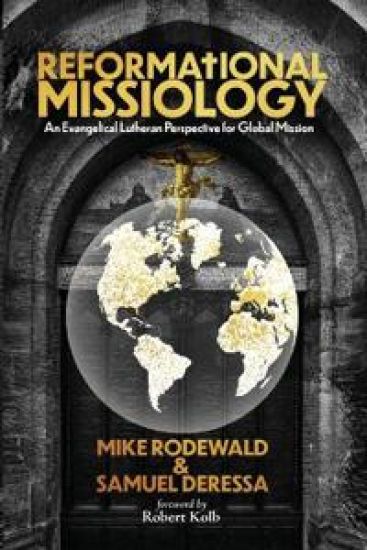
Reformational Missiology
Mike Rodewald; Samuel Deressa; Robert Kolb
Wipf Stock Publishers
2026
pokkari

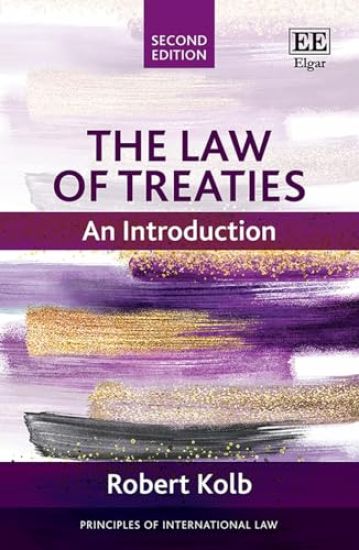
Presenting up-to-date case law and a freshly updated bibliography, this second edition of The Law of Treaties is a valuable addition to contemporary international law scholarship. It offers much-needed clarity on complicated cases and questions whilst maintaining a highly readable style.This timely second edition offers both theoretical and practical insights into the modern law of treaties. Chapters include new additions based on recent legal developments, such as updated information on the invalidity of treaties, and provides precise legal analyses through the integration of modern treaty practice.The Law of Treaties will be highly beneficial for students and academics of international law, politics and international relations looking to expand their knowledge of international affairs. It will also be a valuable read for practitioners wishing to remain informed about new treaties law.
Reservations to Optional Declarations Granting Jurisdiction to the International Court of Justice
Robert Kolb
Edward Elgar Pub
2024
sidottu
The Lutheran Theology of the Holy Spirit
Fred Perry Hall; Robert Kolb
Wipf Stock Publishers
2024
sidottu
Questions about Lutherans and the Holy Spirit? This book probes Lutheranism from Luther to the Formula of Concord (1517-1577) and presents a striking consistency regarding the Holy Spirit among Lutheran Reformers. The Holy Spirit dominated Luther's writing, not only in theology, but in all aspects of living out God's will. Six of the theologians researched in this book were also pastors dealing with enormous challenges from government interference, war, religious disputes, and, as Luther declared, "The rage of the devil." The solution was not brilliant arguments or "best practices." The solution to a Christian's guilty conscience or lukewarm faith was not trying harder or doing good works. Rather, it was to confess failure, to eliminate self-dependence, and to cry out to the Holy Spirit, who alone is totally sufficient in every situation. Theologians, pastors, missionaries, Sunday-school teachers, workers and retirees, moms and dads, students and kids--everyone--is powerless to accomplish anything in the kingdom of God. Only the Holy Spirit is able to change hearts and meet needs. He graciously responds to all who call. Yes, the work of the Holy Spirit and his power is Lutheran, for Luther in the sixteenth century and for Lutherans today.

The Lutheran Theology of the Holy Spirit
Fred Perry Hall; Robert Kolb
Wipf Stock Publishers
2024
pokkari
Questions about Lutherans and the Holy Spirit? This book probes Lutheranism from Luther to the Formula of Concord (1517-1577) and presents a striking consistency regarding the Holy Spirit among Lutheran Reformers. The Holy Spirit dominated Luther's writing, not only in theology, but in all aspects of living out God's will. Six of the theologians researched in this book were also pastors dealing with enormous challenges from government interference, war, religious disputes, and, as Luther declared, ""The rage of the devil."" The solution was not brilliant arguments or ""best practices."" The solution to a Christian's guilty conscience or lukewarm faith was not trying harder or doing good works. Rather, it was to confess failure, to eliminate self-dependence, and to cry out to the Holy Spirit, who alone is totally sufficient in every situation. Theologians, pastors, missionaries, Sunday-school teachers, workers and retirees, moms and dads, students and kids--everyone--is powerless to accomplish anything in the kingdom of God. Only the Holy Spirit is able to change hearts and meet needs. He graciously responds to all who call. Yes, the work of the Holy Spirit and his power is Lutheran, for Luther in the sixteenth century and for Lutherans today.

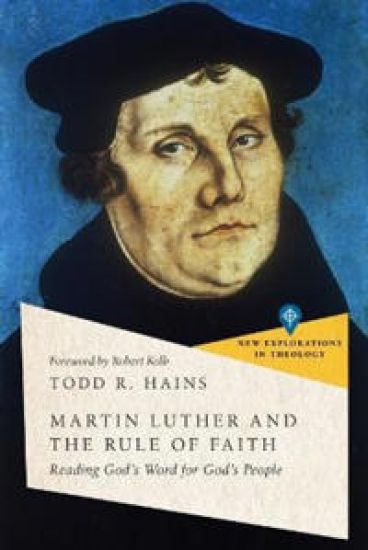
Martin Luther and the Rule of Faith – Reading God`s Word for God`s People
Todd R. Hains; Robert Kolb
IVP Academic
2022
nidottu
Martin Luther considered the reading of God's word to be his primary task as a theologian, a pastor, and a Christian. Though he is often portrayed as reading the Bible with a bare approach of sola Scriptura—without any concern for previous generations’ interpretation—the truth is more complicated. In this New Explorations in Theology (NET) volume, Reformation scholar Todd R. Hains shows that Luther read the Bible according to the rule of faith, which is contained in the church's ancient catechism of the Ten Commandments, the Lord's Prayer, and the Apostles' Creed. Hains carefully examines Luther's sermons to show how Luther taught the rule of faith as the guard and guide of Bible reading. This study will helpfully complicate your view of Luther and bring clarity to your own reading of God's Word. Featuring new monographs with cutting-edge research, New Explorations in Theology provides a platform for constructive, creative work in the areas of systematic, historical, philosophical, biblical, and practical theology.

Le Droit International Comme Corps de Droit Privé Et de Droit Public
Robert Kolb
BRILL NIJHOFF
2022
nidottu
Read the interview with Robert Kolb on Le Droit International Comme Corps de Droit Priv et de Droit Public (in English) / (in French) Cet ouvrage radiographie le corps du droit international public sous l'angle d'une division courante dans tout ordre juridique, savoir le droit priv et le droit public . Le premier vise satisfaire les int r ts des sujets de droit pris individuellement, alors que le second cherche prot ger les int r ts d'une collectivit de sujets (en droit interne l'Etat, en droit international des collectivit s g om trie variable). Des illustrations de la gravitation de ces deux forces sont donn es dans les grandes mati res structurantes du droit international: les sources, les rapports de syst me, les personnes, la responsabilit , le r glement des diff rends, le jus ad bellum et le jus in bello, ainsi que les espaces communs. En suivant ce fil d'analyse in dit, une s rie d' quilibres et de d s quilibres formant le code g n tique intime du droit international sont mis jour.