Kirjojen hintavertailu. Mukana 12 595 353 kirjaa ja 12 kauppaa.

Kirjailija

Robert L. France

Kirjat ja teokset yhdessä paikassa: 7 kirjaa, julkaisuja vuosilta 2002-2022, suosituimpien joukossa Road Ecology. Vertaile teosten hintoja ja tarkista saatavuus suomalaisista kirjakaupoista.

Mukana myös kirjoitusasut: Robert L France

7 kirjaa

Kirjojen julkaisuhaarukka 2002-2022.

Road Ecology

Road Ecology

Richard T.T. Forman; Daniel Sperling; John A. Bissonette; Anthony P. Clevenger; Carol D. Cutshall; Virginia H. Dale; Lenore Fahrig; Robert L. France; Charles R. Goldman; Kevin Heanue; Julia Jones; Frederick Swanson; Thomas Turrentine; Thomas C. Winter

Island Press
2002
nidottu
A central goal of transportation is the delivery of safe and efficient services with minimal environmental impact. In practice, though, human mobility has flourished while nature has suffered. Awarness of the environmental impacts of roads is increasing, yet information remains scarce for those interested in studying, understanding, or minimizing the ecological effects of roads and vehicles. Road Ecology addresses that shortcoming by elevating previously localized and fragmented knowledge into a broad and inclusive framework for understanding and developing solutions. The book brings together fourteen leading ecologists and transportation experts to articulate state-of-the-science road ecology principles and presents specific examples that demonstrate the application of those principles.
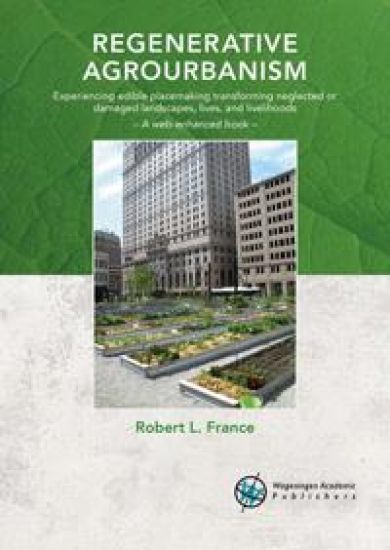
Regenerative agrourbanism

Regenerative agrourbanism

Robert L. France

WAGENINGEN ACADEMIC PUBLISHERS
2022
nidottu
The core activities of urban agriculture are involved with producing, processing, marketing, distributing, and consuming food. Urban agriculture also provides services and outcomes through transforming neglected or damaged landscapes, lives, and livelihoods. This book focuses on the so-called 'ancillary benefits' of urban agriculture in terms of healing economies, connections, aesthetics, heritage, and sites and societies - in short, what might be referred to in an holistic sense as the emerging paradigm of 'agrourbanism'. More than seventy case studies from around the world are reviewed through the social-ecological lens of regenerative landscape design. Many of these cases have never before been discussed in the literature. Topics examined include entrepreneurship, gastro-tourism, food literacy, foodscaping, heritage, and social and societal wellbeing. The methodological approach undertaken is layered-narrative scholarship based on the phenomenology of experiencing landscapes, and is facilitated through a linked website containing photo-essays documenting the site visits. Robert L. France is a world-renowned scientist in the Faculty of Agriculture at Dalhousie University, where he teaches courses on urban agriculture, ecohydrology, watershed management, conservation biology, and environmental restoration. For more than a decade he taught and conducted research on landscape architecture, land-use planning, and urban design at the Harvard Design School. Dr. France is the author or editor of twenty-two books and more than two hundred journal articles on a wide range of environmental subjects, which together have been cited more than ten thousand times in the professional literature. In 2010, he organized the first international academic conference on urban agriculture in Canada, which led to the publication of the edited volume Integrated Urban Agriculture: Precedents, Practices, Prospects. His previous book with Wageningen Academic Publishers is about the pre-plastic environmental history of fishery bycatch: Disentangled: Ethnozoology and Environmental Explanation of the Gloucester Sea Serpent.
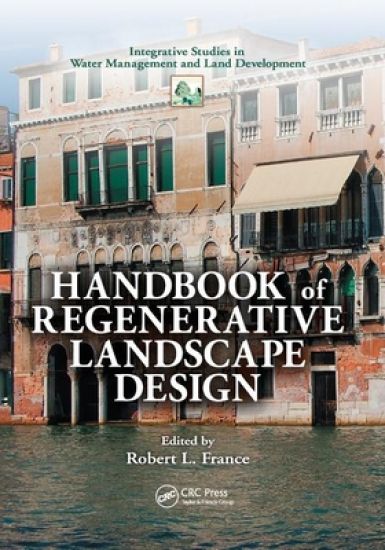
Handbook of Regenerative Landscape Design
What if environmentally damaged landscapes could not only be remediated from an ecological standpoint, but also designed to replenish an entire community as well as the nature surrounding it? The Handbook of Regenerative Landscape Design incorporates ecology, engineering, sociology, and design elements into a new paradigm for environmental restoration and the renewal of urban and cultural sites.This is the first resource in the field to examine the collaborative roles of scientists, landscape architects, and urban planners in transforming degraded landscapes into sustainable communities for both people and wildlife. Top practitioners and theorists from different fields and perspectives contribute innovative case studies that converge in their emphasis on new uses for reclaimed land, rather than a return to its original state. In addition, this book is one in only a handful to address the system conditions necessary for the repair of severely degraded landscapes, especially in an urban context. It elucidates the most suitable remediation strategies for treating degraded environments such as industrial landfills, mining sites, buried urban rivers, heavily polluted or effectively destroyed wetlands, Superfund sites, and abandoned factories. Bringing the perspectives of landscape architects, scientists, and urban planners to a wider audience, the Handbook of Regenerative Landscape Design demonstrates how ecological landscape restoration processes can facilitate sociological and urban renewal initiatives.
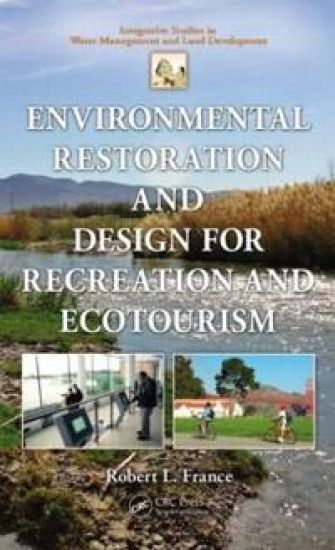
Environmental Restoration and Design for Recreation and Ecotourism
A wetland center in London, parks in downtown San Francisco, a wildlife sanctuary in Arcata, and a wetlands park on the outskirts of Las Vegas—what do these urban and suburban locations have in common? They are leading examples of a new restoration design approach that is squarely placed at the interface of nature and culture. This multidisciplinary paradigm bridges the gap between an ecological approach preoccupied with returning damaged landscapes to an imagined original state and a landscape design approach concerned with creating a place for people to reinhabit.Environmental Restoration and Design for Recreation and Ecotourism is the first book to provide a detailed examination of the entire process of restoring damaged or abandoned landscapes to benefit both nature and people, specifically for the purposes of recreation and ecotourism. With a focus on history, planning, methodology, design, and construction, it explores five case studies of successful regenerative landscape design projects and gives readers an inside look at the evolution of design projects. Two of the cases offer a particularly comprehensive review of award-winning projects: the reparation of the degraded Las Vegas Wash into Clark County Wetlands Park and the transformation of the abandoned Barn Elms Reservoirs into the London Wetland Centre. Supported by extensive photographs, tables, maps, sketches, and schematics, these case studies trace how ideas are first conceived and then adopted, transformed, or even abandoned along the way. Each case study also includes a questions-and-answers discussion with designers and managers. Emphasizing the need for interdisciplinary cooperation, the book presents lessons learned from some of the most innovative projects in regenerative landscape design.
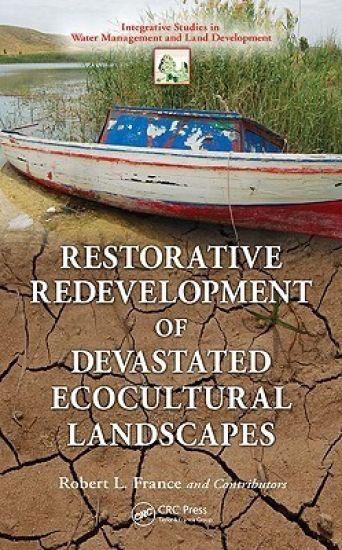
Restorative Redevelopment of Devastated Ecocultural Landscapes
A fusion of ecological restoration and sustainable development, restorative redevelopment represents an emerging paradigm for remediating landscapes. Rather than merely fixing the broken bits and pieces of nature, restorative development advocates the reuse of devastated landscapes to improve the value and livability of a location for humans at the same time as effectively reinstating natural processes and functions. Restorative Redevelopment of Devastated Ecocultural Landscapes explores the use of this approach to address the long-term, sustainable reparation of the fabled marshlands of southern Iraq destroyed by Saddam Hussein, as well as numerous examples of other ecologically sensitive regions.Case studies presented include: Southern marshlands IraqHula swamp, IsraelAzraq Oasis, JordanLas Vegas Wash, USA Xochimilco, MexicoPantanal, BrazilClark County Wetlands Park, USATonle Sap, CambodiaLake Titicaca, PeruNature Reserves, JordanThe book reviews successfully-implemented and celebrated case studies from more than 15 countries around the world which, either in whole or in part, can offer valuable insight into the restorative development of the Iraqi marshlands as well as other devastated ecocultural landscapes. It presents practical approaches for sustaining the process of restoration efforts, both during and after the reparation work has been accomplished. The editor suggests solutions targeted for Iraq but that also have resonance in other regions devastated by conflict and natural disasters. He takes a synoptic or cross-system approach to problem solving when repairing large-scale landscapes that have been devastated by conflict or natural disasters such as tsunami-damaged Indonesia and earthquake-ravaged Haiti.
Handbook of Regenerative Landscape Design

Handbook of Regenerative Landscape Design

Robert L. France

CRC Press Inc
2007
sidottu
What if environmentally damaged landscapes could not only be remediated from an ecological standpoint, but also designed to replenish an entire community as well as the nature surrounding it? The Handbook of Regenerative Landscape Design incorporates ecology, engineering, sociology, and design elements into a new paradigm for environmental restoration and the renewal of urban and cultural sites.This is the first resource in the field to examine the collaborative roles of scientists, landscape architects, and urban planners in transforming degraded landscapes into sustainable communities for both people and wildlife. Top practitioners and theorists from different fields and perspectives contribute innovative case studies that converge in their emphasis on new uses for reclaimed land, rather than a return to its original state. In addition, this book is one in only a handful to address the system conditions necessary for the repair of severely degraded landscapes, especially in an urban context. It elucidates the most suitable remediation strategies for treating degraded environments such as industrial landfills, mining sites, buried urban rivers, heavily polluted or effectively destroyed wetlands, Superfund sites, and abandoned factories. Bringing the perspectives of landscape architects, scientists, and urban planners to a wider audience, the Handbook of Regenerative Landscape Design demonstrates how ecological landscape restoration processes can facilitate sociological and urban renewal initiatives.