Kirjailija
Robert L. Heilbroner
Kirjat ja teokset yhdessä paikassa: 16 kirjaa, julkaisuja vuosilta 1975-2000, suosituimpien joukossa 21st Century Capitalism. Vertaile teosten hintoja ja tarkista saatavuus suomalaisista kirjakaupoista.
Mukana myös kirjoitusasut: Robert L Heilbroner
16 kirjaa
Kirjojen julkaisuhaarukka 1975-2000.
The final revision of this classic bestseller, the 7th edition defines the common thread linking the world's greatest economic thinkers and explores the philosophies that motivate them. Hailed by Galbraith as a "brilliant achievement", The Worldly Philosophers with over 2 million copies sold worldwide, not only enables us to see more deeply into our history, but helps us to better understand our own times. Heilbroner provides the new theme that connects thinkers as different as Adam Smith andKarl Marx: the desire to understand how a capitalist society works. A new chapter conveys a concern that today's increasingly "scientific" economics may overlook fundamental social and political issues that are central to economics.
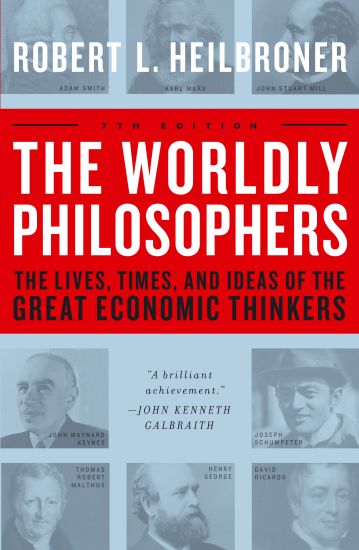
The bestselling classic that examines the history of economic thought from Adam Smith to Karl Marx--"all the economic lore most general readers conceivably could want to know, served up with a flourish" (The New York Times). The Worldly Philosophers not only enables us to see more deeply into our history but helps us better understand our own times. In this seventh edition, Robert L. Heilbroner provides a new theme that connects thinkers as diverse as Adam Smith and Karl Marx. The theme is the common focus of their highly varied ideas--namely, the search to understand how a capitalist society works. It is a focus never more needed than in this age of confusing economic headlines. In a bold new concluding chapter entitled "The End of the Worldly Philosophy?" Heilbroner reminds us that the word "end" refers to both the purpose and limits of economics. This chapter conveys a concern that today's increasingly "scientific" economics may overlook fundamental social and political issues that are central to economics. Thus, unlike its predecessors, this new edition provides not just an indispensable illumination of our past but a call to action for our future.
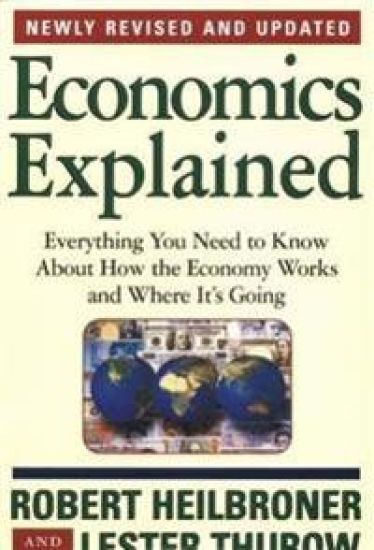
Containing about 30 percent new material, this edition of ECONOMICS EXPLAINED offers readers not only an invaluable primer on economic theory, but a clear understanding of the causes and treatments of the problems confronting us today, as well as the possible risks and the potential rewards we face in the future. Previous Edition ISBN: 0671884220
Author of The Worldly Philosophers, a 3-million-copy seller, Robert Heilbroner offers here a compendium of readings from the "worldly philosophers" themselves. The selections range from the earliest economic thought to such towering volumes as Adam Smith's The Wealth of Nations, Thomas Malthus's Essay on the Principle of Population, David Ricardo's Principles of Political Economy, and John Maynard Keynes's The General Theory of Employment, Interest, and Money. Acting as "a docent, not merely an editor," he takes the reader through the core arguments with "brilliantly clear commentary" (New York Times Book Review).
The Crisis of Vision in Modern Economic Thought
Robert L. Heilbroner; William S. Milberg
Cambridge University Press
1996
pokkari
A deep and widespread crisis affects modern economic theory, a crisis that derives from the absence of a ‘vision’ - a set of widely shared political and social preconceptions - on which all economics ultimately depends. This absence, in turn, reflects the collapse of the Keynesian view that provided such a foundation from 1940 to the early 1970s, comparable to earlier visions provided by Smith, Ricardo, Mill, and Marshall. The ‘unraveling’ of Keynesianism has been followed by a division of discordant and ineffective camps whose common denominator seems to be their shared analytical refinement and lack of practical applicability. Heilbroner and Milberg’s analysis attempts both to describe this state of affairs, and to suggest the direction in which economic thinking must move if it is to regain the relevance and remedial power it now pointedly lacks.
The Crisis of Vision in Modern Economic Thought
Robert L. Heilbroner; William S. Milberg
Cambridge University Press
1996
sidottu
A deep and widespread crisis affects modern economic theory, a crisis that derives from the absence of a ‘vision’ - a set of widely shared political and social preconceptions - on which all economics ultimately depends. This absence, in turn, reflects the collapse of the Keynesian view that provided such a foundation from 1940 to the early 1970s, comparable to earlier visions provided by Smith, Ricardo, Mill, and Marshall. The ‘unraveling’ of Keynesianism has been followed by a division of discordant and ineffective camps whose common denominator seems to be their shared analytical refinement and lack of practical applicability. Heilbroner and Milberg’s analysis attempts both to describe this state of affairs, and to suggest the direction in which economic thinking must move if it is to regain the relevance and remedial power it now pointedly lacks.
A collection of essays on market socialism, originally published in Dissent between 1985 and 1993. Among other topics, they take issue with the traditional view that socialism means rejecting the use of markets to organise economic activities, and question the reliance upon markets.
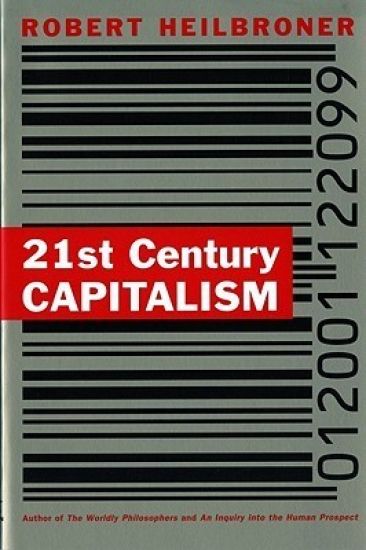
Although communism lies shattered almost everywhere it once existed, no single form of capitalism has emerged worldwide. Which of the varieties of capitalism will be hardy enough to survive into the next century? Will the private sector make way for government to redress the failures of the market system? Does the defeat of the socialist vision portend that unbridled acquisitiveness will dominate the world? In tackling these questions, Heilbroner takes us to the roots of capitalist society. He views capitalism from a wide angle as both an economic system and a political order, showing the integral connections between the two that are often overlooked; finally, he addresses the overarching challenge ahead--a society that no longer believes in the inevitability of progress.
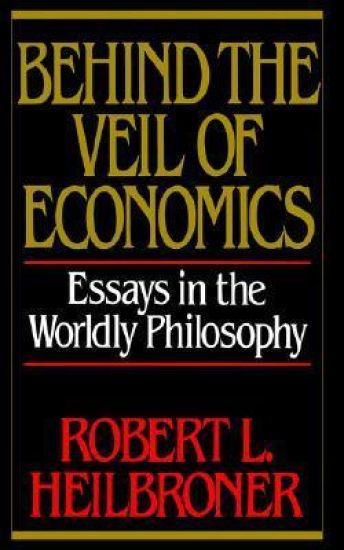
What lies behind the veil of economics? Power and ideology, answers Robert Heilbroner—the power of our economic involvement in society to shape the ways we think about it; the visions and values that add unsuspected ideological color to our economic beliefs about it. Most important, Heilbroner shows why economics has become the reigning form of social inquiry and how we might penetrate its mystique.
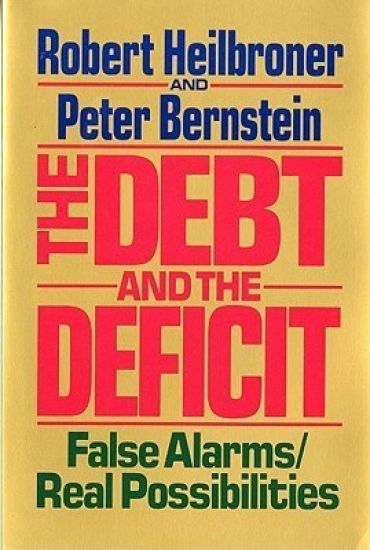
The authors explain what national debts and deficits are, and what they are not. One thing they are not nearly as big as we think. Another thing they are not is a burden on the shoulders of our grandchildren. And one thing they are is a potential means of financing economic growth. Heilbroner and Bernstein do not shrug aside the debt and deficit. "The only remedy for our present frightened state of mind", they write, "is explanations that are simple but accurate, facts that will defuse unreasoning panic, and arguments that will stand up under the most skeptical examination."
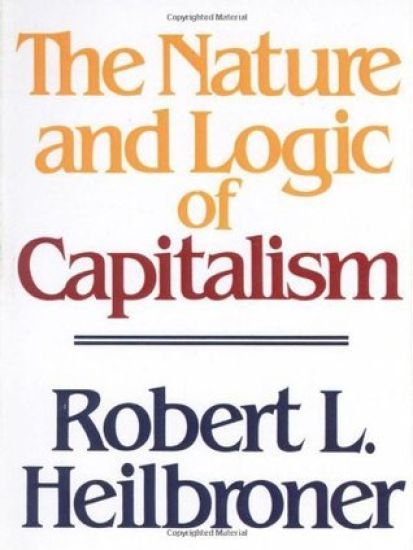
In an inquiry that encompasses a probe of the human psyche, an analysis of the organization of primitive society, and an examination of the sources of profit and the accumulation of wealth, the noted economist explores the nature and dynamics of capitalism