Kirjojen hintavertailu. Mukana 12 390 323 kirjaa ja 12 kauppaa.

Kirjailija

Robert L. Kendrick

Kirjat ja teokset yhdessä paikassa: 4 kirjaa, julkaisuja vuosilta 2002-2025, suosituimpien joukossa Biblical Families in Music. Vertaile teosten hintoja ja tarkista saatavuus suomalaisista kirjakaupoista.

4 kirjaa

Kirjojen julkaisuhaarukka 2002-2025.

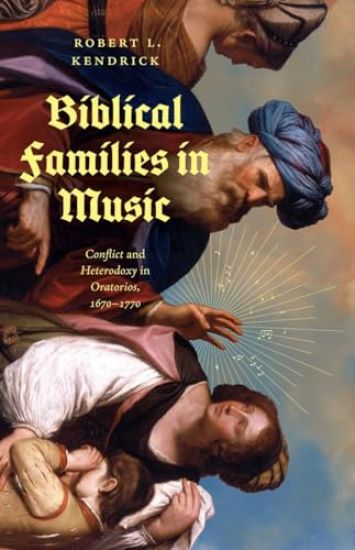
Biblical Families in Music

Biblical Families in Music

Robert L. Kendrick

THE UNIVERSITY OF CHICAGO PRESS
2025
sidottu
Examines how stories of biblical families were reconfigured and projected in the genre of the oratorio, a form of sacred opera, in the seventeenth and eighteenth centuries. Based to a great extent on the Old Testament, the largely Catholic musical-dramatic genre was popular in Italy, Austria, and southern Germany in the seventeenth and eighteenth centuries. Biblical Families in Music reveals how difficult stories of fratricide, child sacrifice, death, and forbidden love performed a didactic function in oratorios, teaching early modern audiences about piety and the rules of proper family life. In the century after 1670, the heavily adapted tales of Abraham and Isaac, Cain and Abel, and the Egyptian slave Hagar and her son Ishmael were set to music by figures such as Alessandro Scarlatti and Antonio Sacchini and performed during Lent in churches and other sacred spaces for an audience of court nobility, clergy, and the urban patriciate. By examining the resonance of Catholic oratorios within predominantly upper-class social realities, the book broadens our cultural understanding of the early modern European family and underscores the centrality of family and familial relation to social position, devotional taste, and identity.
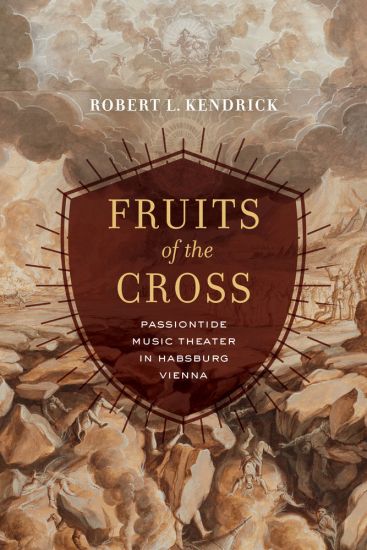
Fruits of the Cross

Fruits of the Cross

Robert L. Kendrick

University of California Press
2018
sidottu
In this first detailed study of seventeenth-century sepolcri—sacred operas written for court performance on Holy Thursday and Good Friday—Robert L. Kendrick delves into the political and artistic world of Habsburg Vienna, in which music and ritual combined on the stage to produce a thoroughly original art form based on devotion to Christ’s Tomb. Through the use of allegorical characters, the musical dramas ranged from the devotionally intense, to the theologically complex, to the ugly anti-Jewish, but played a unique role in making Passion piety relevant to wider cultural concerns. Fruits of the Cross suggests that understanding the sepolcri has implications for the theatricalization of devotion, the power of allegory, the role of queenship in court ideology, the interplay between visuality and music, and not least the intellectual centrality of music theater to court self-understanding.
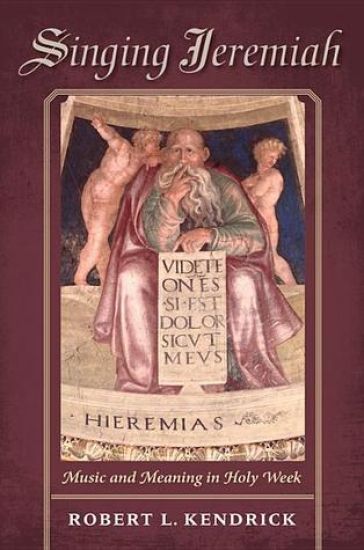
Singing Jeremiah

Singing Jeremiah

Robert L. Kendrick

Indiana University Press
2014
sidottu
A defining moment in Catholic life in early modern Europe, Holy Week brought together the faithful to commemorate the passion, crucifixion, and resurrection of Jesus Christ. In this study of ritual and music, Robert L. Kendrick investigates the impact of the music used during the Paschal Triduum on European cultures during the mid-16th century, when devotional trends surrounding liturgical music were established; through the 17th century, which saw the diffusion of the repertory at the height of the Catholic Reformation; and finally into the early 18th century, when a change in aesthetics led to an eventual decline of its importance. By considering such issues as stylistic traditions, trends in scriptural exegesis, performance space, and customs of meditation and expression, Kendrick enables us to imagine the music in the places where it was performed.
The Sounds of Milan, 1585-1650

The Sounds of Milan, 1585-1650

Robert L. Kendrick

Oxford University Press Inc
2002
sidottu
In this book, a follow-up to his 1996 monograph Celestial Sirens, Robert Kendrick examines the cultural contexts of music in early-modern Milan. This book describes the churches and palaces that served as performance spaces in Milan, analyses the power structures in the city, discusses the devotional rites of the Milanese, and explores the connections among city-politics, city-scape and music. Milan's music, Kendrick argues, was the best representation of that city's symbolic system. More than a typical "patrons and institutions" analysis of music's influences, The Sounds of Milan makes use of social anthropological methods to illuminate the roles of composers, performers and audiences. Kendrick traces the rise of polyphony from early appearances in secular music to an important feature of devotional music, all occurring under the careful regulation of the church hierarchy. He illuminates how lay musicians, organised into professional guilds, collaborated on civic festivals and even borrowed from one another's work. Reflecting extensive research into architecture, art, politics, religion, this book offers a complete and interdisciplinary portrait of Milan, one of the most vibrant -- and most musical -- cities in early-modern Italy.