Kirjojen hintavertailu. Mukana 12 595 353 kirjaa ja 12 kauppaa.

Kirjailija

Robert L. Montgomery

Kirjat ja teokset yhdessä paikassa: 11 kirjaa, julkaisuja vuosilta 1961-2018, suosituimpien joukossa The Diffusion of Religions. Vertaile teosten hintoja ja tarkista saatavuus suomalaisista kirjakaupoista.

Mukana myös kirjoitusasut: Robert L Montgomery

11 kirjaa

Kirjojen julkaisuhaarukka 1961-2018.

The Secular as Methodology

The Secular as Methodology

Robert L Montgomery

Wipf Stock Publishers
2018
sidottu
Secularization is a process that has been taking place throughout the world, but especially in the West. It refers to limitations of various types to religious thoughts, activities, ownership, and power, but does not necessarily mean limitation on religious freedom. Because of this contested double effect, secularization is perceived both negatively and positively. I propose that the secular be viewed primarily as a methodology in various areas of life, beginning most clearly with science, but extending to many other areas of thought and activity. When this is done I believe people then have the clear option to apply their faith to all of their thought and action and at the same time to allow for correction and improvement to their thought and action. These corrections and improvements will be debated, but in the end, for Christians, they are dependent on interpretations of the Bible. Furthermore, I believe the broad result for all people is to clarify the choice to believe in God or rather that we are chosen by God revealed in the Bible who is seeking to have fellowship with us. ""I have long valued Robert Montgomery as a scholar who refuses to be confined by conventional boundaries--be they academic, intellectual, or religious. Drawing on his rich heritage as a child of missionaries, his years of cross-cultural ministry, and academic study, Montgomery has been especially sensitive to the way cultural, linguistic, religious, and academic 'boxes' can distort and hinder our understanding of the Other. Montgomery has courageously stayed focused on the ways our knowledge and understanding can be enlarged and enriched by being open and paying respectful attention."" --Wilbert Shenk, senior professor of mission history and contemporary culture, Fuller Graduate School of Intercultural Studies Robert L. Montgomery comes from missionary heritage and also served as a missionary in Taiwan for sixteen years. The aboriginal Christian movement there sent him back to study sociology of religion in order to understand their enthusiastic response to Jesus Christ compared to other populations. He has written articles and books on why religions spread using a social scientific perspective, but adding a section on implications for missions. Encountering the secular late in life produced the struggle represented in the book
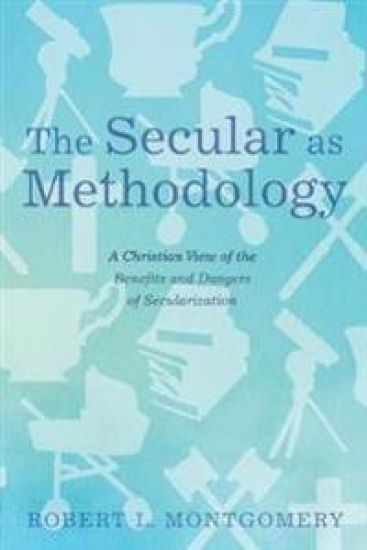
The Secular as Methodology

The Secular as Methodology

Robert L Montgomery

Wipf Stock Publishers
2018
pokkari
Secularization is a process that has been taking place throughout the world, but especially in the West. It refers to limitations of various types to religious thoughts, activities, ownership, and power, but does not necessarily mean limitation on religious freedom. Because of this contested double effect, secularization is perceived both negatively and positively. I propose that the secular be viewed primarily as a methodology in various areas of life, beginning most clearly with science, but extending to many other areas of thought and activity. When this is done I believe people then have the clear option to apply their faith to all of their thought and action and at the same time to allow for correction and improvement to their thought and action. These corrections and improvements will be debated, but in the end, for Christians, they are dependent on interpretations of the Bible. Furthermore, I believe the broad result for all people is to clarify the choice to believe in God or rather that we are chosen by God revealed in the Bible who is seeking to have fellowship with us. ""I have long valued Robert Montgomery as a scholar who refuses to be confined by conventional boundaries--be they academic, intellectual, or religious. Drawing on his rich heritage as a child of missionaries, his years of cross-cultural ministry, and academic study, Montgomery has been especially sensitive to the way cultural, linguistic, religious, and academic 'boxes' can distort and hinder our understanding of the Other. Montgomery has courageously stayed focused on the ways our knowledge and understanding can be enlarged and enriched by being open and paying respectful attention."" --Wilbert Shenk, senior professor of mission history and contemporary culture, Fuller Graduate School of Intercultural Studies Robert L. Montgomery comes from missionary heritage and also served as a missionary in Taiwan for sixteen years. The aboriginal Christian movement there sent him back to study sociology of religion in order to understand their enthusiastic response to Jesus Christ compared to other populations. He has written articles and books on why religions spread using a social scientific perspective, but adding a section on implications for missions. Encountering the secular late in life produced the struggle represented in the book
Following the Human One

Following the Human One

Robert L Montgomery

Wipf Stock Publishers
2017
pokkari
Jesus Christ is the most famous person in human history. His favorite name for himself was ""the Son of Man"" or the ""the Human One."" Rarely did his followers call him that, but it must have had great significance for him. This book describes why this name was so important and what it means for us now. Along with this favorite name, this book shows how Jesus Christ fulfills human longing, but at the same time is resisted by his own followers to this day. Nevertheless, his call to follow him has sounded down the centuries and been heeded by millions. The book leads to an exploration of the Way that is found in Jesus Christ, who called himself ""the Human One."" ""Montgomery asks a vital question: 'What is it about the person of Christ which attracts people to know Christ, to follow Christ, and to experience the fullness of life which Christ offers' This book is an important and clear description of both the longing for God and the ways people are able to respond to that longing as they receive the abundant life which God offers in Jesus Christ."" --John S. McCall, Missionary in Taiwan ""Combining the heart of a missionary with the training of a sociologist, Robert Montgomery's fresh take on the 'drawing power of Jesus' is an inspiration Montgomery, who writes with characteristic humility and faith, gives careful attention to the history of Christian mission and the complexities of the modern world while telling the story of The Human One, whose compassion speaks to our deepest human longings. If you wonder how Jesus fits in a global society with many religious options, then you need to read Following the Human One. This is a unique vision of how the way of Jesus leads into the 'Great Circle of Love' that is the life of the triune God."" --Patrick W. T. Johnson, Pastor, First Presbyterian Church, Asheville, North Carolina Robert L. Montgomery comes from missionary heritage and also served as a missionary to Taiwan for sixteen years. The aboriginal Christian movement there sent him back to study sociology of religion in order to understand their enthusiastic response to Jesus Christ. He has written articles and books on why religions spread, but here his focus is on the person exerting the greatest universal drawing power of any person in history.
Following the Human One

Following the Human One

Robert L Montgomery

Wipf Stock Publishers
2017
sidottu
Jesus Christ is the most famous person in human history. His favorite name for himself was ""the Son of Man"" or the ""the Human One."" Rarely did his followers call him that, but it must have had great significance for him. This book describes why this name was so important and what it means for us now. Along with this favorite name, this book shows how Jesus Christ fulfills human longing, but at the same time is resisted by his own followers to this day. Nevertheless, his call to follow him has sounded down the centuries and been heeded by millions. The book leads to an exploration of the Way that is found in Jesus Christ, who called himself ""the Human One."" ""Montgomery asks a vital question: 'What is it about the person of Christ which attracts people to know Christ, to follow Christ, and to experience the fullness of life which Christ offers' This book is an important and clear description of both the longing for God and the ways people are able to respond to that longing as they receive the abundant life which God offers in Jesus Christ."" --John S. McCall, Missionary in Taiwan ""Combining the heart of a missionary with the training of a sociologist, Robert Montgomery's fresh take on the 'drawing power of Jesus' is an inspiration Montgomery, who writes with characteristic humility and faith, gives careful attention to the history of Christian mission and the complexities of the modern world while telling the story of The Human One, whose compassion speaks to our deepest human longings. If you wonder how Jesus fits in a global society with many religious options, then you need to read Following the Human One. This is a unique vision of how the way of Jesus leads into the 'Great Circle of Love' that is the life of the triune God."" --Patrick W. T. Johnson, Pastor, First Presbyterian Church, Asheville, North Carolina Robert L. Montgomery comes from missionary heritage and also served as a missionary to Taiwan for sixteen years. The aboriginal Christian movement there sent him back to study sociology of religion in order to understand their enthusiastic response to Jesus Christ. He has written articles and books on why religions spread, but here his focus is on the person exerting the greatest universal drawing power of any person in history.
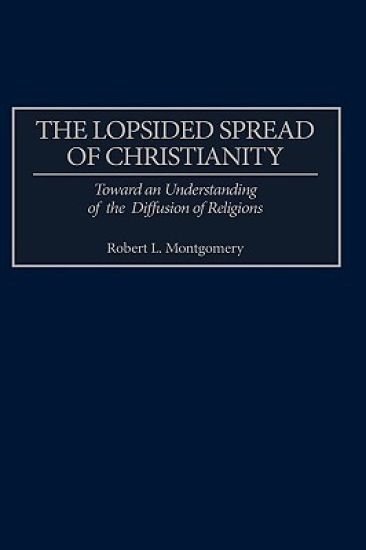
The Lopsided Spread of Christianity

The Lopsided Spread of Christianity

Robert L. Montgomery

Praeger Publishers Inc
2001
sidottu
Comparing the spread of Christianity to the East to its more successful spread to the West, Montgomery illustrates the uneven diffusion of one of the world's most influential and successful religions. Through his sociological analysis, the author examines the causes for Christianity's success to the West and its relative failings in major societies to the east of Jerusalem, including India, Persia, and China. Applying five variables, including Christianity's missionary orientation, geography, intersocietal relations, sociocultural structures, and individual perceptions, Montgomery provides a theory of the diffusion of religion in general, and of Christianity in particular.Beginning by laying out the variables he will apply to the study, Montgomery carefully explains his approach, introducing the reader to this unique field of study. He then moves on to examine Christianity's earliest spread to areas east of Jerusalem. An examination of the rise of Islam in the East precedes a comparative analysis of the success of Christianity in its spread to the West to its relative failure to spread to the East. He concludes with a discussion of religious pluralism. Groundbreaking in its attempt to establish a better understanding of religious diffusion, this work will be indispensable to those interested in the study of sociology of religions, religious studies, missionary studies, and Christianity.
Introduction to the Sociology of Missions

Introduction to the Sociology of Missions

Robert L. Montgomery

Praeger Publishers Inc
1999
sidottu
While much work has been done to apply anthropological insights to the study of missions, the sociological perspective has been generally neglected by missiologists. This volume defines the sociology of missions as a discrete subdiscipline within the sociology of religion and provides a working set of conceptual resources for those involved in mission work to use in furthering their understanding of their task. The author reviews the major areas of sociology that are most relevant to missions and presents his findings as a basis for discussion and a stimulus to further exploration of relevant sociological concepts and theories. One of his main goals is to increase dialogue between missiologists and sociologists of religion, by providing the former with a sociological perspective and the latter with a deeper understanding of the missionary enterprise.
The Diffusion of Religions

The Diffusion of Religions

Robert L. Montgomery

University Press of America
1996
nidottu
Of the major world religions, only three, Buddhism, Christianity, and Islam have diffused widely. They were introduced across numerous socio-cultural boundaries and were received as new religions to their converts. However, these diffusing religions have had varying degrees of success from wholesale reception to wholesale rejection. This book presents the perspective that a major factor in the variations in the diffusions of these religions, and in the religions themselves, is found in the nature of the inter-group relationships between receiving groups and both sending groups and surrounding groups. A crucial perception of the receivers is the perceived contribution the new religion will make to the enhancement of important aspects of group identities and of the strength of the group. This book takes into account diffusion, an old and persistent concept in the social sciences which has been rarely applied in sociology to religions or even ideologies.
Symmetry and Sense

Symmetry and Sense

Robert L. Montgomery

University of Texas Press
1961
nidottu
Few Elizabethans left the image of their personalities cut so deeply into the Renaissance imagination as did Sir Philip Sidney. Widely admired in his own time, Sidney must seem to the modern reader almost universally accomplished. His talents as courtier, diplomat, soldier, scholar, novelist, and poet are history. Almost immediately after Sidney's death in battle against the Spaniards in the Low Countries, the process of legend began, and the legend has survived, sometimes obscuring the facts. The versatile "Renaissance man" has become, in the eyes of some critics, the romantic lover whose frustrations and despair found release in the "confessional" form of the sonnet sequence, Astrophel and Stella, and in other poems. To show these poems to be consciously constructed works of art, not simply passionate outbursts of romantic emotion, is one aim of this study. The author examines Sidney as poet and critic, concentrating his study on rhetorical technique and poetic rhythm and form. He shows Sidney experimenting with the symmetrical possibilities of rhythm and phrase; practicing the ornateness current and acceptable in his day. He examines Sidney's comment on such a style in The Defense of Poesy and the ways in which the poet's own work agreed with or departed from his expressed opinions. He also balances Sidney's poetry against the powerful tradition of Petrarchan love literature and the equally powerful Renaissance impulse to subject passion to the rule of reason. Finally, in an extended analysis of Astrophel and Stella, he shows Sidney as the master of a plainer, wittier, more subtly fashioned style and a complex, more dramatically immediate form. What emerges from the study is not the personality of the poet, but the principles of his art and the value of his achievement in the mainstream of English Renaissance verse.