Kirjailija
Robert Leeson
Kirjat ja teokset yhdessä paikassa: 20 kirjaa, julkaisuja vuosilta 2003-2019, suosituimpien joukossa Hayek: A Collaborative Biography. Vertaile teosten hintoja ja tarkista saatavuus suomalaisista kirjakaupoista.
20 kirjaa
Kirjojen julkaisuhaarukka 2003-2019.
This book is the eighth volume in this Collaborative Biography, which explores the life and works of Nobel Prize-winning economist F.A. Hayek (1899-1992). Making extensive use of archival material and Hayek’s own published writings, it presents a strong challenge to perceptions of the economist’s life and thought. In this volume, chapters canvas subjects such as the relationship between the Austrian School of Economics and the Cold War, the Hapsburg Empire, and the overthrow (or planned overthrow) of democracy in a variety of countries, with a view to examining the process by which economics is constructed and disseminated.
F.A. von Hayek (1899-1992) was a Nobel Prize winning economist, famous for promoting an Austrian version of classical liberalism. The multi-volume Hayek: A Collaborative Biography examines the evolution of his life and influence.Two concepts of civilization revolve around power – should it be separated or concentrated? Liberalism in the non-Austrian classical tradition remains fearful of power concentrated in the hands of government, labour unions or corporations; Red Terrorists sought to monopolize power to liquidate enemies and competitors as a prelude to utopia (the ‘withering away of the State’); and behind the ‘slogan of liberty,’ White Terror promoters (Mises and Hayek) sought to concentrate power in the hands of a ‘dictatorial democracy’ where henchmen would liquidate enemies, and – ‘guided’ by ‘utopia’ (the ‘spontaneous’ order) – follow orders from their social superiors. This volume, Part XII, examines the ‘free’ market Use of Knowledge in Society; examines the foundations of ‘free’ market educational credentials; and asks whether those funded by the tobacco industry and the carbon lobby should be accorded ‘independent policy expert’ status.
Funded by the tobacco and fossil fuel industries, the Mises- and Hayek-inspired ‘free’ market has adopted ‘The Slogan of Liberty’ - but should their faith-based assertions be accorded the same epistemological status as a science? If Austrian economics is a branch of divinely revealed ‘knowledge’ - as the epigone Godfather, Hans Sennholz, insists - what validity do its policy recommendations have? Should those who falsely claim to have PhDs be tax-funded as ‘Post-Doctoral Fellows’ and ‘Professors’? This volume examines the consequences of the ‘free’ market colonisation of economics – climate change, financial crises and the corruption of academic discourse
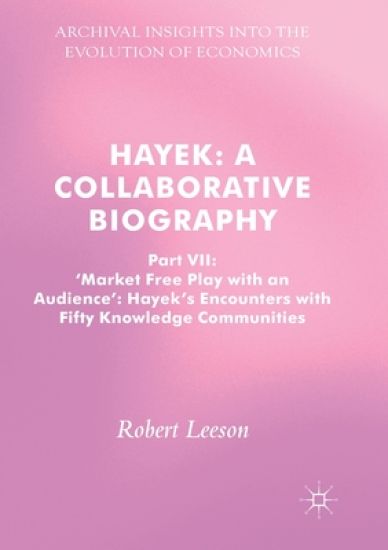
This book is the seventh volume in this series which explores the life of Nobel Price-winning economist F.A. Hayek (1899-1992). The volume uses archival material, juxtaposed with Hayek’s published work to challenge the existing perceptions of his life and thought. It examines the methods by which Hayek interacted with – and schemed against – the knowledge communities that he encountered during his very long life. Chapters explore the ‘rules of engagement’ that Hayek employed when interacting with fifth leading knowledge communities, including the Nobel Prize selection committee who were led to believe his claim about having predicted the Great Depression. It also explores his interactions with William Beveridge, the founder of the modern British Welfare State, A. C. Pigou, the founder of the market school, J. M. Keynes, Sir Arthur Lewis, and Abba Lerner.
Funded by the tobacco and fossil fuel industries, the Mises- and Hayek-inspired ‘free’ market has adopted ‘The Slogan of Liberty’ - but should their faith-based assertions be accorded the same epistemological status as a science? If Austrian economics is a branch of divinely revealed ‘knowledge’ - as the epigone Godfather, Hans Sennholz, insists - what validity do its policy recommendations have? Should those who falsely claim to have PhDs be tax-funded as ‘Post-Doctoral Fellows’ and ‘Professors’? This volume examines the consequences of the ‘free’ market colonisation of economics – climate change, financial crises and the corruption of academic discourse
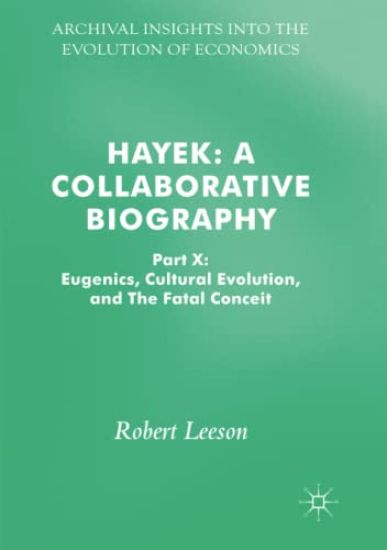
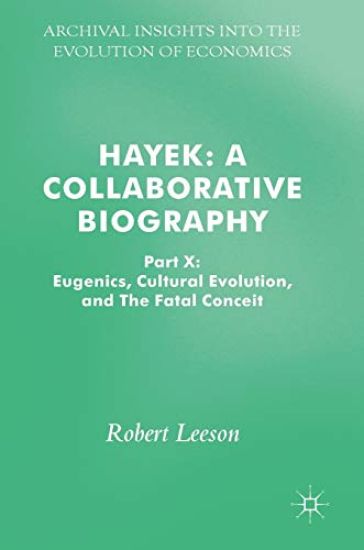
This tenth part of Robert Leeson's collaborative biography of Friedrich August von Hayek explores Hayek’s thought on the free market and democracy. Using an unparalleled array of archival materials, Leeson reconstructs Hayek’s thinking as the notorious economist and his acolytes set about reshaping the post-war economic order. Darker areas of Hayek’s thought are also explored, including the influence of eugenics on his thought and his support for radical right-wing dictatorships in South America. Leeson concludes this volume with a collection of chapters written by eminent scholars of Hayek. These chapters cover subjects as diverse as Hayek’s influence on scholars of Darwinian evolution, his views on psychology, and cultural evolution.
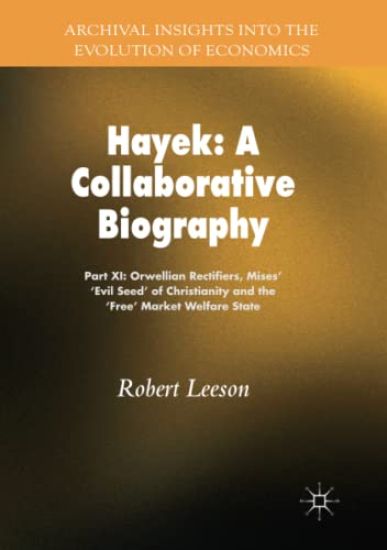
F.A. von Hayek (1899-1992) was a Nobel Prize winning economist, famous for promoting an Austrian version of classical liberalism. The multi-volume Hayek: A Collaborative Biography examines the evolution of his life and influence.Two concepts of civilization revolve around power – should it be separated or concentrated? Liberalism in the non-Austrian classical tradition remains fearful of power concentrated in the hands of government, labour unions or corporations; Red Terrorists sought to monopolize power to liquidate enemies and competitors as a prelude to utopia (the ‘withering away of the State’); and behind the ‘slogan of liberty,’ White Terror promoters (Mises and Hayek) sought to concentrate power in the hands of a ‘dictatorial democracy’ where henchmen would liquidate enemies, and – ‘guided’ by ‘utopia’ (the ‘spontaneous’ order) – follow orders from their social superiors. This volume, Part XII, examines the ‘free’ market Use of Knowledge in Society; examines the foundations of ‘free’ market educational credentials; and asks whether those funded by the tobacco industry and the carbon lobby should be accorded ‘independent policy expert’ status.
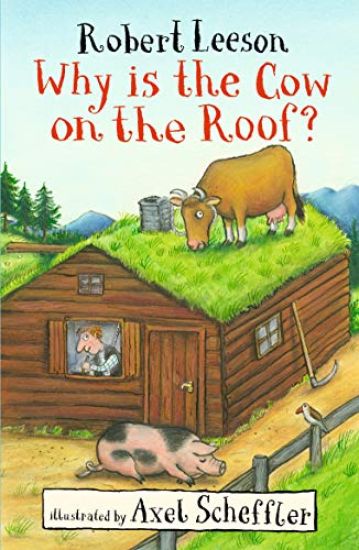
There are lots of questions to be answered in these five funny tales, perfect for fans of Julia Donaldson, Axel Scheffler and Michael Rosen. Who's next for the chop? Why are you such a noddy Big Ears? And of course, Why is the cow on the roof? You'll find the answers to these all-important questions in these five hilarious stories, based on lots of different tales from around the world.
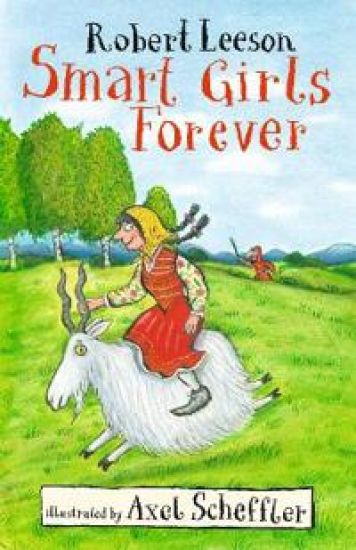
The feisty heroines of these six folk tales all share one important quality: they are extremely SMART!The smart heroines of these folk tales come from different countries around the world. Natasha from Russia is full of comical fantasies but can still outwit the devil; Yamuna from India has eyes like the sun a mind to match; English Marian ... well, she wants to be an outlaw like Robin Hood!
A delightfully funny story with a folk-tale flavour, with illustrations by internationally acclaimed illustrator Axel Scheffler.Idle he may be, but Jack's no fool! Somehow he always manages to come out on top, whether its becoming star pupil, going out to work, attending his own funeral or finding himself suitor to a princess! With elements from many classic popular stories, Idle Jack's tale is perfect for fans of Julia Donaldson, Michael Rosen and Dick King-Smith. Jack may be the sleepiest boy in the world, but his adventures will keep you wide awake with laughter!
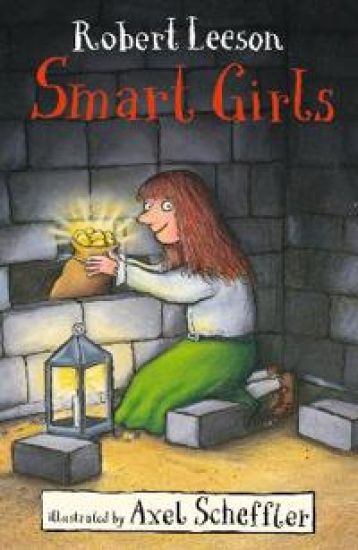
The feisty heroines of these five folk tales all share one important quality: they are extremely SMART!The smart heroines of these folk tales come from different countries around the world and can outwit anyone – a crafty king, a mean old farmer, an angry squire and even a ghost!
This tenth part of Robert Leeson's collaborative biography of Friedrich August von Hayek explores Hayek’s thought on the free market and democracy. Using an unparalleled array of archival materials, Leeson reconstructs Hayek’s thinking as the notorious economist and his acolytes set about reshaping the post-war economic order. Darker areas of Hayek’s thought are also explored, including the influence of eugenics on his thought and his support for radical right-wing dictatorships in South America. Leeson concludes this volume with a collection of chapters written by eminent scholars of Hayek. These chapters cover subjects as diverse as Hayek’s influence on scholars of Darwinian evolution, his views on psychology, and cultural evolution.
This book is the seventh volume in this series which explores the life of Nobel Price-winning economist F.A. Hayek (1899-1992). The volume uses archival material, juxtaposed with Hayek’s published work to challenge the existing perceptions of his life and thought. It examines the methods by which Hayek interacted with – and schemed against – the knowledge communities that he encountered during his very long life. Chapters explore the ‘rules of engagement’ that Hayek employed when interacting with fifth leading knowledge communities, including the Nobel Prize selection committee who were led to believe his claim about having predicted the Great Depression. It also explores his interactions with William Beveridge, the founder of the modern British Welfare State, A. C. Pigou, the founder of the market school, J. M. Keynes, Sir Arthur Lewis, and Abba Lerner.
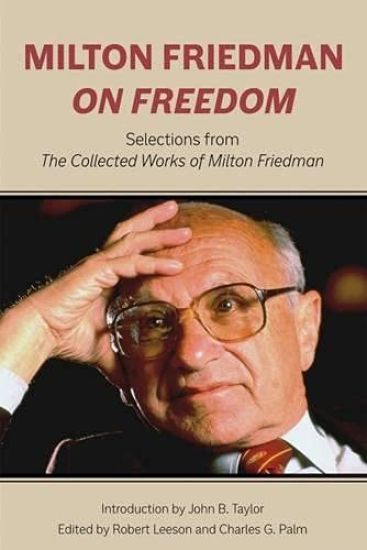
Milton Friedman on Freedom
Milton Friedman; Robert Leeson; Charles G. Palm
Hoover Institution Press,U.S.
2017
sidottu
In this book, Robert Leeson and Charles Palm have assembled an amazing collection of Milton Friedman's best works on freedom. Even more amazing is that the selection represents only 1 percent of the 1,500 works by Friedman that Leeson and Palm have put online in a user-friendly format—and an even smaller percentage if you include their archive of Friedman's audio and television recordings, correspondence, and other writings. This book and the larger online collection are sorely needed and very welcome. Milton Friedman deserves to be read in the original by generation after generation. These days, many people channel Friedman to support their own views, which sometimes are quite contrary to his actual views. With so much of it now readily available, everyone will find it easier to remember and learn from what he actually wrote and said. Readers will find the book refreshing whether or not they are already familiar with Friedman's work.
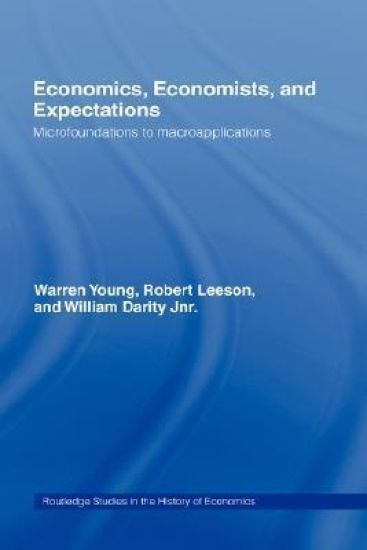
Economics, Economists and Expectations
William Darity; Robert Leeson; Warren Young
Routledge
2012
nidottu
The concept of rational expectations has played a hugely important role in economics over the years. Dealing with the origins and development of modern approaches to expectations in micro and macroeconomics, this book makes use of primary sources and previously unpublished material from such figures as Hicks, Hawtrey and Hart. The accounts of the 'founding fathers' of the models themselves are also presented here for the first time. The authors trace the development of different approaches to expectations from the likes of Hayek, Morgenstern, and Coase right up to more modern theorists such as Friedman, Patinkin, Phelps and Lucas.The startling conclusion that there was no 'Rational Expectations Revolution' is articulated, supported and defended with impressive clarity and authority. A necessity for economists across the world, this book will deserve its place upon many an academic bookshelf.
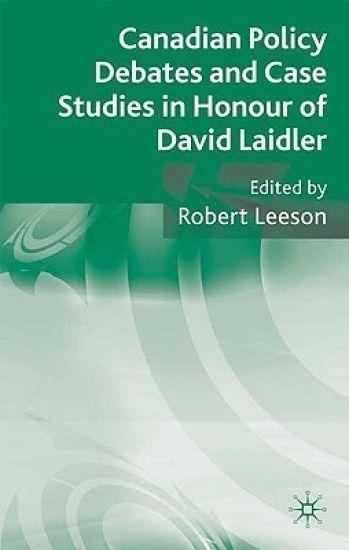
Canadian Policy Debates and Case Studies in Honour of David Laidler
Robert Leeson
Palgrave Macmillan
2009
nidottu
This volume brings together some of the world's leading economists, to focus primarily on Canadian policy issues and case study debates in honour of David Laidler. Commemorating his success and active participation in the research and analysis of monetary policy.
Canadian Policy Debates and Case Studies in Honour of David Laidler
Robert Leeson
Palgrave Macmillan
2009
sidottu
This volume brings together some of the world's leading economists, to focus primarily on Canadian policy issues and case study debates in honour of David Laidler. Commemorating his success and active participation in the research and analysis of monetary policy.
Economics, Economists and Expectations
William Darity; Robert Leeson; Warren Young
Routledge
2004
sidottu
The concept of rational expectations has played a hugely important role in economics over the years. Dealing with the origins and development of modern approaches to expectations in micro and macroeconomics, this book makes use of primary sources and previously unpublished material from such figures as Hicks, Hawtrey and Hart. The accounts of the 'founding fathers' of the models themselves are also presented here for the first time. The authors trace the development of different approaches to expectations from the likes of Hayek, Morgenstern, and Coase right up to more modern theorists such as Friedman, Patinkin, Phelps and Lucas.The startling conclusion that there was no 'Rational Expectations Revolution' is articulated, supported and defended with impressive clarity and authority. A necessity for economists across the world, this book will deserve its place upon many an academic bookshelf.
These two volumes present essays on the subdiscipline of Chicago Monetarism in economics. Some of the issues under dispute can be regarded as resolved, while others are still being debated. The contibutors include Friedman, Patinkin, Harry Johnson and James Tobin.