Kirjailija
Robert Livingston
Kirjat ja teokset yhdessä paikassa: 18 kirjaa, julkaisuja vuosilta 2017-2025, suosituimpien joukossa Fritz. Vertaile teosten hintoja ja tarkista saatavuus suomalaisista kirjakaupoista.
18 kirjaa
Kirjojen julkaisuhaarukka 2017-2025.
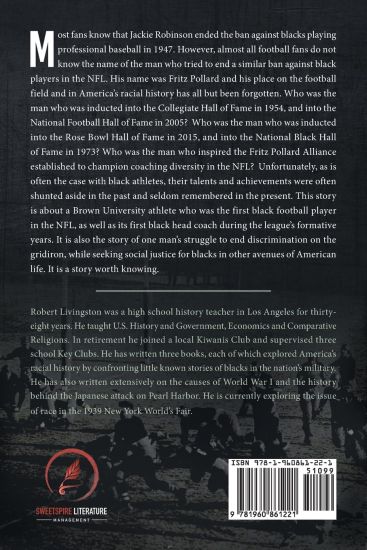
Most fans know that Jackie Robinson ended the ban against blacks playing professional baseball in 1947. However, almost all football fans do not know the name of the man who tried to end a similar ban against black players in the NFL. His name was Fritz Pollard and his place on the football field and in America's racial history has all but been forgotten. Who was the man who was inducted into the Collegiate Hall of Fame in 1954, and into the National Football Hall of Fame in 2005? Who was the man who was inducted into the Rose Bowl Hall of Fame in 2015, and into the National Black Hall of Fame in 1973? Who was the man who inspired the Fritz Pollard Alliance established to champion coaching diversity in the NFL? Unfortunately, as is often the case with black athletes, their talents and achievements were often shunted aside in the past and seldom remembered in the present. This story is about a Brown University athlete who was the first black football player in the NFL, as well as its first black head coach during the league's formative years. It is also the story of one man's struggle to end discrimination on the gridiron, while seeking social justice for blacks in other avenues of American life. It is a story worth knowing.
The decision to impeach the President of the United States is the most momentous action that the Congress can take. An indictment by the House of Representatives strikes at the heart of the executive branch. A trial by the Senate is a political spectacle that rivets the nation's attention. It is crucial that the public's perception is that a "fair and impartial trial" was held. This is the story of an older high school history teacher, very close to retirement, who dealt with the impeachment of Andrew Johnson in the aftermath of the Civil War, and in more recent times the trial of Donald Trump. He did so in face of withering partisan criticism from those who would censor and dictate what is taught in the classroom. He did so to honor those few courageous members of the Senate who rejected conventional wisdom and voted on the basis of personal conviction heedless of the political costs. In doing so he did not shay away from challenging racial issues that were the backdrop to the impeachment trials.
The decision to go to war is the most momentous action an American president can take. Sending young men and women into combat weighs heavily on the Commander in Chief, as it does on the Congress, which must authorize war. This book is about seven courageous public figures. Each voted against going to war. One was a Secretary of state. Two were members of the House of Representatives, Three were in the United States Senate. All faced severe criticism from their colleagues and the public for voting their conscience. All were called traitors. Attempts were made to oust them from their elected positions. All stood firm in their dissent. Their stories are worth knowing.
HBR's 10 Must Reads 2022: The Definitive Management Ideas of the Year from Harvard Business Review (with bonus article "Begin with Trust" by Frances X. Frei and Anne Morriss)
Harvard Business Review; Frances X. Frei; Anne Morriss; Morten T. Hansen; Robert Livingston
Harvard Business Review Press
2022
sidottu
A year's worth of management wisdom, all in one place.We've reviewed the ideas, insights, and best practices from the past year of Harvard Business Review to keep you up-to-date on the most cutting-edge, influential thinking driving business today. With authors from Frances Frei to Morton T. Hansen and company examples from UPS to Apple, this volume brings the most current and important management conversations right to your fingertips.This book will inspire you to:Build trust—the most essential form of capital a leader hasAdopt the best practices for hybrid workNavigate the challenges of workplace anxietyReconsider your approach to innovation by challenging everyday notions of valueAssess whether to team up with a rival and how to manage the relationshipBreak through the organizational barriers that impede gender and racial equityLead with a commitment to sustainabilityThis collection of articles includes "Begin with Trust," by Frances Frei and Anne Morriss; "Cultural Innovation," by Douglas Holt; "The Rules of Co-opetition," by Adam Brandenburger and Barry Nalebu?; "Negotiating Your Next Job," by Hannah Riley Bowles and Bobbi Thomason; "Leading Through Anxiety," by Morra Aarons-Mele; "When Machine Learning Goes Off the Rails," by Boris Babic, I. Glenn Cohen, Theodoros Evgeniou, and Sara Gerke; "Getting Serious About Diversity," by Robin J. Ely and David A. Thomas; "How to Promote Racial Equity in the Workplace," by Robert Livingston; "Our Work-from-Anywhere Future," by Prithwiraj Raj) Choudhury; "A More Sustainable Supply Chain," by Veronica H. Villena and Dennis A. Gioia; and "How Apple Is Organized for Innovation," by Joel M. Podolny and Morten T. Hansen.HBR's 10 Must Reads paperback series is the definitive collection of books for new and experienced leaders alike. Leaders looking for the inspiration that big ideas provide, both to accelerate their own growth and that of their companies, should look no further. HBR's 10 Must Reads series focuses on the core topics that every ambitious manager needs to know: leadership, strategy, change, managing people, and managing yourself. Harvard Business Review has sorted through hundreds of articles and selected only the most essential reading on each topic. Each title includes timeless advice that will be relevant regardless of an ever-changing business environment.
HBR's 10 Must Reads 2022: The Definitive Management Ideas of the Year from Harvard Business Review (with bonus article "Begin with Trust" by Frances X. Frei and Anne Morriss)
Harvard Business Review; Frances X. Frei; Anne Morriss; Morten T. Hansen; Robert Livingston
Harvard Business Review Press
2021
pokkari
A year's worth of management wisdom, all in one place.We've reviewed the ideas, insights, and best practices from the past year of Harvard Business Review to keep you up-to-date on the most cutting-edge, influential thinking driving business today. With authors from Frances Frei to Morton T. Hansen and company examples from UPS to Apple, this volume brings the most current and important management conversations right to your fingertips.This book will inspire you to:Build trust—the most essential form of capital a leader hasAdopt the best practices for hybrid workNavigate the challenges of workplace anxietyReconsider your approach to innovation by challenging everyday notions of valueAssess whether to team up with a rival and how to manage the relationshipBreak through the organizational barriers that impede gender and racial equityLead with a commitment to sustainabilityThis collection of articles includes "Begin with Trust," by Frances Frei and Anne Morriss; "Cultural Innovation," by Douglas Holt; "The Rules of Co-opetition," by Adam Brandenburger and Barry Nalebu?; "Negotiating Your Next Job," by Hannah Riley Bowles and Bobbi Thomason; "Leading Through Anxiety," by Morra Aarons-Mele; "When Machine Learning Goes Off the Rails," by Boris Babic, I. Glenn Cohen, Theodoros Evgeniou, and Sara Gerke; "Getting Serious About Diversity," by Robin J. Ely and David A. Thomas; "How to Promote Racial Equity in the Workplace," by Robert Livingston; "Our Work-from-Anywhere Future," by Prithwiraj Raj) Choudhury; "A More Sustainable Supply Chain," by Veronica H. Villena and Dennis A. Gioia; and "How Apple Is Organized for Innovation," by Joel M. Podolny and Morten T. Hansen.HBR's 10 Must Reads paperback series is the definitive collection of books for new and experienced leaders alike. Leaders looking for the inspiration that big ideas provide, both to accelerate their own growth and that of their companies, should look no further. HBR's 10 Must Reads series focuses on the core topics that every ambitious manager needs to know: leadership, strategy, change, managing people, and managing yourself. Harvard Business Review has sorted through hundreds of articles and selected only the most essential reading on each topic. Each title includes timeless advice that will be relevant regardless of an ever-changing business environment.
In the last years of World War II, the Japanese Imperial Army launched 9,000 balloons bombs in a last ditch effort to attack the American mainland. Each balloon carried one high explosive bomb and a number of incendiaries. In theory, these weapons would cause forest fires on the West Coast, and, if used to carry biological agents, create panic. Traveling in the easterly jet stream many of the balloons did reach the United States and detonate as planned. Many, however, simply disappeared into the forests of the northwest, armed and dangerous. This is the story of one missing balloon bomb that set off a terrifying forest fire near the California-Oregon border, and of three men who were inexplicably linked by time and history to the to the resulting inferno. In a moment of truth, when the fire crowned and torched the land, and survival depended on "tasting the wind," these men did.
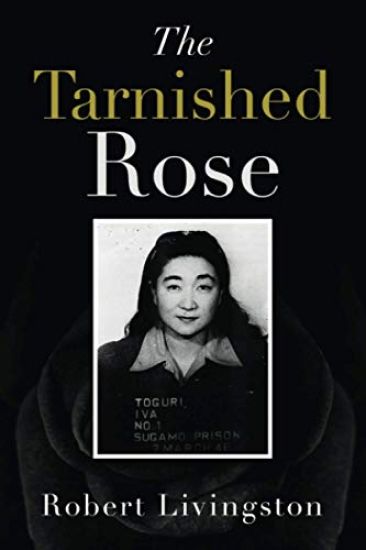
This is the story of a young Japanese-American, Iva Toguri, who found herself stranded in Japan following the attack on Pearl Harbor. Seeking employment in a belligerent country, she worked for Radio Tokyo. There she joined a conspiracy led by an Australian to obstruct and reduce the effectiveness of Japanese propaganda aimed at Allied soldiers in the Pacific. Following the war and against a backdrop of national revenge, she was convicted of treason and sent to prison for her role as the infamous Tokyo Rose, a person who never really existed. Many years later new information led to a presidential pardon for a miscarriage of justice brought about by wartime hysteria and racial animosity. Replete with lessons, it is a story worth knowing in our own age beset by America's "war on terrorism."
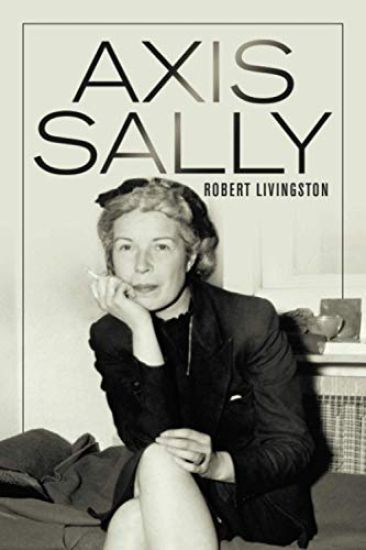
This is the story of an aspiring actress. Mildred Elizabeth Gillars, who found herself in wartime Germany, where she worked for Radio Berlin, the propagandizing arm of the Nazi Regime. Known as Axis Sally, her radio show attempted to lower both civilian and military morale through the dissemination of propaganda. After the war, she was arrested in Berlin by American authorities and later tried for treason in the United States. Though she was convicted of treason and sentenced to prison against a backdrop of national anger and derision, many questions lingered as to the fairness of her trial, including the role of the press, the federal government, and the witnesses who testified against her. This is the story behind the story.
This is an irreverent survival guide for new teachers. The focus is on retelling mythic stories that display our humanity and enhance our empathic nature by giving free reign to the comedic side of our personality. In other words humor has a place in our lives and can be harnessed to help us survive the challenges of the secondary classroom. Humor can be the lever by which we find not only introspection, but also a philosophical approach to life as a teacher. This is not a "here's what to do" manual. Rather, it is more like a compass helping us to navigate our way through the school day. It is not a "Pollyanna" approach to education. It is an immensely serious effort to assist teachers in winning the "hearts and minds" of their students.
The Conversation: How Seeking and Speaking the Truth about Racism Can Radically Transform Individuals and Organizations
Robert Livingston
Crown Currency
2021
sidottu
A FINANCIAL TIMES BEST BOOK OF THE YEAR - An essential tool for individuals, organizations, and communities of all sizes to jump-start dialogue on racism and bias and to transform well-intentioned statements on diversity into concrete actions--from a leading Harvard social psychologist.NAACP IMAGE AWARD NOMINEE FOR OUTSTANDING LITERARY ACHIEVEMENT - LONGLISTED FOR THE PORCHLIGHT BUSINESS BOOK AWARD - FINALIST FOR THE FT/MCKINSEY BUSINESS BOOK OF THE YEAR AWARD "Robert Livingston is one of America's most respected social psychologists studying diversity. He has a unique ability to strip out the judgmentalism that can warp people's thinking about race and racism . . . and therefore he can reach a broad audience, educate them about the research, and bring them along when he talks about solutions."--Jonathan Haidt, #1 New York Times bestselling author of The Anxious GenerationHow can I become part of the solution? In the wake of the social unrest of 2020 and growing calls for racial justice, many business leaders and ordinary citizens are asking that very question. This book provides a compass for all those seeking to begin the work of anti-racism. In The Conversation, Robert Livingston addresses three simple but profound questions: What is racism? Why should everyone be more concerned about it? What can we do to eradicate it? For some, the existence of systemic racism against Black people is hard to accept because it violates the notion that the world is fair and just. But the rigid racial hierarchy created by slavery did not collapse after it was abolished, nor did it end with the civil rights era. Whether it's the composition of a company's leadership team or the composition of one's neighborhood, these racial divides and disparities continue to show up in every facet of society. For Livingston, the difference between a solvable problem and a solved problem is knowledge, investment, and determination. And the goal of making organizations more diverse, equitable, and inclusive is within our capability. Livingston's lifework is showing people how to turn difficult conversations about race into productive instances of real change. For decades he has translated science into practice for numerous organizations, including Airbnb, Deloitte, Microsoft, Under Armour, L'Oreal, and JPMorgan Chase. In The Conversation, Livingston distills this knowledge and experience into an eye-opening immersion in the science of racism and bias. Drawing on examples from pop culture and his own life experience, Livingston, with clarity and wit, explores the root causes of racism, the factors that explain why some people care about it and others do not, and the most promising paths toward profound and sustainable progress, all while inviting readers to challenge their assumptions.
The North Atlantic, February 3, 1943. A German submarine, the U-223 torpedoes the USAT Dorchester. The ship sinks within a few minutes with the loss of over 700 lives. The official Naval Records indicate that four Army chaplains aboard the ship gave their lifejackets to frightened soldiers. Praying together the chaplains stayed on the sinking ship. They are known today as the Four Immortal Chaplains, a Catholic priest, a Jewish rabbi, and two Protestant ministers. There is evidence that a Fifth Chaplain, a Black sailor in the Coast Guard, also saved many lives that terrible night. His story, lost in history, should also be honored for his courage and sacrifice at a time when racism was endemic in the Navy.
Three people are quietly involved in a conspiracy in 1941 to keep America out of a war in the Pacific with Japan. They refer to themselves as "pirates." They are plagued by one intractable question: is war inevitable in the Far East? If unable to forestall a conflict, they are determined to create and intellectual life raft for the post-war survivors to avoid a final disaster in the looming nuclear age. Though they cannot undo past events, they are determined to reset the human compass with sharp-edged idealism to save humanity from its inclination to engage in war.
Wars are a tragedy. Death and destruction define them. War also provides opportunities in a time of change. This was true for America's black soldiers in World War II, who were relegated to menial tasks and denied combat roles. That is, until the U.S. Army conducted a highly secret experiment in 1944-1945 by creating the all-black 555th Airborne. Unknown by the general public, "men of color," participated in this classified effort, sacrificing everything to prove their competency and patriotism in their struggle for racial tolerance. They did so by leaping out of airplanes, not over wartime Japan or Nazi Germany, but rather California and the Northwest. There they fought the world's first intercontinental weapon, Japan's "balloon bombs," carrying with them the threat of fire, blast, and biological warfare. In doing so, these young men became the Army's first fully certified "smokejumpers" and contributed to winning the war. This is their story, neglected in our history books, to gain racial acceptance at a time when prejudice was all too common in America.