Kirjailija
Robert Louis Stevenson
Kirjat ja teokset yhdessä paikassa: 3 103 kirjaa, julkaisuja vuosilta 1878-2026, suosituimpien joukossa Tohtori Jekyll ja herra Hyde (selkokirja). Vertaile teosten hintoja ja tarkista saatavuus suomalaisista kirjakaupoista.
Mukana myös kirjoitusasut: Robert-Louis Stevenson, Robert Louis Stevenson
3 103 kirjaa
Kirjojen julkaisuhaarukka 1878-2026.
Masterfully crafted, Treasure Island is a stunning yarn of piracy on the fiery tropic seas -- an unforgettable tale of treachery that embroils a host of legendary swashbucklers, from honest young Jim Hawkins to sinister, two-timing Israel Hands, to evil incarnate, blind Pew. But above all, Treasure Island is a complex study of good and evil, as embodied by that hero-villain, Long John Silver: the merry unscrupulous buccaneer-rogue whose greedy quest for gold cannot help but win the heart of every soul who ever longed for romance, treasure, and adventure. Since its publication in 1883, Treasure Island has provided an enduring literary model for such eminent writers as Anthony Hope, Graham Greene, and Jorge Luis Borges. As David Daiches wrote: "Robert Louis Stevenson transformed the Victorian boys' adventure into a classic of its kind."
KIDNAPPED is a memoir of the activities of David Balfour in the year 1751. Young Balfour is cheated of his inheritance by his malicious Uncle Ebenezer who has him kidnapped and put on a ship bound for the Carolinas. Not many days underway, the ship runs into a small boat in the fog. Only one man is rescued from the smaller vessel. He is Alan Breck, a Scotsman returning from political exile in France. Balfour and Breck are thrown together on their voyage, and thus begins a tale of events which includes shipwreck, murder, flight and intrigue.
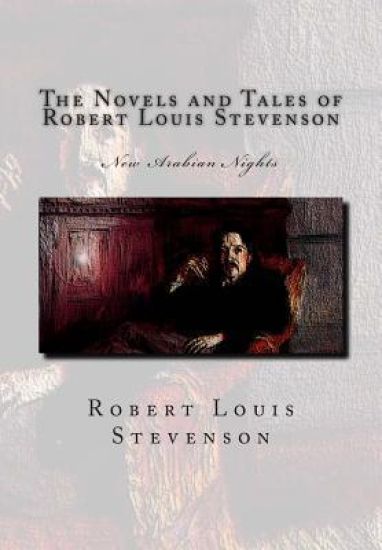
The Novels and Tales of Robert Louis Stevenson: New Arabian Nights
Robert Louis Stevenson
Createspace Independent Publishing Platform
1903
nidottu
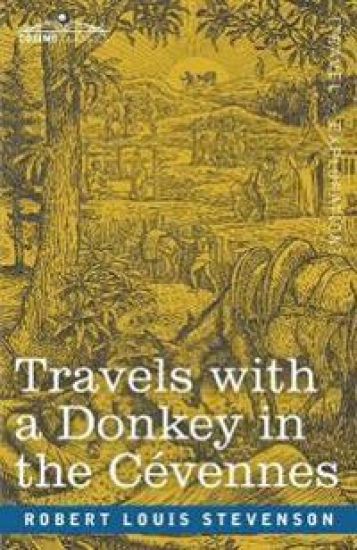
"We are all travellers in what John Bunyan calls the wilderness of this world-all, too, travellers with a donkey: and the best that we find in our travels is an honest friend. He is a fortunate voyager who finds many."-Robert Louis Stevenson, Travels with a Donkey in the C vennes (1879) Travels with a Donkey in the C vennes (1879) is a classic of travel literature by Robert Louis Stevenson about his 12-day, 120-mile walking tour in the French C vennes mountain range, accompanied by his donkey, Modestine. This book is one of the first to present hiking and camping as recreational activities, and is as influential as Stevenson's fiction.
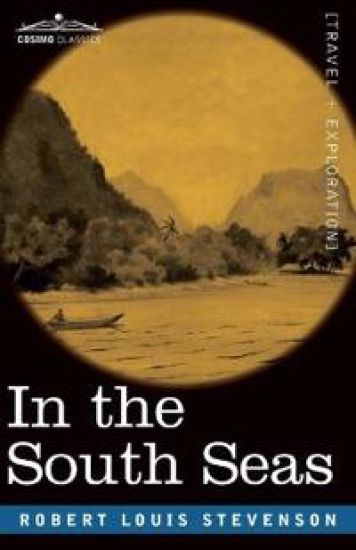
"The first experience can never be repeated. The first love, the first sunrise, the first South Seas island, are memories apart, and touched by a virginity of sense." -Robert Louis Stevenson, In the South SeasThis jacketed hardcover edition of In the South Seas (1896) by Robert Louis Stevenson offers observations the author made during a voyage to the Marquesas, the Paumotus, and the Gilbert Islands in 1888-89. Originally written as a journal, the book that evolved from these notes went beyond an amusing traveler-centered description of his experiences to provide a more theme-based narrative, adding discussions of the South Seas culture, language, traditions, and society: anthropology, history, and sociology, together with personal impressions and anecdotes.
"The first experience can never be repeated. The first love, the first sunrise, the first South Seas island, are memories apart, and touched by a virginity of sense." -Robert Louis Stevenson, In the South Seas.In the South Seas (1896) by Robert Louis Stevenson offers observations the author made during a voyage to the Marquesas, the Paumotus, and the Gilbert Islands in 1888-89. Originally written as a journal, the book that evolved from these notes went beyond an amusing traveler-centered description of his experiences to provide a more theme-based narrative, adding discussions of the South Seas culture, language, traditions, and society: anthropology, history, and sociology, together with personal impressions and anecdotes.
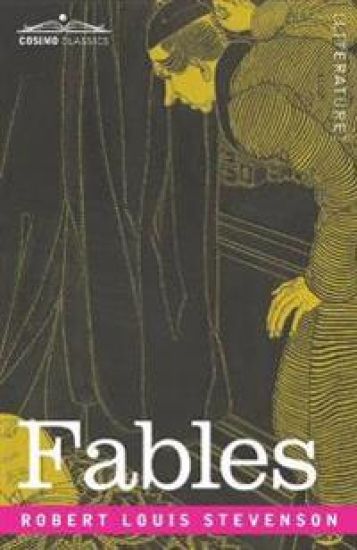
"Peculiar and provocative, graceful, funny, sometimes eerie, and always beautiful, Stevenson's Fables are true masterpieces of art, wit, and style." -Association for Scottish Literary Studies, 2018This jacketed hardcover edition of Fables (1896), by Robert Louis Stevenson, represents the author's attempt to master the age-old genre of fables. Although not all stories have been as popular, many have been highly praised as great works of fiction. These include "Poor Thing" and "The Song of the Morrow," both of which have earned their place alongside stories by the Brothers Grimm and Perrault, Andersen, and Lang as immortal classics.
"For in emigration the young men enter direct by the shipload on their heritage of work; empty continents swarm, as at the bosun's whistle, with industrious hands, and whole hew empires are domesticated to the service of man." -Robert Louis Stevenson, The Amateur Emigrant This jacketed hardcover edition of The Amateur Emigrant: From the Clyde to Sandy Hook (1895), by Robert Louis Stevenson is the first book (followed by Across the Plains and the Silverado Squatters) in a trilogy the author wrote about his journey from Scotland to California in 1879-1880. In this volume, he describes the first leg of his trip, made by ship from Europe to New York City. Stevenson depicts the crowded conditions he experienced in steerage with others who, like him, were poor and sick. At the conclusion, the author also offers his usual sharp-eyed observations, which, in this case are of New York and New Yorkers.
"For in emigration the young men enter direct by the shipload on their heritage of work; empty continents swarm, as at the bosun's whistle, with industrious hands, and whole hew empires are domesticated to the service of man." -Robert Louis Stevenson, The Amateur Emigrant The Amateur Emigrant from the Clyde to Sandy Hook (1895), by Robert Louis Stevenson is the first book (followed by Across the Plains and the Silverado Squatters) in a trilogy the author wrote about his journey from Scotland to California in 1879-1880. In this volume, he describes the first leg of his trip, made by ship from Europe to New York City. Stevenson depicts the crowded conditions he experienced in steerage with others who, like him, were poor and sick. At the conclusion, the author also offers his usual sharp-eyed observations, which, in this case are of New York and New Yorkers.
Across The Plains is a classic American travelogue by Robert Louis Stevenson. This travel journal contains 12 chapters, each a story or essay unto itself. The title chapter is the longest, and is divided into 7 subsections. It describes Stevenson's arrival at New York as an immigrant, along with hundreds of other Europeans, and his train journey from New York to San Francisco in an immigrant train.Robert Louis Stevenson (13 November 1850 - 3 December 1894) was a Scottish novelist and travel writer, most noted for Treasure Island, Kidnapped, Strange Case of Dr Jekyll and Mr Hyde, and A Child's Garden of Verses.Born and educated in Edinburgh, Stevenson suffered from serious bronchial trouble for much of his life, but continued to write prolifically and travel widely, in defiance of his poor health. As a young man, he mixed in London literary circles, receiving encouragement from Andrew Lang, Edmund Gosse, Leslie Stephen and W. E. Henley, the last of whom may have provided the model for Long John Silver in Treasure Island. Stevenson spent several years in search of a location suited to his health, before finally settling in Samoa, where he died.A celebrity in his lifetime, Stevenson attracted a more negative critical response for much of the 20th century, though his reputation has been largely restored. He is currently ranked as the 26th most translated author in the world.
"America was to me a sort of promised land; 'westward the march of empire holds its way'; the race is for the moment to the young; what has been and what is we imperfectly and obscurely know; what is to be yet lies beyond the flight of our imaginations. . . "Robert Louis Stevenson, The Amateur Emigrant This jacketed hardcover edition of Across the Plains with Other Memories and Essays (1892) by Robert Louis Stevenson is the second book in a trilogy that began with The Amateur Emigrant and ended with The Silverado Squatters and in which the author described his travels in the United States. Each of the 12 chapters is a self-contained essay that discusses a particular aspect of what Stevenson observed as he traveled by train from New York to California. They give a fascinating view of what travel was in the late Victorian period from the perspective of a Scottish visitor.
"The story I have to tell is still going on as I write ....] it is a piece of contemporary history in the most exact sense."-Robert Louis Stevenson, A Footnote to History (1887)This jacketed hardcover edition of A Footnote to History: Eight Years of Trouble in Samoa (1887), by Robert Louis Stevenson, describes 10 years (from 1882 to 1892) in the history of a civil war that Stevenson became involved with after moving to Samoa. During this conflict, three colonial powers-America, Germany, and Britain-battled for control of Samoa with the indigenous factions that struggled to preserve their ancient political system. This book is the author's attempt to analyze the "elements of discord" in Samoa, giving his writing the realism of front-line journalism.
"The story I have to tell is still going on as I write ....] it is a piece of contemporary history in the most exact sense." -Robert Louis Stevenson, A Footnote to History (1887)A Footnote to History: Eight Years of Trouble in Samoa (1887), by Robert Louis Stevenson, describes 10 years (from 1882 to 1892) in the history of a civil war that Stevenson became involved with after moving to Samoa. During this conflict, three colonial powers-America, Germany, and Britain-battled for control of Samoa with the indigenous factions that struggled to preserve their ancient political system. This book is the author's attempt to analyze the "elements of discord" in Samoa, giving his writing the realism of front-line journalism.
"America was to me a sort of promised land; 'westward the march of empire holds its way'; the race is for the moment to the young; what has been and what is we imperfectly and obscurely know; what is to be yet lies beyond the flight of our imaginations. . . "Robert Louis Stevenson, The Amateur Emigrant Across the Plains with Other Memories and Essays (1892) by Robert Louis Stevenson is the second book in a trilogy that began with The Amateur Emigrant and ended with The Silverado Squatters and in which the author described his travels in the United States. Each of the 12 chapters is a self-contained essay that discusses a particular aspect of what Stevenson observed as he traveled by train from New York to California. They give a fascinating view of what travel was in the late Victorian period from the perspective of a Scottish visitor.
"This tale of hate is probably Stevenson's best book. . . Its blend of historical romance, travel fantasy and gothic nightmare makes it deeply pleasurable."-Jonathan Jones, art critic, The Guardian, 2009The Master of Ballantrae (1889) by Robert Louis Stevenson is set during a 19th-century uprising in Scotland, weaving the tale of James Durie, who abandons his family and his title of Master of Ballantrae to support the rebellion. When, after years of fighting and piracy, he returns to Ballantrae and reclaims his inheritance, a feud with his brother reveals his evil nature. According to the author, Durie is "all I know of the devil," and his manipulative and seductive character drives a narrative that is both tragic and compelling.
"I know; I don't care to die either. But when whining mendeth nothing, wherefore whine?" -Robert Louis Stevenson, The Black ArrowThe Black Arrow: A Tales of the Two Roses (1888) by Robert Louis Stevenson is a classic piece of adventure fiction, set during a civil war in England known as "The War of the Roses" (1455-1487), that tells the story of a swashbuckling, young nobleman who returns from fighting only to discover that an old family friend has murdered his father. When Richard ("Dick") Shelton finds that his uncle and guardian will not help him avenge the crime, he turns to John Amend-All, leader of a mysterious fellowship called the Black Arrow, thus setting in motion a series of threats that challenge Dick to discover his capacity for heroism. Color illustrations by N.C. Wyeth, enhance a spellbinding tale.
"Of all my verse, like not a single line;But like my title, for it is not mine." -Robert Louis Stevenson, UnderwoodsUnderwoods (1887), by Robert Louis Stevenson, is a collection of original poetry that Stevenson wrote during one of the most prolific periods of his career. Like his more famous collection, A Child's Garden of Verses, it was inspired by the author's own childhood and is written in both English and his native Scots.