Kirjojen hintavertailu. Mukana 12 390 323 kirjaa ja 12 kauppaa.

Kirjailija

Robert M. Emerson

Kirjat ja teokset yhdessä paikassa: 5 kirjaa, julkaisuja vuosilta 2007-2017, suosituimpien joukossa Everyday Troubles. Vertaile teosten hintoja ja tarkista saatavuus suomalaisista kirjakaupoista.

5 kirjaa

Kirjojen julkaisuhaarukka 2007-2017.

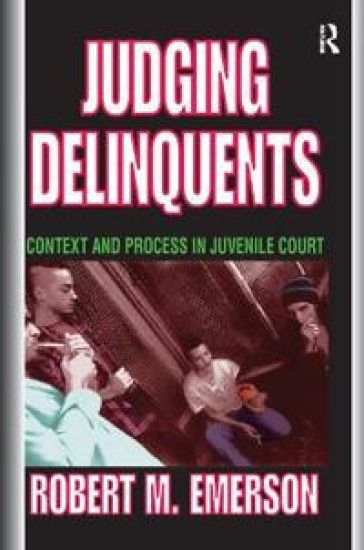
Judging Delinquents

Judging Delinquents

Robert M. Emerson

Routledge
2017
sidottu
Juvenile court has elicited the interest and criticism of lawyers, social workers, and criminologists, but less attention from sociologists. This book adds to growing sociological literature on the operations of legal institutions. It describes some critical aspects of the functioning of the juvenile court, an institution charged with judging and treating delinquents. To this end, it analyzes the nature of the court operation, the handling of delinquents, and the court's functions in relation to the wider social and legal system.
Everyday Troubles

Everyday Troubles

Robert M. Emerson

University of Chicago Press
2015
nidottu
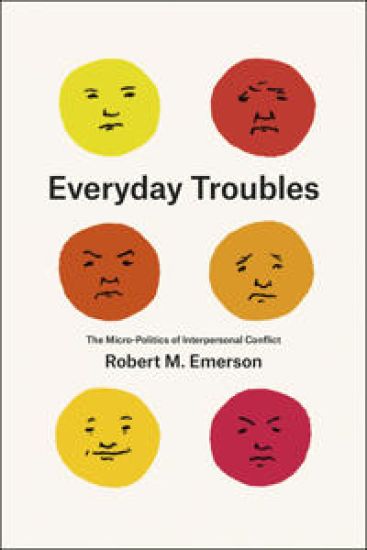
From roommate disputes to family arguments, trouble is inevitable in interpersonal relationships. In Everyday Troubles, Robert M Emerson explores the beginnings and development of the conflicts that occur in our relationships with the people we regularly encounter-family members, intimate partners, coworkers, and others-and the common responses to such troubles. To examine these issues, Emerson draws on interviews with college roommates, diaries documenting a wide range of irritation with others, conversations with people caring for family members suffering from Alzheimer's, studies of family interactions, neighborly disputes, and other personal accounts. He considers how people respond to everyday troubles: in non-confrontational fashion, by making low-visibility, often secretive, changes in the relationship; more openly by directly complaining to the other person; or by involving a third party, such as friends or family. He then examines how some relational troubles escalate toward extreme and even violent responses, in some cases leading to the involvement of outside authorities like the police or mental health specialists. By calling attention to the range of possible reactions to conflicts in interpersonal relationships, Emerson also reminds us that extreme, even criminal actions often result when people fail to find ways to deal with trouble in moderate, non-confrontational ways. Innovative and insightful, Everyday Troubles is an illuminating look at how we deal with discord in our relationships.
Everyday Troubles

Everyday Troubles

Robert M. Emerson

University of Chicago Press
2015
sidottu
From roommate disputes to family arguments, trouble is inevitable in interpersonal relationships. In Everyday Troubles, Robert M Emerson explores the beginnings and development of the conflicts that occur in our relationships with the people we regularly encounter-family members, intimate partners, coworkers, and others - and the common responses to such troubles. To examine these issues, Emerson draws on interviews with college roommates, diaries documenting a wide range of irritation with others, conversations with people caring for family members suffering from Alzheimer's, studies of family interactions, neighborly disputes, and other personal accounts. He considers how people respond to everyday troubles: in non-confrontational fashion, by making low-visibility, often secretive, changes in the relationship; more openly by directly complaining to the other person; or by involving a third party, such as friends or family. He then examines how some relational troubles escalate toward extreme and even violent responses, in some cases leading to the involvement of outside authorities like the police or mental health specialists. By calling attention to the range of possible reactions to conflicts in interpersonal relationships, Emerson also reminds us that extreme, even criminal actions often result when people fail to find ways to deal with trouble in moderate, non-confrontational ways. Innovative and insightful, Everyday Troubles is an illuminating look at how we deal with discord in our relationships.
Writing Ethnographic Fieldnotes, Second Edition

Writing Ethnographic Fieldnotes, Second Edition

Robert M. Emerson; Rachel I. Fretz; Linda L. Shaw

University of Chicago Press
2011
nidottu
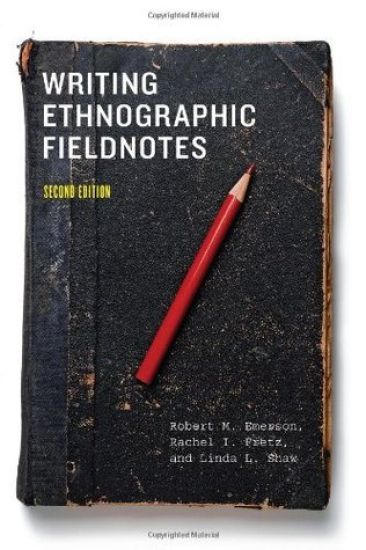
In "Writing Ethnographic Fieldnotes", Robert M. Emerson, Rachel I. Fretz, and Linda L. Shaw present a series of guidelines, suggestions, and practical advice for creating useful fieldnotes in a variety of settings, demystifying a process that is often assumed to be intuitive and impossible to teach. Using actual unfinished notes as examples, the authors illustrate options for composing, reviewing, and working fieldnotes into finished texts. They discuss different organizational and descriptive strategies and show how transforming direct observations into vivid descriptions results not simply from good memory but from learning to envision scenes as written. A good ethnographer, they demonstrate, must learn to remember dialogue and movement like an actor, to see colors and shapes like a painter, and to sense moods and rhythms like a poet. This new edition reflects the extensive feedback the authors have received from students and instructors since the first edition was published in 1995. As a result, they have updated the race, class, and gender section, created new sections on coding programs and revising first drafts, and provided new examples of working notes. An essential tool for budding social scientists, the second edition of "Writing Ethnographic Fieldnotes" will be invaluable for a new generation of researchers entering the field.
Judging Delinquents

Judging Delinquents

Robert M. Emerson

AldineTransaction
2007
nidottu
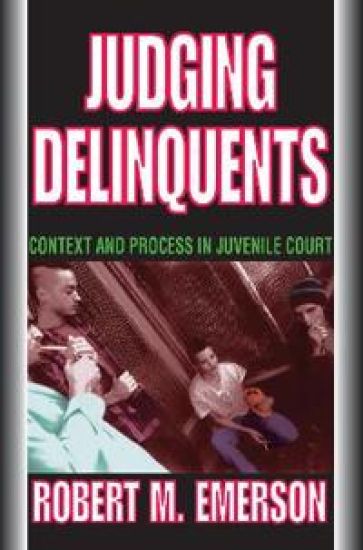
Juvenile court has elicited the interest and criticism of lawyers, social workers, and criminologists, but less attention from sociologists. This book adds to growing sociological literature on the operations of legal institutions. It describes some critical aspects of the functioning of the juvenile court, an institution charged with judging and treating delinquents. To this end, it analyzes the nature of the court operation, the handling of delinquents, and the court's functions in relation to the wider social and legal system.