Kirjojen hintavertailu. Mukana 12 595 353 kirjaa ja 12 kauppaa.

Kirjailija

Robert M. Galford

Kirjat ja teokset yhdessä paikassa: 5 kirjaa, julkaisuja vuosilta 2006-2023, suosituimpien joukossa Your Leadership Legacy. Vertaile teosten hintoja ja tarkista saatavuus suomalaisista kirjakaupoista.

5 kirjaa

Kirjojen julkaisuhaarukka 2006-2023.

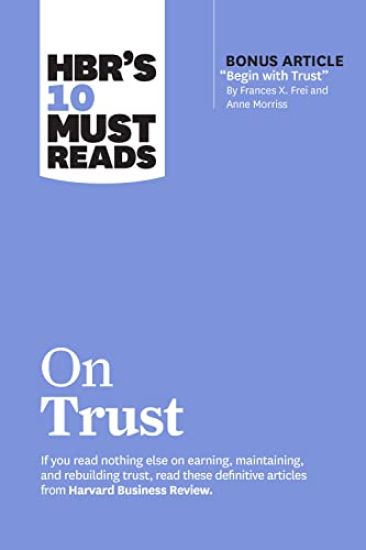
HBR's 10 Must Reads on Trust

HBR's 10 Must Reads on Trust

Harvard Business Review; Frances X. Frei; Anne Morriss; Jamil Zaki; Robert M. Galford

Harvard Business Review Press
2023
sidottu
Business success begins with trust.Trust is the basis for all that we do as leaders and as organizations. Employees who trust their employers are more productive and creative. Businesses that earn their customers' trust maintain better relationships and reap better results. Meanwhile, breaches of trust between companies and the public are becoming more frequent—and more costly.If you read nothing else on trust, read these 10 articles. We've combed through hundreds of Harvard Business Review articles and selected the most important ones to help you build, maintain, and repair trust, both as a leader and as a company.This book will inspire you to:Develop trust through competence, legitimacy, and impactUnderstand the neuroscience of trustFollow through on your commitments to stakeholdersNegotiate better with an untrustworthy counterpartSee your company through the eyes of your customersRebuild relationships after a breakdown of trustThis collection of articles includes "Begin with Trust," by Frances X. Frei and Anne Morriss; "The Neuroscience of Trust," by Paul J. Zak; "Dig, Bridge, Collectively Act," by Tina Opie and Beth A. Livingston; "Rethinking Trust," by Roderick M. Kramer; "How to Negotiate with a Liar," by Leslie K. John; "The Enemies of Trust," by Robert M. Galford and Anne Seibold Drapeau; "Don't Let Cynicism Undermine Your Workplace," by Jamil Zaki; "The Trust Crisis," by Sandra J. Sucher and Shalene Gupta; "Customer Data: Designing for Transparency and Trust," by Timothy Morey, Theodore "Theo" Forbath, and Allison Schoop; "Operational Transparency," by Ryan W. Buell; and "The Organizational Apology," by Maurice E. Schweitzer, Alison Wood Brooks, and Adam D. Galinsky.HBR's 10 Must Reads paperback series is the definitive collection of books for new and experienced leaders alike. Leaders looking for the inspiration that big ideas provide, both to accelerate their own growth and that of their companies, should look no further. HBR's 10 Must Reads series focuses on the core topics that every ambitious manager needs to know: leadership, strategy, change, managing people, and managing yourself. Harvard Business Review has sorted through hundreds of articles and selected only the most essential reading on each topic. Each title includes timeless advice that will be relevant regardless of an ever-changing business environment.
HBR's 10 Must Reads on Trust

HBR's 10 Must Reads on Trust

Harvard Business Review; Frances X. Frei; Anne Morriss; Jamil Zaki; Robert M. Galford

Harvard Business Review Press
2023
pokkari
Business success begins with trust.Trust is the basis for all that we do as leaders and as organizations. Employees who trust their employers are more productive and creative. Businesses that earn their customers' trust maintain better relationships and reap better results. Meanwhile, breaches of trust between companies and the public are becoming more frequent—and more costly.If you read nothing else on trust, read these 10 articles. We've combed through hundreds of Harvard Business Review articles and selected the most important ones to help you build, maintain, and repair trust, both as a leader and as a company.This book will inspire you to:Develop trust through competence, legitimacy, and impactUnderstand the neuroscience of trustFollow through on your commitments to stakeholdersNegotiate better with an untrustworthy counterpartSee your company through the eyes of your customersRebuild relationships after a breakdown of trustThis collection of articles includes "Begin with Trust," by Frances X. Frei and Anne Morriss; "The Neuroscience of Trust," by Paul J. Zak; "Dig, Bridge, Collectively Act," by Tina Opie and Beth A. Livingston; "Rethinking Trust," by Roderick M. Kramer; "How to Negotiate with a Liar," by Leslie K. John; "The Enemies of Trust," by Robert M. Galford and Anne Seibold Drapeau; "Don't Let Cynicism Undermine Your Workplace," by Jamil Zaki; "The Trust Crisis," by Sandra J. Sucher and Shalene Gupta; "Customer Data: Designing for Transparency and Trust," by Timothy Morey, Theodore "Theo" Forbath, and Allison Schoop; "Operational Transparency," by Ryan W. Buell; and "The Organizational Apology," by Maurice E. Schweitzer, Alison Wood Brooks, and Adam D. Galinsky.HBR's 10 Must Reads paperback series is the definitive collection of books for new and experienced leaders alike. Leaders looking for the inspiration that big ideas provide, both to accelerate their own growth and that of their companies, should look no further. HBR's 10 Must Reads series focuses on the core topics that every ambitious manager needs to know: leadership, strategy, change, managing people, and managing yourself. Harvard Business Review has sorted through hundreds of articles and selected only the most essential reading on each topic. Each title includes timeless advice that will be relevant regardless of an ever-changing business environment.
Simple Sabotage

Simple Sabotage

Robert M. Galford; Bob Frisch; Cary Greene

HarperOne
2015
sidottu
The official handbook for stamping out unintentional sabotage in any working group, inspired by the infamous Simple Sabotage Field Manual released by the Office of Strategic Services in 1944 to train the European resistance movement in tactics of sabotage. In 1944, the Office of Strategic Services (OSS) - the predecessor of today's CIA - issued the Simple Sabotage Field Manual that detailed sabotage techniques designed to demoralize the enemy. One section focused on eight incredibly subtle - and devastatingly destructive - tactics for sabotaging the decision-making processes of organizations. While the manual was written decades ago, these sabotage tactics thrive undetected in organizations today: Insist on doing everything through channels; Make speeches. Talk as frequently as possible and at great length; Refer all matters to committees; Bring up irrelevant issues as frequently as possible; Haggle over precise wordings of communications; Refer back to matters already decided upon and attempt to question the advisability of that decision; Advocate caution and urge fellow-conferees to avoid haste that might result in embarrassments or difficulties later on; Be worried about the propriety of any decision. Everyone has been faced with someone who has used these tactics, even when they have meant well. Filled with proven strategies and techniques, this brief, clever book outlines the counter-sabotage measures to detect and reduce the impact of these eight classic sabotage tactics to improve productivity, spur creativity, and engender better collegial relationships.
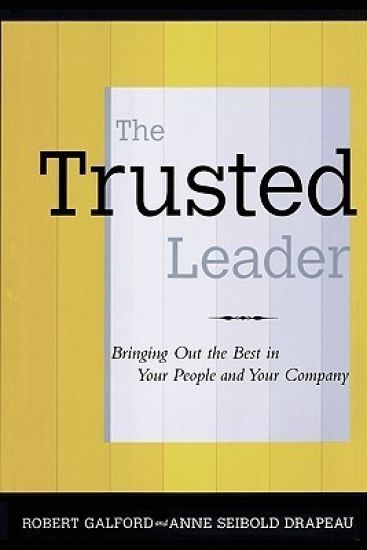
The Trusted Leader

The Trusted Leader

Robert M. Galford; Anne Seibold Drapeau

Atria Books
2011
pokkari
Any good manager feels an intuitive need to build trust inside his or her company and among employees. Self-improvement is an integral part of creating a trust-building climate and current books on leadership and corporate issues understate the importance of this element. Developing further the ideas in THE TRUSTED ADVISOR, the authors move from discussing how managers can make themselves and their company trustworthy to clients and customers to how they can build trust within an organization, between manager and colleagues, bosses, and employees. Instead of focusing on Business to Business, The Trusted Leader deals with building internal, managerial and organizational trust. The authors parse the different kinds of trust, give diagnostic ways to determine whether trust is missing and where it needs to be supplemented, and ways to restore trust when it has been betrayed. The book will contain numerous exercises and quizzes, as well as formulas that quantify the economies of trust and show its importance in an organization. Stories of managers and employees working through issues of trust in many different real-life situations cover many different corporate situations and scenarios (acquisitions, slowdowns, and internal and external crises), making this the most complete guide on the subject for managers.
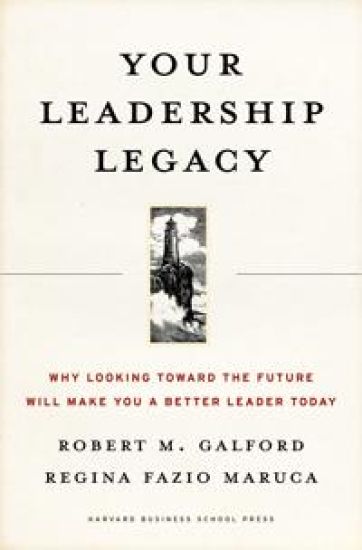
Your Leadership Legacy

Your Leadership Legacy

Robert M. Galford; Regina Fazio Maruca

Harvard Business Review Press
2006
sidottu
You should worry about your legacy later in your career, at the edge of retirement--right? Not according to Robert Galford and Regina Maruca. In Your Leadership Legacy, these authors argue that thinking about your legacy now makes you a better leader today. Based on stories of top leaders who have shaped successful careers, the book explores the art of "legacy thinking," helping you to formulate a legacy that will exert a positive effect on your work immediately. The authors provide a disciplined approach to framing your legacy, as well as shaping it over time. They start with the idea that your legacy is defined by how others approach work and life as a result of having worked with you. They then demonstrate how to assess your current impact on those around you, strengthen that impact, and pass along the best of yourself in the process. While many leaders "find themselves" and hone their work accordingly only after a major life crisis, Your Leadership Legacy enables all leaders to craft their work and build their legacy unburdened by such crises, and to experience personal satisfaction and achievement throughout their working lives.