Kirjailija
Robert M. Sapolsky
Kirjat ja teokset yhdessä paikassa: 17 kirjaa, julkaisuja vuosilta 1998-2024, suosituimpien joukossa Miksi seeprat välttyvät mahahaavoilta. Vertaile teosten hintoja ja tarkista saatavuus suomalaisista kirjakaupoista.
Mukana myös kirjoitusasut: Robert M Sapolsky
17 kirjaa
Kirjojen julkaisuhaarukka 1998-2024.
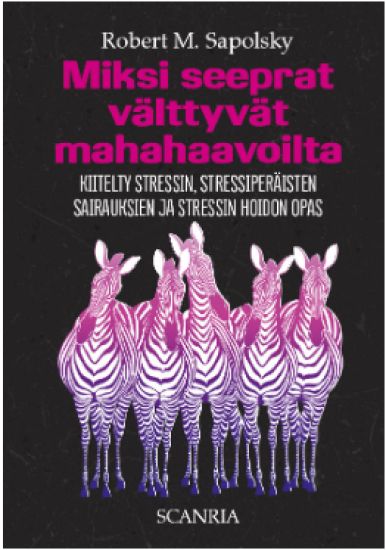
Robert Sapolskyn kiitosta saaneessa Miksi seeprat välttyvät mahahaavoilta -kirjassa eturivin tutkijoiden saavutukset yhdistyvät terveeseen huumoriin ja käytännöllisiin neuvoihin. Sapolsky selittää lukijalle, kuinka pitkittynyt stressi voi aiheuttaa tai pahentaa muun muassa masennusta, mahahaavoja, paksusuolitulehdusta ja sydänsairauksia. Kun olemme huolissamme tai stressaantuneita jostakin, elimistössämme käynnistyvät samat fysiologiset reaktiot kuin eläimillä, mutta yleensä stressireaktio ei kytkeydy meillä pois päältä samalla tavoin kuin eläimillä - taistelemalla, pakenemalla tai jollakin muulla vauhdikkaalla toiminnalla. Mikäli stressireaktio jää päälle, se voi ajan mittaan kirjaimellisesti sairastuttaa meidät.Kirjan kolmanteen painokseen on lisätty unta ja addiktioita käsittelevät luvut sekä jaksot, joissa käsitellään sukupuolten välisiä eroja, ahdistuneisuutta, painonnousua ja traumaperäistä stressireaktiota. Sapolsky paneutuu syvällisesti siihen, millä tavoin hermostomme reagoi stressiin ja kuinka noita reaktioita on mahdollista oppia kontrolloimaan.
Aivojen kemiaan ja fysiikkaan liittyvää ihmisen käyttäytymisen perustaa ei ymmärretä täydellisesti. Siitä kuitenkin tiedetään jo paljon. Tässä hätkähdyttävässä teoksessa Robert Sapolsky vie kiehtovalle tutkimusmatkalle neurotieteen hämmästyttäviin ja intuitiomme haastaviin tuloksiin, jotka kyseenalaistavat vapaan tahdon olemassaolon.Sapolskyn mukaan vapaa tahto on pelkkä fantasia: hermoston toiminnasta ei ole löytynyt ainoatakaan piirrettä, joka voidaan yhdistää vapaaseen tahtoon, eikä yksikään aivojen ilmiö ole riippumaton biologiasta. Yleisen käsityksen mukaan vapaan tahdon puuttuminen johtaa kaaokseen ja pahuuteen, mutta Sapolsky väittää, että asia on täysin päinvastoin. Oikea vapaata tahtoa koskeva ajattelun viitekehys johtaa inhimillisempään, onnellisempaan ja oikeudenmukaisempaan maailmaan. Robert Sapolsky on biologian, neurologian ja neurokirurgian emeritusprofessori Stanfordin yliopistossa. Hän on maailman johtavia neurotieteilijöitä.
The instant New York Times bestseller "Excellent . . . Outstanding for its breadth of research, the liveliness of the writing, and the depth of humanity it conveys." -Wall Street Journal One of our great behavioral scientists, the bestselling author of Behave, mounts a devastating scientific and philosophical case against free will--an argument with profound consequences Robert Sapolsky's Behave, his now classic account of why humans do good and why they do bad, pointed toward an unsettling conclusion: we may not grasp exactly how nature and nurture create the physics and chemistry that cause all human behavior, but that doesn't mean they don't exist. In Determined, Sapolsky takes his argument all the way, mounting a brilliant (and in his inimitable way, delightful) full-frontal assault on the pleasant fantasy that there is some separate self who tells our biology what to do. Determined offers a marvelous synthesis of what we know about consciousness--the tight weave between reason and emotion and between stimulus and response in the moment and over a life. One by one, Sapolsky takes out all the major arguments for free will, cutting a path through the thickets of chaos theory and quantum physics. But as Sapolsky acknowledges, it's sometimes impossible to uncouple from our zeal to judge people, including ourselves. Determined applies this new understanding to some of our most essential questions around punishment, morality, and living well together. Most of all, Sapolsky argues that while accepting the reality about free will is monumentally difficult, it will make for a much more humane world.
One of the world’s greatest scientists of human behaviour, the bestselling author of Behave, shows that free will does not exist - and sets out the disturbing yet liberating implications of accepting this fact.‘One of the best scientist-writers of our time’ OLIVER SACKSWhat if free will is an illusion? As Robert Sapolsky shows in this masterful account of the science of human behaviour, everything we think and do is caused by the luck of our biology and the influence of our environment, and ultimately both are beyond our control. In a world without free will, we must completely rethink what we mean by choice, responsibility, morality and justice. Sapolsky’s extraordinary book does exactly this, guiding us toward a profoundly fairer, more humane way of living together.‘A joy to read. It's impossible to recommend this book too highly. Reading it could change your life’ LAURENCE REES‘Outstanding for its breadth of research, the liveliness of the writing and the depth of humanity it conveys’ Wall Street Journal‘Moving, absorbing, compassionate' OLIVER BURKEMAN, Observer
The instant New York Times bestseller "Excellent Outstanding for its breadth of research, the liveliness of the writing, and the depth of humanity it conveys." - Wall Street JournalOne of our great behavioral scientists, the bestselling author of Behave, plumbs the depths of the science and philosophy of decision-making to mount a devastating case against free will, an argument with profound consequencesRobert Sapolsky's Behave, his now classic account of why humans do good and why they do bad, pointed toward an unsettling conclusion: We may not grasp the precise marriage of nature and nurture that creates the physics and chemistry at the base of human behavior, but that doesn't mean it doesn't exist. Now, in Determined, Sapolsky takes his argument all the way, mounting a brilliant (and in his inimitable way, delightful) full-frontal assault on the pleasant fantasy that there is some separate self telling our biology what to do.Determined offers a marvelous synthesis of what we know about how consciousness works-the tight weave between reason and emotion and between stimulus and response in the moment and over a life. One by one, Sapolsky tackles all the major arguments for free will and takes them out, cutting a path through the thickets of chaos and complexity science and quantum physics, as well as touching ground on some of the wilder shores of philosophy. He shows us that the history of medicine is in no small part the history of learning that fewer and fewer things are somebody's "fault"; for example, for centuries we thought seizures were a sign of demonic possession. Yet, as he acknowledges, it's very hard, and at times impossible, to uncouple from our zeal to judge others and to judge ourselves. Sapolsky applies the new understanding of life beyond free will to some of our most essential questions around punishment, morality, and living well together. By the end, Sapolsky argues that while living our daily lives recognizing that we have no free will is going to be monumentally difficult, doing so is not going to result in anarchy, pointlessness, and existential malaise. Instead, it will make for a much more humane world.
In a masterful synthesis of science and philosophy, one of the world's pre-eminent behavioural scientists demonstrates that free will is a powerful and dangerous illusion. The result is a new way to think about choice, identity, responsibility, justice, morality and how we live together.Behind every thought, action and experience there lies a chain of biological and environmental causes, stretching back from the moment a neuron fires to the dawn of our species and beyond. Nowhere in this infinite sequence is there a place where free will could play a role.Without free will, it makes no more sense to punish people for antisocial behaviour than it does to scold a car for breaking down. It is no one's fault they are poor or overweight or unsuccessful, nor do people deserve praise for their talent or hard work; 'grit' is a myth. This mechanistic view of human behaviour challenges our most powerful instincts, but history suggests that we have already made great strides toward it: where once we saw demonic possession or cowardice, for example, now we diagnose illness or trauma and offer help.Determined confronts us with our true nature: who and what we are is biology and nothing more. Disturbing and liberating in equal measure, it explores the far-reaching implications for society of accepting this reality. Monumentally difficult as it may be, the reward will be a far more just and humane world.
The instant New York Times bestseller "Excellent . . . Outstanding for its breadth of research, the liveliness of the writing, and the depth of humanity it conveys." -Wall Street Journal One of our great behavioral scientists, the bestselling author of Behave, mounts a devastating scientific and philosophical case against free will--an argument with profound consequences Robert Sapolsky's Behave, his now classic account of why humans do good and why they do bad, pointed toward an unsettling conclusion: we may not grasp exactly how nature and nurture create the physics and chemistry that cause all human behavior, but that doesn't mean they don't exist. In Determined, Sapolsky takes his argument all the way, mounting a brilliant (and in his inimitable way, delightful) full-frontal assault on the pleasant fantasy that there is some separate self who tells our biology what to do. Determined offers a marvelous synthesis of what we know about consciousness--the tight weave between reason and emotion and between stimulus and response in the moment and over a life. One by one, Sapolsky takes out all the major arguments for free will, cutting a path through the thickets of chaos theory and quantum physics. But as Sapolsky acknowledges, it's sometimes impossible to uncouple from our zeal to judge people, including ourselves. Determined applies this new understanding to some of our most essential questions around punishment, morality, and living well together. Most of all, Sapolsky argues that while accepting the reality about free will is monumentally difficult, it will make for a much more humane world.
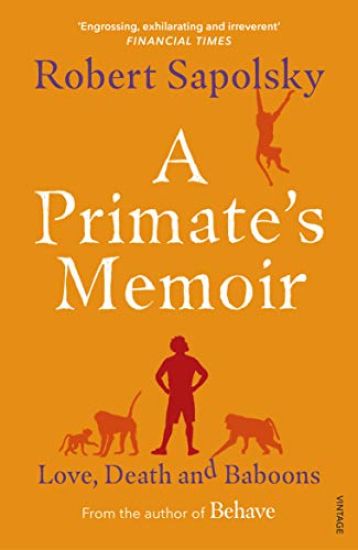
Discover this remarkable account of twenty-one years in remote Kenya with a troop of Savannah baboons from the New York Times bestselling author of Behave.'One of the best scientist-writers of our time' Oliver SacksBrooklyn-born Robert Sapolsky grew up wishing he could live in the primate diorama in the Museum of Natural History. At school he wrote fan letters to primatologists and even taught himself Swahili, all with the hope of one day joining his primate brethren in Africa. But when, at the age of twenty-one, Sapolky's dream finally comes true he discovers that the African bush bears little resemblance to the tranquillity of a museum. This is the story of the next twenty-one years as Sapolsky slowly infiltrates and befriends a troop of Savannah baboons. Alone in the middle of the Serengeti with no electricity, running water or telephone, and surviving countless scams, culinary atrocities and a surreal kidnapping, Sapolsky becomes ever more enamoured with his adopted baboon troop - unique and compelling characters in their own right - and he returns to them summer after summer, until tragedy finally prevails. 'A Primate's Memoir is the closest the baboon is likely to come - and it's plenty close enough - to having its own Iliad' New York Times Review of BooksExhilarating, hilarious and poignant, A Primate's Memoir is a uniquely honest window into the coming-of-age of one of our greatest scientific minds.
New York Times bestseller - Winner of the Los Angeles Times Book Prize - One of the Washington Post's 10 Best Books of the Year"It's no exaggeration to say that Behave is one of the best nonfiction books I've ever read." --David P. Barash, The Wall Street Journal "It has my vote for science book of the year." --Parul Sehgal, The New York Times "Immensely readable, often hilarious...Hands-down one of the best books I've read in years. I loved it." --Dina Temple-Raston, The Washington Post From the bestselling author of A Primate's Memoir and the forthcoming Determined: A Science of Life Without Free Will comes a landmark, genre-defining examination of human behavior and an answer to the question: Why do we do the things we do? Behave is one of the most dazzling tours d'horizon of the science of human behavior ever attempted. Moving across a range of disciplines, Sapolsky--a neuroscientist and primatologist--uncovers the hidden story of our actions. Undertaking some of our thorniest questions relating to tribalism and xenophobia, hierarchy and competition, and war and peace, Behave is a towering achievement--a majestic synthesis of cutting-edge research and a heroic exploration of why we ultimately do the things we do . . . for good and for ill.
Varför vi beter oss som vi gör : Biologin bakom människans bästa och sämsta
Robert M Sapolsky
Natur Kultur Akademisk
2018
sidottu
Varför beter vi oss som vi gör?Robert Sapolsky synar biologin bakom mänskligt beteende och förklarar vad som ligger bakom våra handlingar – ”onda” såväl som ”goda”. Han granskar i sin bok frågor som varför vi människor å ena sidan kan känna empati och samarbeta, å andra sidan bete oss föraktfullt och våldsamt. Andra sidor i vår mänskliga repertoar avhandlas också, som till exempel att vi är lättmanipulerade, kan ändra uppfattning på en sekund och gärna slätar över våra egna brister.Personligt och humoristiskt hållet benas komplexa vetenskapliga samband ut, bl.a. beträffande tonårshjärnans utveckling, effekterna av mobbning, anknytning, brott och straff, samspelet mellan gener och miljö, samhällsstruktur och fattigdomens påverkan, skillnaden mellan kvinnor och män, könsidentitet, frågan om människans krigiska eller fredliga natur, den fria viljan, Vi- och Dom-tänkande, hierarkier och empatins gränser.Varför vi beter oss som vi gör är en bok i vetenskapens framkant om människan och mänskliga beteenden, skriven av en av världens ledande forskare i neurovetenskap och biologi.”Om du alltid tyckt att neurovetenskap verkar dödstråkigt eller plågsamt komplicerat kommer den här boken att få dig att tänka om. Du kommer att skratta högt åt Sapolskys knasiga hipsterhumor, och efter ungefär 100 sidor kommer du att ifrågasätta det där förhastade beslutet för många år sen – att inte välja naturvetenskap. Så bra är den här boken.”Washington Post
**NEW YORK TIMES BESTSELLER**Why do human beings behave as they do?
New York Times bestseller - Winner of the Los Angeles Times Book Prize - One of the Washington Post's 10 Best Books of the Year"It's no exaggeration to say that Behave is one of the best nonfiction books I've ever read." --David P. Barash, The Wall Street Journal "It has my vote for science book of the year." --Parul Sehgal, The New York Times "Immensely readable, often hilarious...Hands-down one of the best books I've read in years. I loved it." --Dina Temple-Raston, The Washington Post From the bestselling author of A Primate's Memoir and the forthcoming Determined: A Science of Life Without Free Will comes a landmark, genre-defining examination of human behavior and an answer to the question: Why do we do the things we do? Behave is one of the most dazzling tours d'horizon of the science of human behavior ever attempted. Moving across a range of disciplines, Sapolsky--a neuroscientist and primatologist--uncovers the hidden story of our actions. Undertaking some of our thorniest questions relating to tribalism and xenophobia, hierarchy and competition, and war and peace, Behave is a towering achievement--a majestic synthesis of cutting-edge research and a heroic exploration of why we ultimately do the things we do . . . for good and for ill.
Described by Oliver Sacks as 'one of the best scientist-writers of our time', Robert M. Sapolsky here presents the human animal in all its quirkiness and diversity. In these remarkable essays, Sapolsky once again deploys his compassion and insights into the human condition to tell us who, why and how we are.
Monkeyluv: And Other Essays on Our Lives as Animals
Robert M. Sapolsky
Scribner Book Company
2006
nidottu
A collection of original essays by a leading neurobiologist and primatologist shares the author's insights into behavioral biology, in a volume that focuses on three primary topics, including the physiology of genes, the human body, and the factors that shape human social interaction. By the author of A Primate's Memoir. Reprint. 25,000 first printing.
Varför zebror inte får magsår : Om stress, stressrelaterade sjukdomar och konsten att handskas med riskerna
Robert M Sapolsky
Natur Kultur Läromedel och Akademi
2003
sidottu
Som en röd tråd i diskussionen av fenomenet stress i denna bok löper jämförelsen mellan å ena sidan zebran som flyr över savannen för att komma undan ett jagande lejon och, å den andra, en bekymrad villaägare som oroar sig för sina banklån. För den flyende zebran krävs ett extra energipådrag för att den ska komma undan faran med livet i behåll. Kroppens olika stressreaktioner är optimalt anpassade efter zebrans behov. För den bekymrade villaägaren gäller att han kan bli sjuk av stress – själva stressreaktionen kan med tiden ge skadliga effekter. Om man upplever varje dag som en annalkande katastrof, och inte låter kroppen vila för att bygga upp resurserna på nytt, får man för eller senare betala ett högt pris. Sapolsky går igenom olika områden där stressen påverkar hur vår kropp fungerar och där ett ständigt stresspåslag kan få ödesdigra konsekvenser. Han diskuterar t.ex.stressens förhållande till diabetes, hjärt-kärlsjukdom, cancer, hjärnans funktion och ett för tidigt åldrande. Samtidigt är han noga med att påpeka att människor är mycket olika i sina reaktioner på stress, både beteendemässigt,känslomässigt och hormonellt. Sapolsky visar också en social medvetenhet när han framhäver en annan mycket viktig stressfaktor – fattigdom. Boken vänder sig till en vetenskapligt intresserad allmänhet, men kan säkert också finna sin plats inom olika grundutbildningar. Översättning Per Rundgren Robert M.Sapolsky är professor vid Stanford University i Kalifornien. Han är neurobiolog och har under flera decennier specialstuderat förhållandet mellan djurs sociala beteende och hur deras nivåer av stresshormoner påverkas i olika situationer. Robert Sapolsky förläser ofta om stress och stressrelaterade sjukdomar och bidrar regelbundet i åtskilliga viktiga vetenskapliga publikationer. Han har utgivit ett flertal publikationer. På svenska finns En människoapa bland babianer (Svenska förlaget, 2002).
In the tradition of Jane Goodall and Dian Fossey, Robert Sapolsky, a foremost science writer and recipient of a MacArthur Genius Grant, tells the mesmerizing story of his twenty-one years in remote Kenya with a troop of Savannah baboons. "I had never planned to become a savanna baboon when I grew up; instead, I had always assumed I would become a mountain gorilla," writes Robert Sapolsky in this witty and riveting chronicle of a scientist's coming-of-age in remote Africa. An exhilarating account of Sapolsky's twenty-one-year study of a troop of rambunctious baboons in Kenya, A Primate's Memoir interweaves serious scientific observations with wry commentary about the challenges and pleasures of living in the wilds of the Serengeti--for man and beast alike. Over two decades, Sapolsky survives culinary atrocities, gunpoint encounters, and a surreal kidnapping, while witnessing the encroachment of the tourist mentality on the farthest vestiges of unspoiled Africa. As he conducts unprecedented physiological research on wild primates, he becomes evermore enamored of his subjects--unique and compelling characters in their own right--and he returns to them summer after summer, until tragedy finally prevents him. By turns hilarious and poignant, A Primate's Memoir is a magnum opus from one of our foremost science writers.
Finalist for the Los Angeles Times Book Prize From the man who Oliver Sacks hailed as "one of the best scientist/writers of our time," a collection of sharply observed, uproariously funny essays on the biology of human culture and behavior. In the tradition of Stephen Jay Gould and Oliver Sacks, Robert Sapolsky offers a sparkling and erudite collection of essays about science, the world, and our relation to both. "The Trouble with Testosterone" explores the influence of that notorious hormone on male aggression. "Curious George's Pharmacy" reexamines recent exciting claims that wild primates know how to medicate themselves with forest plants. "Junk Food Monkeys" relates the adventures of a troop of baboons who stumble upon a tourist garbage dump. And "Circling the Blanket for God" examines the neurobiological roots underlying religious belief. Drawing on his career as an evolutionary biologist and neurobiologist, Robert Sapolsky writes about the natural world vividly and insightfully. With candor, humor, and rich observations, these essays marry cutting-edge science with humanity, illuminating the interconnectedness of the world's inhabitants with skill and flair.