Kirjojen hintavertailu. Mukana 12 393 003 kirjaa ja 12 kauppaa.

Kirjailija

Robert M. Utley

Kirjat ja teokset yhdessä paikassa: 42 kirjaa, julkaisuja vuosilta 1965-2024, suosituimpien joukossa So Long for Now. Vertaile teosten hintoja ja tarkista saatavuus suomalaisista kirjakaupoista.

Mukana myös kirjoitusasut: Robert M Utley

42 kirjaa

Kirjojen julkaisuhaarukka 1965-2024.

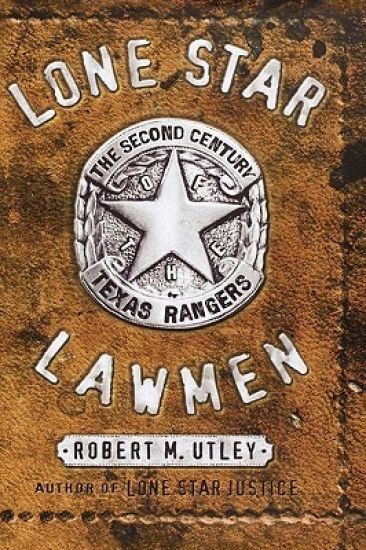
Lone Star Lawmen: The Second Century of the Texas Rangers

Lone Star Lawmen: The Second Century of the Texas Rangers

Robert M. Utley

Oxford University Press
2007
sidottu
Hailed as "a rip-snortin', six-guns-blazin' saga of good guys and bad guys who were sometimes one and the same," Robert M. Utley's Lone Star Justice captured the colorful first century of Texas Ranger history. Now, in the eagerly anticipated conclusion, Lone Star Lawmen, Utley once again chronicles the daring exploits of the Rangers, this time as they bring justice to the twentieth-century West. Based on unprecedented access to Ranger archives, this fast-paced narrative stretches from the days of the Mexican Revolution (where atrocities against Mexican Americans marked the nadir of Ranger history) to the Branch Davidian saga near Waco and the recent bloody standoff with "Republic of Texas" militia. Readers will find in these pages one hundred years of high adventure. Utley follows the Rangers as they pursue bank robbers, bootleggers, moonshiners, and "horsebackers" (smugglers who used mule trains to bring liquor across the border). We see these fearless lawmen taming oil boomtowns, springing the ambush of Bonnie and Clyde, facing down angry lynch mobs, and tracking the "Phantom Killer" of Texarkana. Utley also highlights the gradual evolution of this celebrated force, revealing that while West Texas Rangers still occasionally ride the range on horseback and crack down on smugglers and rustlers, East Texas Rangers--who work mostly in big cities--now ride in high-powered cars and contend with kidnappers, forgers, and other urban criminals. But East or West, today's Rangers have become sophisticated professionals, backed by crime labs and forensic science. Written by one of the most respected Western historians alive, here is the definitive account of the Texas Rangers, a vivid portrait of these legendary peace officers and their role in a changing West.
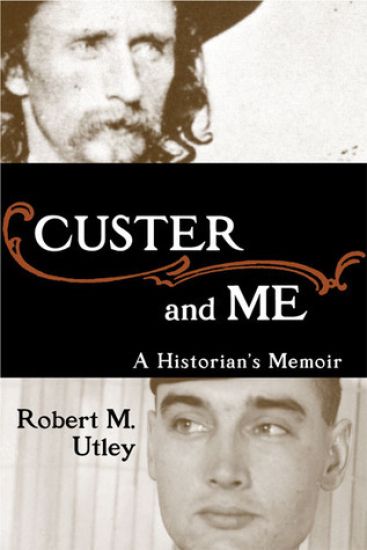
Custer and Me

Custer and Me

Robert M. Utley

University of Oklahoma Press
2004
sidottu
In Custer and Me, renowned western historian and expert on historic preservation, Robert M. Utley, turns his talents to his own life and career. Through lively personal narrative, Utley offers an insider's view of Park Service workings and problems, both at regional and national levels, during the Eisenhower, Kennedy, Johnson, Nixon, Ford, and Carter administrations. Utley also details the birth of the Western History Association, early national historic-preservation programs, and the many clashes over ""symbolic possession"" of what is now the Little Bighorn Battlefield National Monument. Readers will discover how a teenager smitten with Custermania came as an adult to appreciate the full complexity of the Battle of the Little Bighorn and its interpretation and to research and write narrative histories of the American West that have appealed to popular audiences while winning highest honors from the scholarly and writing communities.
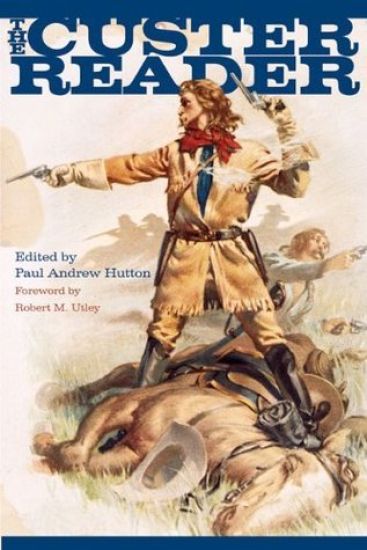
The Custer Reader

The Custer Reader

Robert M. Utley

University of Oklahoma Press
2004
nidottu
George Armstrong Custer, America's most famously unfortunate soldier, has been the subject of scores of books, but The Custer Reader is unique as a substantial source of classic writings about and by him. Here is Custer as seen by himself, his contemporaries, and leading scholars. Even those steeped in Custeriana will discover new insights in these pieces. Combining first-person narratives, essays, and photographs, this book provides a complete introduction to Custer's controversial personality and career and the evolution of the Custer myth.
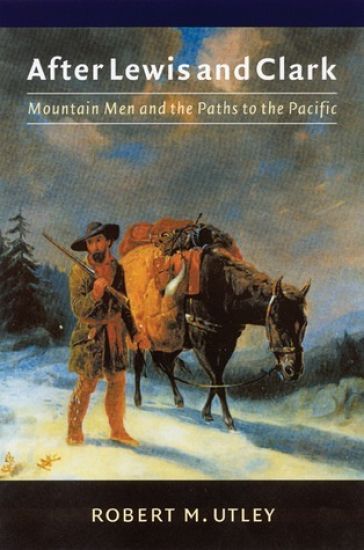
After Lewis and Clark

After Lewis and Clark

Robert M. Utley

Bison Books
2004
pokkari
In 1807, a year after Lewis and Clark returned from the shores of the Pacific, groups of trappers and hunters began to drift West to tap the rich stocks of beaver and to trade with the Native nations. Colorful and eccentric, bold and adventurous, mountain men such as John Colter, George Drouillard, Hugh Glass, Andrew Henry, and Kit Carson found individual freedom and financial reward in pursuit of pelts. Their knowledge of the country and its inhabitants served the first mapmakers, the army, and the streams of emigrants moving West in ever-greater numbers. The mountain men laid the foundations for their own displacement, as they led the nation on a westward course that ultimately spread the American lands from sea to sea.
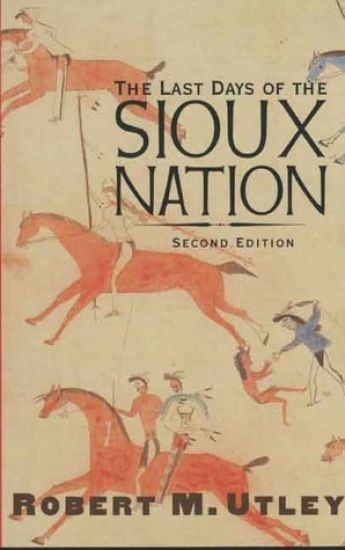
The Last Days of the Sioux Nation

The Last Days of the Sioux Nation

Robert M. Utley

Yale University Press
2004
pokkari
“One of the finest books on the Indian wars of the West.”--Montana (on the original edition) This fascinating account tells what the Sioux were like when they first came to their reservation and how their reaction to the new system eventually led to the last confrontation between the Army and the Sioux at the Battle of Wounded Knee Creek. The Second Edition of this classic work features a new preface by the author that discusses his current thoughts about this tragic episode in American history. Praise for the earlier edition: "History as lively and gripping as good fiction.”—Christian Science Monitor “A well-told, easily read account that will be the standard reference for this phase of the Indian ‘problem.’”--American Historical Review “A major job . . . magnificently researched.”--San Francisco Chronicle “By far the best treatment of the complex and controversial relationship between the Sioux and their conquerors yet presented and should be must reading for serious students of Western Americana.”--St. Louis Dispatch (on the earlier edition) Winner of the Buffalo Award
The Indian Frontier 1846-1890

The Indian Frontier 1846-1890

Robert M. Utley

University of New Mexico Press
2003
nidottu
First published in 1984, Robert Utley's 'The Indian Frontier of the American West, 1846-1890', is considered a classic for both students and scholars. For this revision, Utley includes scholarship and research that has become available in recent years.
Cheyennes and Horse Soldiers

Cheyennes and Horse Soldiers

William Y. Chalfant; Robert M. Utley

University of Oklahoma Press
2002
nidottu
The first major battle between the U.S. Army and the Cheyenne Indians took place on the south fork of the Solomon River in present-day northwest Kansas. In this stirring account, William Y. Chalfant recreates the human dimensions of what was probably the only large-unit sabre charge against the Plains tribes, in a battle that was as much a clash of cultures as of cavalry and Cheyenne warriors.In May 1857 the U. S. First Cavalry, under Col. E. V. Summer, had marched out of Fort Leavenworth to find and ""severely punish"" the Cheyennes for their attacks on immigrants and other travelers during the previous year-attacks precipitated largely by the army's earlier assaults on the Cheyennes. Two columns of soldiers moved westward, penetrating the territory of the southern bands of Cheyennes between the Santa Fe and Oregon-California trails, where few whites had been before.When the cavalry columns were reunited, early in July, the combined forces left their supply train behind and marched southeast across the plains. They were braving the extreme heat of summer with limited rations and little water when they finally met their quarry on the south fork of the Solomon. Resplendent in war finery, the Cheyennes had formed a grand line of battle such as was never again seen in the Plains Indian wars.William Chalfant recaptures the drama of the confrontation in his narrative: ""As one the troopers reached down, and then 300 sabres arced above them, the bright afternoon sunshine flashing across the burnished steel as if the air were torn by a shower of flame. For an instant the blades were held aloft, then came down to the tierce point. At the same time the troopers gave out a mighty yell. And so they thundered across the valley of the Solomon, directly at the oncoming Cheyennes.""In terms of history, the First Cavalry's campaign against the Cheyennes was a microcosm of relations between white civilization and Plains Indian. This exciting narrative penetrates the Indian and white cultures to show the battle marked the end of one era in Indian-white relations and the beginning of another.
Lone Star Justice

Lone Star Justice

Robert M. Utley

Oxford University Press Inc
2002
sidottu
A lively account of the Texas Rangers illuminates their spectacular career on the Western frontier, covering more than acentury of Indian wars, labor strikes, train robbers, cattle thieves, and assorted outlaws.
Indian Wars

Indian Wars

Robert M. Utley

Mariner Books
2002
nidottu
An absorbing and comprehensive work, INDIAN WARS recounts the violent conflicts between Native Americans and white settlers that lasted more than three hundred years, the effects of which still resonate today. Here, the widely respected historians Robert Utley and Wilcomb Washburn examine both small battles and major wars -- from the Native rebellion of 1492, to Crazy Horse and the Sioux War, to the massacre at Wounded Knee. This volume contains a new introduction by Robert Utley.
Cavalier in Buckskin

Cavalier in Buckskin

Robert M. Utley

University of Oklahoma Press
2001
nidottu
George Armstrong Custer. The name evokes instant recognition in almost every American and in people around the world. No figure in the history of the American West has more powerfully moved the human imagination.When originally published in 1988, Cavalier in Buckskin met with critical acclaim. Now Robert M. Utley has revised his best-selling biography of General George Armstrong Custer. In his preface to the revised edition, Utley writes about his summers (1947-1952) spent as a historical aide at the Custer Battlefield-as it was then known-and credits the work of several authors whose recent scholarship has illuminated our understanding of the events of Little Bighorn. He has revised or expanded chapters, added new information on sources, and revised the map of the battlefield.
Custer

Custer

Robert M. Utley

University of Oklahoma Press
2001
sidottu
George Armstrong Custer. The name evokes instant recognition among Americans and people around the world. No figure in the history of the American West has more powerfully moved the human imagination. This new, lavishly illustrated book combines over 300 photographs and paintings, many in color, with a revised edition of Robert M. Utley's classic biography, Cavalier in Buckskin.Drawing on twelve years of additional research on Sitting Bull and the Battle of the Little Bighorn, Utley has dramatically changed his original interpretations of Custer's Last Stand in this revised edition, and has brought the reference list completely up to date for the benefit of students, scholars, and western history buffs.Bringing to life vivid images of the western military frontier, Custer presents George Armstrong Custer, the man and the legend, and illuminates the challenges he faced in warfare with the Indians of the Great Plains.
Recollections of Western Texas, 1852-55

Recollections of Western Texas, 1852-55

Robert M. Utley

Texas Tech Press,U.S.
2000
nidottu
When brothers William and John Wright arrived in the United States from Ireland in 1850 and could find no other suitable employment, they joined the U.S. Armys Regiment of Mounted Rifles, which served on the Texas frontier. Their description of their experiences is unusual on several counts: it is a view of Texas in the 1850s, when personal accounts were rare, and it is written from the point of view of visitors to this nation. And because the Wrights published their book in 1857, only three years after they left the army, their story has an immediacy lacking in many memoirs. He was a man in the prime of life, tall and slender, with black plaited hair descending all the way down his back, and a countenance, whose handsome, intelligent, and dignified expression, was scarcely concealed by the red streaks of war-paint that covered it. Little mercy is shown to an Indian in war, and especially by the Texan rangers, who are scarcely, if at all, advanced beyond the savage state themselves. So the prisoner was immediately tied to a tree, and a number of men were selected to shoot him. On ascertaining his fate, he instantly commenced singing his death-song...which vibrated like the notes of a clarion on the air of early night. ..until his voice was lost in the fatal volley, and all was over. This softcover facsimile of the Book Club of Texas' 1995 fine limited edition of 300 copies makes this classic firsthand account available to a broad audience for the first time since 1857. It is illustrated with wood engravings from William H. Emorys Report of the United States and Mexican Boundary Survey.
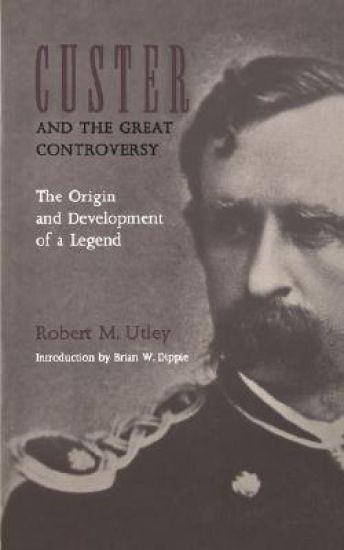
Custer and the Great Controversy

Custer and the Great Controversy

Robert M. Utley

University of Nebraska Press
1998
pokkari
Custer and the Great Controversy was the first book to focus on the origins of what has come to be called the Custer myth. The Battle of the Little Bighorn has always been wrapped in mystery and controversy because none of Custer's men survived to tell what happened, because press accounts circulated much misinformation and editors politicized the event, because popular writers repeated the errors of journalists, because a court of inquiry issued in bitter debate, and because Indian testimony was hard to gauge. This book, originally published in 1962, helps the reader understand the sources of the confusion and controversy surrounding the Custer fight and the beginning of the legend. Custer and the Great Controversy was Robert M. Utley's debut, coming after six years of service as a ranger-historian at the Little Bighorn National Monument. His distinguished career as a historian has produced many books, including Frontiersmen in Blue: The United States Army and the Indian, 1848–1865 and Frontier Regulars: The United States Army and the Indian, 1866–1891, both available as Bison Books.
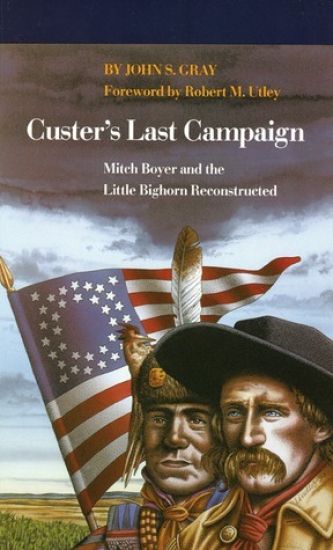
Custer's Last Campaign

Custer's Last Campaign

John S. Gray; Robert M. Utley

Bison Books
1993
pokkari
'Easily the most significant book yet published on the Battle of the Little Bighorn."--Paul L. Hedren, Western Historical Quarterly "[Gray] has applied rigorous analysis as no previous historian has done to these oft-analyzed events. His detailed time-motion study of the movements of the various participants frankly boggles the mind of this reviewer. No one will be able to write of this battle again without reckoning with Gray"--Thomas W. Dunlay, Journal of American History "Gray challenges many time~honored beliefs about the battle. Perhaps most significantly, he brings in as much as possible the testimony of the Indian witnesses, especially that of the young scout Curley, which generations of historians have dismissed for contradictions that Gray convincingly demonstrates were caused not by Curley but by the assumptions made by his questioners ...The contrasts in [this] book...restate the basic components of what still attracts the imagination to the Little Bighorn."--Los Angeles Times Book Review "Gray's analysis, by and large, is impressively drawn; it is an immensely logical reconstruction that should stand the test of time. As a contribution to Custer and Indian wars literature, it is indeed masterful."--Jerome A. Greene, New Mexico Historical Review John S. Gray was a distinguished historian whose books included the acclaimed Centennial Campaign: The Sioux War of 1876. Custer's Last Campaign is the winner of the Western Writers of American Spur award and the Little Bighorn Associates John M. Carroll Literary Award.
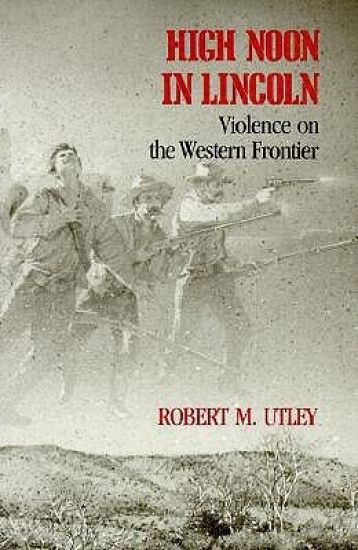
High Noon in Lincoln

High Noon in Lincoln

Robert M. Utley

University of New Mexico Press
1990
nidottu
Here is the most detailed and most engagingly narrated history to date of the legendary two-year facedown and shootout in Lincoln. Until now, New Mexico's late nineteenth-century Lincoln County War has served primarily as the backdrop for a succession of mythical renderings of Billy the Kid in American popular culture.
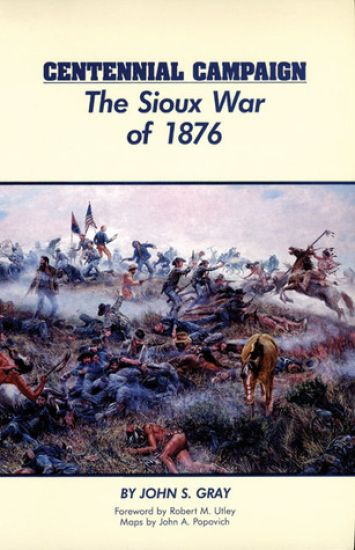
Centennial Campaign

Centennial Campaign

John S. Gray; Robert M. Utley

University of Oklahoma Press
1988
nidottu
"A fine book...In the twenty-two chapters that comprise the background and the campaign narrative, the author is at his best when he moves away from the Washington scene to detail the field operations. But it is the second part of the book--seven chapters labeled "Facets"--that moves Centennial Campaign into the realm of the exceptional. Here Dr. Gray combines impressive research, careful analysis, and sound deduction to reconstruct Indian movements, locations, and concentrations."--Western Historical Quarterly
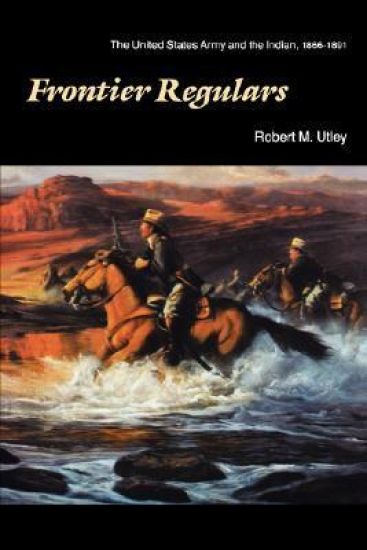
Frontier Regulars

Frontier Regulars

Robert M. Utley

Bison Books
1984
pokkari
In Frontier Regulars Robert M. Utley combines scholarship and drama to produce an impressive history of the final, massive drive by the Regular Army to subdue and control the American Indians and open the West during the twenty-five years following the Civil War. Here are incisive accounts of the campaign directed by Major General William Tecumseh Sherman—from the first skirmishes with the Sioux over the Bozeman Trail defenses in 1866 to the final defeat and subjugation of the Northern Plains Indians in 1890. Utley's brilliant descriptions of military maneuvers and flaming battles are juxtaposed with a careful analysis of Sherman's army: its mode of operation, equipment, and recruitment; its lifestyle and relations with Congress and civilians.Proud of the United States Army and often sympathetic toward the Indians, Utley presents a balanced overview of the long struggle. He concludes that the frontier army was not "the heroic vanguard of civilization" as sometimes claimed and still less "the barbaric band of butchers depicted in the humanitarian literature of the nineteenth century and the atonement literature of the twentieth." Rather, it was a group of ordinary (and sometimes extraordinary) men doing the best they could.
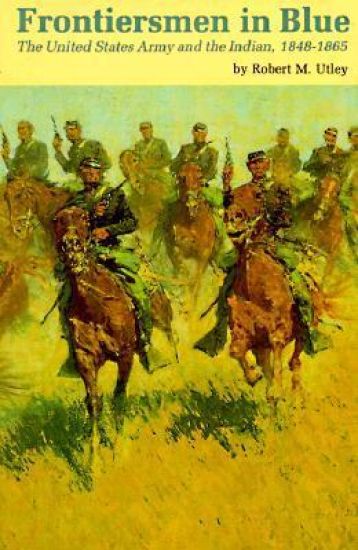
Frontiersmen in Blue

Frontiersmen in Blue

Robert M. Utley

University of Nebraska Press
1981
pokkari
Frontiersmen in Blue is a comprehensive history of the achievements and failures of the United States Regular and Volunteer Armies that confronted the Indian tribes of the West in the two decades between the Mexican War and the close of the Civil War. Between 1848 and 1865 the men in blue fought nearly all of the western tribes. Robert Utley describes many of these skirmishes in consummate detail, including descriptions of garrison life that was sometimes agonizingly isolated, sometimes caught in the lightning moments of desperate battle.