Kirjojen hintavertailu. Mukana 12 595 353 kirjaa ja 12 kauppaa.

Kirjailija

Robert M. Veatch

Kirjat ja teokset yhdessä paikassa: 13 kirjaa, julkaisuja vuosilta 1991-2019, suosituimpien joukossa Hippocratic, Religious, and Secular Medical Ethics. Vertaile teosten hintoja ja tarkista saatavuus suomalaisista kirjakaupoista.

13 kirjaa

Kirjojen julkaisuhaarukka 1991-2019.

The Basics of Bioethics

The Basics of Bioethics

Laura K. Guidry-Grimes; Robert M. Veatch

Routledge
2019
sidottu
The Basics of Bioethics, Fourth Edition offers an easy-to-follow introduction to this dynamic field, intended for healthcare professionals, teachers, students, and anyone interested in bioethics. Accessible and enjoyable for readers of all backgrounds, the book contains numerous cases—including ones that recently have dominated international headlines—to help anchor the broader discussion. The text is suitable for use in short courses in schools of medicine, nursing, and other health professions; continuing professional education; various undergraduate departments; and adult education. Chapters are organized around common moral themes in order to help readers understand the values and other connections that tie together different positions in bioethics. This fourth edition adds a new chapter on alternative frameworks in bioethics, including narrative ethics and casuistry, feminist approaches, care ethics, and virtue ethics. Due to significant advances in genetics and reproductive possibilities, this new edition devotes a full chapter to each. The combined teaching, research, and clinical experience of the two authors helps make this edition current with the evolving field of bioethics, while still embedding the major issues in a systematic framework that allows readers easily to navigate the larger field.Key Changes to the Fourth Edition:• An added chapter on new and emerging approaches in bioethics, including those based on virtue ethics, casuistry and narrative ethics, feminist ethics, and care ethics• Updates throughout the book based on developments in ethical theory and new medical research• Revisions and updates to the Learning Objectives, Key Terms, Bibliographies, and URLs• The addition of multiple recent case studies, including: Jahi McMath an undocumented patient who needs a rule bent a pediatrician who turns away unvaccinated patients a minor eligible for pediatric bariatric surgery a daughter suing a hospital for non-disclosure of her father’s Huntington’s diagnosis CRISPR-edited newborn babies

The Basics of Bioethics

The Basics of Bioethics

Laura K. Guidry-Grimes; Robert M. Veatch

Routledge
2019
nidottu
The Basics of Bioethics, Fourth Edition offers an easy-to-follow introduction to this dynamic field, intended for healthcare professionals, teachers, students, and anyone interested in bioethics. Accessible and enjoyable for readers of all backgrounds, the book contains numerous cases—including ones that recently have dominated international headlines—to help anchor the broader discussion. The text is suitable for use in short courses in schools of medicine, nursing, and other health professions; continuing professional education; various undergraduate departments; and adult education. Chapters are organized around common moral themes in order to help readers understand the values and other connections that tie together different positions in bioethics. This fourth edition adds a new chapter on alternative frameworks in bioethics, including narrative ethics and casuistry, feminist approaches, care ethics, and virtue ethics. Due to significant advances in genetics and reproductive possibilities, this new edition devotes a full chapter to each. The combined teaching, research, and clinical experience of the two authors helps make this edition current with the evolving field of bioethics, while still embedding the major issues in a systematic framework that allows readers easily to navigate the larger field.Key Changes to the Fourth Edition:• An added chapter on new and emerging approaches in bioethics, including those based on virtue ethics, casuistry and narrative ethics, feminist ethics, and care ethics• Updates throughout the book based on developments in ethical theory and new medical research• Revisions and updates to the Learning Objectives, Key Terms, Bibliographies, and URLs• The addition of multiple recent case studies, including: Jahi McMath an undocumented patient who needs a rule bent a pediatrician who turns away unvaccinated patients a minor eligible for pediatric bariatric surgery a daughter suing a hospital for non-disclosure of her father’s Huntington’s diagnosis CRISPR-edited newborn babies

Case Studies in Pharmacy Ethics

Case Studies in Pharmacy Ethics

Robert M. Veatch; Amy Haddad; E. J. Last

Oxford University Press Inc
2017
nidottu
Pharmacists constantly face ethical choices -- sometimes dramatic matters of life-and-death decisions, but more often subtle, less conspicuous choices that are nonetheless important. Case Studies in Pharmacy Ethics identifies and discusses the broad range of ethics issues pharmacists confront in practice. Ranging from situations faced in direct patient care to broader issues, this book uses cases to explore topics and the ethical framework within which practitioners make decisions about such issues as assisted suicide, conscientious refusal, pain management, and confidentiality as well as the equitable distribution of drug resources within institutions or managed care organizations and clinical studies on vulnerable populations. As the scope of the pharmacist's role expands, pharmacists find themselves facing new ethical challenges. This third edition accounts for some of the many changes in pharmacy practice and in the delivery of health care since the second edition. It includes an entirely new chapter on health insurance and health system planning, and a discussion of the impact of the Affordable Care Act and cases that are updated to reflect current pharmacy practice models. It serves as a valuable resource regarding topics that are both specific to pharmacy practice and those that involve the health care system more generally.
Defining Death

Defining Death

Robert M. Veatch; Lainie F. Ross

Georgetown University Press
2016
pokkari
New technologies and medical treatments have complicated questions such as how to determine the moment when someone has died. The result is a failure to establish consensus on the definition of death and the criteria by which the moment of death is determined. This creates confusion and disagreement not only among medical, legal, and insurance professionals but also within families faced with difficult decisions concerning their loved ones. Distinguished bioethicists Robert M. Veatch and Lainie F. Ross argue that the definition of death is not a scientific question but a social one rooted in religious, philosophical, or social beliefs. Drawing on history and recent court cases, the authors detail three potential definitions of death--the whole-brain concept; the circulatory, or somatic, concept; and the higher-brain concept. Because no one definition of death commands majority support, it creates a major public policy problem. The authors cede that society needs a default definition to proceed in certain cases, like those involving organ transplantation. But they also argue the decision-making process must give individuals the space to choose among plausible definitions of death according to personal beliefs. Taken in part from the authors' latest edition of their groundbreaking work on transplantation ethics, Defining Death is an indispensable guide for professionals in medicine, law, insurance, public policy, theology, and philosophy as well as lay people trying to decide when they want to be treated as dead.
Defining Death

Defining Death

Robert M. Veatch; Lainie F. Ross

Georgetown University Press
2016
sidottu
New technologies and medical treatments have complicated questions such as how to determine the moment when someone has died. The result is a failure to establish consensus on the definition of death and the criteria by which the moment of death is determined. This creates confusion and disagreement not only among medical, legal, and insurance professionals but also within families faced with difficult decisions concerning their loved ones. Distinguished bioethicists Robert M. Veatch and Lainie F. Ross argue that the definition of death is not a scientific question but a social one rooted in religious, philosophical, or social beliefs. Drawing on history and recent court cases, the authors detail three potential definitions of death--the whole-brain concept; the circulatory, or somatic, concept; and the higher-brain concept. Because no one definition of death commands majority support, it creates a major public policy problem. The authors cede that society needs a default definition to proceed in certain cases, like those involving organ transplantation. But they also argue the decision-making process must give individuals the space to choose among plausible definitions of death according to personal beliefs. Taken in part from the authors' latest edition of their groundbreaking work on transplantation ethics, Defining Death is an indispensable guide for professionals in medicine, law, insurance, public policy, theology, and philosophy as well as lay people trying to decide when they want to be treated as dead.
Transplantation Ethics

Transplantation Ethics

Robert M. Veatch; Lainie F. Ross

Georgetown University Press
2015
sidottu
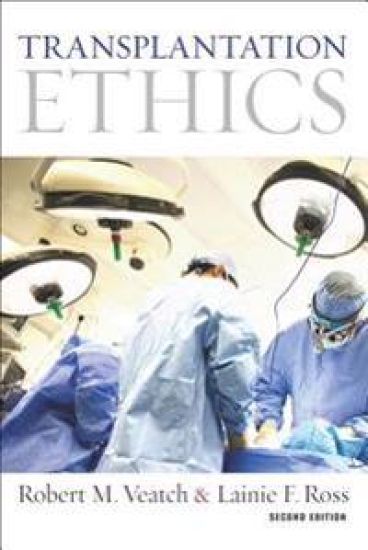
Although the history of organ transplant has its roots in ancient Christian mythology, it is only in the past fifty years that body parts from a dead person have successfully been procured and transplanted into a living person. After fourteen years, the three main issues that Robert Veatch first outlined in his seminal study Transplantation Ethics still remain: deciding when human beings are dead; deciding when it is ethical to procure organs; and deciding how to allocate organs, once procured. However, much has changed. Enormous strides have been made in immunosuppression. Alternatives to the donation model are debated much more openly -- living donors are used more widely and hand and face transplants have become more common, raising issues of personal identity. In this second edition of Transplantation Ethics, coauthored by Lainie F. Ross, transplant professionals and advocates will find a comprehensive update of this critical work on transplantation policies.
Transplantation Ethics

Transplantation Ethics

Robert M. Veatch; Lainie F. Ross

Georgetown University Press
2015
pokkari
Although the history of organ transplant has its roots in ancient Christian mythology, it is only in the past fifty years that body parts from a dead person have successfully been procured and transplanted into a living person. After fourteen years, the three main issues that Robert Veatch first outlined in his seminal study Transplantation Ethics still remain: deciding when human beings are dead; deciding when it is ethical to procure organs; and deciding how to allocate organs, once procured. However, much has changed. Enormous strides have been made in immunosuppression. Alternatives to the donation model are debated much more openly - living donors are used more widely and hand and face transplants have become more common, raising issues of personal identity. In this second edition of Transplantation Ethics, coauthored by Lainie F Ross, transplant professionals and advocates will find a comprehensive update of this critical work on transplantation policies.
Hippocratic, Religious, and Secular Medical Ethics

Hippocratic, Religious, and Secular Medical Ethics

Robert M. Veatch

Georgetown University Press
2012
pokkari
Where should physicians get their ethics? Professional codes such as the Hippocratic Oath claim moral authority for those in a particular field, yet according to medical ethicist Robert Veatch, these codes have little or nothing to do with how members of a guild should understand morality or make ethical decisions. While the Hippocratic Oath continues to be cited by a wide array of professional associations, scholars, and medical students, Veatch contends that the pledge is such an offensive code of ethics that it should be summarily excised from the profession. What, then, should serve as a basis for medical morality? Building on his recent contribution to the prestigious Gifford Lectures, Veatch challenges the presumption that professional groups have the authority to declare codes of ethics for their members. To the contrary, he contends that role-specific duties must be derived from ethical norms having their foundations outside the profession, in religious and secular convictions. Further, these ethical norms must be comprehensible to lay people and patients. Veatch argues that there are some moral norms shared by most human beings that reflect a common morality, and ultimately it is these generally agreed-upon religious and secular ways of knowing - thus far best exemplified by the 2005 Universal Declaration on Bioethics and Human Rights - that should underpin the morality of all patient-professional relations in the field of medicine. "Hippocratic, Religious, and Secular Medical Ethics" is the magnum opus of one of the most distinguished medical ethicists of his generation.
Case Studies In Nursing Ethics

Case Studies In Nursing Ethics

Sara T. Fry; Robert M. Veatch; Carol R. Taylor

Jones and Bartlett Publishers, Inc
2010
nidottu
As the healthcare professional in closest contact with both the patient and the physician, nurses face biomedical ethical problems in unique ways. Accordingly, Case Studies in Nursing Ethics presents basic ethical principles and specific guidance for applying these principles in nursing practice, through analysis of over 150 actual case study conflicts that have occurred in nursing practice. Each case study allows readers to develop their own approaches to the resolution of ethical conflict and to reflect on how the traditions of ethical thought and professional guidelines apply to the situation. The Fourth Edition has been completely revised and updated. It includes two new chapters, one on Moral Integrity and Moral Distress which contains AACN model of moral distress and work and one on Respect which addresses several aspects of the general problem of showing respect for patients and others. It's also been updated with new case studies, new "Critical Thinking Questions" and "Research Briefs" boxes throughout, as well as citations, glossary, and web resources in health care ethics.
Disrupted Dialogue

Disrupted Dialogue

Robert M. Veatch

Oxford University Press Inc
2004
sidottu
Medical ethics changed dramatically in the past 30 years because physicians and humanists actively engaged each other in discussions that sometimes led to confrontation and controversy, but usually have improved the quality of medical decision-making. Before then medical ethics had been isolated for almost two centuries from the larger philosophical, social, and religious controversies of the time. There was, however, an earlier period where leaders in medicine and in the humanities worked closely together and both fields were richer for it. This volume begins with the 18th century Scottish Enlightenment when professors of medicine such as John Gregory, Edward Percival, and the American, Benjamin Rush, were close friends of philosophers like David Hume, Adam Smith, and Thomas Reid. They continually exchanged views on matters of ethics with each other in print, at meetings of elite intellectual groups, and at the dinner table. Then something happened, physicians and humanists quit talking with each other. In searching for the causes of the collapse, this book identifies shifts in the social class of physicians, developments in medical science, and changes in the patterns of medical education. Only in the past three decades has the dialogue resumed as physicians turned to humanists for help just when humanists wanted their work to be relevant to real-life social problems. Again, the book asks why, finding answers in the shift from acute to chronic disease as the dominant pattern of illness, the social rights revolution of the 1960's, and the increasing dissonance between physician ethics and ethics outside medicine. The book tells the critical story of how the breakdown in communication between physicians and humanists occurred and how it was repaired when new developments in medicine together with a social revolution forced the leaders of these two fields to resume their dialogue.
Transplantation Ethics

Transplantation Ethics

Robert M. Veatch

Georgetown University Press
2002
nidottu
Three decades after the first heart transplant surgery stunned the world, organs including eyes, lungs, livers, kidneys, and hearts are transplanted every day. But despite its increasingly routine nature - or perhaps because of it - transplantation offers enormous ethical challenges. A medical ethicist who has been involved in the organ transplant debate for many years, Robert M. Veatch explores a variety of questions that continue to vex the transplantation community, offering his own solutions in many cases. Ranging from the most fundamental questions to recently emerging issues, "Transplantation Ethics" is the first complete and systematic account of the ethical and policy controversies surrounding organ transplants. Veatch structures his discussion around three major topics: the definition of death, the procurement of organs, and the allocation of organs. He lobbies for an allocation system - administered by nonphysicians - that considers both efficiency and equity, that takes into consideration the patient's age and previous transplant history, and that operates on a national rather than a regional level.Rich with case studies and written in an accessible style, this comprehensive reference is intended for a broad cross section of people interested in the ethics of transplantation from either the medical or public policy perspective: patients and their relatives, transplantation professionals, other health care professionals and administrators, social workers, members of organ procurement organizations, and government officials involved in the regulation of transplants.
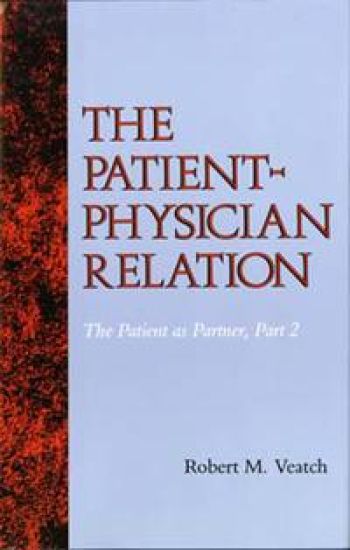
The Patient-Physician Relation

The Patient-Physician Relation

Robert M. Veatch

Indiana University Press
1991
sidottu
"Throughout the past two decades, when medical ethics has had a renaissance, Robert Veatch has been a leading contributor to its dialogue and advance. This collection of his work shows the breadth and the cogency of his thinking. . . . it is a book worth having." —Journal of the American Medical Association " . . . a fascinating dissection of almost every aspect of the doctor-patient relationship. . . . strongly recommended reading for all health care workers interested in this rapidly evolving field." —Queen's Quarterly "This outstanding discussion of important current medical issues is a valuable addition to academic and professional libraries." —Choice " . . . an important contribution to bioethics . . . certain to provoke controversy in the field." —Medical Humanities Review "Lucid and well-argued . . . " —Religious Studies Review This book heralds the imminent demise of "doctor knows best." In it, Robert M. Veatch proposes a postmodern medicine in which decisions about patient care will routinely involve both doctor and patient—not only in ethically complex cases such as the termination of life-sustaining treatment, but in everyday care as well.
Ethics, Trust, and the Professions

Ethics, Trust, and the Professions

Edmund D. Pellegrino; Robert M. Veatch; John P. Langan

Georgetown University Press
1991
pokkari
The essays in "Ethics, Trust, and the Professions" probe the nature of the fiduciary relationship that binds client to lawyer, believer to minister, and patient to doctor. Angles of approach include history, sociology, philosophy, and culture, and their very multiplicity reveals how difficult we find it to formulate a code of ethics which will insure a relationship of trust between the professional and the public.