Kirjojen hintavertailu. Mukana 12 595 353 kirjaa ja 12 kauppaa.

Kirjailija

Robert McCormick

Kirjat ja teokset yhdessä paikassa: 9 kirjaa, julkaisuja vuosilta 2007-2023, suosituimpien joukossa Curriculum Evaluation in Schools. Vertaile teosten hintoja ja tarkista saatavuus suomalaisista kirjakaupoista.

9 kirjaa

Kirjojen julkaisuhaarukka 2007-2023.

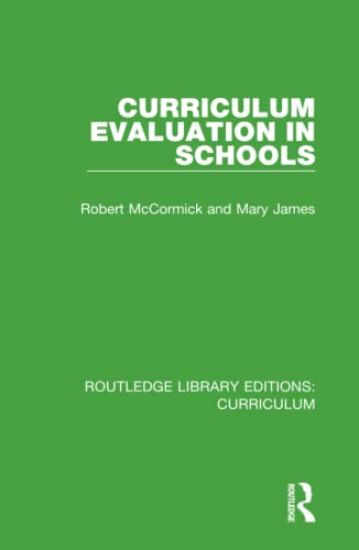
Curriculum Evaluation in Schools

Curriculum Evaluation in Schools

Robert McCormick; Mary James

Routledge
2020
nidottu
Originally published in 1983 and as a second edition in 1988. An attempt is made in this book to disentangle some of the professional, ethical, political, theoretical and practical issues involved in curriculum evaluation. This book present evidence concerning a number of evaluation strategies and techniques, drawing on experience in several countries, including the UK, Australia and the US, to debate the potential of insider and outsider approaches to evaluation, and combinations of the two. It also offers a practical source book for those wishing to plan and conduct curriculum evaluations. Finally, it considers the crucial question of how evaluation can influence curriculum action and, thereby, teaching and learning.
Abandoned Ozarks: Southwest Missouri

Abandoned Ozarks: Southwest Missouri

Robert McCormick

America Through Time
2023
nidottu
A haunting visual journey through Southwest Missouri's abandoned schools, churches, mills, and homesteads, revealing the forgotten cultural fabric of the Ozarks.Abandoned Ozarks: Southwest Missouri offers a poignant, artistic, and sometimes sorrowful look at abandoned structures that have helped shape the culture and society of the rural Ozarks region and the people who live there. Photographer and author Robert McCormick takes you on a colorful and historical journey into the past with his haunting and evocative photos of the buildings that helped knit together rural communities and families in ways that are often forgotten in today's fast-paced and homogenized world. As rural communities and schools were consolidated in the mid-twentieth century, many historic structures were left abandoned to decay, even as others were repurposed for unorthodox uses or preserved for their cultural significance. McCormick has traveled extensively throughout the region over a period of years to find the most historically significant and architecturally interesting examples of schoolhouses, churches, general stores, mills, barns, and farmhouses that showcase the unique identity of Ozarks inhabitants. Join the author on a nostalgic journey into the Ozarks' past.
Curriculum Evaluation in Schools

Curriculum Evaluation in Schools

Robert McCormick; Mary James

Routledge
2018
sidottu
Originally published in 1983 and as a second edition in 1988. An attempt is made in this book to disentangle some of the professional, ethical, political, theoretical and practical issues involved in curriculum evaluation. This book present evidence concerning a number of evaluation strategies and techniques, drawing on experience in several countries, including the UK, Australia and the US, to debate the potential of insider and outsider approaches to evaluation, and combinations of the two. It also offers a practical source book for those wishing to plan and conduct curriculum evaluations. Finally, it considers the crucial question of how evaluation can influence curriculum action and, thereby, teaching and learning.
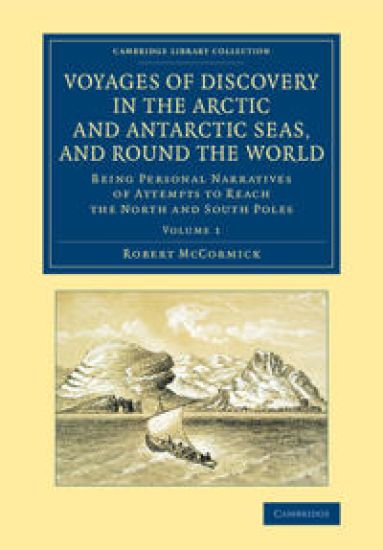
Voyages of Discovery in the Arctic and Antarctic Seas, and round the World
Published in 1884 and illustrated with over 100 of his own drawings and maps, this two-volume work by the doctor and naturalist Robert McCormick (1800–90) provides an account of his voyages in the Arctic with William Parry and in the Antarctic with James Clark Ross, noting also his part in the search for Sir John Franklin. Incorporating a very detailed autobiography, McCormick's work also provides many details relating to natural history and geology. Volume 1 is mainly devoted to his Antarctic voyage (1839–43), during which he also visited St Helena, the Kerguelen Islands, Australia, New Zealand, the Falkland Islands and Tierra del Fuego. During three attempts to reach the South Pole the expedition explored the Ross Sea, described the ice barrier, and raised the British flag to claim possession. The volume ends with the abortive attempt in 1827 to reach the North Pole via Spitsbergen.
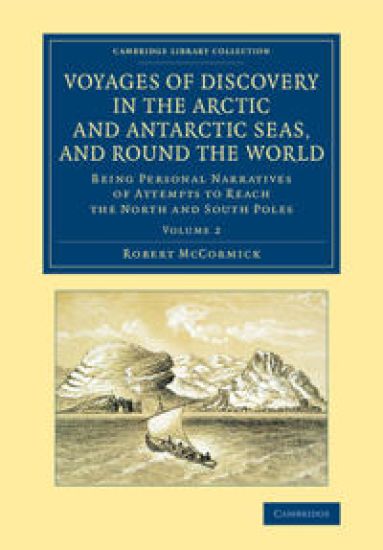
Voyages of Discovery in the Arctic and Antarctic Seas, and round the World
Published in 1884 and illustrated with over 100 of his own drawings and maps, this two-volume work by the doctor and naturalist Robert McCormick (1800–90) provides an account of his voyages in the Arctic with William Parry and in the Antarctic with James Clark Ross, noting also his part in the search for Sir John Franklin. Incorporating a very detailed autobiography, McCormick's work also provides many details relating to natural history and geology. Volume 2 describes his role in the 1852–4 mission to find Franklin in the Arctic, including an open boat voyage up the Wellington Channel. The appendices provide notes on maintaining health in polar climes. This is followed by McCormick's autobiography, tracing his struggles to gain promotion in his naval career. Copies of correspondence relating to the Franklin search reveal his battle to have his ideas accepted by the Admiralty.
Researching and Understanding Educational Networks

Researching and Understanding Educational Networks

Robert McCormick; Alison Fox; Patrick Carmichael; Richard Procter

Routledge
2010
nidottu
In the twenty-first century, what could be more important than networks? Such is the power of their influence and attendant technologies that it is unsurprising that our thinking about networks is permeated with images and metaphors from electronic networks. This orientation may equally influence thinking about education, whether that is of students or teachers.Researching and Understanding Educational Networks extends the discussion of educational networks in a unique and novel way by relating it to teacher learning. Following an investigation of teacher and school networks in the UK, the authors found that theoretical perspectives taken from existing work on such networks were not adequate to provide an understanding of their potential, nor to provide the basis for researching them in ways that reflected the variety of teacher experience.This book presents analyses of the problems with existing theories of teacher learning, which for example draw on ideas of 'communities of practice', and explores what network theories can be brought to the problem of how teachers and schools create and share new knowledge about practice. Innovative networking theories discussed include:social network analysissocial capital theoriesactor-network theoryinvestigations of electronic networks including computer-meditated conferencinghow people learn at events such as conferences.Researching and Understanding Educational Networks explores a new application of networks theories derived from quite different fields of work, and extends it both by being concerned about networks beyond organisations and specifically about educational networks. Their application to educational networks, and to teacher learning in particular, is a unique contribution of the book. This enables it to be of interest to both researchers and those studying for higher degrees, including students who are professionals working in schools.
Researching and Understanding Educational Networks

Researching and Understanding Educational Networks

Robert McCormick; Alison Fox; Patrick Carmichael; Richard Procter

Routledge
2010
sidottu
In the twenty-first century, what could be more important than networks? Such is the power of their influence and attendant technologies that it is unsurprising that our thinking about networks is permeated with images and metaphors from electronic networks. This orientation may equally influence thinking about education, whether that is of students or teachers.Researching and Understanding Educational Networks extends the discussion of educational networks in a unique and novel way by relating it to teacher learning. Following an investigation of teacher and school networks in the UK, the authors found that theoretical perspectives taken from existing work on such networks were not adequate to provide an understanding of their potential, nor to provide the basis for researching them in ways that reflected the variety of teacher experience.This book presents analyses of the problems with existing theories of teacher learning, which for example draw on ideas of 'communities of practice', and explores what network theories can be brought to the problem of how teachers and schools create and share new knowledge about practice. Innovative networking theories discussed include:social network analysissocial capital theoriesactor-network theoryinvestigations of electronic networks including computer-meditated conferencinghow people learn at events such as conferences.Researching and Understanding Educational Networks explores a new application of networks theories derived from quite different fields of work, and extends it both by being concerned about networks beyond organisations and specifically about educational networks. Their application to educational networks, and to teacher learning in particular, is a unique contribution of the book. This enables it to be of interest to both researchers and those studying for higher degrees, including students who are professionals working in schools.
Improving Learning How to Learn

Improving Learning How to Learn

Mary James; Robert McCormick; Paul Black; Patrick Carmichael; Mary-Jane Drummond; Alison Fox; John MacBeath; Bethan Marshall; David Pedder; Richard Procter; Sue Swaffield; Joanna Swann; Dylan Wiliam

Routledge
2007
sidottu
Learning how to learn is an essential preparation for lifelong learning. Whilst this is widely acknowledged by teachers, they have lacked a rich professional knowledge base from which they can teach their pupils how to learn. This book makes a major contribution to the creation of such a professional knowledge base for teachers by building on previous work associated with ‘formative assessment’ or ‘assessment for learning’ which has a strong evidence base, and is now being promoted nationally and internationally. However, it adds an important new dimension by reporting the conditions within schools, and across networks of schools, that are conducive to the promotion, in classrooms, of learning how to learn as an extension of assessment for learning. There is a companion book, Learning How to Learn in Classrooms: Tools for schools (also available from Routledge), which provides practical resources for those teachers looking to put into practice the principles covered in this book.
Improving Learning How to Learn

Improving Learning How to Learn

Mary James; Robert McCormick; Paul Black; Patrick Carmichael; Mary-Jane Drummond; Alison Fox; John MacBeath; Bethan Marshall; David Pedder; Richard Procter; Sue Swaffield; Joanna Swann; Dylan Wiliam

Routledge
2007
nidottu
Learning how to learn is an essential preparation for lifelong learning. Whilst this is widely acknowledged by teachers, they have lacked a rich professional knowledge base from which they can teach their pupils how to learn. This book makes a major contribution to the creation of such a professional knowledge base for teachers by building on previous work associated with ‘formative assessment’ or ‘assessment for learning’ which has a strong evidence base, and is now being promoted nationally and internationally. However, it adds an important new dimension by reporting the conditions within schools, and across networks of schools, that are conducive to the promotion, in classrooms, of learning how to learn as an extension of assessment for learning. There is a companion book, Learning How to Learn in Classrooms: Tools for schools (also available from Routledge), which provides practical resources for those teachers looking to put into practice the principles covered in this book.