Kirjojen hintavertailu. Mukana 12 595 353 kirjaa ja 12 kauppaa.

Kirjailija

Robert McRuer

Kirjat ja teokset yhdessä paikassa: 9 kirjaa, julkaisuja vuosilta 1997-2026, suosituimpien joukossa Disability, Revolution. Vertaile teosten hintoja ja tarkista saatavuus suomalaisista kirjakaupoista.

9 kirjaa

Kirjojen julkaisuhaarukka 1997-2026.

Disability, Revolution

Disability, Revolution

Robert McRuer

University of California Press
2026
pokkari
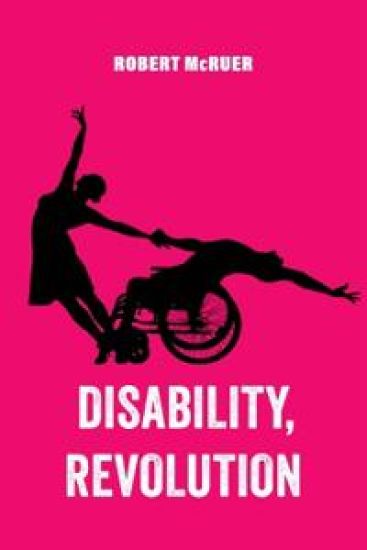
What revolutionary disability politics look like today, with lessons for larger liberatory movements. In recent political times, disability identity has been mobilized in ways that paradoxically compound bodily injury and disability. This single-issue approach obscures the oppression of disabled people and prevents solidarity across difference. In Disability, Revolution, Robert McRuer introduces alternatives to “one-dimensional disability,” providing an accessible overview of disability justice movements and their relevance to larger emancipatory coalitions. Exploring the most prominent examples from the past several decades, the book focuses on the convergence of queer and crip movements, mad pride, intersectional disability justice work, neurodiversity, and the globalization of disability alliances. Essential for anyone interested in disability politics, this book shows how these multivalent movements help us imagine alternative disabled worlds.
Disability, Revolution

Disability, Revolution

Robert McRuer

University of California Press
2026
sidottu
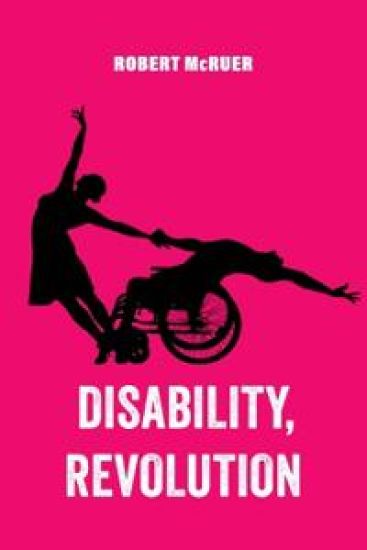
What revolutionary disability politics look like today, with lessons for larger liberatory movements. In recent political times, disability identity has been mobilized in ways that paradoxically compound bodily injury and disability. This single-issue approach obscures the oppression of disabled people and prevents solidarity across difference. In Disability, Revolution, Robert McRuer introduces alternatives to “one-dimensional disability,” providing an accessible overview of disability justice movements and their relevance to larger emancipatory coalitions. Exploring the most prominent examples from the past several decades, the book focuses on the convergence of queer and crip movements, mad pride, intersectional disability justice work, neurodiversity, and the globalization of disability alliances. Essential for anyone interested in disability politics, this book shows how these multivalent movements help us imagine alternative disabled worlds.

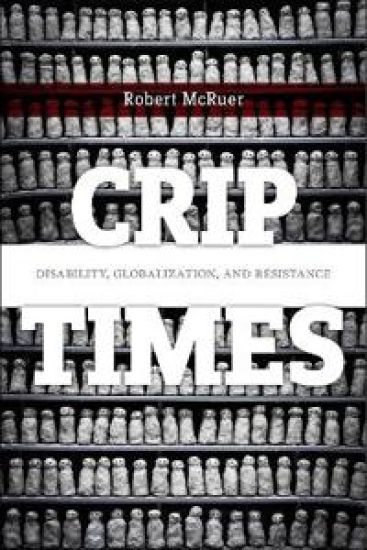
Crip Times

Crip Times

Robert McRuer

New York University Press
2018
sidottu
Contends that disability is a central but misunderstood element of global austerity politics. Broadly attentive to the political and economic shifts of the last several decades, Robert McRuer asks how disability activists, artists and social movements generate change and resist the dominant forms of globalization in an age of austerity, or "crip times." Throughout Crip Times, McRuer considers how transnational queer disability theory and culture—activism, blogs, art, photography, literature, and performance—provide important and generative sites for both contesting austerity politics and imagining alternatives. The book engages various cultural flashpoints, including the spectacle surrounding the London 2012 Olympic and Paralympic Games; the murder trial of South African Paralympian Oscar Pistorius; the photography of Brazilian artist Livia Radwanski which documents the gentrification of Colonia Roma in Mexico City; the defiance of Chilean students demanding a free and accessible education for all; the sculpture and performance of UK artist Liz Crow; and the problematic rhetoric of "aspiration" dependent upon both able-bodied and disabled figurations that emerged in Thatcher's England. Crip Times asserts that disabled people themselves are demanding that disability be central to our understanding of political economy and uneven development and suggests that, in some locations, their demand for disability justice is starting to register. Ultimately, McRuer argues that a politics of austerity will always generate the compulsion to fortify borders and to separate a narrowly defined "us" in need of protection from "them."
Crip Times

Crip Times

Robert McRuer

New York University Press
2018
pokkari
Contends that disability is a central but misunderstood element of global austerity politics. Broadly attentive to the political and economic shifts of the last several decades, Robert McRuer asks how disability activists, artists and social movements generate change and resist the dominant forms of globalization in an age of austerity, or "crip times." Throughout Crip Times, McRuer considers how transnational queer disability theory and culture—activism, blogs, art, photography, literature, and performance—provide important and generative sites for both contesting austerity politics and imagining alternatives. The book engages various cultural flashpoints, including the spectacle surrounding the London 2012 Olympic and Paralympic Games; the murder trial of South African Paralympian Oscar Pistorius; the photography of Brazilian artist Livia Radwanski which documents the gentrification of Colonia Roma in Mexico City; the defiance of Chilean students demanding a free and accessible education for all; the sculpture and performance of UK artist Liz Crow; and the problematic rhetoric of "aspiration" dependent upon both able-bodied and disabled figurations that emerged in Thatcher's England. Crip Times asserts that disabled people themselves are demanding that disability be central to our understanding of political economy and uneven development and suggests that, in some locations, their demand for disability justice is starting to register. Ultimately, McRuer argues that a politics of austerity will always generate the compulsion to fortify borders and to separate a narrowly defined "us" in need of protection from "them."
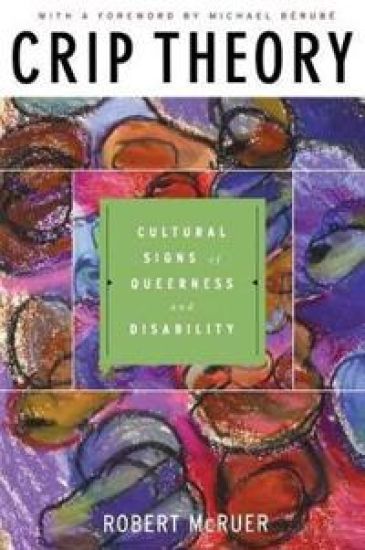
Crip Theory

Crip Theory

Robert McRuer; Michael Bérubé

New York University Press
2006
pokkari
A bold and contemporary discourse of the intersection of disability studies and queer studies Crip Theory attends to the contemporary cultures of disability and queerness that are coming out all over. Both disability studies and queer theory are centrally concerned with how bodies, pleasures, and identities are represented as "normal" or as abject, but Crip Theory is the first book to analyze thoroughly the ways in which these interdisciplinary fields inform each other. Drawing on feminist theory, African American and Latino/a cultural theories, composition studies, film and television studies, and theories of globalization and counter-globalization, Robert McRuer articulates the central concerns of crip theory and considers how such a critical perspective might impact cultural and historical inquiry in the humanities. Crip Theory puts forward readings of the Sharon Kowalski story, the performance art of Bob Flanagan, and the journals of Gary Fisher, as well as critiques of the domesticated queerness and disability marketed by the Millennium March, or Bravo TV's Queer Eye for the Straight Guy. McRuer examines how dominant and marginal bodily and sexual identities are composed, and considers the vibrant ways that disability and queerness unsettle and re-write those identities in order to insist that another world is possible.
Crip Theory

Crip Theory

Robert McRuer; Michael Bérubé

New York University Press
2006
sidottu
A bold and contemporary discourse of the intersection of disability studies and queer studies Crip Theory attends to the contemporary cultures of disability and queerness that are coming out all over. Both disability studies and queer theory are centrally concerned with how bodies, pleasures, and identities are represented as “normal” or as abject, but Crip Theory is the first book to analyze thoroughly the ways in which these interdisciplinary fields inform each other. Drawing on feminist theory, African American and Latino/a cultural theories, composition studies, film and television studies, and theories of globalization and counter-globalization, Robert McRuer articulates the central concerns of crip theory and considers how such a critical perspective might impact cultural and historical inquiry in the humanities. Crip Theory puts forward readings of the Sharon Kowalski story, the performance art of Bob Flanagan, and the journals of Gary Fisher, as well as critiques of the domesticated queerness and disability marketed by the Millennium March, or Bravo TV’s Queer Eye for the Straight Guy. McRuer examines how dominant and marginal bodily and sexual identities are composed, and considers the vibrant ways that disability and queerness unsettle and re-write those identities in order to insist that another world is possible.
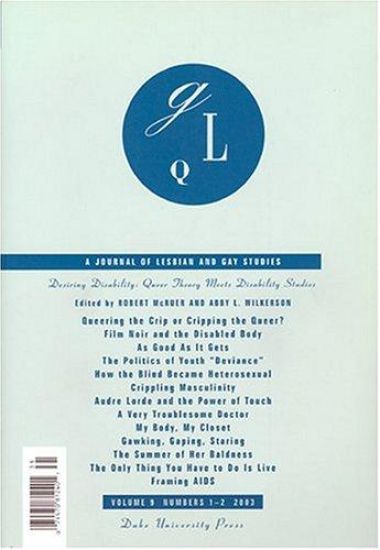
Desiring Disability

Desiring Disability

Robert McRuer; Ellen Samuels

Duke University Press
2003
pokkari
This title explores how the frameworks for queer theory and disability studies suggest new possibilities for one another, for other identity-based frameworks of activism and scholarship, and for cultural studies in general.
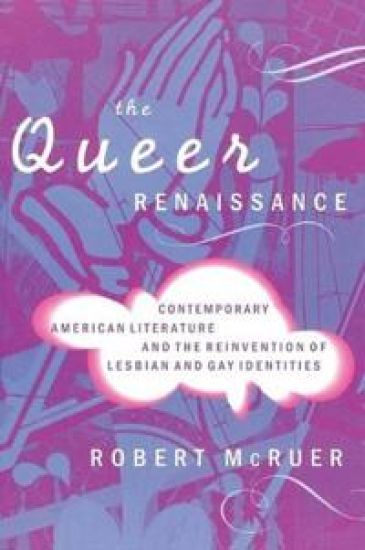
The Queer Renaissance

The Queer Renaissance

Robert McRuer

New York University Press
1997
pokkari
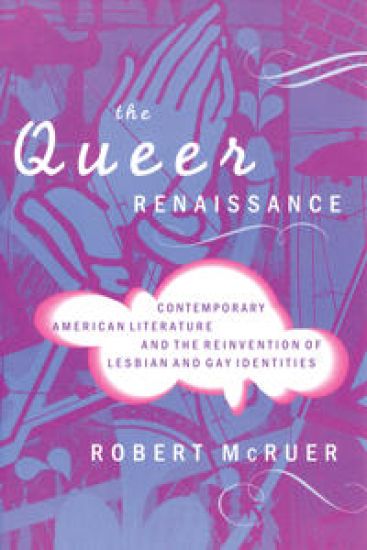
Before the 1969 Stonewall Riots ushered in the contemporary gay liberation movement, overt representations of same-sex desire in American literature and the arts were few and far between. Even in the 1970s, when gay and lesbian cultures began to register on our national consciousness, such work was still quite rare. In the 1980s and 90s, however, all that changed. The Queer Renaissance puts a name to the unprecedented outpouring of creative work by openly lesbian and gay novelists, poets, and playwrights in the past two decades. This volume is one of the first to analyze critically this cultural awakening and is one of the only books to consider the work of gay male and lesbian writers together. Most importantly, The Queer Renaissance is the first book to consider how this wave of creative activity has worked in tandem with a flourishing of radical queer politics. The Queer Renaissance explores the work of such important figures as Audre Lorde, Edmund White, Randall Kenan, Gloria Anzalda, Tony Kushner, and Sarah Schulman to question the dichotomy between art and activism. In addition, The Queer Renaissance interrogates the ways queer theory deploys, intersects with, and contests contemporary theoretical movements such as cultural studies, feminist theory, African American theory, and Chicano/a theory.
The Queer Renaissance

The Queer Renaissance

Robert McRuer

New York University Press
1997
sidottu
Before the 1969 Stonewall Riots ushered in the contemporary gay liberation movement, overt representations of same-sex desire in American literature and the arts were few and far between. Even in the 1970s, when gay and lesbian cultures began to register on our national consciousness, such work was still quite rare. In the 1980s and 90s, however, all that changed. The Queer Renaissance puts a name to the unprecedented outpouring of creative work by openly lesbian and gay novelists, poets, and playwrights in the past two decades. This volume is one of the first to analyze critically this cultural awakening and is one of the only books to consider the work of gay male and lesbian writers together. Most importantly, The Queer Renaissance is the first book to consider how this wave of creative activity has worked in tandem with a flourishing of radical queer politics. The Queer Renaissance explores the work of such important figures as Audre Lorde, Edmund White, Randall Kenan, Gloria Anzalda, Tony Kushner, and Sarah Schulman to question the dichotomy between art and activism. In addition, The Queer Renaissance interrogates the ways queer theory deploys, intersects with, and contests contemporary theoretical movements such as cultural studies, feminist theory, African American theory, and Chicano/a theory.