Kirjojen hintavertailu. Mukana 12 175 155 kirjaa ja 12 kauppaa.
Kirjailija
Robert Mshengu Kavanagh
Kirjat ja teokset yhdessä paikassa: 13 kirjaa, julkaisuja vuosilta 2014-2019, suosituimpien joukossa Theatre and Cultural Struggle under Apartheid. Vertaile teosten hintoja ja tarkista saatavuus suomalaisista kirjakaupoista.
This, the fifth in the series of selected plays, features three plays - Yedebubu Duka: Footsteps in the South South Africa], Mavambo: First Steps Zimbabwe] and The Tree of Ghosts Namibia] - which span thirty five years and are situated in three countries. Apart from coming from different Southern African countries, they have one thing in common, their liberations struggles - the ANC and PAC's struggle against apartheid; ZANU-PF and PF-ZAPU's struggle for Zimbabwean independence; and SWAPO's struggle for Namibian independence. All three plays were adapted from existing texts - From Shantytown to Forest by Norman Duka, Son of the Soil by Wilson Katiyo and Ghosts by Henrik Ibsen.
Adam Kok is a fictional character. A Griqua, descended from an all too intimate follower of the legendary Griqua chief, Adam Kok. His ancient forebear handed down the line his own taste for other men's wives, including the chief's, and the chief's modern namesake followed dedicatedly in his forebear's footsteps. Having participated in the armed struggle against the apartheid regime, Adam Kok came to live in Zimbabwe, where he married the beautiful and upright, Rudo. Although he died a few years back, Adam used his job as a popular human interest journalist for a Harare newspaper to good effect. Adam was a great lover of women, a latter day Don Juan or Giacomo Casanova, an Africanist, a staunch Griqua patriot, an Epicurean when it came to Scots whisky and a frequenter of drinking holes, a man whose iconoclastic effusions were a cocktail of the truth people do not like to hear, and pure evil. A photographic negative, whose whiteness forced one to think of black and whose blackness made one think of white - an immoral scoundrel. Though almost all the stories relate the unabashed Utilitarianism of Adam's philosophy of life, many of them tackle issues of current importance in Zimbabwe, in Africa and the World. The narrator sets up a dialogue between his friend, Adam, and the reader in order to explore these issues. The result is a dialectic between Adam's own scandalous thoughts and deeds, the idea's of his wife, Rudo, who is a devout Catholic, the reader and the narrator himself, who is a socialist. In the process a fascinating cross-section of Zimbabwean as well as global social life and textures emerges. The original idea was inspired by Stuart Cloete's tales of Jean Macaque. His witty, iconoclastic and amoral depiction of scandalous situations in the capital of love, Paris, seemed to ring some serious bells when it came to the goings-on in Harare, the Sunshine City, and also a capital - if not of love - let us say sexual adventure.
The Selected Plays series features theatre work in which Robert Mshengu Kavanagh played a leading role, as playmaker, director and/or actor. The first in the series featured the work of Workshop '71 in South Africa in the 1970s. The second volume, featured the political theatre of the socialist Frontline theatre group, Zambuko/Izibuko, in the 1980s and early '90s in Zimbabwe, the period that followed the coming of independence to Zimbabwe and the intensification in South Africa and the Southern African region of the struggle against apartheid. This volume is a collection of plays Kavanagh was involved in between 2002 and 2010 while working with the New Horizon Youth Theatre Company, a project in the youth programme of the Zimbabwean arts education for development and employment organisation, the CHIPAWO Trust, It includes four plays and an appendix in which an unfinished play is offered to directors and youth theatre companies for development into a finished production.The four plays are as follows: The Little Man of Murehwa, a hilarious but profound social satire set in the Zimbabwean countryside, based on a story by Hans Christian Andersen; a dramatization of Charles Mungoshi's classic novel; Waiting for the Rain; a creative adaptation of Henrik Ibsen's Peer Gynt, called A Journey to Yourself; an interrogation of Norah's actions in Ibsen's play, A Doll's House, in the context of Zimbabwean culture and social norms, called The Most Wonderful Thing of All; and, as an Appendix, the unfinished script of Secrets, an adaptation of Lutanga Shaba's book on her life and struggles as a woman who is HIV-positive. SELECTED PLAYS is a collection of plays with a difference. It features the work of South African theatre practitioner, arts educationist, cultural activist and academic, Robert Mshengu Kavanagh, in South Africa, England, Ethiopia and Zimbabwe. However, as Kavanagh himself makes clear, he did not single-handedly write a single one of them. They are all plays in which he worked with actors or other writers in a playmaking process which he led and which produced a performance which he directed.
In this book, South African performer and activist Robert Mshengu Kavanagh reveals the complex and conflicting interplay of class, nation and race in South African theatre under Apartheid. Evoking an era when theatre itself became a political battleground, Kavanagh displays how the struggle against Apartheid was played out on the stage as well as on the streets. Kavanagh's account spans three very different areas of South African theatre, with the author considering the merits and limitations of the multi-racial theatre projects created by white liberals; the popular commercial musicals staged for black audiences by emergent black entrepreneurs; and the efforts of the Black Consciousness Movement to forge a distinctly African form of revolutionary theatre in the 1970s. The result is a highly readable, pioneering study of the theatre at a time of unprecedented upheaval, diversity and innovation, with Kavanagh's cogent analysis demonstrating the subtle ways in which culture and the arts can become an effective means of challenging oppression.
In this book, South African performer and activist Robert Mshengu Kavanagh reveals the complex and conflicting interplay of class, nation and race in South African theatre under Apartheid. Evoking an era when theatre itself became a political battleground, Kavanagh displays how the struggle against Apartheid was played out on the stage as well as on the streets.Kavanagh's account spans three very different areas of South African theatre, with the author considering the merits and limitations of the multi-racial theatre projects created by white liberals; the popular commercial musicals staged for black audiences by emergent black entrepreneurs; and the efforts of the Black Consciousness Movement to forge a distinctly African form of revolutionary theatre in the 1970s.The result is a highly readable, pioneering study of the theatre at a time of unprecedented upheaval, diversity and innovation, with Kavanagh's cogent analysis demonstrating the subtle ways in which culture and the arts can become an effective means of challenging oppression.
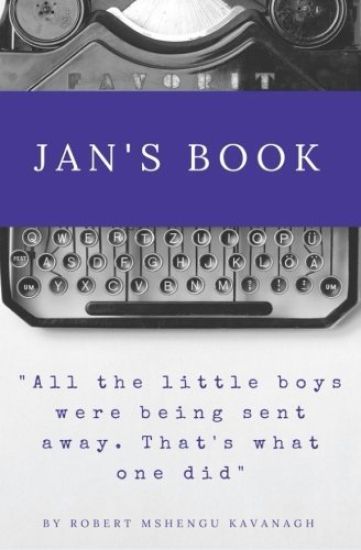
Jan Symons, Head Girl at an exclusive private school in South Africa, meets three young men, Bruce Ferguson, James Donahue and Morris Galliers, at the School Dance, who become important in her life. Ferguson is killed while still at school but continues to impact on her life.As a loved but rather scandalous teacher she becomes best friends with Francis, another teacher, who is shocked by the stories Jan tells her about what goes on at exclusive boarding schools, including the death of Ferguson. She persuades her to write it up as a thesis. Jan's thesis, which she converts into a book, explores the nature of elite white private education and the institution of boarding schools in apartheid South Africa and the potential impact the system might have in the 'New' South Africa and spells out the effects on boys and girls, men and women who go to such schools - as well as to their parents, mothers in particular. In the process the events taking place in the country, beginning with the 1976 Soweto Uprising, and her encounters with the Black Consciousness Movement and the mass democratic movement induce in her a political awakening.Jan's life, her loves and friendships and in particular her struggle to write and eventually publish her book in the teeth of opposition from the academic and social establishment become for her a journey through the life, feelings and experiences of little boys in preparatory boarding schools, bigger boys in prestigious colleges, young men in university residences and then the effects these experiences have on them and their families in their adult lives.
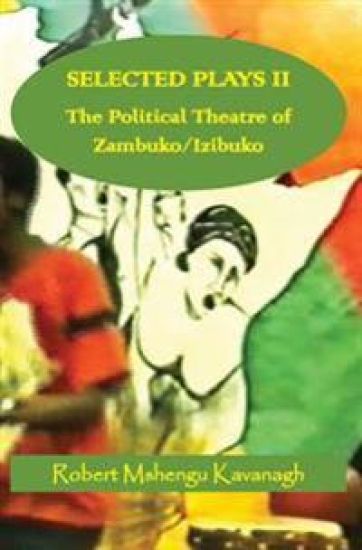
SELECTED PLAYS is a collection of plays with a difference. It features the work of South African theatre practitioner, arts educationist, cultural activist and academic, Robert Mshengu Kavanagh, in South Africa, England, Ethiopia and Zimbabwe. However, as Kavanagh himself makes clear, he did not single-handedly write a single one of them. They are all plays in which he worked with actors or other writers in a playmaking process which he led and which produced a performance which he directed and sometimes acted in. The first in the series featured the work of Workshop '71 in South Africa in the 1970s. This, the second volume, features the political theatre of the socialist Frontline theatre group, Zambuko/ Izibuko in the 1980s and early 90s in Zimbabwe, a the period that followed the coming of independence to Zimbabwe and the intensification in South Africa and the Southern African region of the struggle against apartheid. It was a highly ideological and militant phase in the region's history. The plays of Zambuko/Izibuko reflect this. It's name, in Shona and Ndebele, means 'river-crossing', the crossing from the colonial, racist, exploitative society of the past into a new just and free society. Zambuko/Izibuko was based at the University of Zimbabwe and its membership included cultural activists from various walks of life, all of whom were deeply political and committed to the struggle for social justice. This volume includes four full-length plays, 'Katshaa - the Sound of the AK' an anti-apartheid agit-prop piece], 'Samora Continua' on the history of Mozambique and its struggle for a new society], 'Mandela, the Spirit of No Surrender' how Mandela's inspiration, even in jail, helped the people of South Africa to keep fighting] and 'Simuka Zimbabwe- Zimbabwe Arise' an innovative and trenchant satire on the International Monetary Fund's Structural Adjustment programme in Zimbabwe], and 'Chris Hani: Revolutionary Fighter', a short play staged shortly after the assassination of the ANC and Umkhonto weSizwe freedom-fighter, Chris Hani.The plays are all imaginative and lively, ranging from straight agit-prop to realism and feature lots of songs, dances and physical theatre. Each playscript is prefaced with a background to the play and an account of how it was made. An interesting feature of Zambuko/Izibuko's work was its use of short political pieces created for specific occasions, called 'ngonjera', a concept adapted from Tanzania.
Selected Plays is a collection of plays with a difference. It features the work of South African theatre practitioner, arts educationist, cultural activist and academic, Robert Mshengu Kavanagh, in South Africa, England, Ethiopia and Zimbabwe. However, as Kavanagh himself makes clear, he did not single-handedly write a single one of them. They are all plays in which he worked with actors or other writers in a playmaking process which he led and which produced a performance which he directed. Even the directing method was socialised and democratic, with actors and sometimes visitors free to make suggestions - a form of directing which the Russian director, Yevgeny Vakhtangov, also favoured.All the plays featured in this the first volume of the Selected Plays were produced by the well-known and influential theatre organisation, Experimental Theatre Workshop '71. Founded in 1971 in Johannesburg, Workshop '71 pioneered unsegregated theatre and played an important role in the development of the theatre of the dispossessed majority. All three plays, Crossroads, uHlanga - the Reed and Survival, received enthusiastic reviews when they opened at unsegregated venues in the apartheid South Africa of the 1970s. All three plays were devised through a process of research, acting exercises, improvisations and discussion involving the director, Kavanagh, and the actors. Crossroads was a non-racial production and the cast included members of all the different racial groups. It was one of the first 'workshop theatre' productions in South Africa and possibly the first to make use of almost all the actual languages as they are spoken by South Africans, including tsotsitaal, a language created by black South Africans as a lingua franca and spoken by many urban-based intellectuals, artists and young people. The play was based on the medieval play, Everyman, and the life of a notorious Johannesburg gangster, Lefty Mthembu. It interrogates conventional morality in the context of apartheid oppression. uHlanga is a one-actor play which goes deeply into African history, culture and spiritual experience. The actor, James Mthoba, dazzled with his versatility and skills. As one reviewer wrote, he brought virtually the whole African continent onto the stage. Survival is a four man ensemble theatre piece, witty, fast-moving and also hard-hitting. Based in jail, the four actors explore through music, dance and dialogue the metaphor of prison - the prison inside and the prison outside - revealing in the process how in apartheid South Africa, for the oppressed, society was in itself a prison.
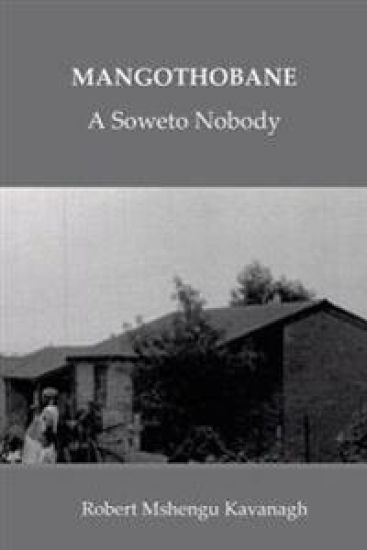
This is the story of a Black South African who was brought up, lived and died in Soweto or thereabouts. It is very unlikely that history will remember him - or the many others like him. No important people attended Vusi's funeral. At one point in his life, he was described by the Chairman of a great gold-mining corporation in South Africa as a 'nobody'. According to the measure of the world, that is what he was.But the dark days of apartheid and the lighter but deceptive days of the new democratic South Africa are well-known for stunting lives and wasting human capital. A white South African who was popularly known by the praise name, Damase, forged in the crucible of apartheid race relations a lifetime friendship with Vusi. According to him, there was a great deal more to the nobody than the world would have thought. The course of Damase and Vusi's friendship begins with a chance meeting in the library of a local university. At first it was the Zulu language that brought Vusi and Damase together - - but their friendship rapidly grew to be so much more. The book describes in lively fashion how that friendship developed and at the same time reveals a lived history - a history of the time and of the place. It is the 1970s in Johannesburg, Soweto and the Reef in general, a time when change was afoot, when the currents of social, economic and cultural developments were converging on the day the end began - June 16th, 1976.The rhythm of their friendship unconsciously follows the beat of the historic drum. In the beginning there are the bwat's, risky but enchanted parties. Vusi has a settled job in the library. The two go to Swaziland for the weekend, pursuing escape and pleasure but finding food for thought. The growing embourgoisement in Soweto, the rise of Black Consciousness, the increased militancy of the workers and the intensification of the battle for economic survival are reflected in Vusi's new house, the loss of his job and his efforts to stand on his own without having to work for the white baas.The growing polarisation between black and white, which provided the stimulus for the great uprising and which set in motion the unstoppable march to freedom, impacts cruelly on Vusi and Damase's friendship as friends and even family begin to decry it - until finally Damase decides to leave his homeland. Much later he returns for periodic visits and Vusi and he renew their friendship. It is during this period that Damase comes to know what Vusi has been through and what he has achieved in the tumultuous years before the negotiations that led to the death of legislative apartheid. He also comes to know how he has been cheated and robbed of the fruits of his achievements in the new South Africa and sadly watches as Vusi's entrails, like the Spartan boy's, are devoured by the wolf of rage and impotence. Despite the heavy pall of apartheid and its tragic waste and degradation, people managed to make for themselves such sweetness - as the story of Vusi demonstrates - and in the process innovate and conjure exhilarating ideas, wit and behaviour. All this is exemplified in the power, versatility and inventiveness of the languages they spoke. So the story of Vusi and Damase's friendship is not only a tale of transcultural and racial relations and the history of the time. It is also a linguistic voyage of discovery.
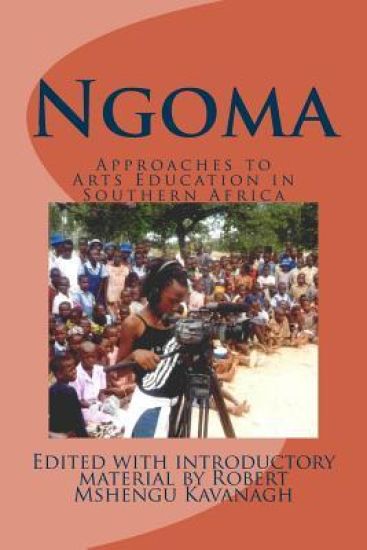
'Ngoma' is a common word in the indigenous languages of the region and its meaning is always associated with the arts - whether it be drum, poetry or song. Ngoma: Approaches to Arts Education in Southern Africa gathers together papers, testimonies and discussions about arts education in the region - with important and inspirational inputs from Ghana and Tanzania - deriving from the work and experience of some of the region's leading arts education personalities and organisations. Key colloquia from which the book draws its material are: a UNESCO Regional Conference on Arts Education held in Port Elizabeth, South Africa, in 2001; the Southern African Theatre Initiative SATI] 'Finding Feet Conference' in Windhoek in 2003; and especially the 'Approaches to Arts Education Worldwide' Symposium, organisated with the assistance of UNESCO by the Zimbabwean Arts Education for Development and Employment organisation, CHIPAWO, at Lake Chivero and Harare in 2002.The performing arts in Southern Africa have had a dynamic and illustrious history. The traditional cultures of the region are extraordinarily rich in orature, sculpture, ritual, music and dance. Owing largely to the high degree of urbanisation caused by heavy European settlement and the exploitation of the region's natural resources, mining in particular, the traditional art forms rapidly transformed, proliferated and produced exciting new urban artistic and performance forms. The whole region today is artistically vibrant and innovative.Yet almost all of this outpouring of literary, visual and performance art has had little to do with formal arts education. Though informal arts education has played a heroic role, there is still a great need for research and development, documentation and publication, networking, training, collaboration and, above all, consciousness-raising. For it is a paradox that a region that has such a rich artistic history and current practice, has to struggle for acceptance. In general, governments, authorities, school heads and parents have a low opinion of the arts - both as a contributor to social and human development but also as a key driver in the forging of a humane, intelligent, expressive, creative, sensitive and democratic society. The region is not alone in tackling its challenges in the arts and arts education. Through the interest and support of organisations like ASSITEJ, IATA, SIDA, NORAD, DANIDA and above all UNESCO a number of important conferences and colloquia have been held and arts education organisations assisted not only to survive and grow but also to bring together similar arts organisation in different countries. In this book arts educators from Ghana, Malawi, Namibia, South Africa, Tanzania, Zambia and Zimbabwe talk to each other about their work. Getting together and discussing was very much the tenor of their meetings. Everyone agreed that it was this meeting, comparing notes, discussing challenges and inspiring each other with achievements registered in the face of all the odds that arts education in region needs. The pages of this book are alive with the words and experiences of Southern Africans committed to the arts and above all absolutely dedicated to the great mission of bringing them to children and young people and changing current negative social practices and bigotry.
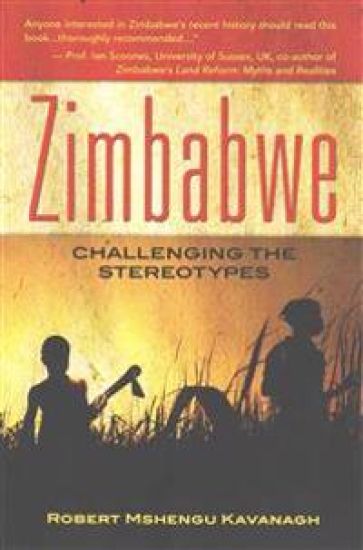
"Zimbabwe: Challenging the Stereotypes" brings the story of Zimbabwe up-to-date (2014) in a dramatic, readable, firsthand description of thirty four years of Zimbabwe's history by a South African academic, writer and arts educationist who went through it all - from Independence to the present. While it confirms some of the West's criticisms, it offers a unique alternative viewpoint and questions a number of long-held and seldom challenged beliefs, including the almost universal clich that at Independence Zimbabwe had everything going for it and threw it all away through bad government. It offers a fresh assessment of Robert Mugabe, Zimbabwe's military involvement in the Congo, the Gukurahundi massacres in Matebeleland, sanctions, human rights, the rule of law, the media and culture in Zimbabwe and builds on recent research which demonstrates that the reality of the Land Reform and other aspects of the country's recent history belie the unquestioned and widely-propagated myths.Extracts from pre-publication previews: "Anyone interested in Zimbabwe's recent history should read this book...thoroughly recommended..." - Prof. Ian Scoones, University of Sussex, UK, co-author of Zimbabwe's Land Reform: Myths and Realities "Refreshingly daring, original, inventive and captivating, ...highly controversial and likely to stir heated debate" - Prof. Micere Githae Mugo, Syracuse University, US, Kenyan poet, playwright and essayist, author of Writing and Speaking from the Heart of My Mind "Told with brutal honesty. A book all South Africans - and indeed all who wish to learn - must read" - Maishe Maponya, South African playwright and poet, author of The Hungry Earth and Gangsters.