Kirjojen hintavertailu. Mukana 12 390 323 kirjaa ja 12 kauppaa.

Kirjailija

Robert N. Proctor

Kirjat ja teokset yhdessä paikassa: 5 kirjaa, julkaisuja vuosilta 1990-2014, suosituimpien joukossa La Guerre Des Nazis Contre Le Cancer. Vertaile teosten hintoja ja tarkista saatavuus suomalaisista kirjakaupoista.

5 kirjaa

Kirjojen julkaisuhaarukka 1990-2014.

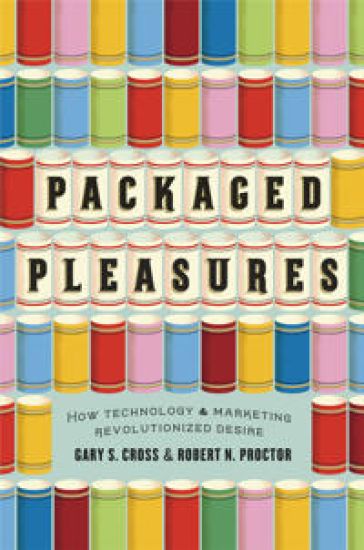
Packaged Pleasures

Packaged Pleasures

Gary S. Cross; Robert N. Proctor

University of Chicago Press
2014
sidottu
From the candy bar to the cigarette, records to roller coasters, a technological revolution during the last quarter of the nineteenth century precipitated a colossal shift in human consumption and sensual experience. Food, drink, and many other consumer goods came to be mass-produced, bottled, canned, condensed, and distilled, unleashing new and intensified surges of pleasure, delight, thrill - and addictions. In Packaged Pleasures, Gary S. Cross and Robert N. Proctor delve into an unchartered chapter of American history, shedding new light on the origins of modern consumer culture and how technologies have transformed human sensory experience. In the space of only a few decades, junk foods, cigarettes, movies, recorded sound, and thrill rides brought about a revolution in what it means to taste, smell, see, hear, and touch. New techniques of boxing, labeling, and tubing gave consumers virtually unlimited access to pleasures they could simply unwrap and enjoy. Manufacturers generated a seemingly endless stream of sugar-filled, high-fat foods that were delicious but detrimental to health. Mechanically rolled cigarettes entered the market and quickly addicted millions. And many other packaged pleasures dulled or displaced natural and social delights. Yet many of these same new technologies also offered convenient and effective medicines, unprecedented opportunities to enjoy music and the visual arts, and more hygienic, varied, and nutritious food and drink. For better or for worse, sensation became mechanized, commercialized, and, to a large extent, democratized by being made cheap and accessible. Cross and Proctor have delivered an ingeniously constructed history of consumerism and consumer technology that will make us all rethink some of our favorite things.

Golden Holocaust

Golden Holocaust

Robert N. Proctor

University of California Press
2012
sidottu
The cigarette is the deadliest artifact in the history of human civilization. It is also one of the most beguiling, thanks to more than a century of manipulation at the hands of tobacco industry chemists. In "Golden Holocaust", Robert N. Proctor draws on reams of formerly-secret industry documents to explore how the cigarette came to be the most widely-used drug on the planet, with six trillion sticks sold per year. He paints a harrowing picture of tobacco manufacturers conspiring to block the recognition of tobacco-cancer hazards, even as they ensnare legions of scientists and politicians in a web of denial. Proctor tells heretofore untold stories of fraud and subterfuge, and he makes the strongest case to date for a simple yet ambitious remedy: a ban on the manufacture and sale of cigarettes.
La Guerre Des Nazis Contre Le Cancer

La Guerre Des Nazis Contre Le Cancer

Robert N. Proctor

Les Belles Lettres
2001
nidottu
Les medecins nazis commirent d'innombrables atrocites pour tenter de creer, selon le projet dement d'Hitler, la race allemande des seigneurs. Cependant, au cours de ses recherches, l'historien des sciences Robert Proctor a decouvert que l'Allemagne nazie avait des decennies d'avance sur les autres nations dans la mise en place de reformes sanitaires que nous considerons aujourd'hui comme progressistes et socialement responsables. Ainsi, medecins et gouvernement nazis entreprirent de lutter contre l'amiante, les radiations, les pesticides et les colorants alimentaires, tandis que, apres la decouverte d'un lien entre la consommation de tabac et le cancer du poumon, furent lancees de virulentes campagnes anti-tabac, accompagnees de diverses interdictions. Toutes ces mesures s'appuyaient sur l'exemple du Fuhrer lui-meme, non fumeur et vegetarien, dont le corps sain devait etre un modele pour la societe entiere. Cette guerre contre le cancer ne faisait pas que s'en prendre a la maladie elle-meme: elle etait aussi une metaphore, dans la mesure ou, pour les nazis, les juifs et autres ennemis du peuple etaient une tumeur qu'il fallait extirper du corps de l'Allemagne. L'ouvrage de Proctor ne fait pas que reveler, grace a des documents et des archives inexploites a e jour, un aspect inconnu et surprenant du nazisme, il pose aussi des questions fondamentales sur la science - un regime malefique peut-il engendrer une bonne science? - ou l'activisme sanitaire de nos propres societes. Auteur de plusieurs ouvrages sur l'hygienisme racial ou l'influence de la politique sur la lutte contre le cancer, Robert N. Proctor est professeur d'Histoire des Sciences a Pennsylvania State University (Etats-Unis). Traduction et preface de Bernard Frumer.
Value-Free Science?

Value-Free Science?

Robert N. Proctor

Harvard University Press
1991
sidottu
Why have scientists shied away from politics, or defended their work as value free? How has the ideal of neutrality come to dominate the world of science? These are some of the central questions that Robert Proctor addresses in his study of the politics of modern science.Value-Free Science? emphasizes the importance of understanding the political origins and impact of scientific ideas. Proctor lucidly demonstrates how value-neutrality is a reaction to larger political developments, including the use of science by government and industry, the specialization of professional disciplines, and the efforts to stifle intellectual freedoms or to politicize the world of the academy.The first part of the book traces the origins of value-neutrality prior to the eighteenth century. Plato and Aristotle saw contemplative thought as superior to practical action, and this separation of theory and practice is still invoked today in defense of "neutral science." In the seventeenth century the Baconian search for useful knowledge allowed a new and closer tie between theory and practice, but it also isolated moral knowledge from natural philosophy. Another version of neutrality was introduced by the mechanical conception of the universe, in which the idea of a benevolent, human-centered cosmos was replaced with a "devalorized" view of nature.The central part of the book explores the exclusion of politics and morals with the emergence of the social sciences. Proctor highlights the case of Germany, where the ideal of value-neutrality was first articulated in modern form by social scientists seeking to attack or defend Marxism, feminism, and other social movements. He traces the rise and fall of positivist ethical and economic theory, showing that arguments for value-free science often mask concrete political maneuvers. Finally, he reviews critiques of science that have been voiced in recent debates over critical issues in agricultural science, military research, health and medicine, and biological determinism.This provocative book will interest anyone seeking ways to reconcile the ideals of scientific freedom and social responsibility.
Racial Hygiene

Racial Hygiene

Robert N. Proctor

Harvard University Press
1990
nidottu
Examines the participation of scientists and physicians in the construction of Nazi racial policy and discusses sterilization laws, euthanasia programs, public health policies, and the Holocaust