Kirjojen hintavertailu. Mukana 12 595 353 kirjaa ja 12 kauppaa.

Kirjailija

Robert Nash Parker

Kirjat ja teokset yhdessä paikassa: 6 kirjaa, julkaisuja vuosilta 1995-2023, suosituimpien joukossa GIS and Spatial Analysis for the Social Sciences. Vertaile teosten hintoja ja tarkista saatavuus suomalaisista kirjakaupoista.

6 kirjaa

Kirjojen julkaisuhaarukka 1995-2023.

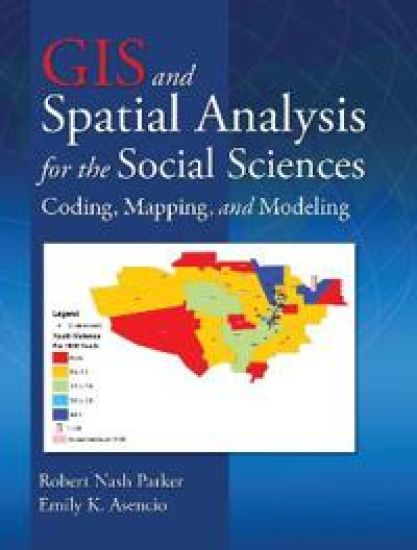
GIS and Spatial Analysis for the Social Sciences

GIS and Spatial Analysis for the Social Sciences

Tony Grubesic; William Pridemore; Robert Nash Parker; Emily K. Asencio

Routledge
2023
nidottu
GIS and Spatial Analysis for the Social Sciences, Second Edition is a foundational text that provides sociologists, criminologists, political scientists, and other social scientists with the methodological logic and techniques for doing spatial analysis in their chosen fields of inquiry. The book provides a wealth of examples as to why these techniques are worth doing, over and above conventional statistical techniques using STATA, R, SPSS or other statistical packages. This new edition will offer a wealth of screenshots from the open source software, QGIS, to give students step-by-step instruction along with an extensive companion website with new data sets and instructor support material.
GIS and Spatial Analysis for the Social Sciences

GIS and Spatial Analysis for the Social Sciences

Tony Grubesic; William Pridemore; Robert Nash Parker; Emily K. Asencio

Routledge
2023
sidottu
GIS and Spatial Analysis for the Social Sciences, Second Edition is a foundational text that provides sociologists, criminologists, political scientists, and other social scientists with the methodological logic and techniques for doing spatial analysis in their chosen fields of inquiry. The book provides a wealth of examples as to why these techniques are worth doing, over and above conventional statistical techniques using STATA, R, SPSS or other statistical packages. This new edition will offer a wealth of screenshots from the open source software, QGIS, to give students step-by-step instruction along with an extensive companion website with new data sets and instructor support material.
Alcohol and Violence

Alcohol and Violence

Robert Nash Parker; Kevin J. McCaffree

Lexington Books
2014
nidottu
Many people have experienced or witnessed situations in which people drinking alcohol get aggressive, obnoxious, and violent. Scientific research has shown evidence of a relationship between alcohol and violence, and even evidence that alcohol plays a role in causing violent and aggressive responses. The book explores a number of aspects of this relationship. If you have been drinking are you more likely to be a victim of crime? If victimized, does drinking alcohol make you more likely to be injured? How does availability of alcohol in the community influence rates of violence among Mexican American youth? Does advertising that links sex and alcohol result in higher rates of sexual assault in Latino neighborhoods? How do elementary school children react to experimentation with drugs, alcohol, and aggression? Do countries outside the United States have alcohol and violence problems, and do these impact men and women differently? We presents original research that shows the depths and conditions under which alcohol and violence are linked, further strengthening the evidence that alcohol use and availability is an important factor in violence in our cities, neighborhoods, school, and homes. The good news is that we regulate alcohol use and availability effectively, with a body of established laws and procedures. We can, therefore, find ways using this existing system to develop new ways to prevent the alcohol related violence studied here. The second half of the book begins this task by laying out the principles of environmental prevention, a strategy that has been very successful in a number of health and safety related domains. The next four chapters show just how environmental prevention strategies have worked, and worked very effectively, to lower rates of violence by reducing alcohol availability and alcohol consumption. The research reported here shows communities different approaches and mechanisms to achieve reductions in violence, and they provide a road map for communities everywhere to follow suit and reduce alcohol related violence. Reducing violence can be accomplished, everyone can do it if they work together, and the result is a safer and better society.
Alcohol and Violence

Alcohol and Violence

Robert Nash Parker; Kevin J. McCaffree

Lexington Books
2012
sidottu
Many people have experienced or witnessed situations in which people drinking alcohol get aggressive, obnoxious, and violent. Scientific research has shown evidence of a relationship between alcohol and violence, and even evidence that alcohol plays a role in causing violent and aggressive responses. The book explores a number of aspects of this relationship. If you have been drinking are you more likely to be a victim of crime? If victimized, does drinking alcohol make you more likely to be injured? How does availability of alcohol in the community influence rates of violence among Mexican American youth? Does advertising that links sex and alcohol result in higher rates of sexual assault in Latino neighborhoods? How do elementary school children react to experimentation with drugs, alcohol, and aggression? Do countries outside the United States have alcohol and violence problems, and do these impact men and women differently? We presents original research that shows the depths and conditions under which alcohol and violence are linked, further strengthening the evidence that alcohol use and availability is an important factor in violence in our cities, neighborhoods, school, and homes. The good news is that we regulate alcohol use and availability effectively, with a body of established laws and procedures. We can, therefore, find ways using this existing system to develop new ways to prevent the alcohol related violence studied here. The second half of the book begins this task by laying out the principles of environmental prevention, a strategy that has been very successful in a number of health and safety related domains. The next four chapters show just how environmental prevention strategies have worked, and worked very effectively, to lower rates of violence by reducing alcohol availability and alcohol consumption. The research reported here shows communities different approaches and mechanisms to achieve reductions in violence, and they provide a road map for communities everywhere to follow suit and reduce alcohol related violence. Reducing violence can be accomplished, everyone can do it if they work together, and the result is a safer and better society.
GIS and Spatial Analysis for the Social Sciences

GIS and Spatial Analysis for the Social Sciences

Robert Nash Parker; Emily K. Asencio

Routledge
2008
sidottu
This is the first book to provide sociologists, criminologists, political scientists, and other social scientists with the methodological logic and techniques for doing spatial analysis in their chosen fields of inquiry. The book contains a wealth of examples as to why these techniques are worth doing, over and above conventional statistical techniques using SPSS or other statistical packages. GIS is a methodological and conceptual approach that allows for the linking together of spatial data, or data that is based on a physical space, with non-spatial data, which can be thought of as any data that contains no direct reference to physical locations.
Alcohol and Homicide

Alcohol and Homicide

Robert Nash Parker

State University of New York Press
1995
pokkari
The relationship between alcohol and homicide in America is explored both historically and theoretically, providing the groundwork for two empirical analyses. The first, a theoretical approach, leads to the development of a selective disinhibition hypothesis, the implications of which are tested in a longitudinal analysis of alcohol availability and homicide in 256 U.S. cities between 1960 and 1980. Alcohol availability was found to significantly increase homicide rates. Availability also interacted with city poverty rates, lack of social bonds, and the age structure to further increase the incidence of murder.The second analysis, policy based, focuses on the impact on youth homicide rates of increases in the minimum age of purchase for alcohol, enacted by most states during the 1980s. This analysis shows that increases in the minimum drinking age had a significant impact on certain types of youth homicide. The book concludes with a discussion of the causes of the alcohol and homicide relationship, public policy and crime control alternatives for reducing alcohol related homicide, and other ongoing research that addresses these and other issues.