Kirjojen hintavertailu. Mukana 12 390 323 kirjaa ja 12 kauppaa.

Kirjailija

Robert O'Meally

Kirjat ja teokset yhdessä paikassa: 5 kirjaa, julkaisuja vuosilta 1995-2022, suosituimpien joukossa Lady Day. Vertaile teosten hintoja ja tarkista saatavuus suomalaisista kirjakaupoista.

5 kirjaa

Kirjojen julkaisuhaarukka 1995-2022.

Antagonistic Cooperation

Antagonistic Cooperation

Robert O'Meally

Columbia University Press
2022
sidottu
Winner, 2023 Columbia University Press Distinguished Book AwardFinalist, 2023 Pauli Murray Book Prize in Black Intellectual History, African American Intellectual History SocietyShortlisted, Historical Nonfiction Legacy Award, Hurston / Wright FoundationRalph Ellison famously characterized ensemble jazz improvisation as “antagonistic cooperation.” Both collaborative and competitive, musicians play with and against one another to create art and community. In Antagonistic Cooperation, Robert G. O’Meally shows how this idea runs throughout twentieth-century African American culture to provide a new history of Black creativity and aesthetics.From the collages of Romare Bearden and paintings of Jean-Michel Basquiat to the fiction of Ralph Ellison and Toni Morrison to the music of Louis Armstrong and Duke Ellington, O’Meally explores how the worlds of African American jazz, art, and literature have informed one another. He argues that these artists drew on the improvisatory nature of jazz and the techniques of collage not as a way to depict a fractured or broken sense of Blackness but rather to see the Black self as beautifully layered and complex. They developed a shared set of methods and motives driven by the belief that art must involve a sense of community. O’Meally’s readings of these artists and their work emphasize how they have not only contributed to understanding of Black history and culture but also provided hope for fulfilling the broken promises of American democracy.
Antagonistic Cooperation

Antagonistic Cooperation

Robert O'Meally

Columbia University Press
2022
pokkari
Winner, 2023 Columbia University Press Distinguished Book AwardFinalist, 2023 Pauli Murray Book Prize in Black Intellectual History, African American Intellectual History SocietyShortlisted, Historical Nonfiction Legacy Award, Hurston / Wright FoundationRalph Ellison famously characterized ensemble jazz improvisation as “antagonistic cooperation.” Both collaborative and competitive, musicians play with and against one another to create art and community. In Antagonistic Cooperation, Robert G. O’Meally shows how this idea runs throughout twentieth-century African American culture to provide a new history of Black creativity and aesthetics.From the collages of Romare Bearden and paintings of Jean-Michel Basquiat to the fiction of Ralph Ellison and Toni Morrison to the music of Louis Armstrong and Duke Ellington, O’Meally explores how the worlds of African American jazz, art, and literature have informed one another. He argues that these artists drew on the improvisatory nature of jazz and the techniques of collage not as a way to depict a fractured or broken sense of Blackness but rather to see the Black self as beautifully layered and complex. They developed a shared set of methods and motives driven by the belief that art must involve a sense of community. O’Meally’s readings of these artists and their work emphasize how they have not only contributed to understanding of Black history and culture but also provided hope for fulfilling the broken promises of American democracy.
Lady Day

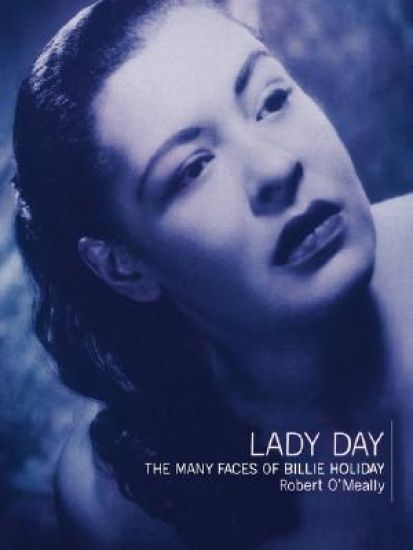
Lady Day

Robert O'Meally

Da Capo Press Inc
2000
pokkari
"Billie Holiday deserves a biography in which her musicianship isn't overshadowed by the tragic events of her life. O'Meally has written that book," says Entertainment Weekly about this absorbing and authoritative account of the greatest jazz singer in history. O'Meally emphasizes Holiday's artistry and training rather than her personal miseries, and he uses voluminous archival material to correct common myths about Holiday. Chronicling her rigorous musical apprenticeship in Baltimore, her reception in New York by Benny Goodman and Duke Ellington, and her work with various musicians, particularly Lester Young, Lady Day is an impassioned testament to Holiday's genius that confirms her place in American jazz.
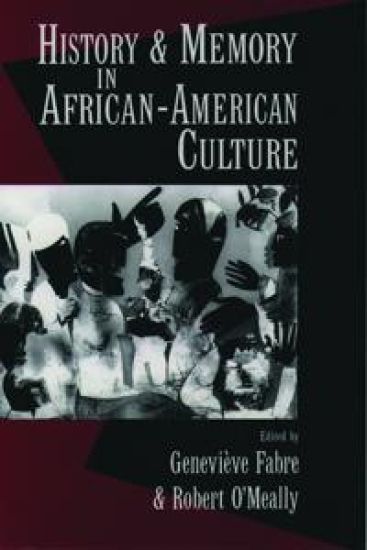
History and Memory in African-American Culture

History and Memory in African-American Culture

Genevieve Fabre; Robert O'Meally

Oxford University Press Inc
1995
sidottu
The relation between history and memory has become an object of increasing attention among historians and literary critics. Through a team of leading scholars, this volume offers a complex picture of the dynamic ways in which an African-American historical identity constantly invents and transmits itself in books, art, performance, and oral documents.
History and Memory in African-American Culture

History and Memory in African-American Culture

Genevieve Fabre; Robert O'Meally

Oxford University Press Inc
1995
nidottu
As Nathan Huggins once stated, altering American history to account fully for the nation's black voices would change the tone and meaning--the frame and the substance--of the entire story. Rather than a sort of Pilgrim's Progress tale of bold ascent and triumph, American history with the black parts told in full would be transmuted into an existential tragedy, closer, Huggins said, to Sartre's No Exit than to the vision of life in Bunyan. The relation between memory and history has received increasing attention both from historians and from literary critics. In this volume, a group of leading scholars has come together to examine the role of historical consciousness and imagination in African-American culture. The result is a complex picture of the dynamic ways in which African-American historical identity constantly invents and transmits itself in literature, art, oral documents, and performances. Each of the scholars represented has chosen a different "site of memory"--from a variety of historical and geographical points, and from different ideological, theoretical, and artistic perspectives. Yet the book is unified by a common concern with the construction of an emerging African-American cultural memory. The renowned group of contributors, including Hazel Carby, Werner Sollors, Vèvè Clark, Catherine Clinton, and Nellie McKay, among others, consists of participants of the five-year series of conferences at the DuBois Institute at Harvard University, from which this collection originated. Conducted under the leadership of Geneviève Fabre, Melvin Dixon, and the late Nathan Huggins, the conferences--and as a result, this book--represent something of a cultural moment themselves, and scholars and students of American and African-American literature and history will be richer as a result.