Kirjailija
Robert Ornstein
Kirjat ja teokset yhdessä paikassa: 20 kirjaa, julkaisuja vuosilta 1975-2022, suosituimpien joukossa What We See and Don't See, 2nd ed.. Vertaile teosten hintoja ja tarkista saatavuus suomalaisista kirjakaupoista.
20 kirjaa
Kirjojen julkaisuhaarukka 1975-2022.


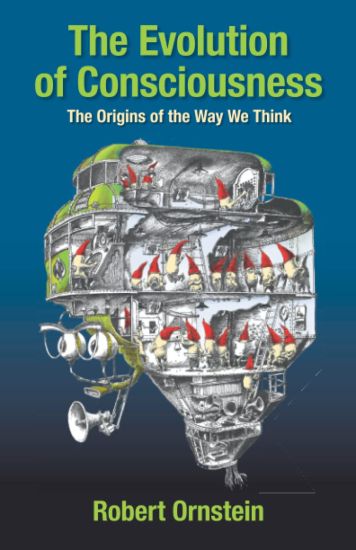
A provocative look at how our mind evolved and what this means for the human futureWhat is your mind? How is it that, like the proverbial fish in the ocean, we know so little about something that controls every aspect of our individual and collective lives?Passionate, entertaining and provocative, The Evolution of Consciousness is a fundamental challenge to our assumptions about the human mind and how it works. Ornstein tackles central mysteries of the mind: how the human brain size advanced so quickly; why we dream; how memory works.Crediting the discoveries of Charles Darwin (whom Ornstein considers the central scientist of modern psychology), he shows how the mind evolved to help us survive-to avoid danger, procure food, and perpetuate the species-not to reason why. Through a panoramic history of the brain and mind's evolution, he shows that our mind is not rational, but adaptive.As a result, our mind is a "squadron of simpletons," unconscious mind shifts geared to survival in a world long gone. Even what we call our "self" is just another of these simpletons with its own limited role and insight. He shows how remaining unaware of these mind shifts leaves us vulnerable to misjudgement and indoctrination, both individually and culturally.With wit and wisdom, he points out that within us all is the potential to go beyond the simpletons. To solve the collective problems of the modern world we need urgently to develop this innate faculty - a perceptive capacity that has been called "higher consciousness" - a new level of understanding reality, a new altruism, in which everyone can take part. It is humanity's next step.
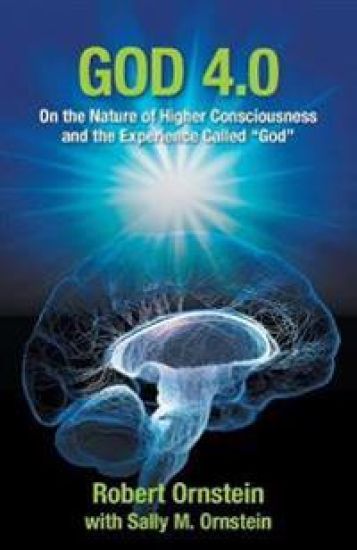
A stunning unification of science and tradition for a revolutionary new concept of spirituality to address the challenges of the modern worldThe book explores how our "everyday" mind works as a device for selecting just a few parts of the outside reality that are important for our survival. We don't experience the world as it is, but as a virtual reality-a small, limited system which evolved to keep us safe and ensure our survival. This system, though essential for getting us safely across a busy street, is insufficient for understanding and solving the challenges of the modern world. But we are also endowed with a quiescent "second network" of cognition which, when activated, can dissolve or break through the barriers of ordinary consciousness. We all experience this activation to some degree when we suddenly see a solution to a problem or have an intuitive or creative insight - when we connect to a larger whole beyond the self. By combining ancient teachings with modern science, we have a new psychology of spiritual experience - the knowledge to explore how this second network can be developed and stabilized.The authors take care to differentiate this development from temporary trance experiences or from overloading the brain with drugs, dancing, drumming, or other practices. Instead, they emphasize the need to reflect on and explicate, both individually and collectively, the functional value of virtues such as generosity, humility and gratitude, and of service. These attitudes and activities shift brain function away from the self toward an expanded consciousness - an experience of the world's greater interconnectedness and unity and an understanding of one's place in it.Neither an academic tome nor a religious treatise, God 4.0is a comprehensive, thoroughly researched work addressed to inquisitive, open-minded people genuinely trying to understand life and meaning. It is written for critical thinkers, for readers of news, history, biography and science who seek more from life than is accessible through any one of these disciplines, people who may find religion as they've encountered it to be unsatisfactory.The authors neither advocate nor dismiss organized religion but contend that knowledge we have now of how higher consciousness happens in the brain allows us to move beyond faith, belief, and ritual to a direct experience of self-transcendence which has been called "seeing God." Developing this innate second system of perception could be the first step toward finding the vital common ground that reconciles science, religion and spirituality, allowing us to solve our global problems as we work toward a new spiritual literacy, and enter a new era-God 4.0.
This work has been selected by scholars as being culturally important and is part of the knowledge base of civilization as we know it.This work is in the public domain in the United States of America, and possibly other nations. Within the United States, you may freely copy and distribute this work, as no entity (individual or corporate) has a copyright on the body of the work.Scholars believe, and we concur, that this work is important enough to be preserved, reproduced, and made generally available to the public. To ensure a quality reading experience, this work has been proofread and republished using a format that seamlessly blends the original graphical elements with text in an easy-to-read typeface.We appreciate your support of the preservation process, and thank you for being an important part of keeping this knowledge alive and relevant.

This work has been selected by scholars as being culturally important and is part of the knowledge base of civilization as we know it.This work is in the public domain in the United States of America, and possibly other nations. Within the United States, you may freely copy and distribute this work, as no entity (individual or corporate) has a copyright on the body of the work.Scholars believe, and we concur, that this work is important enough to be preserved, reproduced, and made generally available to the public. To ensure a quality reading experience, this work has been proofread and republished using a format that seamlessly blends the original graphical elements with text in an easy-to-read typeface.We appreciate your support of the preservation process, and thank you for being an important part of keeping this knowledge alive and relevant.
A new revised edition of the classic study takes a fresh look at human consciousness and an exciting new view of the untapped potential of the human mind What is consciousness and why do we need to know?In this new fourth edition of his revolutionary study, Robert Ornstein reexamines what is known about consciousness and why this understanding is so important at this time of enormous challenge, change and potential.He begins with an exploration of how the human brain evolved as a complex system for limiting what we "pick up" from the vast external environment to just the information we need to survive. We fill in the gaps with "unconscious inferences" - assumptions, categorizations, expectations and habituations that allow us to operate in the world, but that limit our perception of what is, and what is possible. Going beyond the theory that creative impulses originate in the right side of the brain and rational impulses in the left, he shows how a synthesis of these two functions can bring about "a more complete science of human consciousness with an extended conception of our own capabilities." Ornstein proposes that education at all levels should now include learning and teaching about our human nature - the nature of the person being taught. Offering far more than scholarly discourse, he enriches his presentation with thought-provoking illustrations and traditional teachings stories that bring the science to life, giving readers a first-hand taste of what such education might be like.Only with the development of self-knowledge and the cultivation of a comprehensive, expanded consciousness, he says, will humanity be able to perceive and take the "selfless" steps necessary to solve our collective problems. This new edition comes at a time when on a global scale we need this type of thinking more than ever.

Robert Ornstein and Paul Ehrlich explain that we are causing our own problems because we have created a world where our basic mental functions are no longer suitable. We evolved over a period of millions of years to survive in small tribal families on the wild grassy plains of East Africa. Now the way we live has nothing to do with that time and place, but the mental tools that were developed to survive on the savanna have remained unchanged. These instincts were wonderfully adapted to the environment that shaped them. But that world, the world that made us, is gone. Now these same instincts are causing us to destroy the world that we made.The threats we face are of our own making, and we can unmake them. If people learn how we have come to this point, we can restore our hope for the future. NWNM describes the way our minds have evolved, and offers suggestions for how to cope with who we are in the world we live in now. Recent decades have seen remarkable progress in many areas. For example, while not overlooking the abject suffering of millions of people, it is nonetheless true that there has been unprecedented alleviation of poverty and disease for the world's poorest people. There are so many promising and astonishing advances in medicine, technology, and the social and physical sciences that if we give ourselves a chance to survive, our species could enter a golden age.
For years, North Americans have been seeking rational, analytical answers to despair and anxiety. But now, this rational Western perception of consciousness has been challenged by an Eastern discipline which brings into sharp focus the travesty and deception underlying many of the contemporary awareness movements. Yet it is also the author's intent to combat the easy criticisms of the super-rationalists who dismiss every new development as the irresponsible inventions of the "guru-of-the-month club." He offers not only the finding of extensive scientific research on the brain but the valuable discoveries of personal experience as well. There is no one who is better qualified to assess our modern approach to matters of the mind than Robert Ornstein and he does so with clarity, wit, and utter persuasiveness




This is a book that shows, in simple detail, one of the most startling findings of modern science: We don't experience the world as it is, but as virtual reality. And while much of the latest scientific work demonstrates this, as do many of the classical psychological illusions, it is an important meeting point for students of the mind, brain, philosophy and religion because, as we can now see in light of this book, all these disciplines begin at the same place.This is not an abstruse treatise, but part graphic novel and part direct address. It allows the reader a breakthrough understanding of the mind which is not available anywhere else. It is, in part, a summa of Dr. Ornstein's research and writing of the past 35 years (with pieces and references to many of his works) as well as a seminal introduction to new readers.
Synthesizes immunobiology, genetics, and psychology to illustrate the emotional and physical importance of pleasure and recommends ways to create positive attitudes that make life an affirmative experience