Kirjojen hintavertailu. Mukana 12 595 353 kirjaa ja 12 kauppaa.

Kirjailija

Robert P. Burns

Kirjat ja teokset yhdessä paikassa: 15 kirjaa, julkaisuja vuosilta 2001-2026, suosituimpien joukossa Courts and Bureaucracies. Vertaile teosten hintoja ja tarkista saatavuus suomalaisista kirjakaupoista.

15 kirjaa

Kirjojen julkaisuhaarukka 2001-2026.

Courts and Bureaucracies

Courts and Bureaucracies

Robert P. Burns

THE UNIVERSITY OF CHICAGO PRESS
2026
nidottu
A novel meditation on how courts and bureaucracies function today and how they can be made better. We live in a highly bureaucratic society, so much so that we often don’t even see it. Although we think of bureaucracies and courtrooms as different kinds of institutions, as Robert P. Burns argues in Courts and Bureaucracies, their functions and everyday operations often blur together. Today, courts are being used to address numerous social problems that the government is unable or unwilling to tackle, and consequently, the courts frequently emphasize bureaucratic goals—such as efficiency and social control—over the adjudicatory functions that they are supposed to embody. Drawing on social theory, philosophy, public administration, and law, Burns clarifies the role of courts in today’s bureaucratic society and considers the distinctive contributions that specifically legal procedures can bring. After exploring the competing first principles of adjudication, Burns then examines our current administrative, civil, and criminal processes and describes new and looming changes to rules and practices that should affect our thinking about the rule of law and the role of the courts. A broad reassessment—both philosophical and practical—of how criminal, civil, and administrative practices differ from one another and what benefits each bestows, Courts and Bureaucracies offers concrete suggestions for how we can better achieve the ideals already implicit in our judicial traditions and practices.

Courts and Bureaucracies

Courts and Bureaucracies

Robert P. Burns

THE UNIVERSITY OF CHICAGO PRESS
2026
sidottu
A novel meditation on how courts and bureaucracies function today and how they can be made better. We live in a highly bureaucratic society, so much so that we often don’t even see it. Although we think of bureaucracies and courtrooms as different kinds of institutions, as Robert P. Burns argues in Courts and Bureaucracies, their functions and everyday operations often blur together. Today, courts are being used to address numerous social problems that the government is unable or unwilling to tackle, and consequently, the courts frequently emphasize bureaucratic goals—such as efficiency and social control—over the adjudicatory functions that they are supposed to embody. Drawing on social theory, philosophy, public administration, and law, Burns clarifies the role of courts in today’s bureaucratic society and considers the distinctive contributions that specifically legal procedures can bring. After exploring the competing first principles of adjudication, Burns then examines our current administrative, civil, and criminal processes and describes new and looming changes to rules and practices that should affect our thinking about the rule of law and the role of the courts. A broad reassessment—both philosophical and practical—of how criminal, civil, and administrative practices differ from one another and what benefits each bestows, Courts and Bureaucracies offers concrete suggestions for how we can better achieve the ideals already implicit in our judicial traditions and practices.
Problems and Materials in Evidence and Trial Advocacy: Volume I / Cases

Problems and Materials in Evidence and Trial Advocacy: Volume I / Cases

Robert P. Burns; Steven Lubet; Richard E. Moberly

Aspen Publishing
2023
nidottu
Volume One of Problems and Materials in Evidence and Trial Advocacy contains two fictional case files, containing material similar to that trial lawyers may have as they approach trial. The first file is a murder case, where the issue is the identity of the killer and the defendant is the estranged husband of the victim. The second file is a civil action for defamation brought by a former employee against her very wealthy employer. Both cases present engaging fact patterns as they introduce lawyers to the rigors of evidence rules. Both raise realistic and challenging issues in the law of evidence and allow for a critical assessment of that law. The cases are designed to raise realistic and challenging issues in trial theory and practice and in the law of evidence. The book is designed to be used with Volume II of Problems and Materials, which contains over three hundred problems in evidence and over sixty exercises in trial advocacy based on the files. New to the Seventh Edition: MacIntyre case file updated to reflect modern working situation Text message evidence Web page evidence Updated problems that address these newer forms of evidence Professors and students will benefit from: The inclusion of both a criminal and a civil case file, providing opportunities for students to work as prosecutors, defense counsel, and plaintiff's counsel Engaging fact patterns and evidentiary items More than 300 problems that guide students through multiple evidence scenarios
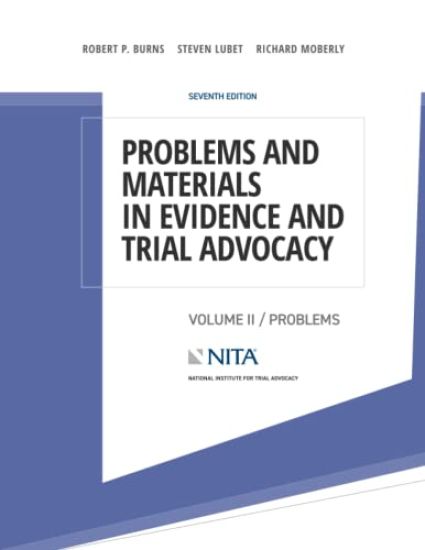
Problems and Materials in Evidence and Trial Advocacy: Volume II / Problems

Problems and Materials in Evidence and Trial Advocacy: Volume II / Problems

Robert P. Burns; Steven Lubet; Richard E. Moberly

Aspen Publishing
2023
nidottu
Volume Two of Problems and Materials in Evidence and Trial Advocacy is designed as the workbook for coordinated courses in Evidence and Trial Advocacy. It contains over three hundred problems in evidence law and over sixty exercises in trial advocacy. It is designed to be used with Volume One of Problems and Materials, which contains two fictional case files, one criminal and the other civil. New to the Seventh Edition: MacIntyre case file updated to reflect modern working situation Text message evidence Web page evidence Updated problems that address these newer forms of evidence Professors and students will benefit from: The inclusion of both a criminal and a civil case file, providing opportunities for students to work as prosecutors, defense counsel, and plaintiff's counsel Engaging fact patterns and evidentiary items More than 300 problems that guide students through multiple evidence scenarios
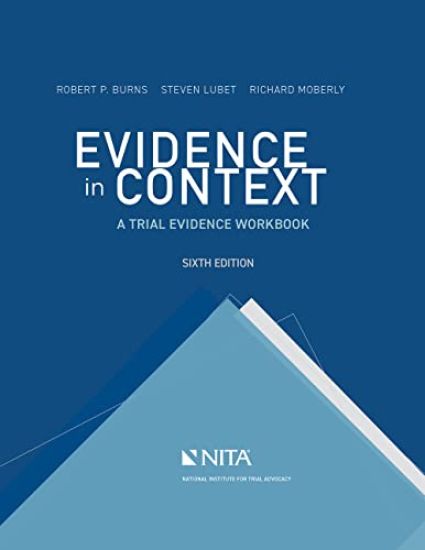
Evidence in Context: A Trial Evidence Workbook

Evidence in Context: A Trial Evidence Workbook

Robert P. Burns; Steven Lubet; Richard E. Moberly

Aspen Publishing
2022
nidottu
Evidence in Context is the perfect book for transforming abstract knowledge of rules of evidence into a hands-on familiarity with how those rules work. Utilizing two fictional case files, Evidence in Context presents users with items similar to the material trial lawyers may have as they approach trial--documents, photos, web pages, text messages, and more. Both cases present engaging fact patterns as they introduce lawyers to the rigors of evidence rules. Both raise realistic and challenging issues in the law of evidence and allow for a critical assessment of that law. They are followed by over three hundred problems for class analysis and discussion. These problems address the full range of evidentiary issues. New to the Sixth Edition: MacIntyre case file updated to reflect modern working situation Text message evidence Web page evidence Updated problems that address these newer forms of evidence Professors and students will benefit from: The inclusion of both a criminal and a civil case file, providing opportunities for students to work as prosecutors, defense counsel, and plaintiff's counsel Engaging fact patterns and evidentiary items More than 300 problems that guide students through multiple evidence scenarios
Cranbrooke v. Intellex: Case File

Cranbrooke v. Intellex: Case File

Robert P. Burns; Steven Lubet; Terre Rushton

Aspen Publishing
2020
nidottu
Intellex, an ambitious US video game company, comes into conflict with Cranbrooke, a traditional manufacturer of children's games for the European market. Their dispute? The terms of a contract for Cranbrooke to license and manufacture Intellex's newest virtual reality system. Cranbrooke claims that the new system is an improvement over the original system and therefore covered by the terms of the contract and that it has the exclusive right to distribute Intellex's virtual reality products in the European Union for at least five years. Intellex counters that the new system is no more an "improvement" than compact discs were merely an improvement on phonograph records and that Cranbrooke's contract only provided a first right of refusal on innovative new products. At stake are distribution rights for the improved system throughout the European Union. The fourth edition of Cranbrooke is a substantial update over previous versions. The Cranbrooke offices have been moved to fictional Brittania to avoid any Brexit conflicts. Exhibits have been updated to reflect modern business practices, including text messaging. Expert witness reports have been updated to reflect more realistic pricing. And the game system in dispute has been modernized. This international contract case file provides the flexibility that you've been looking for. It comes in formats that can be used as a fact investigation file, a deposition file, or trial file on liability or damages or both. The Trial file contains all witness depositions and documents. The Deposition versions reflect the reality of deposition practice, when each party only has certain documents: the Plaintiff file contains materials only available to the plaintiff side to aid in prepping for depositions; the Defendant file contains materials only available to defendants; the Faculty file contains both the plaintiff and defendant material and is for instructor use. The plaintiff and defendant each have three witnesses, including accounting experts for each side.
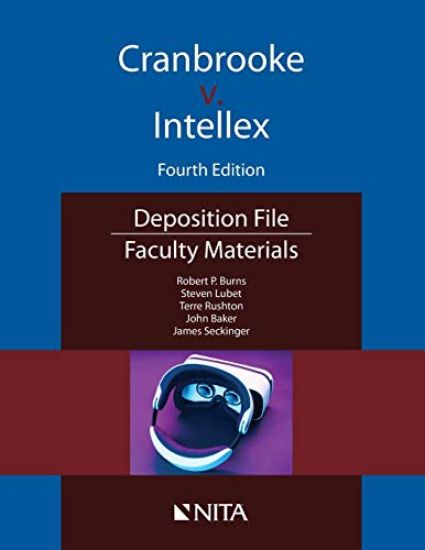
Cranbrooke v. Intellex: Faculty Materials

Cranbrooke v. Intellex: Faculty Materials

Robert P. Burns; Steven Lubet; Terre Rushton

Aspen Publishing
2020
nidottu
Intellex, an ambitious US video game company, comes into conflict with Cranbrooke, a traditional manufacturer of children's games for the European market. Their dispute? The terms of a contract for Cranbrooke to license and manufacture Intellex's newest virtual reality system. Cranbrooke claims that the new system is an improvement over the original system and therefore covered by the terms of the contract and that it has the exclusive right to distribute Intellex's virtual reality products in the European Union for at least five years. Intellex counters that the new system is no more an "improvement" than compact discs were merely an improvement on phonograph records and that Cranbrooke's contract only provided a first right of refusal on innovative new products. At stake are distribution rights for the improved system throughout the European Union. The fourth edition of Cranbrooke is a substantial update over previous versions. The Cranbrooke offices have been moved to fictional Brittania to avoid any Brexit conflicts. Exhibits have been updated to reflect modern business practices, including text messaging. Expert witness reports have been updated to reflect more realistic pricing. And the game system in dispute has been modernized. This international contract case file provides the flexibility that you've been looking for. It comes in formats that can be used as a fact investigation file, a deposition file, or trial file on liability or damages or both. The Trial file contains all witness depositions and documents. The Deposition versions reflect the reality of deposition practice, when each party only has certain documents: the Plaintiff file contains materials only available to the plaintiff side to aid in prepping for depositions; the Defendant file contains materials only available to defendants; the Faculty file contains both the plaintiff and defendant material and is for instructor use. The plaintiff and defendant each have three witnesses, including accounting experts for each side.
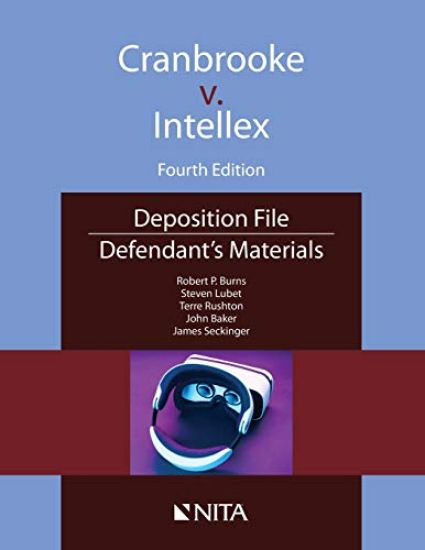
Cranbrooke v. Intellex: Defendant's Materials

Cranbrooke v. Intellex: Defendant's Materials

Robert P. Burns; Steven Lubet; Terre Rushton

Aspen Publishing
2020
nidottu
Intellex, an ambitious US video game company, comes into conflict with Cranbrooke, a traditional manufacturer of children's games for the European market. Their dispute? The terms of a contract for Cranbrooke to license and manufacture Intellex's newest virtual reality system. Cranbrooke claims that the new system is an improvement over the original system and therefore covered by the terms of the contract and that it has the exclusive right to distribute Intellex's virtual reality products in the European Union for at least five years. Intellex counters that the new system is no more an "improvement" than compact discs were merely an improvement on phonograph records and that Cranbrooke's contract only provided a first right of refusal on innovative new products. At stake are distribution rights for the improved system throughout the European Union. The fourth edition of Cranbrooke is a substantial update over previous versions. The Cranbrooke offices have been moved to fictional Brittania to avoid any Brexit conflicts. Exhibits have been updated to reflect modern business practices, including text messaging. Expert witness reports have been updated to reflect more realistic pricing. And the game system in dispute has been modernized. This international contract case file provides the flexibility that you've been looking for. It comes in formats that can be used as a fact investigation file, a deposition file, or trial file on liability or damages or both. The Trial file contains all witness depositions and documents. The Deposition versions reflect the reality of deposition practice, when each party only has certain documents: the Plaintiff file contains materials only available to the plaintiff side to aid in prepping for depositions; the Defendant file contains materials only available to defendants; the Faculty file contains both the plaintiff and defendant material and is for instructor use. The plaintiff and defendant each have three witnesses, including accounting experts for each side.
Cranbrooke v. Intellex: Plaintiff's Materials

Cranbrooke v. Intellex: Plaintiff's Materials

Robert P. Burns; Steven Lubet; Terre Rushton

Aspen Publishing
2020
nidottu
Intellex, an ambitious US video game company, comes into conflict with Cranbrooke, a traditional manufacturer of children's games for the European market. Their dispute? The terms of a contract for Cranbrooke to license and manufacture Intellex's newest virtual reality system. Cranbrooke claims that the new system is an improvement over the original system and therefore covered by the terms of the contract and that it has the exclusive right to distribute Intellex's virtual reality products in the European Union for at least five years. Intellex counters that the new system is no more an "improvement" than compact discs were merely an improvement on phonograph records and that Cranbrooke's contract only provided a first right of refusal on innovative new products. At stake are distribution rights for the improved system throughout the European Union. The fourth edition of Cranbrooke is a substantial update over previous versions. The Cranbrooke offices have been moved to fictional Brittania to avoid any Brexit conflicts. Exhibits have been updated to reflect modern business practices, including text messaging. Expert witness reports have been updated to reflect more realistic pricing. And the game system in dispute has been modernized. This international contract case file provides the flexibility that you've been looking for. It comes in formats that can be used as a fact investigation file, a deposition file, or trial file on liability or damages or both. The Trial file contains all witness depositions and documents. The Deposition versions reflect the reality of deposition practice, when each party only has certain documents: the Plaintiff file contains materials only available to the plaintiff side to aid in prepping for depositions; the Defendant file contains materials only available to defendants; the Faculty file contains both the plaintiff and defendant material and is for instructor use. The plaintiff and defendant each have three witnesses, including accounting experts for each side.
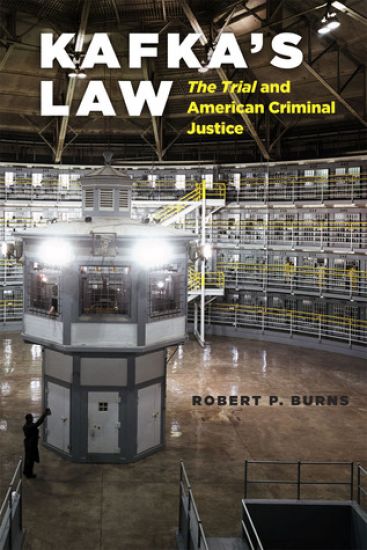
Kafka's Law

Kafka's Law

Robert P. Burns

University of Chicago Press
2014
sidottu
The Trial is actually closer to reality than fantasy as far as the client's perception of the system. It's supposed to be a fantastic allegory, but it's reality. It's very important that lawyers read it and understand this." Justice Anthony Kennedy famously offered this assessment of the Kafkaesque character of the American criminal justice system in 1993. While Kafka's vision of the "Law" in The Trial appears at first glance to be the antithesis of modern American legal practice, might the characteristics of this strange and arbitrary system allow us to identify features of our own system that show signs of becoming similarly nightmarish? With Kafka's Law, Robert P. Burns shows how The Trial provides an uncanny lens through which to consider flaws in the American criminal justice system today. Burns begins with the story, at once funny and grim, of Josef K., caught in the Law's grip and then crushed by it. Laying out the features of the Law that eventually destroy K., Burns argues that the American criminal justice system has taken on many of these same features. In the overwhelming majority of contemporary cases, police interrogation is followed by a plea bargain, in which the court's only function is to set a largely predetermined sentence for an individual already presumed guilty. Like Kafka's nightmarish vision much of American criminal law and procedure has become unknowable, ubiquitous, and bureaucratic. It, too, has come to rely on deception in dealing with suspects and jurors, to limit the role of defense, and to increasingly dispense justice without the protection of formal procedures. But, while Kennedy may be correct in his grim assessment, a remedy is available in the tradition of trial by jury, and Burns concludes by convincingly arguing for its return to a more central place in American criminal justice.
The Death of the American Trial

The Death of the American Trial

Robert P. Burns

University of Chicago Press
2011
nidottu
In "The Death of the American Trial", distinguished legal scholar Robert P. Burns makes an impassioned case for reversing the rapid decline of the trial before we lose one of our public culture's greatest achievements. As a practice that is adapted for modern times yet rooted in ancient wisdom, the trial is uniquely suited to balance the tensions - between idealism and realism, experts and citizens, contextual judgment and reliance on rules - that define American culture. Arguing that many observers make a grave mistake by taking a complacent or even positive view of the trial's demise, Burns concludes by laying out the catastrophic consequences of losing an institution that so perfectly embodies democratic governance.
The Death of the American Trial

The Death of the American Trial

Robert P. Burns

University of Chicago Press
2009
sidottu
In "The Death of the American Trial", distinguished legal scholar Robert P. Burns makes an impassioned case for reversing the rapid decline of the trial before we lose one of our public culture's greatest achievements. As a practice that is adapted for modern times yet rooted in ancient wisdom, the trial is uniquely suited to balance the tensions - between idealism and realism, experts and citizens, contextual judgment and reliance on rules - that define American culture. Arguing that many observers make a grave mistake by taking a complacent or even positive view of the trial's demise, Burns concludes by laying out the catastrophic consequences of losing an institution that so perfectly embodies democratic governance.
Business Research Methods and Statistics Using SPSS

Business Research Methods and Statistics Using SPSS

Robert P. Burns; Richard Burns

SAGE Publications Inc
2008
nidottu
Ideal for those with a minimum of mathematical and statistical knowledge, Business Research Methods and Statistics Using SPSS provides an easy to follow approach to understanding and using quantitative methods and statistics. It is solidly grounded in the context of business and management research, enabling students to appreciate the practical applications of the techniques and procedures explained. The book is comprehensive in its coverage, including discussion of the business context, statistical analysis of data, survey methods, and reporting and presenting research. A companion website also contains four extra chapters for the more advanced student, along with PowerPoint slides for lecturers, and additional questions and exercises, all of which aim to help students to: - Understand the importance and application of statistics and quantitative methods in the field of business - Design effective research studies - Interpret statistical results - Use statistical information meaningfully - Use SPSS confidently
Business Research Methods and Statistics Using SPSS

Business Research Methods and Statistics Using SPSS

Robert P. Burns; Richard Burns

SAGE Publications Inc
2008
sidottu
Ideal for those with a minimum of mathematical and statistical knowledge, Business Research Methods and Statistics Using SPSS provides an easy to follow approach to understanding and using quantitative methods and statistics. It is solidly grounded in the context of business and management research, enabling students to appreciate the practical applications of the techniques and procedures explained. The book is comprehensive in its coverage, including discussion of the business context, statistical analysis of data, survey methods, and reporting and presenting research. A companion website also contains four extra chapters for the more advanced student, along with PowerPoint slides for lecturers, and additional questions and exercises, all of which aim to help students to: - Understand the importance and application of statistics and quantitative methods in the field of business - Design effective research studies - Interpret statistical results - Use statistical information meaningfully - Use SPSS confidently
A Theory of the Trial

A Theory of the Trial

Robert P. Burns

Princeton University Press
2001
pokkari
Anyone who has sat on a jury or followed a high-profile trial on television usually comes to the realization that a trial, particularly a criminal trial, is really a performance. Verdicts seem determined as much by which lawyer can best connect with the hearts and minds of the jurors as by what the evidence might suggest. In this celebration of the American trial as a great cultural achievement, Robert Burns, a trial lawyer and a trained philosopher, explores how these legal proceedings bring about justice. The trial, he reminds us, is not confined to the impartial application of legal rules to factual findings. Burns depicts the trial as an institution employing its own language and styles of performance that elevate the understanding of decision-makers, bringing them in contact with moral sources beyond the limits of law. Burns explores the rich narrative structure of the trial, beginning with the lawyers' opening statements, which establish opposing moral frameworks in which to interpret the evidence. In the succession of witnesses, stories compete and are held in tension. At some point during the performance, a sense of the right thing to do arises among the jurors. How this happens is at the core of Burns's investigation, which draws on careful descriptions of what trial lawyers do, the rules governing their actions, interpretations of actual trial material, social science findings, and a broad philosophical and political appreciation of the trial as a unique vehicle of American self-government.