Kirjojen hintavertailu. Mukana 12 207 283 kirjaa ja 12 kauppaa.

Kirjailija

Robert P. Weller

Kirjat ja teokset yhdessä paikassa: 10 kirjaa, julkaisuja vuosilta 1987-2020, suosituimpien joukossa Ritual and its Consequences. Vertaile teosten hintoja ja tarkista saatavuus suomalaisista kirjakaupoista.

Mukana myös kirjoitusasut: Robert P Weller

10 kirjaa

Kirjojen julkaisuhaarukka 1987-2020.

Ritual and its Consequences

Ritual and its Consequences

Adam B Seligman; Robert P Weller; Michael J Puett; Bennett Simon

Oxford University Press Inc
2008
nidottu
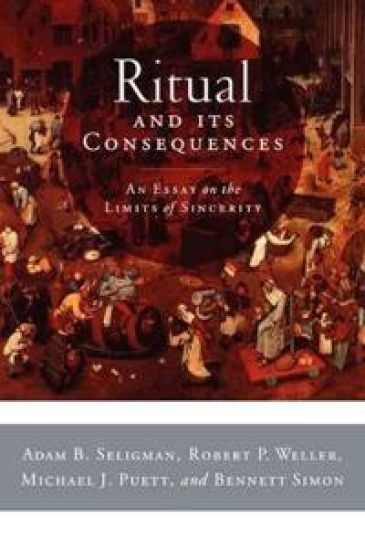
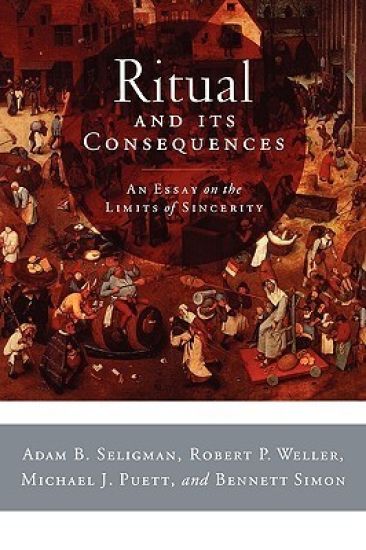
Ritual is usually understood as pointing to some essence beyond the ritual act itself. This ambitious interdisciplinary study offers a convincing challenge to this understanding. The authors begin by seeking to explain how the conventional idea arose in the first place. They locate its origin in a post-Protestant and post-Enlightenment vision of ritual action that emphasizes rituals as merely external signs of interior states. This approach, say the authors, is part of a far larger way of relating to the self and to the world, which they label "sincerity." But ritual, they say, is the very opposite of sincerity because it consists of stylized, repetitive interactions that construct an "as if" world, a world of role, propriety, play, and even fantasy, rather than pointing to the world as it actually is. In fact, that is ritual's great contribution. Ritual modes of behavior make a shared social world possible by helping to navigate between diverse people and groups, rather than attempting to transcend and efface boundaries. After setting forth this argument, the authors go on to build on it by showing how sincerity and ritual are stand-ins for two very different ways of being in the world. Although both modes are always present to some degree, modernity has deeply privileged sincerity and authenticity. And, they say, we are now paying a heavy price for this extreme and often totalizing projection of personality in contemporary political life.
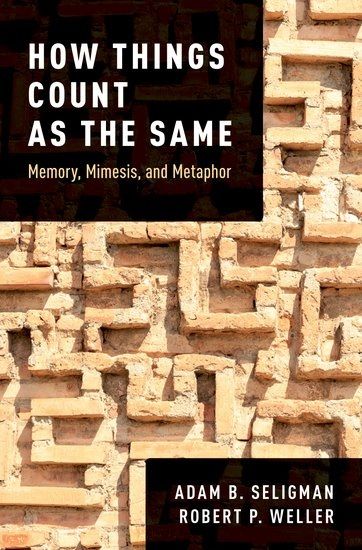
How Things Count as the Same

How Things Count as the Same

Adam B. Seligman; Robert P. Weller

Oxford University Press Inc
2020
nidottu
In their third book together, Adam B. Seligman and Robert P. Weller address a seemingly simple question: What counts as the same? Given the myriad differences that divide one individual from another, why do we recognize anyone as somehow sharing a common fate with us? For that matter, how do we live in harmony with groups who may not share the sense of a common fate? Such relationships lie at the heart of the problems of pluralism that increasingly face so much of the world today. Note that "counting as" the same differs from "being" the same. Counting as the same is not an empirical question about how much or how little one person shares with another or one event shares with a previous event. Nothing is actually the same. That is why, as humans, we construct sameness all the time. In the process, of course, we also construct difference. Creating sameness and difference leaves us with the perennial problem of how to live with difference instead of seeing it as a threat. How Things Count as the Same suggests that there are multiple ways in which we can count things as the same, and that each of them fosters different kinds of group dynamics and different sets of benefits and risks for the creation of plural societies. While there might be many ways to understand how people construct sameness, three stand out as especially important and form the focus of the book's analysis: Memory, Mimesis, and Metaphor.
How Things Count as the Same

How Things Count as the Same

Adam B. Seligman; Robert P. Weller

Oxford University Press Inc
2018
sidottu
In their third book together, Adam B. Seligman and Robert P. Weller address a seemingly simple question: What counts as the same? Given the myriad differences that divide one individual from another, why do we recognize anyone as somehow sharing a common fate with us? For that matter, how do we live in harmony with groups who may not share the sense of a common fate? Such relationships lie at the heart of the problems of pluralism that increasingly face so much of the world today. Note that "counting as" the same differs from "being" the same. Counting as the same is not an empirical question about how much or how little one person shares with another or one event shares with a previous event. Nothing is actually the same. That is why, as humans, we construct sameness all the time. In the process, of course, we also construct difference. Creating sameness and difference leaves us with the perennial problem of how to live with difference instead of seeing it as a threat. How Things Count as the Same suggests that there are multiple ways in which we can count things as the same, and that each of them fosters different kinds of group dynamics and different sets of benefits and risks for the creation of plural societies. While there might be many ways to understand how people construct sameness, three stand out as especially important and form the focus of the book's analysis: Memory, Mimesis, and Metaphor.
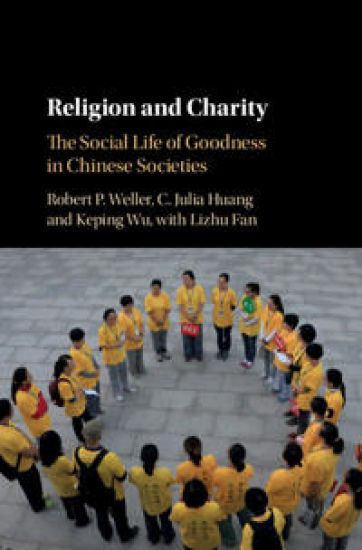
Religion and Charity

Religion and Charity

Robert P. Weller; C. Julia Huang; Keping Wu; Lizhu Fan

Cambridge University Press
2017
sidottu
Free markets alone do not work effectively to solve certain kinds of human problems, such as education, old age care, or disaster relief. Nor have markets ever been the sole solution to the psychological challenges of death, suffering, or injustice. Instead, we find a major role for the non-market institutions of society - the family, the state, and social institutions. The first in-depth anthropological study of charities in contemporary Chinese societies, this book focuses on the unique ways that religious groups have helped to solve the problems of social well-being. Using comparative case studies in China, Taiwan and Malaysia during the 1980s and onwards, it identifies new forms of religious philanthropy as well as new ideas of social 'good', including different forms of political merit-making, new forms of civic selfhood, and the rise of innovative social forms, including increased leadership by women. The book finally argues that the spread of these ideas is an incomplete process, with many alternative notions of goodness continuing to be influential.
Rethinking Pluralism

Rethinking Pluralism

Adam B. Seligman; Robert P. Weller

Oxford University Press Inc
2012
nidottu
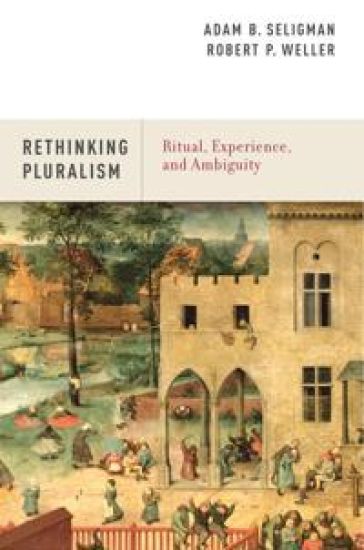
How can we order the world while accepting its enduring ambiguities? Rethinking Pluralism suggests a new approach to the problem of ambiguity and social order, which goes beyond the default modern position of 'notation' (resort to rules and categories to disambiguate). The book argues that alternative, more particularistic modes of dealing with ambiguity through ritual and shared experience better attune to contemporary problems of living with difference. It retrieves key aspects of earlier discussions of ambiguity evident in rabbinic commentaries, Chinese texts, and Greek philosophical and dramatic works, and applies those texts to modern problems. The book is a work of recuperation that challenges contemporary constructions of tradition and modernity. In this, it draws on the tradition of pragmatism in American philosophy, especially John Dewey's injunctions to heed the particular, the contingent and experienced as opposed to the abstract, general and disembodied. Only in this way can new forms of empathy emerge congruent with the deeply plural nature of our present experience. While we cannot avoid the ambiguities inherent to the categories through which we construct our world, the book urges us to reconceptualize the ways in which we think about boundaries - not just the solid line of notation, but also the permeable membrane of ritualization and the fractal complexity of shared experience.
Rethinking Pluralism

Rethinking Pluralism

Adam B. Seligman; Robert P. Weller

Oxford University Press Inc
2012
sidottu
How can we order the world while accepting its enduring ambiguities? Rethinking Pluralism suggests a new approach to the problem of ambiguity and social order, which goes beyond the default modern position of 'notation' (resort to rules and categories to disambiguate). The book argues that alternative, more particularistic modes of dealing with ambiguity through ritual and shared experience better attune to contemporary problems of living with difference. It retrieves key aspects of earlier discussions of ambiguity evident in rabbinic commentaries, Chinese texts, and Greek philosophical and dramatic works, and applies those texts to modern problems. The book is a work of recuperation that challenges contemporary constructions of tradition and modernity. In this, it draws on the tradition of pragmatism in American philosophy, especially John Dewey's injunctions to heed the particular, the contingent and experienced as opposed to the abstract, general and disembodied. Only in this way can new forms of empathy emerge congruent with the deeply plural nature of our present experience. While we cannot avoid the ambiguities inherent to the categories through which we construct our world, the book urges us to reconceptualize the ways in which we think about boundaries - not just the solid line of notation, but also the permeable membrane of ritualization and the fractal complexity of shared experience.
Ritual and Its Consequences

Ritual and Its Consequences

Adam B. Seligman; Robert P. Weller

Oxford University Press Inc
2008
sidottu
This pioneering, interdisciplinary work shows how rituals allow us to live in a perennially imperfect world. Drawing on a variety of cultural settings, the authors utilize psychoanalytic and anthropological perspectives to describe how ritual--like play--creates "as if" worlds, rooted in the imaginative capacity of the human mind to create a subjunctive universe. The ability to cross between imagined worlds is central to the human capacity for empathy. Ritual, they claim, defines the boundaries of these imagined worlds, including those of empathy and other realms of human creativity, such as music, architecture and literature. The authors juxtapose this ritual orientation to a "sincere" search for unity and wholeness. The sincere world sees fragmentation and incoherence as signs of inauthenticity that must be overcome. Our modern world has accepted the sincere viewpoint at the expense of ritual, dismissing ritual as mere convention. In response, the authors show how the conventions of ritual allow us to live together in a broken world. Ritual is work, endless work. But it is among the most important things that we humans do.