Kirjojen hintavertailu. Mukana 12 595 353 kirjaa ja 12 kauppaa.

Kirjailija

Robert Pasnau

Kirjat ja teokset yhdessä paikassa: 12 kirjaa, julkaisuja vuosilta 1997-2025, suosituimpien joukossa Construire La Volonte: Debats Sur Le Libre Arbitre a la Fin Du Moyen Age. Vertaile teosten hintoja ja tarkista saatavuus suomalaisista kirjakaupoista.

12 kirjaa

Kirjojen julkaisuhaarukka 1997-2025.

The Philosophy Of Aquinas

The Philosophy Of Aquinas

Robert Pasnau; Christopher Shields

Routledge
2021
nidottu
This book introduces Thomas Aquinas's own principal fascinations in philosophy: rational theology, metaphysics, human nature, philosophy of mind, and value theory. It offers an introduction to his overarching explanatory framework in a distinctive deployment of an approach familiar from Aristotle.
After Certainty

After Certainty

Robert Pasnau

Oxford University Press
2019
nidottu
No part of philosophy is as disconnected from its history as is epistemology. After Certainty offers a reconstruction of that history, understood as a series of changing expectations about the cognitive ideal that beings such as us might hope to achieve in a world such as this. The story begins with Aristotle and then looks at how his epistemic program was developed through later antiquity and into the Middle Ages, before being dramatically reformulated in the seventeenth century. In watching these debates unfold over the centuries, one sees why epistemology has traditionally been embedded within a much larger sphere of concerns about human nature and the reality of the world we live in. It ultimately becomes clear why epistemology today has become a much narrower and specialized field, concerned with the conditions under which it is true to say, that someone knows something. Based on a series of lectures given at Oxford University, Robert Pasnau's book ranges widely over the history of philosophy, and examines in some detail the rise of science as an autonomous discipline. Ultimately Pasnau argues that we may have no good reasons to suppose ourselves capable of achieving even the most minimal standards for knowledge, and the final chapter concludes with a discussion of faith and hope.
The Philosophy Of Aquinas

The Philosophy Of Aquinas

Robert Pasnau; Christopher Shields

Routledge
2019
sidottu
This book introduces Thomas Aquinas's own principal fascinations in philosophy: rational theology, metaphysics, human nature, philosophy of mind, and value theory. It offers an introduction to his overarching explanatory framework in a distinctive deployment of an approach familiar from Aristotle.
After Certainty

After Certainty

Robert Pasnau

Oxford University Press
2017
sidottu
No part of philosophy is as disconnected from its history as is epistemology. After Certainty offers a reconstruction of that history, understood as a series of changing expectations about the cognitive ideal that beings such as us might hope to achieve in a world such as this. The story begins with Aristotle and then looks at how his epistemic program was developed through later antiquity and into the Middle Ages, before being dramatically reformulated in the seventeenth century. In watching these debates unfold over the centuries, one sees why epistemology has traditionally been embedded within a much larger sphere of concerns about human nature and the reality of the world we live in. It ultimately becomes clear why epistemology today has become a much narrower and specialized field, concerned with the conditions under which it is true to say, that someone knows something. Based on a series of lectures given at Oxford University, Robert Pasnau's book ranges widely over the history of philosophy, and examines in some detail the rise of science as an autonomous discipline. Ultimately Pasnau argues that we may have no good reasons to suppose ourselves capable of achieving even the most minimal standards for knowledge, and the final chapter concludes with a discussion of faith and hope.
The Philosophy of Aquinas

The Philosophy of Aquinas

Christopher Shields; Robert Pasnau

Oxford University Press Inc
2016
sidottu
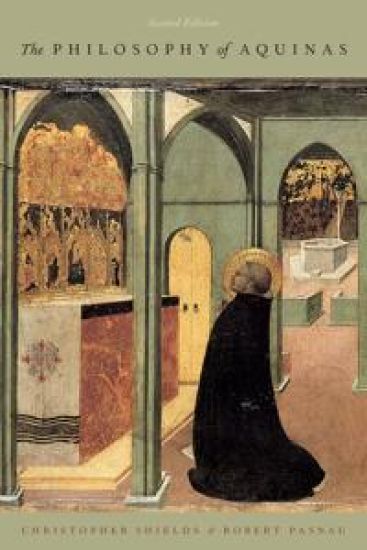
This new and updated edition of Christopher Shields and Robert Pasnau's The Philosophy of Aquinas introduces the Aquinas' overarching explanatory framework in order to provide the necessary background to his philosophical investigations across a wide range of areas: rational theology, metaphysics, philosophy of human nature, philosophy of mind, and ethical and political theory. Although not intended to provide a comprehensive evaluation of all aspects of Aquinas' far-reaching writings, the volume presents a systematic introduction to the principal areas of his philosophy and attends no less to Aquinas' methods and argumentative strategies than to his ultimate conclusions. The authors have updated the second edition in light of recent scholarship on Aquinas, while streamlining and refining their presentation of the key elements of Aquinas' philosophy.
The Philosophy of Aquinas

The Philosophy of Aquinas

Christopher Shields; Robert Pasnau

Oxford University Press Inc
2016
nidottu
This new and updated edition of Christopher Shields and Robert Pasnau's The Philosophy of Aquinas introduces the Aquinas' overarching explanatory framework in order to provide the necessary background to his philosophical investigations across a wide range of areas: rational theology, metaphysics, philosophy of human nature, philosophy of mind, and ethical and political theory. Although not intended to provide a comprehensive evaluation of all aspects of Aquinas' far-reaching writings, the volume presents a systematic introduction to the principal areas of his philosophy and attends no less to Aquinas' methods and argumentative strategies than to his ultimate conclusions. The authors have updated the second edition in light of recent scholarship on Aquinas, while streamlining and refining their presentation of the key elements of Aquinas' philosophy.
Metaphysical Themes 1274-1671

Metaphysical Themes 1274-1671

Robert Pasnau

Oxford University Press
2013
nidottu
Robert Pasnau traces the developments of metaphysical thinking through four rich but for the most part neglected centuries of philosophy, running from the thirteenth century through to the seventeenth. At no period in the history of philosophy, other than perhaps our own, have metaphysical problems received the sort of sustained attention they received during the later Middle Ages, and never has a whole philosophical tradition come crashing down as quickly and completely as did scholastic philosophy in the seventeenth century. The thirty chapters work through various fundamental metaphysical issues, sometimes focusing more on scholastic thought, sometimes on the seventeenth century. Pasnau begins with the first challenges to the classical scholasticism of Bonaventure and Thomas Aquinas, runs through prominent figures like John Duns Scotus and William Ockham, and ends in the seventeenth century, with the end of the first stage of developments in post-scholastic philosophy: on the continent, with Descartes and Gassendi, and in England, with Boyle and Locke.
Metaphysical Themes 1274-1671

Metaphysical Themes 1274-1671

Robert Pasnau

Oxford University Press
2011
sidottu
Robert Pasnau traces the developments of metaphysical thinking through four rich but for the most part neglected centuries of philosophy, running from the thirteenth century through to the seventeenth. At no period in the history of philosophy, other than perhaps our own, have metaphysical problems received the sort of sustained attention they received during the later Middle Ages, and never has a whole philosophical tradition come crashing down as quickly and completely as did scholastic philosophy in the seventeenth century. The thirty chapters work through various fundamental metaphysical issues, sometimes focusing more on scholastic thought, sometimes on the seventeenth century. Pasnau begins with the first challenges to the classical scholasticism of Bonaventure and Thomas Aquinas, runs through prominent figures like John Duns Scotus and William Ockham, and ends in the seventeenth century, with the end of the first stage of developments in post-scholastic philosophy: on the continent, with Descartes and Gassendi, and in England, with Boyle and Locke.

Thomas Aquinas on Human Nature

Thomas Aquinas on Human Nature

Robert Pasnau

Cambridge University Press
2001
pokkari
This is a major new study of Thomas Aquinas, the most influential philosopher of the Middle Ages. The book offers a clear and accessible guide to the central project of Aquinas’ philosophy: the understanding of human nature. Robert Pasnau sets the philosophy in the context of ancient and modern thought, and argues for some groundbreaking proposals for understanding some of the most difficult areas of Aquinas’ thought: the relationship of soul to body, the workings of sense and intellect, the will and the passions, and personal identity. Structured around a close reading of the treatise on human nature from the Summa theologiae and deeply informed by a wide knowledge of the history of philosophy and contemporary philosophy, this study will offer specialists a series of novel and provocative interpretations, while providing students with a reference commentary on one of Aquinas’ core texts.
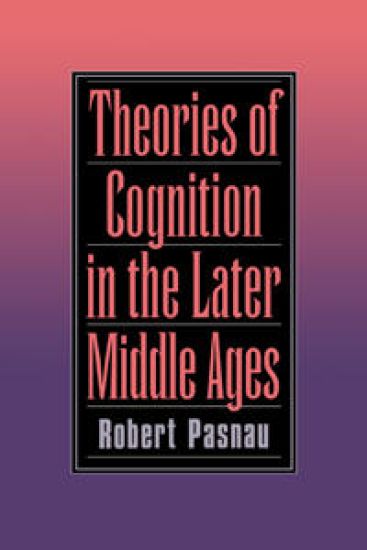
Theories of Cognition in the Later Middle Ages

Theories of Cognition in the Later Middle Ages

Robert Pasnau

Cambridge University Press
1997
sidottu
This book is a major contribution to the history of philosophy in the later medieval period (1250–1350). It focuses on cognitive theory, a subject of intense investigation during these years. In fact many of the issues that dominate philosophy of mind and epistemology today - intentionality, mental representation, scepticism, realism - were hotly debated in the later medieval period. The book offers a careful analysis of these debates, primarily through the work of Thomas Aquinas, John Olivi, and William Ockham. Each of these figures attempts to reconceptualise cognition along direct realist lines, criticising in the process the standard Aristotelian account. Though of primary interest to medieval philosophers, the book presupposes no background knowledge of the medieval period, and will therefore interest a broader community of philosophers concerned with the origins of contemporary cognitive theory.