Kirjojen hintavertailu. Mukana 12 595 353 kirjaa ja 12 kauppaa.
Kirjailija
Robert Penn Warren
Kirjat ja teokset yhdessä paikassa: 34 kirjaa, julkaisuja vuosilta 1968-2026, suosituimpien joukossa All the King's Men. Vertaile teosten hintoja ja tarkista saatavuus suomalaisista kirjakaupoista.
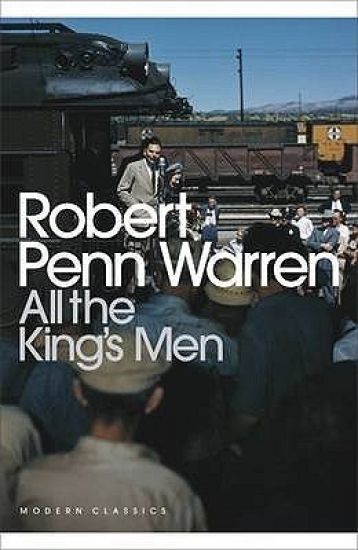
All the King's Men is considered the finest novel ever written on American politics. Set in the 1930s, this book traces the rise and fall of Willie Stark, who resembles the real-life Huey 'Kingfish' Long of Louisiana. Stark begins his political career as an idealistic man of the people but soon becomes corrupted by success.
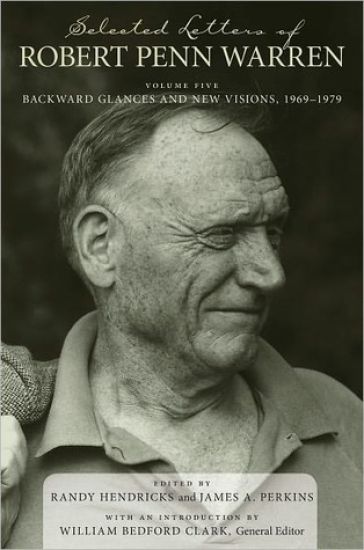
The years 1969 and 1979 bookend a volatile decade in American history. As an articulate witness to the era of the Vietnam War, Watergate, Jimmy Carter, and the national ""malaise,"" Robert Penn Warren produced a phenomenal body of work, securing his place in the canon of American poetry.Volume five of Selected Letters of Robert Penn Warren: Backward Glances and New Visions, 1969-1979 includes Warren's letters to friends, family, peers, editors, inquiring scholars, and critics - recording the details of his personal and professional life and illustrating his pivotal role in twentieth-century American literature.In these turbulent but fruitful years, Warren produced both Audubon: A Vision (1969) and the revised version of Brother to Dragons (1979). In between lay some of Warren's most searching work as poet, novelist, literary critic, and social commentator.During this era Warren's achievements included his highly experimental and complex Or Else - Poem/Poems (1974) and the Pulitzer Prize-winning Now and Then (1978). Before the end of the 1970s three more novels appeared concluding with his final book of fiction, A Place to Come To.This volume provides insight into Warren's inspiration during a remarkably productive era and will prove an essential resource on his life and work.
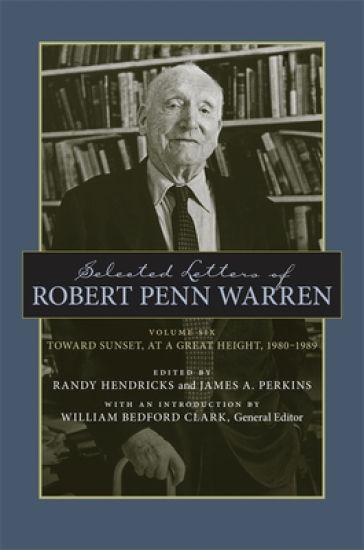
In the last decade of his life, Robert Penn Warren remained a vibrant force in American literature, producing new works of poetry and nonfiction while also dealing courageously with the gradual decline of his health and the diminishment of his poetic powers. Toward Sunset, at a Great Height, 1980-1989, the sixth and final volume of the author's selected letters, provides crucial documentation of this period, containing Warren's correspondence with friends, family, fellow writers, editors, critics, and the scholars studying his works.Warren published several volumes of poetry, including Being Here (1980), Rumor Verified (1981), and Chief Joseph of the Nez Perce (1983), and returned to nonfiction prose with Jefferson Davis Gets His Citizenship Back (1980) and the memoir Portrait of a Father (1988).His letters reveal that he tried to begin writing a novel but was unable to make substantial progress on it, and that from 1985 on he became increasingly dissatisfied with his new poems. Until his death at age eighty-four, however, Warren maintained an active correspondence filled with news about his writings and travels, accounts of the lives of his wife and children, and a stoic attitude about his own physical decline as well as a solicitousness regarding the health of others, such as his brother, Thomas, and sister, Mary. He communicated with rising young scholars and encouraged younger poets he admired.Toward Sunset, at a Great Height offers rich insights into the closing chapter of Robert Penn Warren's professional and personal life, making it an essential resource for understanding the full scope of the author's contribution to American letters.
Volume four of the Selected Letters of Robert Penn Warren covers a crucial time of personal and professional rejuvenation in Warren's life. During the fifteen-year period spanned by this correspondence, he completed Brother to Dragons; Segregation: The Inner Conflict in the South; and Who Speaks for the Negro? As these titles suggest, these years were marked by Warren's immersion in American history and his maturing interest in race relations. They also saw his return to lyric poetry, after a ten-year hiatus, with the publication of the Pulitzer Prize-winning collection Promises. Along with seeing the completion of some of his most successful work, this period was a time of momentous change in Warren's life, including his move to Yale University; his marriage to his second wife, Eleanor; and the birth of his two children. As a chronicle of Warren's thoughts on his family, his work, his friends, the state of literary studies, and the culture at large, these letters are invaluable. Unlike many writers, Warren rarely drafted his correspondence with future readers and scholars in mind; he typically saved his prepared statements about the human condition and the state of the world for his poetry, fiction, and social commentary. His letters offer a candid and personal glimpse of Warren's relationships as well as his personal views on literature, politics, and social trends. Their recipients include Ralph Ellison, Allen Tate, Saul Bellow, Robert Lowell, Eudora Welty, and Louis Rubin, as well as Warren's editors, reviewers, collaborators, and other friends. Providing an unusually vivid and personal account of Warren's rich and fully realised life, these missives are equally revealing of his thoughts on the state of contemporary American culture during this dynamic time in American history.
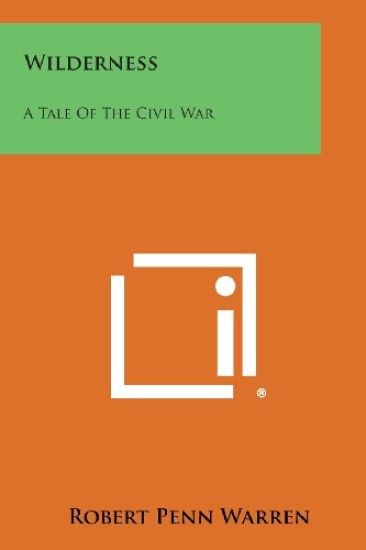
“A moving and disturbing work—one which goes beyond events, to brood upon their meanings.”—Samuel Hynes, New York Times Book ReviewIn the summer of 1863, Adam Rosenzweig leaves a Bavarian ghetto and sails for the United States to fight for the North in the Civil War. Fired by a revolutionary idealism inherited from his father, he hopes to aid a cause that he believes to be as simple as he knows it to be just.Over the course of his journey, Adam becomes witness to a world whose complexity does not readily conform to his ideals of liberty. When his twisted foot attracts unwanted attention on his voyage to America, he is threatened with return to Europe. He jumps ship in New York, only to be caught up in the violence and horror of the anti-draft riots. Eventually he reaches the Union Army, serving not as a soldier but as a civilian provisioner’s assistant. Adam’s encounters with others—among them a wealthy benefactor, a former slave, an exiled Southerner, a bushwacker and his wife—further challenge the absolutism that informs his view of the world and of his place in it.First published in 1961, Wilderness remains a profoundly provocative meditation on the significance of the Civil War and the varieties of human experience. This new edition of the novel includes an insightful introductory essay by James H. Justus, Distringuished Professor Emeritus at Indiana University and author of The Achievement of Robert Penn Warren.The Author: Robert Penn Warren (1905–1989)was born in Kentucky and studied at Vanderbilt and Oxford Universities. As a novelist, teacher, poet, and critic, he became one of America’s most celebrated men of letters and the only writer to receive Pulitzer Prizes for both poetry and fiction. In addition to Wilderness, his novels included All the King’s Men, World Enough and Time, and Band of Angels.
John Burt's Selected Poems of Robert Penn Warren is more broadly representative of Warren's poetry than any previous selected gathering. More than two hundred poems from every phase grace the volume, a vehicle ideal for sampling- or soaking in- the finest of Warren's rich output. With each poem, Burt has carefully located the version that constitutes Warren's final revision. His introduction gives an eloquent overview of the poet's career, touching on every published book of verse and highlighting significant lines. A ""selected"" collection in the truest sense, featuring several previously unpublished pieces, this treasure is at once new and familiar. At the heart of Warren's poetry is a celebration of man's intellect and imagination, his integral place within nature, and his relationship to time and the past; ultimately, joy coexists with the knowledge of life's many mysteries, including its tragedies. Selected Poems, a generous survey and a convenient compendium, is the shining portal to this greatly gifted poet.
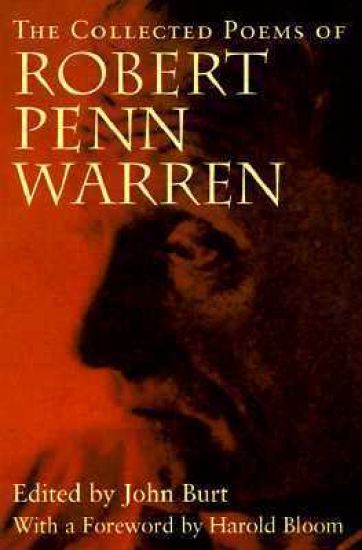
Winner of the C. Hugh Holman AwardA central figure in twentieth-century American literature, Robert Penn Warren (1905- 1989) was appointed by the Library of Congress as the first Poet Laureate of the United States in 1985. Although better known for his fiction, especially his novel All the King's Men, it is mainly his poetry- spanning sixty years, fifteen volumes of verse, and a wide range of styles- that reveals Warren to be one of America's foremost men of letters.In this indispensable volume, John Burt, Warren's literary executor, has assembled every poem Warren ever published (with the exception of Brother to Dragons), including the many poems he published in The Fugitive and other magazines, as well as those that appeared in his small press works and broadsides. Burt has also exhaustively collated all of the published versions of Warren's poems- which, in some cases, appeared as many as six different times with substantive revisions in every line- as well as his typescripts and proofs. And since Warren never seemed to reread any of his books without a pencil in his hand, Burt has referred to Warren's personal library copies. This comprehensive edition also contains textual notes, lists of emendations, and explanatory notes.Warren was born and raised in Guthrie, Kentucky, where southern agrarian values and a predilection for storytelling were ingrained in him as a young boy. By 1925, when he graduated from Vanderbilt University, he was already the most promising of that exceptional set of poets and intellectuals known as the Fugitives. Warren devoted most of the 1940s and 1950s to writing prose and literary criticism, but from the late 1950s he composed primarily poetry, with each successive volume of verse that he penned demonstrating his rigorous and growing commitment to that genre. The mature visionary power and technical virtuosity of his work in the 1970s and early 1980s emanated from his strongly held belief that ""only insofar as the work [of art] establishes and expresses a self can it engage us."" Many of Warren's later poems, which he deemed ""some of my best,"" rejoice in the possibilities of old age and the poet's ability for ""continually expanding in a vital process of definition, affirmation, revision, and growth, a process that is the image, we may say, of the life process.
First published in 1956, Segregation is a collection of Robert Penn Warren's informal conversations with southerners in the wake of the Brown v. Board of Education decision. Warren, who in his own writings often explored the theme of race in American life, traveled through his native region to talk with scores of individuals—taxi drivers, NAACP leaders, members of White Citizens groups, college students, preachers—to report their responses to the Court's decision.
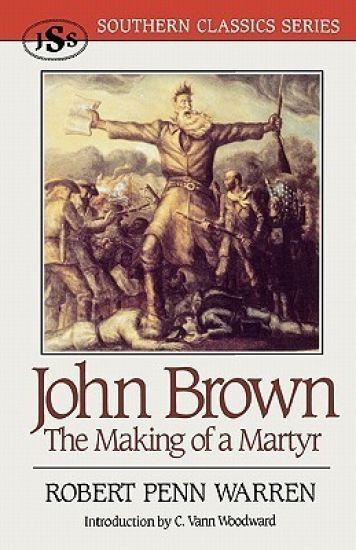
WarrenAIs first book, a biography that foreshadows the themes developed in novels like All the King's Men, portrays the flawed idealist whose violent seizure of the Harper's Ferry arsenal led to the greater violence of the Civil War. Southern Classics Series.
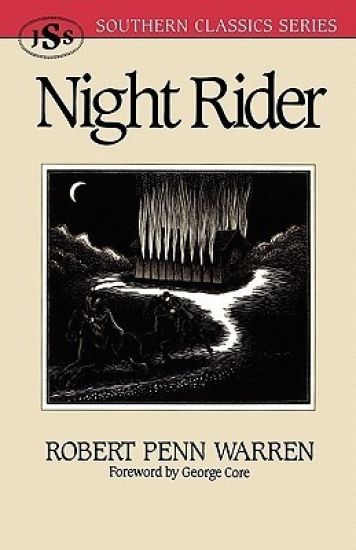
WarrenAIs first novel, set during the tobacco warsO that raged in Kentucky and Tennessee in the early part of this century. Percy Munn is one of WarrenAIs innocent idealists whose delusions become murderous as he attempts to define himself by action in the unfolding violence around him. Southern Classics Series.
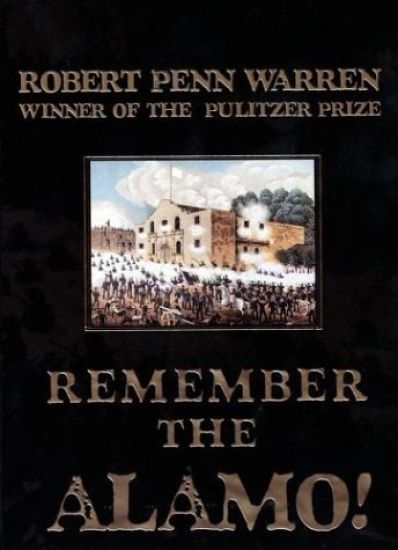
Originaly published in 1958 by Random House, Remember the Alamo is a children's book intended for ages 9 and up. Written just three years following the acclaimed Disney miniseries, Davy Crockett at the Alamo staring Fess Parker and Buddy Ebsen, the book is right out of the 1950s before "politically correct" entered our mindsets. Remember the Alamo is the acclaimed classic accounts of one of the most thrilling moments in the history of the United States frontier. The battle for the Alamo was an epic event in the fight for Texas independence from Mexico. Davy Crockett, Colonel Jim Bowie and Colonel Travis are just three of the legendary and colorful heroes whose courageous and doomed defense of the Alamo against an overwhelming Mexican army led by General Santa Anna earned them immortality. Their valiastand and death inspired the rallying cry, "Remember the Alamo " that inspired Texans to continue their struggle and ultimate win their independence from Mexico. Robert Penn Warren was a poet, critic, novelist, and teacher. He taught at Vanderbilt University, Nashville, Tennessee, Southwestern College, Memphis, Tennessee, University of Minnesota, Yale University, and Louisiana State University. While at LSU he founded and edited, along with Cleanth Brooks and Charles W. Pipkin, the literary quarterly, The Southern Review. As a poet, he was appointed the nation's first Poet Laureate, February 26, 1986. He published sixteen volumes of poetry and two---Promises: Poems, 1954-1956 and Now and Then: Poems, 1976-1978---won Pulitzer Prizes. Warren published ten novels. One novel, All the King's Men, won a Pulitzer Prize. Two novels, All the King's Men and Band of Angels were made into movies. In addition he published a book of short stories, two selections of critical essays, a biography, three historical essays, a study of Melville, a critical book on Dreiser, a study of Whittier, and two studies of race relations in America. As of this writing, he is the only author to have won the Pulitzer for both fiction and poetry.
Selected Letters of Robert Penn Warren, Volume three, provides an indispensable glimpse of Warren the writer and the man, covering a crucial decade in his life. Edited by Randy Hendricks and James A. Perkins, and introduced by William Bedford Clark, this collection of largely previously unpublished letters and newly discovered material documents Warren's time at the University of Minnesota, his writing and publication of the Pulitzer Prize-winning novel All the King's Men, his appointment as Consultant in Poetry at the Library of Congress, and his divorce from Emma ""Cinina"" Brescia and subsequent marriage to the writer Eleanor Clark.The period 1943-1952 also saw the publication of ""A Poem of Pure Imagination""; World Enough and Time; The Ballad of Billie Potts; At Heaven's Gate; and Selected Poems, 1923-1943. Warren's letters shed new light on those works and on his close relationship with his editors Lambert Davis and Albert Erskine. Included too is correspondence concerning Warren's collaboration with Robert Rossen on the movie production of All the King's Men, which received the Academy Award for best picture in 1949.The list of friends and colleagues with whom Warren communicated reads like a roll call of major twentieth-century literary figures and clearly shows his ever-widening influence on the world of letters. Spanning a remarkable range in both style and tone, the letters disclose Warren's attitudes toward his work as a teacher and his thoughts on the events of World War II, the Korean War, and the political conflicts in postwar Europe.Thoroughly annotated and scrupulously researched, Volume Three captures Warren in an extraordinary phase in his life and career, reaching his maturity and making many commitments at once yet pursuing them all with a seemingly boundless energy.
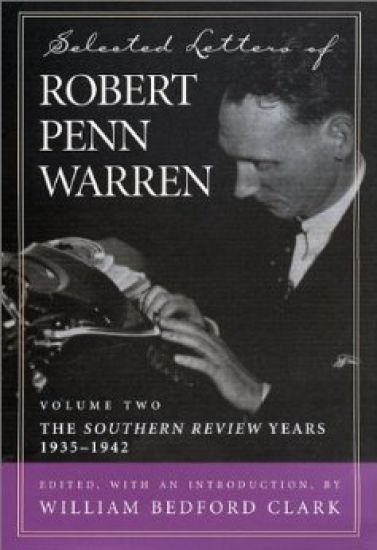
At the beginning of 1935, Robert Penn Warren was destined for arguably the most crucial period in his distinguished career. Having escaped the brink of unemployment the previous fall to join fellow Vanderbilt alumnus and Rhodes scholar Cleanth Brooks on the English faculty at Louisiana State University (which was enjoying a boom thanks to the favouritism shown by the Long regime), the young author was poised to establish himself, against the backdrop of the Great Depression and America's belated entry into World War II, as a compelling new voice, perhaps the most versatile writer of his generation.Continuing where Volume One of the Selected Letters left off, the missives from his Baton Rouge years show Warren exploring and testing the boundaries of his genius on a number of simultaneous fronts. Editing the Southern Review with Brooks was the center of his working life, and it offered him an almost immediate springboard to prominence on both sides of the Atlantic. Warren was determined to establish and maintain the stature of the quarterly even as he systematically nurtured the talent of a younger generation of writers that included Eudora Welty, Randall Jarrell, Peter Taylor, and John Berryman. He attended to his own writing as well and not only emerged as a celebrated poet but also published his first major fiction. During the same period, he and Brooks drew directly upon their classroom challenges to design and launch a series of textbooks that gradually transformed the teaching of poetry and fiction in American colleges and universities.What any number of commentators have called Warren's ""protean"" energy is in full evidence in these letters. The range and sheer diversity of his correspondence, whether with old friends, established literary figures, hopeful young writers, his beloved wife Cinina, recalcitrant academic administrators, or sometimes troublesome publishers, reveal an extraordinarily keen mind and heightened imagination operating in concert with optimum efficiency. Scrupulously edited and thoroughly annotated by William Bedford Clark with an eye toward the needs of the lay reader as well as the specialist, Warren's letters have the immediacy of skillful autobiography.
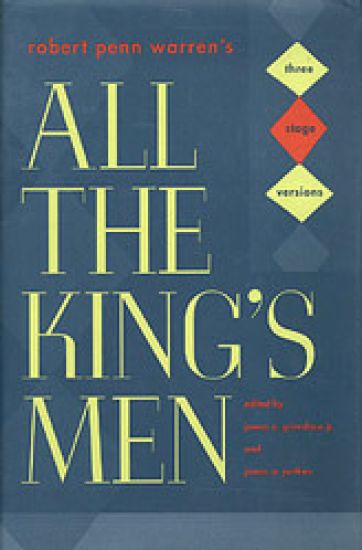
Robert Penn Warren's 1946 Pulitzer Prize-winning novel All the King's Men is one of the undisputed classics of American literature. Fifty years after the novel's publication, Warren's characters still stand as powerful representations of the moral dilemmas faced by individuals in positions of power. All the King's Men had its genesis in Warren's stage play Proud Flesh, unpublished in his lifetime. He also wrote a subsequent unpublished play titled Willie Stark: His Rise and Fall and a later dramatic version of the novel that shared the title All the King's Men. This volume is the first to collect all three dramatic texts and to publish Proud Flesh and Willie Stark. Proud Flesh is particularly fascinating for what it reveals about the development of All the King's Men and Warren's changing perceptions of its characters and themes. The other plays, as post-novel writings, provide a forum for Warren to clarify his intentions in the novel. The editors' introduction to this collection reviews the composition history of the works and their relationship to the novel and to each other. The new perspectives on Warren's writing presented in Robert Penn Warren's "All the King's Men": Three Stage Versions provide a glimpse into a creative mind struggling with a compelling story and offer readers another way of looking at this American classic. This book is an essential reference in Warren studies that will give students of All the King's Men another context from which to consider Warren's novel.
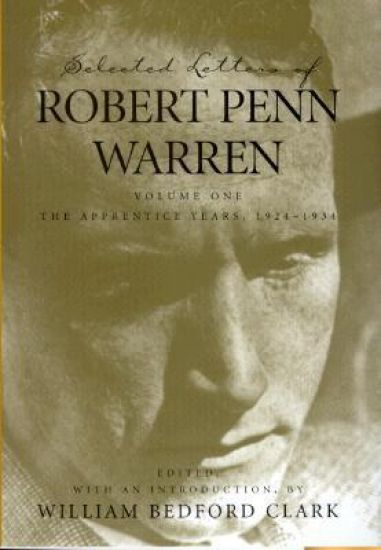
In America's twentieth century, there is no man of letters more versatile, distinguished, and influential than the poet, novelist, editor, critic, social commentator, and teacher Robert Penn Warren (1905-1989). The most intimate of Warren's ""letters,"" his personal correspondence, now join his published canon under William Bedford Clark's expert supervision. Volume One, The Apprentice Years, forms a kind of epistolary coming-of-age novel, taking Warren from the awkwardness of emerging genius during his Fugitive student years at Vanderbilt to the brink of producing great work in a newly appointed post at Louisiana State University.Warren's earliest correspondence limns a friendship in earnest with Allen Tate, a crushing heartbreak, and an attempted suicide. Eventually the author regroups, graduates with honors, and entertains a bad-boy phase at Berkeley and Yale. As he studies at Oxford, writes his first book, and decides not to complete his doctorate, Warren exhibits a deepening maturity and devotion to his literary craft, expressing ever more complex ideas about poetry and fiction. His nagging financial difficulties, growing commitment to the -Agrarian movement, controversial essay for I'll Take My Stand, marriage to Cinina Brescia, and professional uncertainty as one of the first to combine writing with college teaching lead him into the 1930s, when the bright prospect of tenure and an opportunity to remake the Southwest Review arises.Warren's letters, all but one previously unpublished, fascinate in their revelations, such as the author's surprisingly tangled relationship with his parents, his delicate health, and the gossip about major literary figures, including Tate, John Crowe Ransom, Donald Davidson, and Laura Riding. But beyond rich biographical detail, they offer a veritable self-portrait of the fledgling artist: ""When a person writes a letter it is nearly as much one to himself as to the person who takes it from the postbox."" The self-conscious, precocious, yet sensitive young Warren modulates to the sardonic, irreverent aesthete/wit ""Red"" and finally acquires a voice distinctively ""Warrenesque,"" confident and sophisticated. Thus the imaginative as well as literal aspects of these years in Warren's life are conveyed, his writing persona and historical person always an intriguing comparison.Highly accessible, unfailingly interesting, and scrupulously annotated, The Apprentice Years will satisfy scholar and lay reader alike, providing a unique window on what it means to ""profess"" the writer's calling in an era of rapid change. When complete, the Selected Letters of Robert Penn Warren will prove an indispensable addition to the author's literary oeuvre.
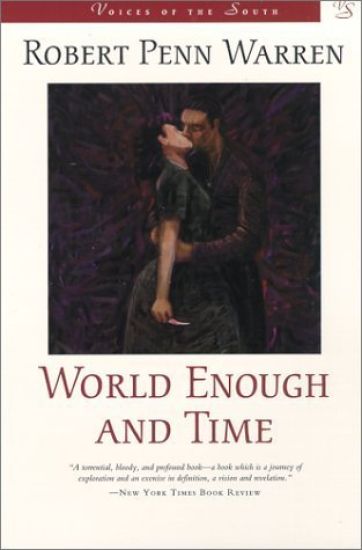
In the admixture of wilderness and elegant society that was 1826 Kentucky, Jeremiah Beaumont, a brilliant, imaginative lawyer, stood trial for murdering his benefactor and father figure, the politician Colonel Cassius Fort. Now all the documents are in hand to reconstruct Beaumont's life story - his crime, his trial, his ultimate sin and punishment - and the historian-narrator of World Enough and Time sets about doing just that. Based on the famous murder case known as the Kentucky Tragedy, World Enough and Time is, like its precursor All the King's Men, a fictional wonder that personifies history, philosophy, politics, and passion.
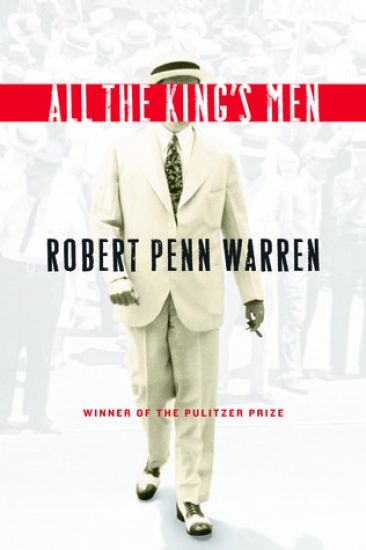
WINNER OF THE PULITZER PRIZEThe classic, ever-relevant story of a backcountry lawyer whose idealism is overcome by his lust for power -- American literature's definitive political novel.All the King's Men traces the rise of fall of demagogue Willie Stark, a fictional Southern policitian who resembles the real-life Huey Long of Louisiana. Stark begins his career as an idealistic man of the people, but he soon becomes corrupted by success and the lust for power.
In these two essays, one of America’s most honored writers fastens on the interrelation of American democracy and poetry and the concept of selfhood vital to each. “I really don’t want to make a noise like a pundit,” Mr. Warren declares, “What I do want to do is to return us—and myself most of all—to a scrutiny of our own experience of our own world.” Indeed, Democracy and Poetry offers one of the most pertinent and strongly personal meditations on our condition to have appeared in recent letters.Our native “poetry,” that is, literature and art, in general, is a social document, is “diagnostic,” and has often been a corrosive criticism of our democracy, Mr. Warren argues. Persuasively, and movingly, he shows that all of “art” and all that goes into the making of democracy require a free and responsible self. Yet the American experience has been one of the decay of the notion of self. Our astounding success jeopardized what we promised to create—the free man. For a century and a half the conception of the self has been dwindling, separating itself from traditional values, moral identity, and a secure relation with community. Lonely heroes in a bankrupt civilization, then protest, despair, aimlessness, and violence, have marked our literature.The anguish of Robert Penn Warren’s own poetic vision of art and democracy is soothed only by his belief that poetry—the making of art can nourish and at least do something toward the rescue of democracy; he shows how art can be- come a healer, can be “therapeutic.” In the face of disintegrative forces set loose in a business and technetronic society, it is poetry that affirms the notion of the self. It is a model of the organized self, an emblem of the struggle for the achieving self, and of the self in a community. More and more as our modern technetronic society races toward the abolition of the self, and diverges from a culture created to enhance the notion of selfhood, poetry becomes indispensable.Compelling, resonant, memorable, Democracy and Poetry is a major testament not only to the vitality of poetry, but also to a faith in democracy.