Kirjojen hintavertailu. Mukana 12 390 323 kirjaa ja 12 kauppaa.

Kirjailija

Robert Pollin

Kirjat ja teokset yhdessä paikassa: 11 kirjaa, julkaisuja vuosilta 1993-2021, suosituimpien joukossa Globalization and Progressive Economic Policy: The Real Constraints and Opt. Vertaile teosten hintoja ja tarkista saatavuus suomalaisista kirjakaupoista.

11 kirjaa

Kirjojen julkaisuhaarukka 1993-2021.

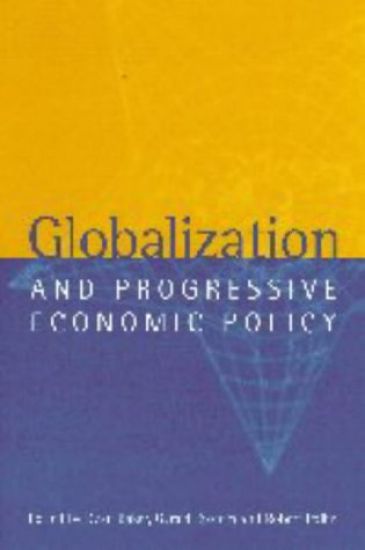
Globalization and Progressive Economic Policy: The Real Constraints and Opt

Globalization and Progressive Economic Policy: The Real Constraints and Opt

Dean Baker; Robert Pollin; Gerald Epstein

CAMBRIDGE UNIVERSITY PRESS_
1999
sidottu
In Globalization and Progressive Economic Policy, thirty-six prominent economists analyze the impact of the emerging global economy on our national sovereignty and standards of living. Does globalization cause inequality? Instability? Unemployment? Environmenal degradation? Or is it an engine of prosperity and wealth for the vast majority of the world's citizens? The authors analyze problems, institutions and possible government responses, and conclude that globalization can be a force for good or ill depending on the degree of regulation that governments and citizens can exercise over its trajectory.
Climate Crisis and the Global Green New Deal

Climate Crisis and the Global Green New Deal

Noam Chomsky; Robert Pollin

Verso Books
2020
nidottu
The environmental crisis under way is unique in human history. It is a true existential crisis. Those alive today will decide the fate of humanity. Meanwhile, the leaders of the most powerful state in human history are dedicating themselves with passion to destroying the prospects for organized human life. At the same time, there is a solution at hand, which is the Green New Deal. Putting meat on the bones of the Green New Deal starts with a single simple idea: we have to absolutely stop burning fossil fuels to produce energy within the next 30 years at most; and we have to do this in a way that also supports rising living standards and expanding opportunities for working people and the poor throughout the world. This version of a Green New Deal program is, in fact, entirely realistic in terms of its purely economic and technical features. The real question is whether it is politically feasible. Chomsky and Pollin examine how we can build the political force to make a global Green New Deal a reality.
Greening the Global Economy

Greening the Global Economy

Robert Pollin

MIT Press
2015
sidottu
A program for building a global clean energy economy while expanding job opportunities and economic well-being.In order to control climate change, the International Panel on Climate Change (IPCC) estimates that greenhouse gas emissions will need to fall by about forty percent by 2030. Achieving the target goals will be highly challenging. Yet in Greening the Global Economy, economist Robert Pollin shows that they are attainable through steady, large-scale investments-totaling about 1.5 percent of global GDP on an annual basis-in both energy efficiency and clean renewable energy sources. Not only that: Pollin argues that with the right investments, these efforts will expand employment and drive economic growth.Drawing on years of research, Pollin explores all aspects of the problem: how much energy will be needed in a range of industrialized and developing economies; what efficiency targets should be; and what kinds of industrial policy will maximize investment and support private and public partnerships in green growth so that a clean energy transformation can unfold without broad subsidies. All too frequently, inaction on climate change is blamed on its potential harm to the economy. Pollin shows greening the economy is not only possible but necessary: global economic growth depends on it.
An Employment-Targeted Economic Program for Kenya

An Employment-Targeted Economic Program for Kenya

Robert Pollin; Mwangi wa Githinji; James Heintz

Edward Elgar Publishing Ltd
2008
sidottu
The Kenyan economy has experienced improved economic growth in recent years, and the government has maintained a commitment to generating 500,000 new jobs per year. But the country still faces severe problems of poverty-level employment - people working full-time yet living with their families in poverty. This study develops detailed proposals for greatly expanding decent employment opportunities in Kenya, and to accomplish this in a manner that also creates a wide range of employment and business opportunities, including those for small and medium-sized enterprises, agricultural small holders, commercial banks, and microfinance institutions.
A Measure of Fairness

A Measure of Fairness

Robert Pollin; Mark Brenner; Stephanie Luce; Jeannette Wicks-Lim

Cornell University Press
2008
pokkari
In early 2007, there were approximately 140 living wage ordinances in place throughout the United States. Communities around the country frequently debate new proposals of this sort. Additionally, as a result of ballot initiatives, twenty-nine states and the District of Columbia, representing nearly 70 percent of the total U.S. population, maintain minimum wage standards above those set by the federal minimum wage. In A Measure of Fairness, Robert Pollin, Mark Brenner, Jeannette Wicks-Lim, and Stephanie Luce assess how well living wage and minimum wage regulations in the United States serve the workers they are intended to help. Opponents of such measures assert that when faced with mandated increases in labor costs, businesses will either lay off workers, hire fewer low-wage employees in the future, replace low-credentialed workers with those having better qualifications or, finally, even relocate to avoid facing the increased costs being imposed on them. The authors give an overview of living wage and minimum wage implementation in Louisiana, New Mexico, Arizona, California, Massachusetts, and Connecticut to show how these policies play out in the paychecks of workers, in the halls of legislature, and in business ledgers. Based on a decade of research, this volume concludes that living wage laws and minimum wage increases have been effective policy interventions capable of bringing significant, if modest, benefits to the people they were intended to help.
A Measure of Fairness

A Measure of Fairness

Robert Pollin; Mark Brenner; Stephanie Luce; Jeannette Wicks-Lim

Cornell University Press
2008
sidottu
In early 2007, there were approximately 140 living wage ordinances in place throughout the United States. Communities around the country frequently debate new proposals of this sort. Additionally, as a result of ballot initiatives, twenty-nine states and the District of Columbia, representing nearly 70 percent of the total U.S. population, maintain minimum wage standards above those set by the federal minimum wage. In A Measure of Fairness, Robert Pollin, Mark Brenner, Jeannette Wicks-Lim, and Stephanie Luce assess how well living wage and minimum wage regulations in the United States serve the workers they are intended to help. Opponents of such measures assert that when faced with mandated increases in labor costs, businesses will either lay off workers, hire fewer low-wage employees in the future, replace low-credentialed workers with those having better qualifications or, finally, even relocate to avoid facing the increased costs being imposed on them. The authors give an overview of living wage and minimum wage implementation in Louisiana, New Mexico, Arizona, California, Massachusetts, and Connecticut to show how these policies play out in the paychecks of workers, in the halls of legislature, and in business ledgers. Based on a decade of research, this volume concludes that living wage laws and minimum wage increases have been effective policy interventions capable of bringing significant, if modest, benefits to the people they were intended to help.
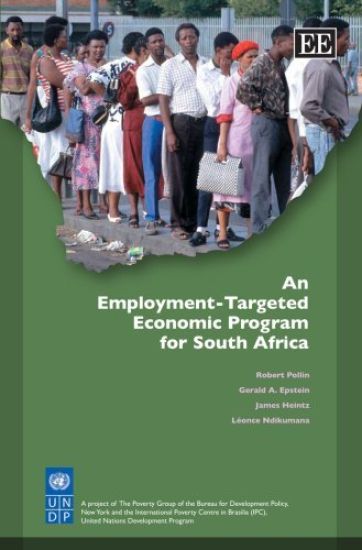
An Employment-Targeted Economic Program for South Africa

An Employment-Targeted Economic Program for South Africa

Robert Pollin; Gerald A. Epstein; James Heintz; Léonce Ndikumana

Edward Elgar Publishing Ltd
2007
sidottu
The people of South Africa, and the African National Congress-led government, have made extraordinary social and economic advances since ending apartheid and beginning the transition to democracy in 1994. But the country still faces severe problems of mass unemployment, underemployment and poverty. This study, sponsored by the United Nations Development Program, presents a detailed economic program designed to produce major reductions in unemployment and poverty, and a general spreading of economic well-being, and to achieve these ends in a manner that is sustainable over a longer-term framework. The 'employment-targeted' program developed here builds from standard policy tools and initiatives already undertaken by the government in the areas of macroeconomic policy, development banking and large-scale credit subsidies, labor-intensive public investments, and social welfare expenditures. The authors introduce these measures alongside specific proposals in the areas of fiscal budgetary control, inflation control and exchange rate management. Students and scholars of development economics will find this analysis of South Africa's economy, and the authors' plan for stimulating job growth, of great interest.
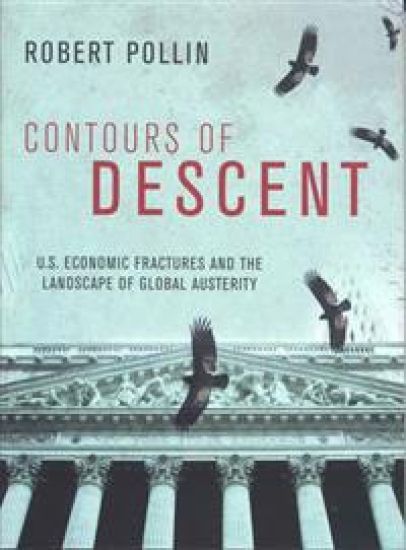
Contours of Descent

Contours of Descent

Robert Pollin

Verso Books
2005
nidottu
In the past twenty-five years the free-market neoliberal model has been hailed as a panacea for economic ills in both the advanced economies and the developing world. Pollin dissects this model as it has been implemented in the US during the Clinton and Bush administrations under Greenspan's Chairmanship of the Federal Reserve, and in developing countries under the auspices of the IMF.Clinton's Third Way policies were hailed as combining a pro-business stance with social responsibility. This approach seemed to be vindicated by the extraordinary fall in both inflation and unemployment. In fact, the apparent successes of the Clinton years were based on anti-labor policies, the stagnation of real wages, deregulation of financial markets, and an historically unprecedented stock market boom. Even before 9/11 there were indications that the Clinton bubble would collapse into recession. Bush's response was to give big tax breaks to the rich, introduce more anti-labor measures, and cut social spending at both the federal and state levels.Both Clinton and Bush have applied free-market policies only selectively within the US itself, when such policies have most benefited the interests of business. At the same time, through the IMF, the US has compelled developing countries to slash public spending, deregulate financial markets and dismantle trade barriers virtually across the board. Argentina's embrace of this policy package culminated in financial ruin. Throughout Asia and Africa, sweatshops and poverty are the testaments to a bankrupt economic model.Pollin concludes by exploring concrete proposals that would promote full employment, economic growth and increased equality in the US and throughout the less developed countries, drawing ong the spreading movements for living wages, the Tobin Tax on financial speculation, and more generally workable alternatives to neoliberal globalization.