Kirjojen hintavertailu. Mukana 12 595 353 kirjaa ja 12 kauppaa.

Kirjailija

Robert Pool

Kirjat ja teokset yhdessä paikassa: 12 kirjaa, julkaisuja vuosilta 1994-2019, suosituimpien joukossa Numero Uno / Peak: Secrets from the New Science of Expertise: Secretos Para Ser Mejor En Lo Que Nos Propongamos. Vertaile teosten hintoja ja tarkista saatavuus suomalaisista kirjakaupoista.

12 kirjaa

Kirjojen julkaisuhaarukka 1994-2019.

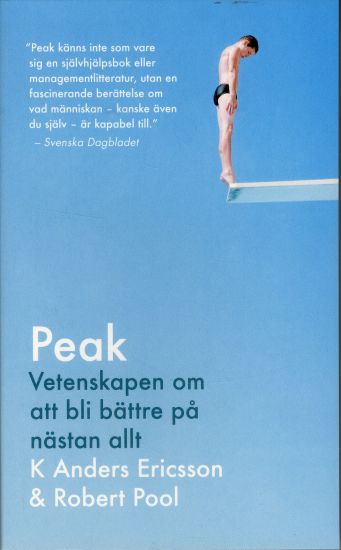
Peak : vetenskapen om att bli bättre på nästan allt : sanningen bakom 10 000-timmarsregeln
Ingen är begränsad till talang. Vi skapar själva gränsen för våra förmågor.Vart vi än vänder oss från idrott och musik till naturvetenskap och näringsliv finns människor som uppvisar extraordinära förmågor. Människor som vi gärna kallar särskilt begåvade eller talangfulla .Men Mozart föddes inte med absolut gehör och Zlatan har inte kunnat luta sig enbart mot talang. Det handlar i stället om träning och övning och framför allt rätt sorts övning vilket K Anders Ericsson visat i sin banbrytande forskning.De principer för att utvecklas som beskrivs i Peak gäller för oss alla: oavsett vad vi vill bli bättre på eller om vi vill hjälpa andra att nå längre.*K Anders Ericsson är professor i psykologi. Det är hans forskning om exceptionella prestationer som ligger till grund för den omtalade 10 000-timmarsregeln .br> Peak känns inte som vare sig en självhjälpsbok eller managementlitteratur, utan en fascinerande berättelse om vad människan - kanske även du själv - är kapabel till. - Svenska Dagbladet
Numero Uno / Peak: Secrets from the New Science of Expertise: Secretos Para Ser Mejor En Lo Que Nos Propongamos
El mayor experto mundial en rendimiento y desarrollo de habilidades, Anders Ericsson, nos ense a los secretos para conseguir ser el mejor en lo que nos propongamos. «Este libro es el gu a que nos mostrar el camino hasta la cumbre. Lo lejos que queramos llegar es una decisi n personal. Anders Ericsson Por qu hay algunas personas que son incre blemente buenas en lo que hacen? En el deporte, la m sica, la ciencia o los negocios siempre ha habido figuras excepcionales. «Tiene un aut ntico don , decimos asombrados. Pero existe realmente el talento innato? Anders Ericsson ha descubierto ese don en atletas, m sicos, m dicos o ajedrecistas entre otros, pero tambi n asegura que en realidad todos nacemos con alg n don y que tenemos la capacidad de crear habilidades, mediante el entrenamiento y la pr ctica, gracias a la incre ble adaptabilidad del cerebro y del cuerpo humanos. Tambi n nos asegura que los principios de la pr ctica deliberada que aplican los «n meros uno de las m s variadas disciplinas ofrecen tambi n excelentes resultados a todas aquellas personas o empresas que desean mejorar. Queremos mejorar en tenis? Nuestra escritura? Las dotes de vendedor? Necesitamos pr ctica deliberada, y he aqu una buena forma de concebirla: Imaginemos que queremos subir una monta a. Podemos simplemente tomar un camino que parezca prometedor, aunque probablemente no lleguemos muy lejos, o confiar en un gu a que conoce el mejor camino y alcanzar la cima de forma mucho m s eficiente y efectiva. Esta forma mejor es la pr ctica deliberada y este libro es el gu a que nos mostrar el camino hasta la cumbre. Luego, cada uno decide hasta d nde quiere llegar. El talento innato es un mito y todos podemos ser n meros uno gracias a nuestro potencial y a la pr ctica deliberada, un principio revolucionario para mejorar lashabilidades y alcanzar la excelencia. Rese as: «Quien siga al pie de la letra las lecciones de este libro, podr cambiar el mundo. - Joshua Foer, autor de Los desaf os de la memoria «La ciencia de la excelencia se divide en dos eras: el antes y el despu s de Ericsson. - Dan Coyle, autor de Las claves del talento «Un excelente destilado del valioso trabajo de toda una vida. - Stephen J. Dubner, coautor de Freakonomics y SuperFreakonomics ENGLISH DESCRIPTION For the first time in decades of groundbreaking research, the inventor of the 10,000-hour rule explains his techniques for developing mastery of any skill We live in a world full of people with extraordinary abilities. Consider what Roger Federer can do with a tennis ball, or Connor McDavid with a puck. There are chess grandmasters who can play several dozen different games simultaneously--while blindfolded--and a seemingly unending supply of young musical prodigies who would have astonished aficionados a century ago. We are dramatically better at just about everything than we were just a generation ago. We assume, though, that these peak performers are the lucky ones, the ones with a gift. That's only partly true. The fact is we are all lucky. We all have that gift. As Ericsson's whole career has shown, with the proper practice, we are all capable of extraordinary feats. On the surface, the techniques that chess players use to develop their skills seem quite different from the methods soccer players use to perfect their games, which in turn seem quite different from how pianists improve their playing. But at a deeper level, they are all variations on a single fundamental approach to learning, what Ericsson, a world-renowned researcher, has named "deliberate practice" a simple, yet powerful system for enhancing learning. This approach to expertise has the potential to revolutionize how we think about every sort of education and training. We are not limited by an endowment of natural talent. We create our own limits. Whether you want to step up your game at work or on the weekend, or help your kid achieve athletic or academic goals, Ericsson's revolutionary methods will show you how to master almost anything.From the world's reigning expert on expertise comes a powerful new approach to mastering almost any skill.Have you ever wanted to learn a language or pick up an instrument, only to become too daunted by the task at hand? Expert performance guru Anders Ericsson has made a career studying chess champions, violin virtuosos, star athletes, and memory mavens. Peak condenses three decades of original research to introduce an incredibly powerful approach to learning that is fundamentally different from the way people traditionally think about acquiring a skill. Ericsson's findings have been lauded and debated, but never properly explained. So the idea of expertise still intimidates us -- we believe we need innate talent to excel, or think excelling seems prohibitively difficult. Peak belies both of these notions, proving that almost all of us have the seeds of excellence within us -- it's just a question of nurturing them by reducing expertise to a discrete series of attainable practices. Peak offers invaluable, often counterintuitive, advice on setting goals, getting feedback, identifying patterns, and motivating yourself. Whether you want to stand out at work, or help your kid achieve academic goals, Ericsson's revolutionary methods will show you how to master nearly anything.
Peak

Peak

Anders Ericsson; Robert Pool

Random House UK
2017
pokkari
'Anyone who wants to get better at anything should read Peak.' Fortune Do you want to stand out at work, improve your athletic or musical performance, or help your child achieve academic goals?
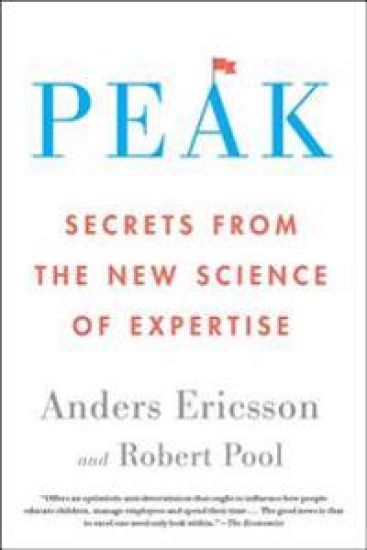
Peak: Secrets from the New Science of Expertise

Peak: Secrets from the New Science of Expertise

Anders Ericsson; Robert Pool

HarperOne
2017
nidottu
"This book is a breakthrough, a lyrical, powerful, science-based narrative that actually shows us how to get better (much better) at the things we care about."--Seth Godin, author of Linchpin "Anyone who wants to get better at anything should read Peak]. Rest assured that the book is not mere theory. Ericsson's research focuses on the real world, and he explains in detail, with examples, how all of us can apply the principles of great performance in our work or in any other part of our lives."--Fortune Anders Ericsson has made a career studying chess champions, violin virtuosos, star athletes, and memory mavens. Peak distills three decades of myth-shattering research into a powerful learning strategy that is fundamentally different from the way people traditionally think about acquiring new abilities. Whether you want to stand out at work, improve your athletic or musical performance, or help your child achieve academic goals, Ericsson's revolutionary methods will show you how to improve at almost any skill that matters to you. "The science of excellence can be divided into two eras: before Ericsson and after Ericsson. His groundbreaking work, captured in this brilliantly useful book, provides us with a blueprint for achieving the most important and life-changing work possible: to become a little bit better each day."--Dan Coyle, author of The Talent Code "Ericsson's research has revolutionized how we think about human achievement. If everyone would take the lessons of this book to heart, it could truly change the world."--Joshua Foer, author of Moonwalking with Einstein
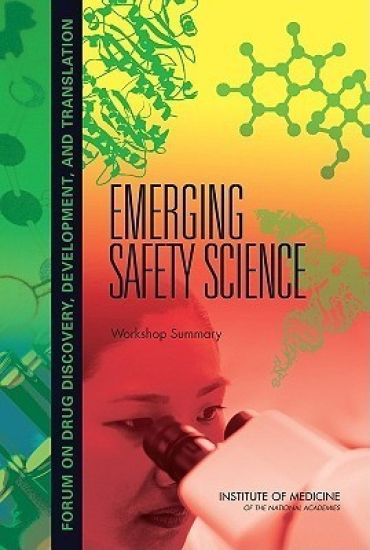
Emerging Safety Science

Emerging Safety Science

Robert Giffin; Robert Pool; Sally Robinson

National Academies Press
2008
nidottu
In recent years, the costs of new drug development have skyrocketed. The average cost of developing a new approved drug is now estimated to be $1.3 billion (DiMasi and Grabowski, 2007). At the same time, each year fewer new molecular entities (NMEs) are approved. DiMasi and Grabowski report that only 21.5 percent of the candidate drugs that enter phase I clinical testing actually make it to market. In 2007, just 17 novel drugs and 2 novel biologics were approved. In addition to the slowing rate of drug development and approval, recent years have seen a number of drugs withdrawn from the market for safety reasons. According to the Government Accountability Office (GAO), 10 drugs were withdrawn because of safety concerns between 2000 and March 2006 (GAO, 2006). Finding ways to select successful drug candidates earlier in development could save millions or even billions of dollars, reduce the costs of drugs on the market, and increase the number of new drugs with improved safety profiles that are available to patients. Emerging scientific knowledge and technologies hold the potential to enhance correct decision making for the advancement of candidate drugs. Identification of safety problems is a key reason that new drug development is stalled. Traditional methods for assessing a drug's safety prior to approval are limited in their ability to detect rare safety problems. Prior to receiving U.S. Food and Drug Administration (FDA) approval, a drug will have been tested in hundreds to thousands of patients. Generally, drugs cannot confidently be linked to safety problems until they have been tested in tens of thousands to hundreds of thousands of people. With current methods, it is unlikely that rare safety problems will be identified prior to approval. Emerging Safety Science: Workshop Summary summarizes the events and presentations of the workshop.Table of Contents Front Matter 1 Introduction 2 Investigative Toxicology: The State of the Art 3 Screening Technologies I: Human Cell–Based Approaches 4 Screening Technologies II: Toxicogenomics 5 Screening Technologies III: Metabolomics 6 Screening Technologies IV: Pharmacogenetics 7 Qualifying Biomarkers 8 Pharmacovigilance 9 Integration 10 The Future of Safety Science References Appendix A: Workshop Agenda Appendix B: Speaker Biographies
Medical Anthropology

Medical Anthropology

Robert Pool; Wenzel Geissler

Open University Press
2005
nidottu
Medical anthropology is playing an increasingly important role in public health. This book provides an introduction to the basic concepts, approaches and theories used, and shows how these contribute to understanding complex health related behaviour. Public health policies and interventions are more likely to be effective if the beliefs and behaviour of people are understood and taken into account. The book examines:Concepts of cultureMedical systemsPatient's experience of illness and treatmentThe use of medicines and healing practicesPublic health and medical researchExamples of particular health problems, such as HIV and malaria, are used to show how an anthropological approach can contribute to both a better understanding of health and illness and to more culturally compatible public health measures.Series Editors: Rosalind Plowman and Nicki Thorogood.
Fat

Fat

Robert Pool

Oxford University Press, USA
2001
sidottu
The author of Eve's Rib takes a close up look at scientific efforts to understand and control human obesity, examining the pharmaceutical and weight control programs available, the history of obesity research, and the science of body weight, and arguing that the real problem with obesity is not losing the weight, but keeping it off.
Beyond Engineering

Beyond Engineering

Robert Pool

Oxford University Press Inc
1999
nidottu
We have long recognized technology as a driving force behind much historical and cultural change. The invention of the printing press initiated the Reformation. The development of the compass ushered in the Age of Exploration and the discovery of the New World. The cotton gin created the conditions that led to the Civil War. Now, in Beyond Engineering, science writer Robert Pool turns the question around to examine how society shapes technology. Drawing on such disparate fields as history, economics, risk analysis, management science, sociology, and psychology, Pool illuminates the complex, often fascinating interplay between machines and society, in a book that will revolutionize how we think about technology. We tend to think that reason guides technological development, that engineering expertise alone determines the final form an invention takes. But if you look closely enough at the history of any invention, says Pool, you will find that factors unrelated to engineering seem to have an almost equal impact. In his wide-ranging volume, he traces developments in nuclear energy, automobiles, light bulbs, commercial electricity, and personal computers, to reveal that the ultimate shape of a technology often has as much to do with outside and unforeseen forces. For instance, Pool explores the reasons why steam-powered cars lost out to internal combustion engines. He shows that the Stanley Steamer was in many ways superior to the Model T--it set a land speed record in 1906 of more than 127 miles per hour, it had no transmission (and no transmission headaches), and it was simpler (one Stanley engine had only twenty-two moving parts) and quieter than a petrol engine--but the steamers were killed off by factors that had little or nothing to do with their engineering merits, including the Stanley twins' lack of business acumen and an outbreak of hoof-and-mouth disease. Pool illuminates other aspects of technology as well. He traces how seemingly minor decisions made early along the path of development can have profound consequences further down the road, and perhaps most important, he argues that with the increasing complexity of our technological advances--from nuclear reactors to genetic engineering--the number of things that can go wrong multiplies, making it increasingly difficult to engineer risk out of the equation. Citing such catastrophes as Bhopal, Three Mile Island, the Exxon Valdez, the Challenger, and Chernobyl, he argues that is it time to rethink our approach to technology. The days are gone when machines were solely a product of larger-than-life inventors and hard-working engineers. Increasingly, technology will be a joint effort, with its design shaped not only by engineers and executives but also psychologists, political scientists, management theorists, risk specialists, regulators and courts, and the general public. Whether discussing bovine growth hormone, molten-salt reactors, or baboon-to-human transplants, Beyond Engineering is an engaging look at modern technology and an illuminating account of how technology and the modern world shape each other.
Beyond Engineering

Beyond Engineering

Robert Pool

Oxford University Press Inc
1997
sidottu
We have long recognized technology as a driving force behind much historical and cultural change. The invention of the printing press initiated the Reformation. The development of the compass ushered in the Age of Exploration and the discovery of the New World. The cotton gin created the conditions that led to the Civil War. Now, in Beyond Engineering, science writer Robert Pool turns the question around to examine how society shapes technology. Drawing on such disparate fields as history, economics, risk analysis, management science, sociology, and psychology, Pool illuminates the complex, often fascinating interplay between machines and society, in a book that will revolutionize how we think about technology. We tend to think that reason guides technological development, that engineering expertise alone determines the final form an invention takes. But if you look closely enough at the history of any invention, says Pool, you will find that factors unrelated to engineering seem to have an almost equal impact. In his wide-ranging volume, he traces developments in nuclear energy, automobiles, light bulbs, commercial electricity, and personal computers, to reveal that the ultimate shape of a technology often has as much to do with outside and unforeseen forces. For instance, Pool explores the reasons why steam-powered cars lost out to internal combustion engines. He shows that the Stanley Steamer was in many ways superior to the Model T--it set a land speed record in 1906 of more than 127 miles per hour, it had no transmission (and no transmission headaches), and it was simpler (one Stanley engine had only twenty-two moving parts) and quieter than a petrol engine--but the steamers were killed off by factors that had little or nothing to do with their engineering merits, including the Stanley twins' lack of business acumen and an outbreak of hoof-and-mouth disease. Pool illuminates other aspects of technology as well. He traces how seemingly minor decisions made early along the path of development can have profound consequences further down the road, and perhaps most important, he argues that with the increasing complexity of our technological advances--from nuclear reactors to genetic engineering--the number of things that can go wrong multiplies, making it increasingly difficult to engineer risk out of the equation. Citing such catastrophes as Bhopal, Three Mile Island, the Exxon Valdez, the Challenger, and Chernobyl, he argues that is it time to rethink our approach to technology. The days are gone when machines were solely a product of larger-than-life inventors and hard-working engineers. Increasingly, technology will be a joint effort, with its design shaped not only by engineers and executives but also psychologists, political scientists, management theorists, risk specialists, regulators and courts, and the general public. Whether discussing bovine growth hormone, molten-salt reactors, or baboon-to-human transplants, Beyond Engineering is an engaging look at modern technology and an illuminating account of how technology and the modern world shape each other.
Dialogue and the Interpretation of Illness
The etiology of the Wimbum people in the Western Grassfields of Cameroon is described through an examination of the way in which the meanings of key concepts, used to interpret and explain illness and other forms of misfortune, are continually being produced and reproduced in the praxis of everyday communication. During the course of numerous dialogues, witchcraft, a highly ambivalent force, gradually emerges as the prime mover. As destructive cannibals or respectable elders the witches are the ultimate cause of all significant illness, misfortune and death, and as diviners they are also the ultimate judges who apportion moral responsibility. Even the ancestors and the traditional gods turn out to be fronts behind which the witches hide their activities.The study is on three levels: a medical anthropological exploration of explanations of illness and misfortune; a detailed ethnography of traditional African cosmology and witchcraft; and an examination of recent theoretical issues in anthropology such as the nature of ethnographic fieldwork and the possibility of dialogical or postmodern ethnography.
Dialogue and the Interpretation of Illness
The etiology of the Wimbum people in the Western Grassfields of Cameroon is described through an examination of the way in which the meanings of key concepts, used to interpret and explain illness and other forms of misfortune, are continually being produced and reproduced in the praxis of everyday communication. During the course of numerous dialogues, witchcraft, a highly ambivalent force, gradually emerges as the prime mover. As destructive cannibals or respectable elders the witches are the ultimate cause of all significant illness, misfortune and death, and as diviners they are also the ultimate judges who apportion moral responsibility. Even the ancestors and the traditional gods turn out to be fronts behind which the witches hide their activities.The study is on three levels: a medical anthropological exploration of explanations of illness and misfortune; a detailed ethnography of traditional African cosmology and witchcraft; and an examination of recent theoretical issues in anthropology such as the nature of ethnographic fieldwork and the possibility of dialogical or postmodern ethnography.