Kirjailija
Robert Pope
Kirjat ja teokset yhdessä paikassa: 21 kirjaa, julkaisuja vuosilta 2000-2025, suosituimpien joukossa The Land Where We Become Ourselves. Vertaile teosten hintoja ja tarkista saatavuus suomalaisista kirjakaupoista.
21 kirjaa
Kirjojen julkaisuhaarukka 2000-2025.
Robert Pope's stories are vibrant adventures into the unknown. They veer gleefully from visceral, earthy tales of insanity, crime and delusion, all the way to playful, surreal and often absurd outings to a world not unlike our own. Jo Rosina Harlow, short fiction writer, Dark Lane Anthology, The Ghastling, & others I think Robert Pope must be one of the most capable short story writers around. His writing reminds me of such luminaries as Marquez, Vonnegut, Highsmith, Jackson, Cheever and Carver. Yet Pope's stories-by turns strange, tender, funny, shocking-seem to me very much his own. They hold the reader, provoking thought, even a distracted wonder. They're written in a sparse yet elegant and indeed vivid way, with passages that are at times quite brilliant. All these things, to my mind, are hallmarks of a contemporary master." Matthew G. Rees, The Feast, Smoke House, Keyhole, & The Snow Leopard of Moscow For godssake listen to Bob Pope read you his stories. Give him a wry crinkled voice, sometimes Ray Bradbury sometimes David Lynch circa The Straight Story. Some of these are mid-century pulp nasties, some Hitchcockian time-bombs, others horrors in casual clothes. Bob nails childhood's roving drunk paganism then spins to adults in all their adulterousness. His stories are insidious and limber and humane, droll then petrifying. Bob Pope is a jolly papa who plays at monster then actually swallows you. Jeremy Tenenbaum, Editor, SORTES The land where we become ourselves is a land of myth and fable as well as the concrete real; a land in which unwitting, ill-fitting, or downright duplicitous characters meet their dates with destiny, real or imagined, merciful or perilous. It's also a land of beasts and forests and hospitals and barstools, coexisting in a fun and fabulous danse macabre that bring this fictional landscape to light. It's a land that requires a passport that only arch fabricator and gifted counterfeiter Robert Pope could forge. And, by Jove, he's done it What splendid medicine for this jaundiced age John Bullock, Mark Small: This Is Your Life, fiction editor, Sheila-Na-Gig press
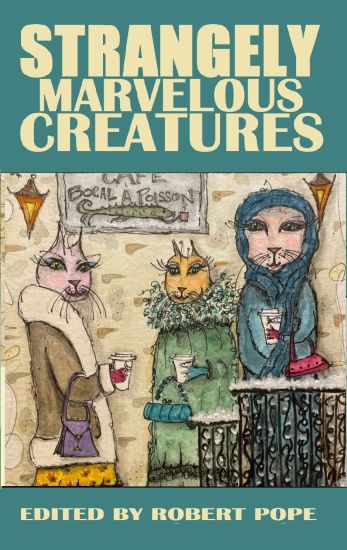
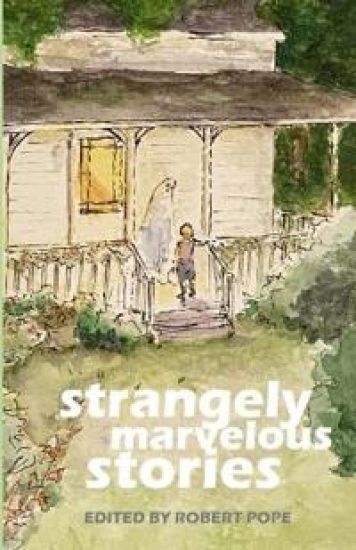
Strangely Marvelous Creatures Marvin Brown, The Wet Knot Michael Charlton, Pop's Surprise Mark A, R. Facknitz, Honesty Catherine Fahey-Hunt, The Revival J. Rosina Harlow, Fox-Mable David Hartley, The Bycatch Tim Jeffreys, Maycat Thomas Koloniar, D tect Noir Dave Materna. Halloween Eve Kacie Menendez, Tilly Robert Pope, Cora and the Seagull Matthew G. Rees, The Strangest of Tales Carolyn Stockdale Starlight Eric Wasserman, Lake Country James Winter, Nothing Shall Hurt You
25 strangely marvelous stories Sana Aslam, "Paper Child" Pete Barnstrom, "How Danny Rodeo Became the Crown Prince of the Penguins" Christopher Barzak, "Gap Year" Marvin Brown, "Canine" John Bullock, "How Mia Learned to Dance Emily Dressler, "The Bloody Nose" Michael Goroff, "Grief Counseling" Steven Gowin, "Tragedy and Wreck" Tim Jeffreys. "The Queen of Swans" Couri Johnson, "The Girl in the Garden" Jason Jurkowski, "Collapse" Dave Materna, "Jimi the Wrassler" Kacie Menendez. "Lenny Pays the Devil" Jason Mullin, "The Amazing Solomea" Dallas Quinn Nypaver, "The Most Expensive Snack Pack" Robert Pope, "The Winning Ticket" Suzanne Garcia Pino, "Black Hole IRL" Jeremy Sayers, "The Want of a Nickel" Lisa Sarkis. "Body of Evidence" Steven Smith, "The Dance of Hitler" Norman Thompson, "The Bird Sings More Sweetly in the Field" Meghan Louise Wagner, "What's Dad Gonna Do?" Eric Wassermen, "Trampled Under Foot" Andrew Wehman, "A Dead Blind Man" Gregory J. Wolos, "Svengali"
"Robert Pope's latest collection offers a beautifully rendered selection of short stories in which reality and dreams overlap in a most captivating way. Pope is an accomplished author whose love of language is clear. He uses it with precision and poise to create fiction which may be funny, dark, often wild, and always original. Be ready to meet some quirky protagonists facing challenging moments in their lives. Compelling enough, one might say, but then you'll be taken to some surprising and quite unexpected places-every time. An impressive book I wholeheartedly recommend." Laura Black Editor, Fictive Dream These stories are mindscapes where the ancient past overlaps the present future, where ghosts co-exist with the living, where dream has encroached upon reality. The results are funny if you tilt your head one way or the other. Otherwise, they are somber reminders of ourselves.
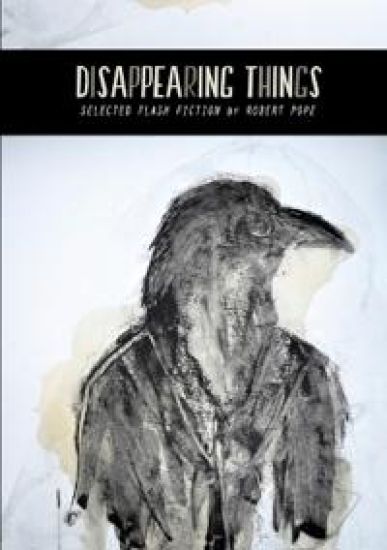
These seven short-short stories are strange, dark, humorous, and mysterious, driven by compulsion or whimsy, and follow up the previous book of flash fiction by the same author, Shutterbug.
Shutterbug contains eight odd and humorous micro-fictions from Robert Pope.
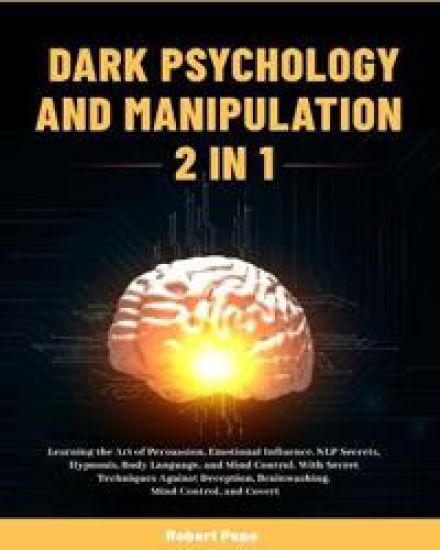
Are people really as kind as we think?How dark, cruel, and contemptible is human nature?Why are so many things beyond our control? Controlled by others?Do you want to start speed reading people, detect deception, and defend yourself from toxic people?This book will solve the mystery for you.Dark Psychology is the technique of introducing a person into a state in which he cannot or does not want to resist our influences. Dark Psychology is becoming more and more used by those who want to control your actions, to get what they want. So, it is quite clear that the knowledge of mental manipulation techniques is necessary for daily survival.Fortunately, there are methods to detect manipulators and beat them at their game This book will help you understand dark psychology, understand the dark side of human nature, and master the skills and methods to persuade and influence others. And to help you avoid being controlled by others.
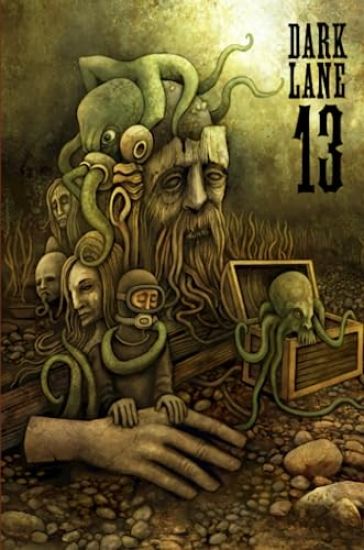
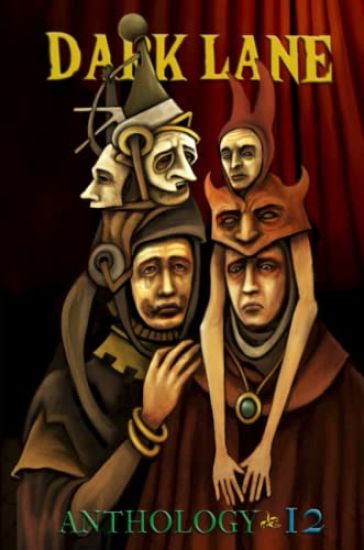
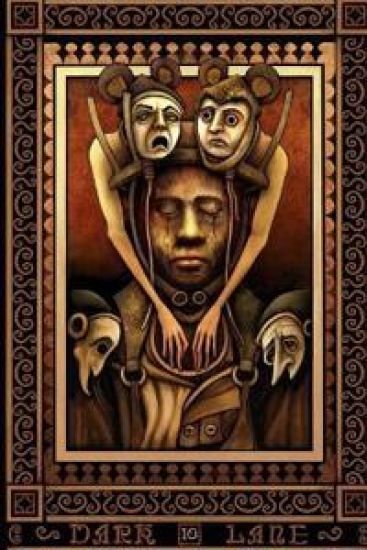
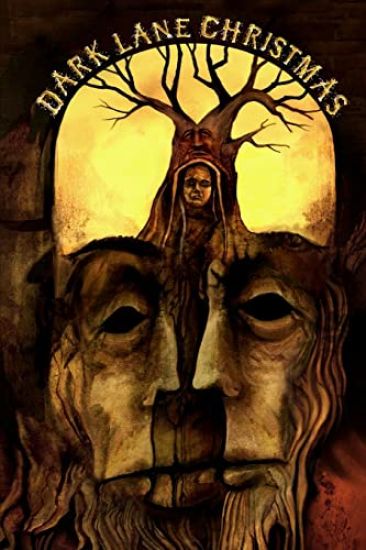
The Dark Lane anthology returns with a brand new collection of strange and eerie stories. This collection takes the reader to the banks of a lake where odd folk gather; to a small American town where people suffer disturbing mood shifts; to a house stuck on the borderland between life and death; to a ship adrift in the ocean that might just have something unimaginable on board. We travel to a far future moon where war breaks out and unknown entities occupy deep dark craters; then onwards into deep space where loneliness, heartbreak and alien Sasquatches await. Here are horrors both real and imagined. Let these writers take you by the hand, and lead you down a shadowed path. Come. Come. Featuring fiction by Sam Hicks, Williams Squirrel, Charles Wilkinson, K.W. Taylor, George Aitch, Kate Carne, Robert Pope, Jack Howling, Robert P. Kaye, Tomas Eklund, Helen Power, Matthew Chabin, Stephen McQuiggan, Edward Ahern, Damon King, Anya Penfold, J.Rosina Harlow, Joshua Storrs, Bryn Fortey, George Kearse, Tim Jeffreys, Ariel Dodson, and T.J. Miller.
The years between 1906 and 1939 in Europe were characterized by a concern, expressed in political, economic, social and religious terms, about the social conditions which had resulted from more than a century of industrialization. Seeking God’s Kingdom examines the work of Welsh Nonconformity’s four main protagonists of social thinking: David Miall Edwards, Thomas Rees, Herbert Morgan and John Morgan Jones. It explores the ways in which they were influenced by European intellectual and philosophical ideas, showing how religion was reinterpreted by them to promote social improvement, and the book assesses the strengths and weaknesses of their approach. Archetypal theological liberals rather than specifically social gospellers, their conclusions were undermined towards the end of the period by changes and developments in the current of European religious thought. This is a comprehensive and fascinating study of liberal theology’s attempt to come to terms with the demands and challenges of an industrialized society. Contents 1. Preface to the Second Edition 2. Discovering Jerusalem 3. Wales and the Social Gospel 4. A Crisis of Faith 5. The Question of Context
Much of the social and industrial history written during the last quarter of the twentieth century presented Welsh working-class culture in terms of a thirst for knowledge that was secular, economic and political. The emphasis was squarely placed on the influence of the union lodge and the workingmen's institute, and priority was given to the importance of sport and the public house in the life of the working class. Relatively little attention was given to religion and its continuing influence on industrial communities, despite the fact that the 1904 - 5 revival brought many thousands into contact with the chapel. Inspired in part by the challenge of socialist and labour agitation and in part by theological considerations, Nonconformists moved away from specifically political involvement and developed their own responses to the social questions of the day. This new edition will appeal to a fresh generation of scholars and readers interested in Wales's Nonconformist history, presenting an exploration of Welsh social thinking, politics and religion.
Creativity in Language and Literature
Joan Swann; Robert Pope; Ronald Carter
Red Globe Press
2011
nidottu
"Creativity in Language and Literature is a provocative and valuable book. Its breadth of topics, variety of approaches, and self-consciously creative and dialogic nature are especially appropriate and creative ways of approaching the subject of creativity. The scope, variety and original content of this book make it a unique contribution to the field" - Professor David L. Hoover, New York University, USAThis unique resource brings together contributions from creative practitioners and academic researchers working across different disciplines. Researchers, literary authors, editors, performers and film makers reflect on their work and collectively explore the art of creativity in language and literature.Creativity in Language and Literature covers a range of texts, genres and practices, such as poetry, hip hop, film, story telling, web chat and pen-friend correspondence. Each part of the book begins with an introduction and the final part includes critical responses to the idea of linguistic creativity, encouraging ongoing dialogue and debate. This richly diverse collection is an ideal text for students and practitioners working at all levels.With contributions by Patience Agbabi, Daniel Allington, R. Amritavalli, Richard D. Brown, Lynne Cameron, Ronald Carter, Guy Cook, Jon Cook, Ruth Finnegan, Angela Goddard, Ben Haggarty, Graeme Harper, G. D. Jayalakshmi, Angel Lin, Janet Maybin, Rukmini Bhaya Nair, Kate Pahl, Mario Petrucci, Rob Pope, Elena Semino, Fiona Sampson, Jane Spiro, Peter Stockwell, Joan Swann, S. Upendran and Michelene Wandor.
Much work in the field of theology and film lacks a really theological focus. This book suggests a methodology based on the recognition of the imagination as the fundamental category in producing and interpreting film. The argument is presented that the imagination holds theological significance when it is conceived of in certain ways. As a result, the book adopts the 'paradigmatic imagination' (an imagination which works within the paradigms of scripture) or 'theological imagination' (one grounded in theological forms), which is both noetic (it is the image-making faculty of the mind) and almost ontological (it is that which draws human beings into the future which they are able to construct or bring into being). Once the theological (paradigmatic) imagination has been identified and justified, its insights will be applied to 'Jesus films' and 'Christ figure films' asking whether or not they provide us with valid Christological understanding. Films with redemptive or salvific themes are discussed as is the popularity of mythical stories and animation. The final chapter will make the case that the engagement of the theological imagination with film is a method in practical theology.
This book will focus on religious matters in their contemporary context. The volume will be topical, with analysis of such diverse areas as religion and the cinema and the current global increase in fundamentalist religions. The proposed chapters are as follows: What is theology? What is the contemporary role of theology? Semper Reformanda - The nature and purpose of the church today; Worship; The Church in the World; Theology and Politics; Democracy: What does Christianity tell us? God and Evil: How does certitude relate to morality? Christianity amongst other religions; Fundamentalism - history and development; and, The Gospel and Visual Culture.