

Kirjailija
Robert Redfield
Kirjat ja teokset yhdessä paikassa: 15 kirjaa, julkaisuja vuosilta 1989-2026, suosituimpien joukossa Tepoztlan a Mexican Village. Vertaile teosten hintoja ja tarkista saatavuus suomalaisista kirjakaupoista.
15 kirjaa
Kirjojen julkaisuhaarukka 1989-2026.

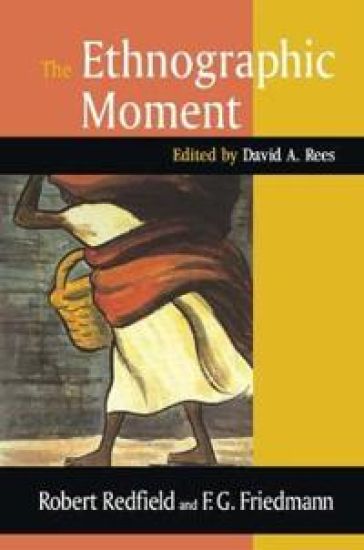
The first fifty years of the twentieth century were a time of ferment in American anthropology. American ethnographic work evolved from the "salvage" work of professionals affiliated with museums who undertook to document with artifacts and testimony the threatened traditional way of life among the Native American tribes, to the establishment of anthropology as a science, represented in university departments, that sought to describe the "ethnographic present" of isolated primitive peoples, often in distant parts of the world.By the beginning of the 1950s, cultural anthropology discovered the peasant. Robert Redfield, himself a leading figure in this paradigm shift, challenged anthropology's focus on a static model of the isolated primitive community, pointing out the dynamic nature of the "little communities" he studied in Mesoamerica. These were not isolated communities, but rather local, traditional cultures located well within the sphere of a complex urban culture. In order to distinguish the "great tradition" deriving from urban centers from the "little tradition" of a more primitive culture, Redfield believed anthropology needed to refer to other disciplines, such as theology, philosophy, economics, and sociology. In other words, anthropology had to develop from the collection of material artifacts to a concern with the immaterial realm of values and ideas.This collection of essays and previously unpublished papers, The Ethnographic Moment, tells the story of a remarkable chapter in Redfield's pioneering efforts on what was then an anthropological frontier. The present volume covers the years from 1952 to 1958, the last of Redfield's life. It focuses solely on his study of peasant communities. At the core of the book is his correspondence with the philosopher-humanist F. G. Friedmann, who played an important role in Redfield's conceptualization of the complex urban-rural continuum that characterizes the peasant's world. The volume also includes an autobiographical introduction by Friedmann that illuminates both his own writings and the humanistic background that motivated his study of peasantry.
The Bilateral Network of Social Relations in Konkama Lapp District
Robert Niel Pehrson; C. F. Voegelin; Robert Redfield
Literary Licensing, LLC
2013
sidottu
The Bilateral Network Of Social Relations In Konkama Lapp District is a book written by Robert Niel Pehrson. The book is a comprehensive study of the social relations in the Konkama Lapp district, with a focus on the bilateral network. The book explores the social structure of the Konkama Lapp community, including the kinship system, marriage practices, and the role of gender in social relations. Pehrson's research is based on fieldwork conducted in the Konkama Lapp district, where he lived for several years. He used a combination of ethnographic and sociological methods to gather data, including participant observation, interviews, and surveys. The book is divided into several chapters, each of which focuses on a different aspect of social relations in the Konkama Lapp district. The first chapter provides an overview of the Konkama Lapp community and its history. The second chapter explores the kinship system in the community, including the different types of kinship relationships and the role of kinship in social organization. The third chapter focuses on marriage practices in the Konkama Lapp district, including the different types of marriages and the role of marriage in social relations. The fourth chapter explores the role of gender in social relations, including the division of labor and the status of women in the community. The final chapter of the book provides a summary of Pehrson's findings and conclusions. Overall, The Bilateral Network Of Social Relations In Konkama Lapp District is a valuable resource for anyone interested in the social structure of indigenous communities, particularly those in the Arctic region.International Journal Of American Linguistics, V3, No. 1, January, 1957, Part 2.This scarce antiquarian book is a facsimile reprint of the old original and may contain some imperfections such as library marks and notations. Because we believe this work is culturally important, we have made it available as part of our commitment for protecting, preserving, and promoting the world's literature in affordable, high quality, modern editions, that are true to their original work.
The Bilateral Network of Social Relations in Konkama Lapp District
Robert Niel Pehrson; C. F. Voegelin; Robert Redfield
Literary Licensing, LLC
2013
nidottu
Aspects of Primitive Art
Robert Redfield; Melville Jean Herskovits; Gordon Frederick Ekholm
Literary Licensing, LLC
2012
nidottu

The Mexican Immigrant: His Life Story
Manuel Gamio; Robert Redfield
Literary Licensing, LLC
2012
sidottu
The Mexican Immigrant: His Life Story is a book written by Manuel Gamio that provides a detailed account of the experiences and struggles of Mexican immigrants in the United States. The book is divided into three parts, each exploring different aspects of the Mexican immigrant experience. In the first part, Gamio examines the reasons why Mexicans leave their home country and migrate to the United States. He discusses the economic and political factors that drive migration, as well as the cultural and social factors that influence the decision to leave one's home and family behind.In the second part, Gamio focuses on the challenges that Mexican immigrants face when they arrive in the United States. He discusses the difficulties of finding work, learning a new language, and adapting to a new culture. He also explores the discrimination and prejudice that Mexican immigrants often face, and the impact that this has on their lives and their sense of identity.In the third part, Gamio looks at the ways in which Mexican immigrants have adapted to life in the United States. He discusses the ways in which they have created their own communities and maintained their cultural traditions, while also assimilating into American society. He also examines the contributions that Mexican immigrants have made to American culture and society.Overall, The Mexican Immigrant: His Life Story provides a comprehensive and insightful look at the experiences of Mexican immigrants in the United States. It offers a nuanced understanding of the challenges and opportunities that these immigrants face, and sheds light on the complex issues surrounding immigration and identity in America.Autobiographic Documents.This scarce antiquarian book is a facsimile reprint of the old original and may contain some imperfections such as library marks and notations. Because we believe this work is culturally important, we have made it available as part of our commitment for protecting, preserving, and promoting the world's literature in affordable, high quality, modern editions, that are true to their original work.
Aspects of Primitive Art
Robert Redfield; Melville Jean Herskovits; Gordon Frederick Ekholm
Literary Licensing, LLC
2012
sidottu
Aspects of Primitive Art is a book written by Robert Redfield that explores the characteristics and significance of art created by non-Western, indigenous cultures. The book delves into the cultural and social contexts in which this art is produced, examining the ways in which it reflects the values, beliefs, and practices of the societies that create it. Redfield argues that primitive art is not simply decorative or ornamental, but rather serves important functions within these societies, such as expressing religious beliefs, communicating social status, and reinforcing cultural identity. The book draws on examples from a range of cultures and traditions, including African, Native American, and Oceanic art, and includes numerous illustrations and photographs to help readers better understand the visual elements of this art. Overall, Aspects of Primitive Art offers a thought-provoking exploration of the rich and complex world of non-Western art and the cultures that produce it.Foreword By R. Goldwater.This scarce antiquarian book is a facsimile reprint of the old original and may contain some imperfections such as library marks and notations. Because we believe this work is culturally important, we have made it available as part of our commitment for protecting, preserving, and promoting the world's literature in affordable, high quality, modern editions, that are true to their original work.
The Mexican Immigrant: His Life Story
Manuel Gamio; Robert Redfield
Literary Licensing, LLC
2012
nidottu

""Chan Kom: A Maya Village"" is a non-fiction book written by Robert Redfield. The book is a detailed account of the author's experiences living in Chan Kom, a small Maya village located in the Yucatan Peninsula of Mexico. The book is divided into three sections, each of which provides a different perspective on life in the village. The first section of the book provides a general overview of the village and its inhabitants. Redfield describes the physical layout of the village, the daily routines of its residents, and the social and economic structures that govern life in Chan Kom. He also provides a brief history of the Maya people and their culture.The second section of the book focuses on the religious beliefs and practices of the villagers. Redfield describes the various gods and spirits that the Maya worship, as well as the rituals and ceremonies that are performed to honor them. He also discusses the role of the shaman, or spiritual leader, in the community.The final section of the book examines the impact of modernization on the village. Redfield discusses the changes that have occurred in Chan Kom as a result of increased contact with the outside world, including the introduction of new technologies and the influence of Western culture. He also explores the tensions that arise between traditional Maya beliefs and practices and the pressures of modernization.Overall, ""Chan Kom: A Maya Village"" provides a fascinating glimpse into the daily lives and cultural traditions of the Maya people. Redfield's detailed observations and insightful analysis make this book a valuable resource for anyone interested in anthropology, Latin American studies, or indigenous cultures.This scarce antiquarian book is a facsimile reprint of the old original and may contain some imperfections such as library marks and notations. Because we believe this work is culturally important, we have made it available as part of our commitment for protecting, preserving, and promoting the world's literature in affordable, high quality, modern editions, that are true to their original work.
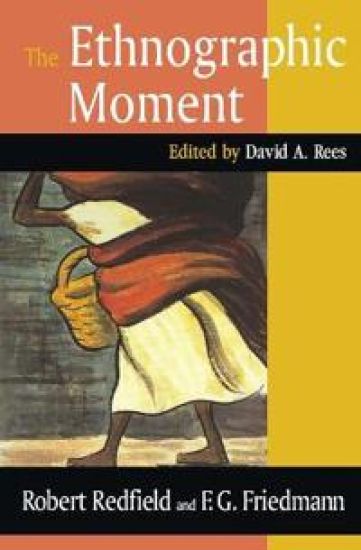
The first fifty years of the twentieth century were a time of ferment in American anthropology. American ethnographic work evolved from the "salvage" work of professionals affiliated with museums who undertook to document with artifacts and testimony the threatened traditional way of life among the Native American tribes, to the establishment of anthropology as a science, represented in university departments, that sought to describe the "ethnographic present" of isolated primitive peoples, often in distant parts of the world.By the beginning of the 1950s, cultural anthropology discovered the peasant. Robert Redfield, himself a leading figure in this paradigm shift, challenged anthropology's focus on a static model of the isolated primitive community, pointing out the dynamic nature of the "little communities" he studied in Mesoamerica. These were not isolated communities, but rather local, traditional cultures located well within the sphere of a complex urban culture. In order to distinguish the "great tradition" deriving from urban centers from the "little tradition" of a more primitive culture, Redfield believed anthropology needed to refer to other disciplines, such as theology, philosophy, economics, and sociology. In other words, anthropology had to develop from the collection of material artifacts to a concern with the immaterial realm of values and ideas.This collection of essays and previously unpublished papers, The Ethnographic Moment, tells the story of a remarkable chapter in Redfield's pioneering efforts on what was then an anthropological frontier. The present volume covers the years from 1952 to 1958, the last of Redfield's life. It focuses solely on his study of peasant communities. At the core of the book is his correspondence with the philosopher-humanist F. G. Friedmann, who played an important role in Redfield's conceptualization of the complex urban-rural continuum that characterizes the peasant's world. The volume also includes an autobiographical introduction by Friedmann that illuminates both his own writings and the humanistic background that motivated his study of peasantry.
The Little Community and Peasant Society and Culture
Robert Redfield
University of Chicago Press
1989
nidottu
This volume combines two classic works of anthropology. The Little Community draws on the author's own notable studies of the villages of Tepoztlan and Chan Kom to explore the means by which scientists try to understand human communities. It contains, wrote Margaret Mead, "the essence of Robert Redfield's multifaceted contributions to the place of community studies in social science." Peasant Society and Culture outlines a speculative foundation for the emergence of anthropology from the study of isolated primitive tribes.