Kirjojen hintavertailu. Mukana 12 595 353 kirjaa ja 12 kauppaa.

Kirjailija

Robert Root

Kirjat ja teokset yhdessä paikassa: 12 kirjaa, julkaisuja vuosilta 1987-2024, suosituimpien joukossa Andreas. Vertaile teosten hintoja ja tarkista saatavuus suomalaisista kirjakaupoista.

12 kirjaa

Kirjojen julkaisuhaarukka 1987-2024.

Andreas

Andreas

Robert Root

Hansebooks
2017
pokkari
Andreas: the legend of St. Andrew - Translated from the Old English by Robert Kilburn Root is an unchanged, high-quality reprint of the original edition of 1899. Hansebooks is editor of the literature on different topic areas such as research and science, travel and expeditions, cooking and nutrition, medicine, and other genres. As a publisher we focus on the preservation of historical literature. Many works of historical writers and scientists are available today as antiques only. Hansebooks newly publishes these books and contributes to the preservation of literature which has become rare and historical knowledge for the future.
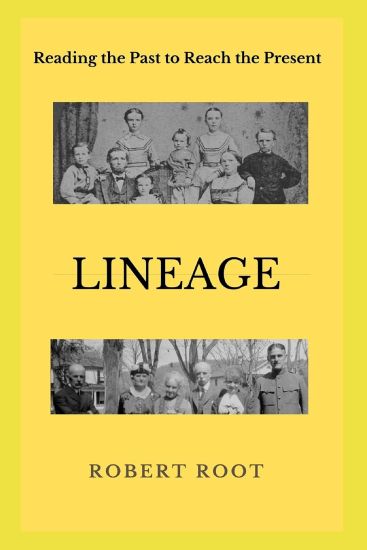
Lineage: Reading the Past to Reach the Present
Like a medieval Polyptych arranging discreet images into an impressionistic whole, Lineage assembles brief essays and vignettes to investigate images, texts, and memories across family history. Through the writing and photographs of past family members Robert Root tries to locate them in their own time and, wherever possible, locate himself in their presence. He attempts to discern what family testimony and family portraits tell us about family history and the continuing resonance of lineage on succeeding generations, including his own. His searches make memorable ancestors he never knew about, bring back to life a grandmother he has no memory of, lead him to a better understanding of an uncle who had abiding influence on his upbringing. Interludes visit locations vital to family history and eventually he is led to contemplate the immediate moments of his own life. The impulse behind Lineage is an effort to gather artifacts of image and texts in hopes of interpreting them, of better understanding the past, of coming to terms with the present. The literary remains he explores are not only his own; they are his ancestors', his family's, the legacy he will pass on to his descendants.
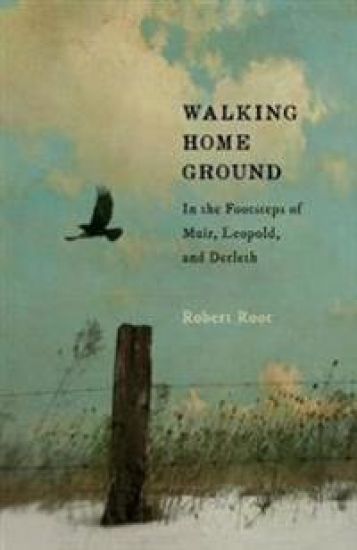
Walking Home Ground: In the Footsteps of Muir, Leopold, and Derleth

Walking Home Ground: In the Footsteps of Muir, Leopold, and Derleth

Robert Root

Wisconsin Historical Society Press
2017
nidottu
When longtime author Robert Root moves to a small town in southeast Wisconsin, he gets to know his new home by walking the same terrain traveled by three Wisconsin luminaries who were deeply rooted in place--John Muir, Aldo Leopold, and August Derleth. Root walks with Muir at John Muir State Natural Area, with Leopold at the Shack, and with Derleth in Sac Prairie; closer to home, he traverses the Ice Age Trail, often guided by such figures as pioneering scientist Increase Lapham. Along the way, Root investigates the changes to the natural landscape over nearly two centuries, and he chronicles his own transition from someone on unfamiliar terrain to someone secure on his home ground.In prose that is at turns introspective and haunting, Walking Home Ground inspires us to see history's echo all around us: the parking lot that once was forest; the city that once was glacier. "Perhaps this book is an invitation to walk home ground," Root tells us. "Perhaps, too, it's a time capsule, a message in a bottle from someone given to looking over his shoulder even as he tries to examine the ground beneath his feet."
Postscripts

Postscripts

Robert Root

University of Nebraska Press
2012
pokkari
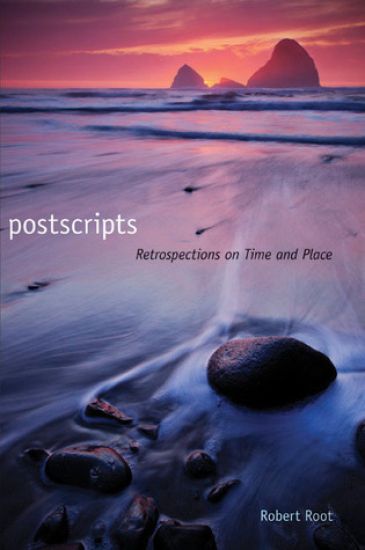
Walt Whitman's meditation on time is the undercurrent running through Postscripts, a series of reflections on finding one's place in the endless chain of time. In linked essays, Robert Root ranges across American terrains and landscapes including locales as varied as Walden Pond and Mesa Verde, the mountains of Montana and the coastline of Maine, Great Lakes shorelines and Manhattan on the first day of the war with Iraq.Rich in "all that retrospection," Postscripts chronicles moments of intimacy and arrival in the natural world while also charting intersections of natural, cultural, and personal history. Whether revisiting the first European settlement in Nova Scotia or seeking out the sites of E. B. White's life and literature, exploring the only old-growth forest in lower Michigan or shifting perceptions at the birth of a granddaughter, Root offers readers a new perspective on the relationship between time and place, time and timelessness, history and personal history. If the past is prologue, his book suggests, the present is postscript.
Fourth Genre,  The

Fourth Genre, The

Robert Root; Michael Steinberg

Pearson
2012
nidottu
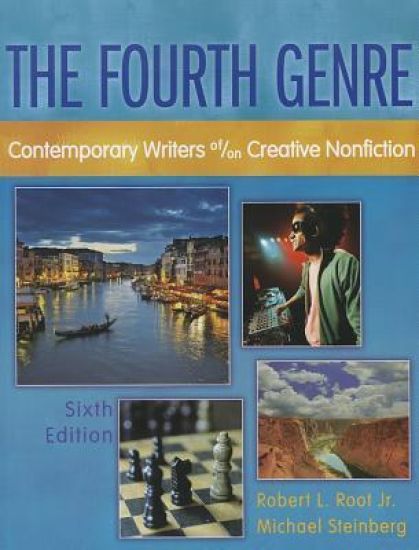
The Fourth Genre offers the most comprehensive, teachable, and current introduction available today to the cutting-edge, evolving genre of creative nonfiction. While acknowledging the literary impulse of nonfiction to be a fourth genre equivalent to poetry, fiction, and drama, this text focuses on subgenres of the nonfiction form, including memoir, nature writing, personal essays, literary journalism, cultural criticism, and travel writing. This anthology was the first to draw on the common ground of the practicing writer and the practical scholar and to make the pedagogical connections between creative writing practice and composition theory, bridging some of the gaps between the teaching of composition, creative writing, and literature in English departments.
Following Isabella

Following Isabella

Robert Root

University of Oklahoma Press
2009
nidottu
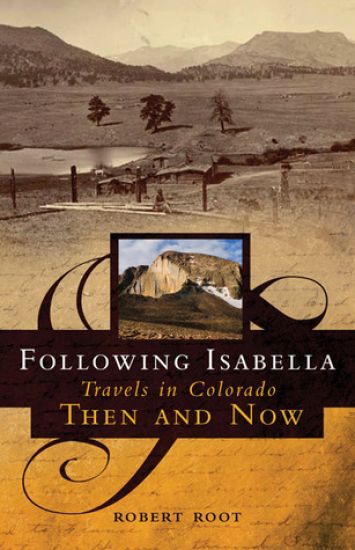
A world traveler, Isabella Bird recorded her 1873 visit to Colorado Territory in her classic travel narrative, A Lady's Life in the Rocky Mountains. This work inspired Robert Root's own discovery of Colorado's Front Range following his move from the flatlands of Michigan. In this elegantly written book, Root retraces Bird's three-month journey, seeking to understand what Colorado meant to her - and what it would come to mean for him.Following Isabella is a work of intersecting histories. Root interweaves an overview of Bird's life and work with regional history, nature writing, and his own travels to produce a uniquely informative and entertaining narrative. He probes Bird's self-transformation as her writing moved from private letters to published books, and also draws on reflections of other authors of her day, including Grace Greenwood and Helen Hunt Jackson. Like Bird, Root experiences his most fulfilling moments in the mountains, climbing formidable Longs Peak, living alone in the cabin of famed editor William Allen White, and wandering wild landscapes.Through reflections on earlier writers' experiences, and by weighing his own response to them, Root learns not only how to come to Colorado, as visitors so often do, but more important, how to stay.
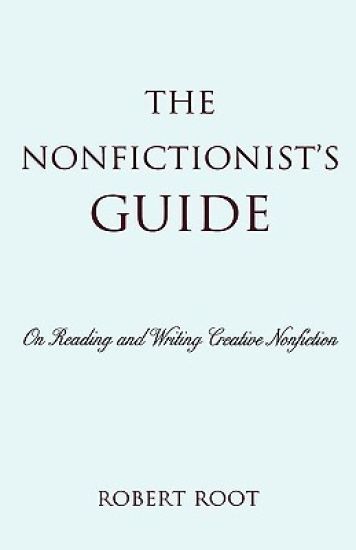
The Nonfictionist's Guide

The Nonfictionist's Guide

Robert Root

Rowman Littlefield Publishers
2008
nidottu
Nonfiction—the "fourth genre" (along with poetry, fiction, and drama)—is a literary field affecting bestseller lists, writing programs, writers' workshops, and conferences on the study of creative writing, composition/rhetoric, and literature. It is often labeled and/or limited as "creative" or "literary" nonfiction and subdivided into essay, memoir, literary journalism, personal cultural criticism, and narratives of nature and travel. A vital and growing form, nonfiction has, until now, needed a sustained discussion about its poetics—both the theory and the craft of this genre. The Nonfictionist's Guide offers a lively exploration of the elements of contemporary nonfiction and suggests imaginative approaches to writing it. Each chapter on a vital aspect of contemporary nonfiction concludes with a separate section of relevant "notes for nonfictionists." Beginning with a new definition of nonfiction and explanation of the nonfiction motive, Robert Root discusses the use of experimental forms, the effects of present and past tense and experiential and reflective voices, and the issue of truth. He provides groundbreaking explorations of the segmented essay and the role of spaces as an essential literary device, guiding both readers and writers through the innovative and stimulating ways we write nonfiction now.
The Nonfictionist's Guide

The Nonfictionist's Guide

Robert Root

Rowman Littlefield Publishers
2007
sidottu
Nonfiction_the 'fourth genre' (along with poetry, fiction, and drama)_is a literary field affecting bestseller lists, writing programs, writers' workshops, and conferences on the study of creative writing, composition/rhetoric, and literature. It is often labeled and/or limited as 'creative' or 'literary' nonfiction and subdivided into essay, memoir, literary journalism, personal cultural criticism, and narratives of nature and travel. A vital and growing form, nonfiction has, until now, needed a sustained discussion about its poetics_both the theory and the craft of this genre. The Nonfictionist's Guide offers a lively exploration of the elements of contemporary nonfiction and suggests imaginative approaches to writing it. Each chapter on a vital aspect of contemporary nonfiction concludes with a separate section of relevant 'notes for nonfictionists.' Beginning with a new definition of nonfiction and explanation of the nonfiction motive, Robert Root discusses the use of experimental forms, the effects of present and past tense and experiential and reflective voices, and the issue of truth. He provides groundbreaking explorations of the segmented essay and the role of spaces as an essential literary device, guiding both readers and writers through the innovative and stimulating ways we write nonfiction now.
Recovering Ruth

Recovering Ruth

Robert Root

University of Nebraska Press
2003
pokkari
The task of editing and annotating a nineteenth-century diary seemed straightforward at first, but as Robert Root assembled scattered fragments of lost history and immersed himself in background research, he became enmeshed in unexpected ways. When doubts arose about who really wrote the journal, Root found himself plunged into a mystery of lost identity, drawn ever deeper into the drama and complexity of forgotten lives and engaged in a quest at times both compulsive and quixotic. Part memoir, part meditation on the nature of biography, Recovering Ruth is the absorbing story of recovering a hidden past—and of learning firsthand the complications of intimacy that develop between a biographer and his subject.