Kirjojen hintavertailu. Mukana 12 595 353 kirjaa ja 12 kauppaa.

Kirjailija

Robert Rydell

Kirjat ja teokset yhdessä paikassa: 3 kirjaa, julkaisuja vuosilta 1999-2010, suosituimpien joukossa Gendering the Fair. Vertaile teosten hintoja ja tarkista saatavuus suomalaisista kirjakaupoista.

3 kirjaa

Kirjojen julkaisuhaarukka 1999-2010.

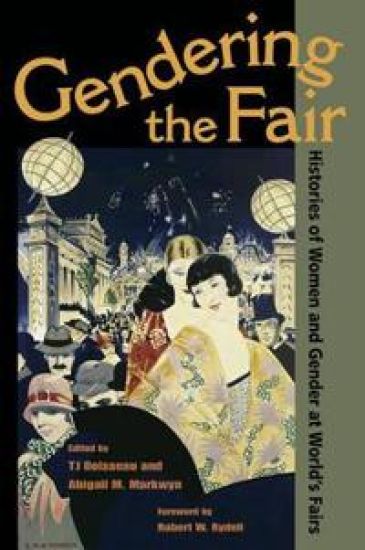
Gendering the Fair

Gendering the Fair

TJ Boisseau; Robert Rydell

University of Illinois Press
2010
nidottu
This field-defining work opens the study of world's fairs to women's and gender history, exploring the intersections of masculinity, femininity, exoticism, display, and performance at these influential events. As the first global gatherings of mass numbers of attendees, world's fairs and expositions introduced cross-class, multi-racial, and mixed-sex audiences to each other, as well as to cultural concepts and breakthroughs in science and technology. Gendering the Fair focuses on the manipulation of gender ideology as a crucial factor in the world's fairs' incredible power to shape public opinions of nations, government, and culture. Established and rising scholars working in a variety of disciplines and locales discuss how gender played a role in various countries' exhibits and how these nations capitalized on opportunities to revise national and international understandings of womanhood. Spanning several centuries and extending across the globe from Portugal to London and from Chicago to Paris, the essays cover topics including women's work at the fairs; the suffrage movement; the intersection of faith, gender, and patriotism; and the ability of fair organizers to manipulate fairgoers' experience of the fairgrounds as gendered space. The volume includes a foreword by preeminent world's fair historian Robert W. Rydell. Contributors are TJ Boisseau, Anne Clendinning, Lisa K. Langlois, Abigail M. Markwyn, Sarah J. Moore, Isabel Morais, Mary Pepchinski, Elisabeth Israels Perry, Andrea G. Radke-Moss, Alison Rowley, and Anne Wohlcke.

Gendering the Fair

Gendering the Fair

TJ Boisseau; Robert Rydell

University of Illinois Press
2010
sidottu
This field-defining work opens the study of world's fairs to women's and gender history, exploring the intersections of masculinity, femininity, exoticism, display, and performance at these influential events. As the first global gatherings of mass numbers of attendees, world's fairs and expositions introduced cross-class, multi-racial, and mixed-sex audiences to each other, as well as to cultural concepts and breakthroughs in science and technology. Gendering the Fair focuses on the manipulation of gender ideology as a crucial factor in the world's fairs' incredible power to shape public opinions of nations, government, and culture. Established and rising scholars working in a variety of disciplines and locales discuss how gender played a role in various countries' exhibits and how these nations capitalized on opportunities to revise national and international understandings of womanhood. Spanning several centuries and extending across the globe from Portugal to London and from Chicago to Paris, the essays cover topics including women's work at the fairs; the suffrage movement; the intersection of faith, gender, and patriotism; and the ability of fair organizers to manipulate fairgoers' experience of the fairgrounds as gendered space. The volume includes a foreword by preeminent world's fair historian Robert W. Rydell. Contributors are TJ Boisseau, Anne Clendinning, Lisa K. Langlois, Abigail M. Markwyn, Sarah J. Moore, Isabel Morais, Mary Pepchinski, Elisabeth Israels Perry, Andrea G. Radke-Moss, Alison Rowley, and Anne Wohlcke.
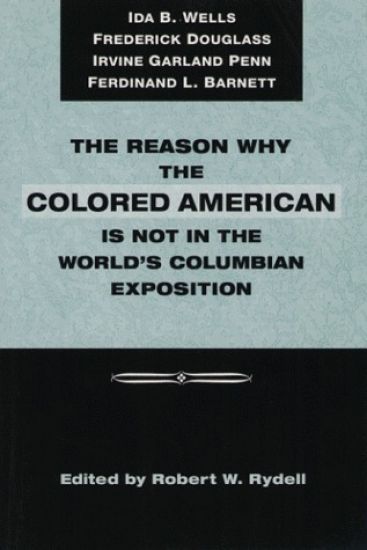
The Reason Why Colored American Is Not in World's Columbian Exposition
Expressly intended to demonstrate America's national progress toward utopia, the 1893 World's Columbian Exposition in Chicago pointedly excluded the contributions of African Americans. For them, being left outside the gates of the "White City" merely underscored a more general exclusion from America's bright future. Exhibits at the fair were controlled by all-white committees, and those that acknowledged African Americans at all, such as the famous Aunt Jemima pancake exhibit, ridiculed and denigrated them. Many African Americans saw the racist policies of the World's Columbian Exposition as mirroring, framing, and reinforcing the larger horrors confronting blacks throughout the United States, where white supremacy meant segregation, second-class citizenship, and sometimes mob violence and lynching. In response to the politics of exclusion that governed the fair, and of its larger implications, several prominent African Americans resolved to publish a pamphlet that would catalog the achievements of African Americans since the abolition of slavery while articulating the persistent political economy of apartheid in the American South. The authors of this remarkable document included the antilynching crusader Ida B. Wells, the former slave and abolitionist Frederick Douglass, the educator Irvine Garland Penn, and the lawyer and newspaper publisher Ferdinand L. Barnett. An eloquent statement of protest and pride, The Reason Why the Colored American Is Not in the World's Columbian Exposition reminds us that struggles over cultural representation are nothing new in American life. Robert Rydell's introduction provides insight into the sometimes conflicting strategies employed by African Americans as they strove to represent themselves at a cultural event that was widely regarded as a defining moment in American history.