Kirjojen hintavertailu. Mukana 12 595 353 kirjaa ja 12 kauppaa.

Kirjailija

Robert S. Grumet

Kirjat ja teokset yhdessä paikassa: 8 kirjaa, julkaisuja vuosilta 1995-2022, suosituimpien joukossa The Munsee Indians. Vertaile teosten hintoja ja tarkista saatavuus suomalaisista kirjakaupoista.

8 kirjaa

Kirjojen julkaisuhaarukka 1995-2022.

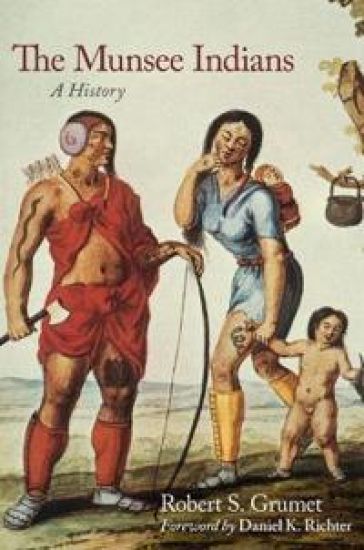
The Munsee Indians

The Munsee Indians

Robert S. Grumet; Daniel K. Richter

UNIVERSITY OF OKLAHOMA PRESS
2022
nidottu
The Indian sale of Manhattan is one of the world’s most cherished legends. Few people know that the Indians who made the fabled sale were Munsees whose ancestral homeland lay between the lower Hudson and upper Delaware river valleys. The story of the Munsee people has long lain unnoticed in broader histories of the Delaware Nation.Now, The Munsee Indians deftly interweaves a mass of archaeological, anthropologi-cal, and archival source material to resurrect the lost history of this forgotten people, from their earliest contacts with Europeans to their final expulsion just before the American Revolution. Anthropologist Robert S. Grumet rescues from obscurity Mattano, Tackapousha, Mamanuchqua, and other Munsee sachems whose influence on Dutch and British settlers helped shape the course of early American history in the mid-Atlantic heartland. He looks past the legendary sale of Manhattan to show for the first time how Munsee leaders forestalled land-hungry colonists by selling small tracts whose vaguely worded and bounded titles kept courts busy—and settlers out—for more than 150 years.Ravaged by disease, war, and alcohol, the Munsees finally emigrated to reservations in Wisconsin, Oklahoma, and Ontario, where most of their descendants still live today. Coinciding with the four hundredth anniversary of Hudson’s voyage to the river that bears his name, this book shows how Indians and settlers struggled, in land deals and other transactions, to reconcile cultural ideals with political realities. The result is the most authoritative treatment of the Munsee experience—one that restores this people to their place in history.This book is published with the generous assistance of Furthermore: a program of the J. M. Kaplan Fund.
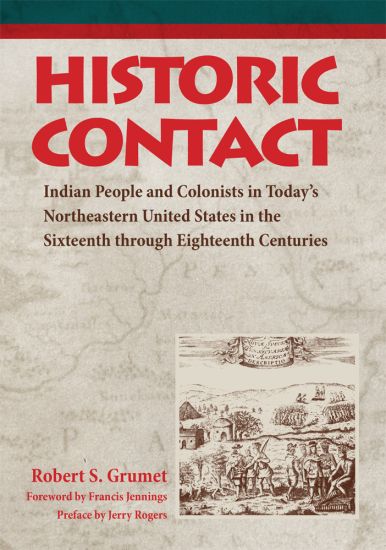
Historic Contact

Historic Contact

Robert S. Grumet; Francis Jennings

University of Oklahoma Press
2021
nidottu
Anthropologist and preservationist Robert S. Grumet has created this up-to-date, well-written overview of historic contact with Native Americans on the colonial frontier from a vast array of documentary, archaeological, and ethnographic data never assembled before. This is a definitive history of early Indian-white relations in an area extending from Virginia to Maine and from the Atlantic coast to the upper Ohio River. It will be read by specialists and Indian-studies buffs alike.Historic Contact divides native northeastern America into three subregions where the histories of thirty-four Indian Countries are described and mapped in detail, including all National Historic Landmarks. In the North Atlantic Region are the Eastern and Western Abenaki, Pocumtuck-Squakheag, Nipmuck, Pennacook-Pawtucket, Massachusett, Wampanoag, Narragansett, Mohegan-Pequot, Montauk, Lower Connecticut Valley, and Mahican Indian Countries; in the Middle Atlantic Region, the Munsee, Delaware, Nanticoke, Piscataway-Potomac, Powhatan, Nottoway-Meherrin, Upper Potomac-Shenandoah, Virginian Piedmont, Southern Appalachian Highlands, and lower Susquehanna Indian Countries; and in the Trans-Appalachian Region, the Mohawl, Oneida, Cayuga, Seneca, Niagara-Erie, Upper Susquehanna, and Upper Ohio Indian Countries.Readers interested in Indian history and colonial America will value this basic reference, which originated as a National Historic landmarks Survey Theme Study. Federal agencies, state and local preservation officers, and Indian communities will use it as an excellent planning tool in making evaluations protection decisions.
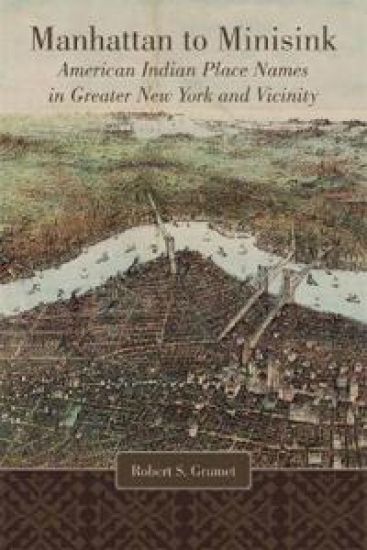
Manhattan to Minisink

Manhattan to Minisink

Robert S. Grumet

University of Oklahoma Press
2021
nidottu
Drivers exiting the New Jersey Turnpike for Perth Amboy, and map readers marveling at all the places in Pennsylvania named Lackawanna, need no longer wonder how these names originated. Manhattan to Minisink provides the histories of more than five hundred place names in the Greater New York area, including the five boroughs, western Long Island, the New York counties north of the city, and parts of New Jersey, Pennsylvania, and Connecticut. Robert S. Grumet, a leading ethnohistorian specializing in the region’s Indian peoples, draws on his meticulous research and deep knowledge to determine the origins of Native, and Native-sounding, place names.Grumet divides his encyclopedic entries into two parts. The first comprises an alphabetical listing of nearly 340 Indian place names preserved in colonial records, located by county and state. Each entry includes the name’s language of origin, if known, and a brief discussion of its etymology, including its earliest known occurrence in written records, the history of its appearance on maps, and the name’s current status.The book’s second section presents nearly 200 place names that, though widely believed to be of Indian origin, are “imports, inventions, invocations, or impostors.” Mistranslations are abundant in place names, and Grumet has ferreted out the mistakes and deceptions among home-grown colonial etymologies that New Yorkers have accepted for centuries.Complete with a concise history of Greater New York, a discussion of the region’s naming practices, a useful timeline, and four maps, this is an invaluable resource both for scholars and for readers who want a more intimate knowledge of the place where they live or visit.
Voices from the Delaware Big House Ceremony

Voices from the Delaware Big House Ceremony

Robert S. Grumet

University of Oklahoma Press
2019
nidottu
Voices from the Delaware Big House Ceremony examines and celebrates the Big House ceremony, the most important Delaware Indian religious observance to be documented historically. Edited by Robert S. Grumet, this compilation of essays offers diverse perspectives, from both historical documents and contemporary accounts, which shed light on the ceremony and its role in Delaware culture. As Grumet says, ""The many voices brought together in this book produce something more akin to a chorus than a chant.""The annual fall festival known as the ""Gamwing"" (Big House) was the center of life for Delaware Indian communities in Pennsylvania, Ohio, and Indiana west to Ontario and Oklahoma. The last ceremony was performed by the Eastern Oklahoma Delaware community in 1924. Determined to preserve their traditions for future generations, Delaware Big House followers have worked with anthropologists to preserve Big House texts, rituals, songs, and sacred objects.Including commentaries by Delaware traditionalists from communities in Oklahoma, Wisconsin, and Ontario, where most descendants of the Big House Church live today, the volume also features an ethnographic description of the Big House ceremony and historical accounts dating from 1655 to 1984.Voices from the Delaware Big House Ceremony contributors and consultants are John Bierhorst, Ruthe Blalock Jones, Marlene Molly Miller, Michael Pace, Bruce L. Pearson, Terry J. Prewitt, James A. Rementer, and Darryl Stonefish.
Manhattan to Minisink

Manhattan to Minisink

Robert S. Grumet

University of Oklahoma Press
2013
sidottu
Drivers exiting the New Jersey Turnpike for Perth Amboy, and map readers marveling at all the places in Pennsylvania named Lackawanna, need no longer wonder how these names originated. Manhattan to Minisink provides the histories of more than five hundred place names in the Greater New York area, including the five boroughs, western Long Island, the New York counties north of the city, and parts of New Jersey, Pennsylvania, and Connecticut. Robert S. Grumet, a leading ethnohistorian specializing in the region's Indian peoples, draws on his meticulous research and deep knowledge to determine the origins of Native, and Native-sounding, place names. Grumet divides his encyclopedic entries into two parts. The first comprises an alphabetical listing of nearly 340 Indian place names preserved in colonial records, located by county and state. Each entry includes the name's language of origin, if known, and a brief discussion of its etymology, including its earliest known occurrence in written records, the history of its appearance on maps, and the name's current status.The book's second section presents nearly 200 place names that, though widely believed to be of Indian origin, are ""imports, inventions, invocations, or impostors."" Mistranslations are abundant in place names, and Grumet has ferreted out the mistakes and deceptions among home-grown colonial etymologies that New Yorkers have accepted for centuries.Complete with a concise history of Greater New York, a discussion of the region's naming practices, a useful timeline, and four maps, this is an invaluable resource both for scholars and for readers who want a more intimate knowledge of the place where they live or visit.
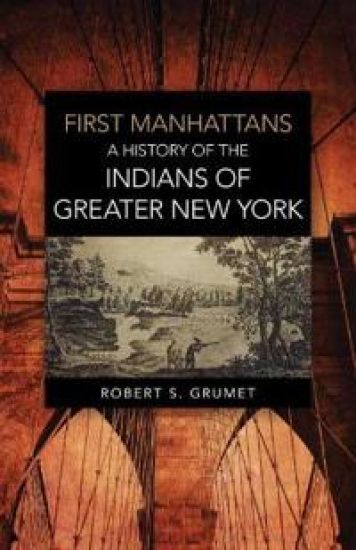
First Manhattans

First Manhattans

Robert S. Grumet

University of Oklahoma Press
2011
nidottu
A concise history of the Indians said to have sold Manhattan for $24The Indian sale of Manhattan is one of the world's most cherished legends. Few people know that the Indians who made the fabled sale were Munsees whose ancestral homeland lay between the lower Hudson and upper Delaware river valleys. The story of the Munsee people has long lain unnoticed in broader histories of the Delaware Nation.First Manhattans, a concise and lively distillation of the author's comprehensive The Munsee Indians, resurrects the lost history of this forgotten people, from their earliest contacts with Europeans to their final expulsion just before the American Revolution. Anthropologist Robert S. Grumet rescues from obscurity Mattano, Tackapousha, Mamanuchqua, and other Munsee sachems whose influence on Dutch and British settlers helped shape the course of early American history in the mid-Atlantic heartland. He looks past the legendary sale of Manhattan to show for the first time how Munsee leaders forestalled land-hungry colonists by selling small tracts whose vaguely worded and bounded titles kept courts busy - and settlers out - for more than 150 years.Ravaged by disease, war, and alcohol, the Munsees finally emigrated to reservations in Wisconsin, Oklahoma, and Ontario, where most of their descendants still live today. With the four hundredth anniversary of Hudson's voyage to the river that bears his name, this book shows how Indians and settlers struggled, through land deals and other transactions, to reconcile cultural ideals with political realities. It offers a wide audience access to the most authoritative treatment of the Munsee experience - one that restores this people to their place in history.
The Munsee Indians

The Munsee Indians

Robert S. Grumet; Daniel K. Richter

University of Oklahoma Press
2009
sidottu
The Indian sale of Manhattan is one of the world's most cherished legends. Few people know that the Indians who made the fabled sale were Munsees whose ancestral homeland lay between the lower Hudson and upper Delaware river valleys. The story of the Munsee people has long lain unnoticed in broader histories of the Delaware Nation.Now, The Munsee Indians deftly interweaves a mass of archaeological, anthropologi-cal, and archival source material to resurrect the lost history of this forgotten people, from their earliest contacts with Europeans to their final expulsion just before the American Revolution. Anthropologist Robert S. Grumet rescues from obscurity Mattano, Tackapousha, Mamanuchqua, and other Munsee sachems whose influence on Dutch and British settlers helped shape the course of early American history in the mid-Atlantic heartland. He looks past the legendary sale of Manhattan to show for the first time how Munsee leaders forestalled land-hungry colonists by selling small tracts whose vaguely worded and bounded titles kept courts busy - and settlers out - for more than 150 years.Ravaged by disease, war, and alcohol, the Munsees finally emigrated to reservations in Wisconsin, Oklahoma, and Ontario, where most of their descendants still live today. Coinciding with the four hundredth anniversary of Hudson's voyage to the river that bears his name, this book shows how Indians and settlers struggled, in land deals and other transactions, to reconcile cultural ideals with political realities. The result is the most authoritative treatment of the Munsee experience - one that restores this people to their place in history.This book is published with the generous assistance of Furthermore: a program of the J. M. Kaplan Fund.
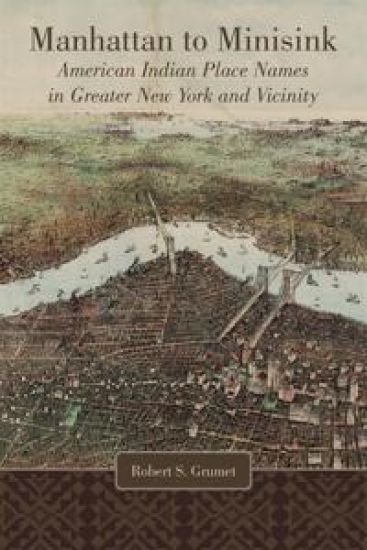
Historic Contact

Historic Contact

Francis Jennings; Jerry L. Rogers; Robert S. Grumet

University of Oklahoma Press
1995
sidottu
Anthropologist and preservationist Robert S. Grumet has created this up-to-date, well-written overview of historic contact with Native Americans on the colonial frontier from a vast array of documentary, archaeological, and ethnographic data never assembled before. This is a definitive history of early Indian-white relations in an area extending from Virginia to Maine and from the Atlantic coast to the upper Ohio River. It will be read by specialists and Indian-studies buffs alike.Historic Contact divides native northeastern America into three subregions where the histories of thirty-four Indian Countries are described and mapped in detail, including all National Historic Landmarks. In the North Atlantic Region are the Eastern and Western Abenaki, Pocumtuck-Squakheag, Nipmuck, Pennacook-Pawtucket, Massachusett, Wampanoag, Narragansett, Mohegan-Pequot, Montauk, Lower Connecticut Valley, and Mahican Indian Countries; in the Middle Atlantic Region, the Munsee, Delaware, Nanticoke, Piscataway-Potomac, Powhatan, Nottoway-Meherrin, Upper Potomac-Shenandoah, Virginian Piedmont, Southern Appalachian Highlands, and lower Susquehanna Indian Countries; and in the Trans-Appalachian Region, the Mohawl, Oneida, Cayuga, Seneca, Niagara-Erie, Upper Susquehanna, and Upper Ohio Indian Countries.Readers interested in Indian history and colonial America will value this basic reference, which originated as a National Historic landmarks Survey Theme Study. Federal agencies, state and local preservation officers, and Indian communities will use it as an excellent planning tool in making evaluations protection decisions.