Kirjojen hintavertailu. Mukana 12 292 791 kirjaa ja 12 kauppaa.

Kirjailija

Robert S. Kaplan

Kirjat ja teokset yhdessä paikassa: 19 kirjaa, julkaisuja vuosilta 1996-2024, suosituimpien joukossa HBR's 10 Must Reads 2018. Vertaile teosten hintoja ja tarkista saatavuus suomalaisista kirjakaupoista.

Mukana myös kirjoitusasut: Robert S Kaplan

19 kirjaa

Kirjojen julkaisuhaarukka 1996-2024.

HBR's 10 Must Reads 2018

HBR's 10 Must Reads 2018

Harvard Business Review; Michael E. Porter; Robert S. Kaplan; Roger L. Martin; Daniel Kahneman

Harvard Business Review Press
2017
sidottu
A year's worth of management wisdom, all in one place. We've reviewed the ideas, insights, and best practices from the past year of Harvard Business Review to keep you up-to-date on the most cutting-edge, influential thinking driving business today. With authors from Michael E. Porter to Daniel Kahneman and company examples from P&G to Adobe, this volume brings the most current and important management conversations to your fingertips. This book will inspire you to: Reconsider what keeps your customers coming backCreate visualizations that send a clear messageAssess how quickly disruptive change is coming to your industryBoost engagement by giving your employees the freedom to break the rulesUnderstand what blockchain is and how it will affect your industryGet your product in customers' hands faster by accelerating your research and development phase This collection of articles includes "Customer Loyalty Is Overrated," by A.G. Lafley and Roger L. Martin; "Noise: How to Overcome the High, Hidden Cost of Inconsistent Decision Making," by Daniel Kahneman, Andrew M. Rosenfield, Linnea Gandhi, and Tom Blaser; "Visualizations That Really Work," by Scott Berinato; "Right Tech, Wrong Time," by Ron Adner and Rahul Kapoor; "How to Pay for Health Care," by Michael E. Porter and Robert S. Kaplan; "The Performance Management Revolution," by Peter Cappelli and Anna Tavis; "Let Your Workers Rebel," by Francesca Gino; "Why Diversity Programs Fail," by Frank Dobbin and Alexandra Kalev; "What So Many People Don’t Get About the U.S. Working Class," by Joan C. Williams; "The Truth About Blockchain," by Marco Iansiti and Karim R. Lakhani; and "The Edison of Medicine," by Steven Prokesch.
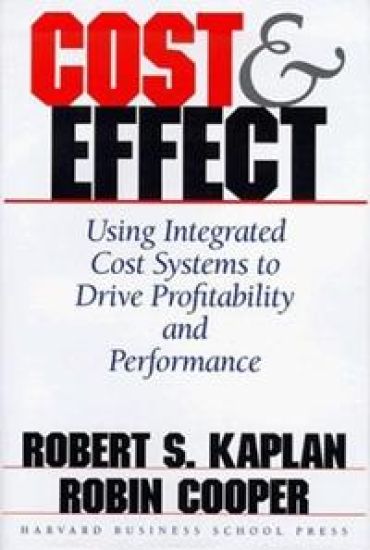
Cost & Effect

Cost & Effect

Robert S. Kaplan; Robin Cooper

Harvard Business Review Press
1997
sidottu
Two of the most innovative thinkers in the field present a work that represents the single best resource for understanding and implementing activity-based cost management. Kaplan and Cooper reveal that most companies don't know how to measure accurately, influence, or understand the fundamental cost drivers in their businesses. They then provide a detailed and comprehensive blueprint that will enable managers to make better decisions and to promote organizational learning and improvement. Cost and Effect takes the management, finance, and accounting fields to an entirely new level, as the authors demonstrate how the principles of activity-based costing and other advanced cost management techniques, such as target and kaizen costing, can drive business performance. Using lively examples from a variety of leading companies worldwide--including Siemens, Hewlett-Packard, AT&T, the Swedish wire manufacturer Kanthal, Kirin Beer, and Procter & Gamble--they show how to create integrated, knowledge-based systems that provide meaningful information on current and past performance.The innovation systems described in Cost and Effect will help you: determine where improvements in quality, efficiency, and productivity will have the highest payoffs; assist front-line employees in their learning and improvement activities; make better product mix and capital investment decisions; negotiate more effectively on price, product features, quality, delivery, and service to promote win-win relationships with your customers; choose low-cost suppliers who are truly low cost, not just low price; design products and services that meet customers' expectations - and that can be produced and delivered at a profit; and, integrate your activity-based cost system into reporting and budgeting processes to reveal the sources of excess capacity. Everyone involved in running a business--from general managers and strategic planners to financial executives, IT professionals, and operations managers--must read this book to learn how innovative cost and performance measurement systems can enhance their organizational profitability and performance.
Advancing Innovation

Advancing Innovation

Patrick J. Stroh; Robert S. Kaplan

IMA Info Center
2020
nidottu
This book provides the requirements for performing engagements in accordance with Statements on Standards for Accounting and Review Services (SSARS). This updated edition includes the authoritative standards and interpretations applicable to preparation, compilation, and review engagements. The guidance and related interpretations will help you apply the standards in specific circumstances. The codification also clearly shows amendments, deleted or superseded content, and conforming changes due to the issuance of other authoritative guidance. The codification contains all SSARSs, including SSARS No. 21, which is now effective, through SSARS No. 25, Materiality in a Review of Financial Statements and Adverse Conclusions. SSARS No. 25 further converges AR-C section 90 with International Standard on Review Engagements (ISRE) 2400 (Revised), Engagements to Review Historical Financial Statements, and minimizes differences with the auditing standards regarding concepts that are consistent regardless of the level of service performed on the financial statements.
HBR's 10 Must Reads on Boards (with bonus article "What Makes Great Boards Great" by Jeffrey A. Sonnenfeld)

HBR's 10 Must Reads on Boards (with bonus article "What Makes Great Boards Great" by Jeffrey A. Sonnenfeld)

Harvard Business Review; Jeffrey A. Sonnenfeld; Linda A. Hill; Robert S. Kaplan; Ram Charan

Harvard Business Review Press
2020
pokkari
Keep shareholders happy and manage for the long term.Earning a board seat is a rite of passage. But directors must juggle many responsibilities, from steering company strategy, managing risk, and appointing leaders to setting the right incentives, meeting shareholder expectations, and dealing with activist investors. How do you balance it all?If you read nothing else on boards, read these 10 articles by experts in the field. We've combed through hundreds of articles in the Harvard Business Review archive and selected the most important ones to help you set your board up for success.This book will inspire you to:Ensure you have directors who can meet company goalsEstablish a robust succession-planning processEncourage the risk-taking that will generate breakthrough innovationPrioritize the health of the enterprise without neglecting shareholdersProvide the critical support a new CEO needs to succeedIgnite nonprofit board members by engaging them in work that mattersTake on the world's toughest economic, social, and environmental problemsThis collection of articles includes "What Makes Great Boards Great," by Je?rey A. Sonnenfeld; "Building Better Boards," by David A. Nadler; "The Error at the Heart of Corporate Leadership," by Joseph L. Bower and Lynn S. Paine; "The New Work of the Nonprofit Board," by Barbara E. Taylor, Richard P. Chait, and Thomas P. Holland; "Dysfunction in the Boardroom," by Boris Groysberg and Deborah Bell; "The Board's New Innovation Imperative," by Linda A. Hill and George Davis; "Managing Risks: A New Framework," by Robert S. Kaplan and Anette Mikes; "Ending the CEO Succession Crisis," by Ram Charan; "Comp Targets That Work," by Radhakrishnan Gopalan, John Horn, and Todd Milbourn; and "Sustainability in the Boardroom," by Lynn S. Paine.HBR's 10 Must Reads paperback series is the definitive collection of books for new and experienced leaders alike. Leaders looking for the inspiration that big ideas provide, both to accelerate their own growth and that of their companies, should look no further. HBR's 10 Must Reads series focuses on the core topics that every ambitious manager needs to know: leadership, strategy, change, managing people, and managing yourself. Harvard Business Review has sorted through hundreds of articles and selected only the most essential reading on each topic. Each title includes timeless advice that will be relevant regardless of an ever-changing business environment.
HBR's 10 Must Reads on Managing Risk (with bonus article "Managing 21st-Century Political Risk" by Condoleezza Rice and Amy Zegart)

HBR's 10 Must Reads on Managing Risk (with bonus article "Managing 21st-Century Political Risk" by Condoleezza Rice and Amy Zegart)

Harvard Business Review; Robert S. Kaplan; Condoleezza Rice; Philip E. Tetlock; Paul J. H. Schoemaker

Harvard Business Review Press
2020
pokkari
Is your business playing it safe&#8212or taking the right risks?If you read nothing else on managing risk, read these 10 articles. We've combed through hundreds of Harvard Business Review articles and selected the most important ones to help your company make smart decisions and thrive, even when the future is unclear.This book will inspire you to:Avoid the most common errors in risk managementUnderstand the three distinct categories of risk and tailor your risk-management processes accordinglyEmbrace uncertainty as a key element of breakthrough innovationAdopt best practices for mitigating political threatsUpgrade your organization's forecasting capabilities to gain a competitive edgeDetect and neutralize cyberattacks originating inside your companyThis collection of articles includes "Managing Risks: A New Framework," by Robert S. Kaplan and Anette Mikes; "How to Build Risk into Your Business Model," by Karan Girotra and Serguei Netessine; "The Six Mistakes Executives Make in Risk Management," by Nassim N. Taleb, Daniel G. Goldstein, and Mark W. Spitznagel; "From Superstorms to Factory Fires: Managing Unpredictable Supply-Chain Disruptions," by David Simchi-Levi, William Schmidt, and Yehua Wei; "Is It Real? Can We Win? Is It Worth Doing?: Managing Risk and Reward in an Innovation Portfolio," by George S. Day; “Superforecasting: How to Upgrade Your Company's Judgment," by Paul J. H. Schoemaker and Philip E. Tetlock; "Managing 21st-Century Political Risk," by Condoleezza Rice and Amy Zegart; "How to Scandal-Proof Your Company," by Paul Healy and George Serafeim; "Beating the Odds When You Launch a New Venture," by Clark Gilbert and Matthew Eyring; "The Danger from Within," by David M. Upton and Sadie Creese; and "Future-Proof Your Climate Strategy," by Joseph E. Aldy and Gianfranco Gianfrate.
What You Really Need to Lead

What You Really Need to Lead

Robert S. Kaplan

Harvard Business Review Press
2015
sidottu
WHAT MAKES A LEADER? CAN YOU REALLY LEARN TO LEAD? You might believe that leaders are born, not made. Perhaps you think that you need to hold an important job to be a leader--that you need permission to lead. Leadership is one of the most important aspects of our society. Yet there is enormous disagreement and confusion about what leadership means and whether it can really be learned. As Harvard Business School professor Robert Steven Kaplan explains in this powerful new book, leadership qualities are not something you either have or you don't. Leadership is not a destination or a state of being. Leadership is about what you do, rather than who you are, and it starts with an ownership mind-set. For Kaplan, learning to lead involves three key elements: * Thinking like an owner * A willingness to act on your beliefs * A relentless focus on adding value to others Kaplan compellingly argues that great organizations are built around a nucleus of people who think and act with an ownership mind-set. He believes that leadership is not a role reserved only for those blessed with the right attributes or situated in the right positions of power. Leadership is accessible to each of us--today. It requires a process of hard work, willingness to ask questions, and openness to learning. This book aims to demystify leadership and outlines a specific regimen that will empower you to build your leadership skills. Kaplan tells real-life stories from his own experience of working with various types of leaders seeking to improve their effectiveness and make their organizations more successful. He asks probing questions, provides exercises, and suggests concrete follow-up steps that will help you develop your skills, create new habits, and move you toward reaching your unique leadership potential. What You Really Need to Lead will help you develop your capacity to lead by unlocking your power to think and act like an owner.
What You're Really Meant to Do

What You're Really Meant to Do

Robert S. Kaplan

Harvard Business Review Press
2013
sidottu
How do you create your own definition of success--and reach your unique potential? Building a fulfilling life and career can be a daunting challenge. It takes courage and hard work. Too often, we charge down a path leading to "success" as defined by those around us--and ultimately, are left feeling dissatisfied. Each of us is unique and brings distinctive skills and qualities to any situation. So why is it that most of us fail to spend sufficient time learning to understand ourselves and creating our own definition of success? The truth is, it can seem so natural and so much easier to just do what everyone else is doing--for now--leaving it for later to develop our best selves and figure out our own unique path. Is there a road map that will enable you to defy conventional wisdom, resist peer pressure, and carve out a path that fits your unique skills and passions? Harvard Business School's Robert Steven Kaplan, leadership expert and author of the highly successful book What to Ask the Person in the Mirror, regularly advises executives and students on how to tackle these questions. In this indispensable new book, Kaplan shares a specific and actionable approach to defining your own success and reaching your potential. Drawing on his years of experience, Kaplan proposes an integrated plan for identifying and achieving your goals. He outlines specific steps and exercises to help you understand yourself more deeply, take control of your career, and build your capabilities in a way that fits your passions and aspirations. Are you doing what you're really meant to do? If you're ready to face this question, this book can help you change your life.
What to Ask the Person in the Mirror

What to Ask the Person in the Mirror

Robert S. Kaplan

Harvard Business Review Press
2011
sidottu
Successful leaders know that leadership is less often about having all the answers--and more often about asking the right questions. The challenge lies in being able to step back, reflect, and ask the key questions that are critical to your performance and your organization's effectiveness. In What to Ask the Person in the Mirror, HBS professor and business leader Robert Kaplan presents a process for asking the big questions that will enable you to diagnose problems, change course if necessary, and advance your career. He lays out areas of inquiry, including questions such as: *Do I clearly articulate my vision and top priorities to my employees and key constituencies? *Does the way I spend my time enable me to achieve my top priorities? *Do I give subordinates timely and direct feedback they can act on? Do I actively seek feedback myself? *Have I developed a succession roadmap? *Is my organization's design aligned with the achievement of its objectives? *Is my leadership style still effective, and does it reflect who I truly am? Packed with real-life situations, this highly readable and practical guide helps you learn to ask the right questions--and work through the answers in ways that are right for you. By asking these questions, you can tackle the inevitable challenges of leadership as you craft new strategies for staying on top of your game.
The Execution Premium

The Execution Premium

Robert S. Kaplan; David P. Norton

Harvard Business Review Press
2008
sidottu
In a world of stiffening competition, business strategy is more crucial than ever. Yet most organizations struggle in this area--not with formulating strategy but with executing it, or putting their strategy into action. Owing to execution failures, companies realize just a fraction of the financial performance promised in their strategic plans. It doesn't have to be that way, maintain Robert Kaplan and David Norton in The Execution Premium. Building on their breakthrough works on strategy-focused organizations, the authors describe a multistage system that enables you to gain measurable benefits from your carefully formulated business strategy. This book shows you how to: Develop an effective strategy--with tools such as SWOT analysis, vision formulation, and strategic change agendas Plan execution of the strategy--through portfolios of strategic initiatives linked to strategy maps and Balanced Scorecards Put your strategy into action--by integrating operational tools such as process dashboards, rolling forecasts, and activity-based costing Test and update your strategy--using carefully designed management meetings to review operational and strategic data Drawing on extensive research and detailed case studies from a broad array of industries, The Execution Premium presents a systematic and proven framework for achieving the financial results promised by your strategy.
Drive Business Performance

Drive Business Performance

Bruno Aziza; Joey Fitts; Robert S. Kaplan; David P. Norton

John Wiley Sons Inc
2008
sidottu
This groundbreaking guide provides a deep understanding of how to achieve enterprise performance management objectives, backed up by first-hand accounts from Fortune 500 companies who are winning by building accountability, intelligence, and informed decision-making into their organizational DNA. Drive Business Performance explains the competitive advantage experienced by organizations that create and manage a "Culture of Performance."
Time-Driven Activity-Based Costing

Time-Driven Activity-Based Costing

Robert S. Kaplan; Anderson Steven R.

Harvard Business Review Press
2007
sidottu
In the classroom, ABC looks like a great way to manage a company's resources. But many executives who have tried to implement ABC on a large scale in their organizations have found the approach limiting and frustrating. Why? The employee surveys that companies used to estimate resources required for business activities proved too time-consuming, expensive, and irritating to employees. This book shows you how to implement time-driven activity-based costing (TDABC), an easier and more powerful way to implement ABC. You can now estimate directly the resource demands imposed by each business transaction, product, or customer. The payoff? You spend less time and money obtaining and maintaining TDABC data--and more time addressing problems that TDABC reveals, such as inefficient processes, unprofitable products and customers, and excess capacity. The authors also show how to use TDABC to link strategic planning to operational budgeting, to enhance the due diligence process for mergers and acquisitions, and to support continuous improvement activities such as lean management and benchmarking. In presenting their model, the authors define the two questions required to build TDABC: 1) How much does it cost per time unit to supply resource capacity for each business process? 2) How much resource capacity (time) is required to perform work for a company's many transactions, products, and customers? The book demonstrates how to develop simple, valid answers to these two questions. Kaplan and Anderson illustrate the TDABC approach with a wealth of case studies, in diverse settings, based on actual implementations.
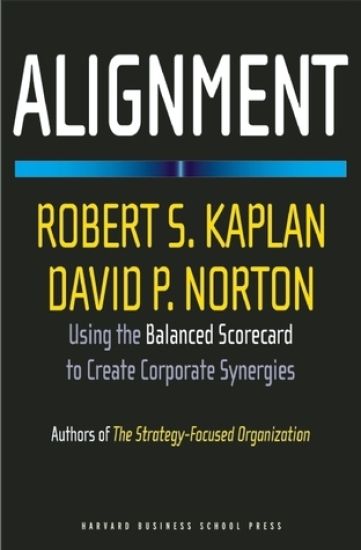
Alignment

Alignment

Robert S. Kaplan; David P. Norton

Harvard Business Review Press
2006
sidottu
Most organizations consist of multiple business and support units, each populated by highly trained, experienced executives. But often the efforts of individual units are not coordinated, resulting in conflicts, lost opportunities, and diminished performance. Robert S. Kaplan and David P. Norton argue that the responsibility for this critical alignment lies with corporate headquarters. In this book, the authors apply their revolutionary Balanced Scorecard management system to corporate-level strategy, revealing how highly successful enterprises achieve powerful synergies by explicitly defining corporate headquarters' role in setting, coordinating, and overseeing organizational strategy. Based on extensive field research in organizations worldwide, Alignment shows how companies can build an enterprise-level Strategy Map and Balanced Scorecard that clearly articulate the "enterprise value proposition": how the enterprise creates value above that achieved by individual business units operating alone. The book provides case studies, actionable frameworks, and sample scorecards that show how to align business and support units, boards of directors, and external partners with the corporate strategy and create a governance process that will ensure that alignment is sustained. The next breakthrough in strategy execution from the field's premier thinkers, Alignment shows how today's companies can unlock unrealized value from enterprise synergies.
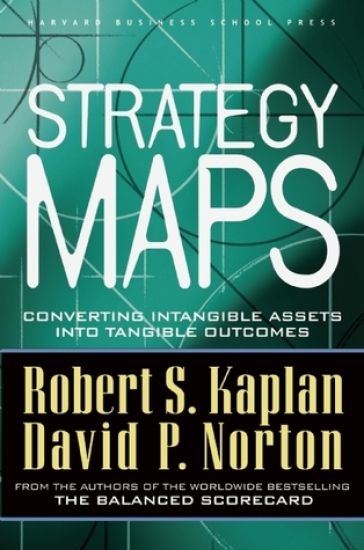
Strategy Maps

Strategy Maps

Robert S. Kaplan; David P. Norton

Harvard Business Review Press
2004
sidottu
More than a decade ago, Robert S. Kaplan and David P. Norton introduced the Balanced Scorecard, a revolutionary performance measurement system that allowed organizations to quantify intangible assets such as people, information, and customer relationships. Then, in The Strategy-Focused Organization, Kaplan and Norton showed how organizations achieved breakthrough performance with a management system that put the Balanced Scorecard into action. Now, using their ongoing research with hundreds of Balanced Scorecard adopters across the globe, the authors have created a powerful new tool--the "strategy map"--that enables companies to describe the links between intangible assets and value creation with a clarity and precision never before possible. Kaplan and Norton argue that the most critical aspect of strategy--implementing it in a way that ensures sustained value creation--depends on managing four key internal processes: operations, customer relationships, innovation, and regulatory and social processes. The authors show how companies can use strategy maps to link those processes to desired outcomes; evaluate, measure, and improve the processes most critical to success; and target investments in human, informational, and organizational capital. Providing a visual "aha!" for executives everywhere who can't figure out why their strategy isn't working, Strategy Maps is a blueprint any organization can follow to align processes, people, and information technology for superior performance.
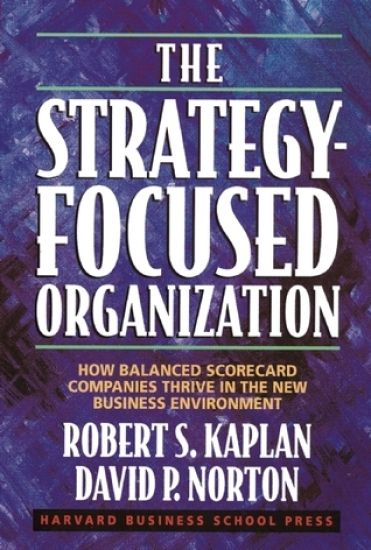
The Strategy-Focused Organization

The Strategy-Focused Organization

Robert S. Kaplan; David P. Norton

Harvard Business Review Press
2000
sidottu
The creators of the revolutionary performance management tool called the Balanced Scorecard introduce a new approach that makes strategy a continuous process owned not just by top management, but by everyone. In The Strategy-Focused Organization, Robert Kaplan and David Norton share the results of ten years of learning and research into more than 200 companies that have implemented the Balanced Scorecard. Drawing from more than twenty in-depth case studies--including Mobil, CIGNA, and AT&T Canada--Kaplan and Norton illustrate how Balanced Scorecard adopters have taken their groundbreaking tool to the next level. These organizations have used the scorecard to create an entirely new performance management framework that puts strategy at the center of key management processes and systems. Kaplan and Norton articulate the five key principles required for building strategy-focused organizations: 1) translate the strategy into operational terms, 2) align the organization to the strategy, 3) make strategy everyone's everyday job, 4) make strategy a continual process, and 5) mobilize change through strong, effective leadership. The authors provide a detailed account of how a range of organizations in the private, public, and nonprofit sectors have deployed these principles to achieve breakthrough, sustainable performance improvements.
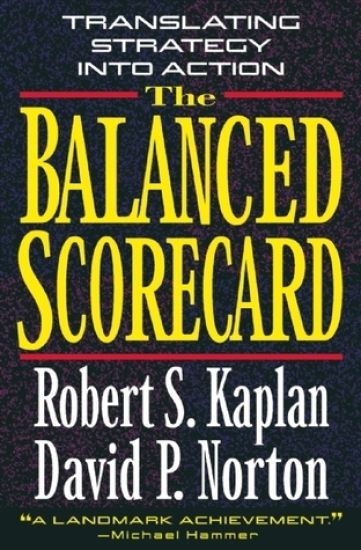
The Balanced Scorecard

The Balanced Scorecard

Robert S. Kaplan; David P. Norton

Harvard Business Review Press
1996
sidottu
The Balanced Scorecard translates a company's vision and strategy into a coherent set of performance measures. The four perspectives of the scorecard--financial measures, customer knowledge, internal business processes, and learning and growth--offer a balance between short-term and long-term objectives, between outcomes desired and performance drivers of those outcomes, and between hard objective measures and softer, more subjective measures. In the first part, Kaplan and Norton provide the theoretical foundations for the Balanced Scorecard; in the second part, they describe the steps organizations must take to build their own Scorecards; and, finally, they discuss how the Balanced Scorecard can be used as a driver of change.