Kirjojen hintavertailu. Mukana 12 218 781 kirjaa ja 12 kauppaa.

Kirjailija

Robert S. Leonard

Kirjat ja teokset yhdessä paikassa: 13 kirjaa, julkaisuja vuosilta 1999-2017, suosituimpien joukossa Innovative Management in the DARPA High Altitude Endurance Unmanned Aerial Vehicle Program. Vertaile teosten hintoja ja tarkista saatavuus suomalaisista kirjakaupoista.

Mukana myös kirjoitusasut: Robert S Leonard

13 kirjaa

Kirjojen julkaisuhaarukka 1999-2017.

The Future of the U.S. Intercontinental Ballistic Missile Force

The Future of the U.S. Intercontinental Ballistic Missile Force

Lauren Caston; Robert S. Leonard; Christopher A. Mouton; Chad J. R. Ohlandt; S. Craig Moore; Raymond E. Conley; Glenn Buchan

RAND
2014
pokkari
The authors assess alternatives for a next-generation intercontinental ballistic missile (ICBM) across a broad set of potential characteristics and situations. They use the current Minuteman III as a baseline to develop a framework to characterize alternative classes of ICBMs, assess the survivability and effectiveness of possible alternatives, and weigh those alternatives against their cost.
Innovative Management in the DARPA High Altitude Endurance Unmanned Aerial Vehicle Program
The U.S. military's development of Unmanned Aerial Vehicles (UAVs) has been hampered by cost overruns, schedule slippage, and disappointing operational results. The High Altitude Endurance UAV (HAE UAV) joint program, initiated under the direction of the Defense Advanced Research Projects Agency (DARPA), incorporates several innovative elements in its acquisition strategy that depart radically from traditional acquisition approaches. The program's development phase for the Global Hawk and DarkStar air vehicles is analyzed in this research. The HAE UAV program has experienced problems that are typical of newly implemented methods, but it has produced significant benefits, and provides lessons that could improve a wide variety of future acquisition processes.
Quantifying Cost and Schedule Uncertainty for Major Defense Acquisition Programs (Mdaps)
To help the Air Force better anticipate cost and schedule challenges and manage programs, this study developed a methodology to evaluate the likelihood of cost growth and schedule slip for major defense acquisition projects (MDAPs). The authors apply this methodology to programs currently in the Air Force's MDAP portfolio to assess future risk of cost growth and schedule slip.
Extreme Cost Growth

Extreme Cost Growth

Mark A. Lorell; Robert S. Leonard; Abby Doll

RAND
2015
pokkari
Examines conditions present in six U.S. Air Force Major Defense Acquisition Programs (MDAPs) experiencing extreme cost growth, using case study analysis. This report is a companion to Air Force Major Defense Acquisition Program Cost Growth Is Driven by Three Space a Program and the F-35: Fiscal Year 2013 President s Budget Selected Acquisition Reports (RR-477-AF, 2014), which analyzed cost growth trends in current U.S. Air Force MDAPs."
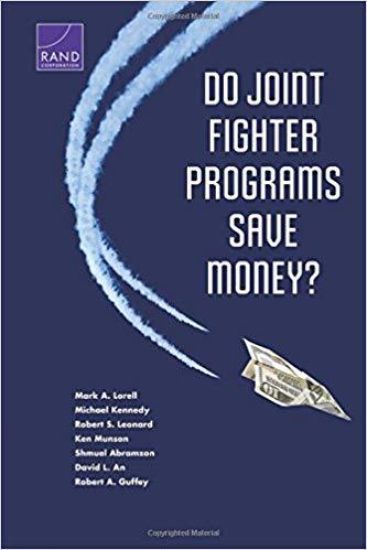
Do Joint Fighter Programs Save Money?

Do Joint Fighter Programs Save Money?

Mark A. Lorell; Michael Kennedy; Robert S. Leonard; Ken Munson; Shmuel Abramzon; David L. An; Robert A. Guffey

RAND
2013
pokkari
This report analyzes costs and savings of joint aircraft acquisition programs, whether historical joint aircraft programs have saved Life Cycle Cost (LCC) over single-service programs, whether the Joint Strike Fighter is on track to achieving the originally anticipated LCC savings, and the implications of joint fighter programs for the industrial base and for operational and strategic risk.
Do Joint Fighter Programs Save Money

Do Joint Fighter Programs Save Money

Mark A. Lorell; Michael Kennedy; Robert S. Leonard; Ken Munson; Shmuel Abramzon; David L. An; Robert A. Guffey

RAND
2013
pokkari
These appendixes explain the methodology used in an analysis of the costs and savings of joint aircraft acquisition programs. They illustrate calculations for theoretical maximum joint aircraft savings in acquisition and in operations and support, historical joint aircraft cost-growth premiums, savings needed to offset premiums, and two cost-comparison methodologies.
Improving the Cost Estimation of Space Systems

Improving the Cost Estimation of Space Systems

Obaid Younossi; Mark A. Lorell; Kevin Brancato; Cynthia R. Cook; Mel Eisman; Bernard Fox; John C. Graser; Kim Yool; Robert S. Leonard; Shari Lawrence Pfleeger

RAND
2008
pokkari
Why have the costs of acquiring space systems been so high? What are the sources of the problem? To answer these questions, RAND undertook an extensive study of two space systems - the Space Based Infrared SystemHigh (SBIRS) and the Global Positioning System (GPS).This title analyzes the reason for the comparatively high growth in the cost of space systems by means of an in-depth study of two systems: SBIRS-High and GPS.
Sources of Weapon System Cost Growth

Sources of Weapon System Cost Growth

Joseph G. Bolten; Robert S. Leonard; Mark V. Arena; Obaid Younossi; Jerry M. Sollinger

RAND
2008
pokkari
This analysis uses data from Selected Acquisition Reports to determine the causes of cost growth in 35 mature major defense acquisition programs. Four major sources of growth are identified: errors in estimation and scheduling, decisions by the government, financial matters, and miscellaneous. The analysis shows that more than two-thirds of cost growth (measured as simple averages) is caused by decisions, most of which involve quantity changes, requirements growth, and schedule changes.Cost growth in major weapon-systems programs results from errors in estimation and scheduling, government decisions, financial matters, and miscellaneous sources, with decisions involving changes in requirements, quantities, and production schedules the dominant cause.
Is Weapon System Cost Growth Increasing?

Is Weapon System Cost Growth Increasing?

Obaid Younossi; Mark V Arena; Robert S Leonard; Charles Robert Roll; Arvind Jain

RAND
2007
pokkari
In recent decades, there have been numerous attempts to rein in the cost growth of U.S. Department of Defense acquisition programs. Drawing on prior RAND research, new analyses of completed and ongoing weapon system programs, and data drawn from Selected Acquisition Reports, this study finds that development cost growth over the past three decades has remained high and without any significant improvement.
Historical Cost Growth of Completed Weapon System Programs

Historical Cost Growth of Completed Weapon System Programs

Mark V Arena; Robert S Leonard; Sheila E Murray; Obaid Younossi

RAND
2006
pokkari
Our analysis shows that the Department of Defense (DoD) and the military departments have generally underestimated the cost of buying new weapon systems and that this growth is higher than previously thought. It indicates a systematic bias toward underestimating costs and substantial uncertainty in estimating the final cost of a weapon system.
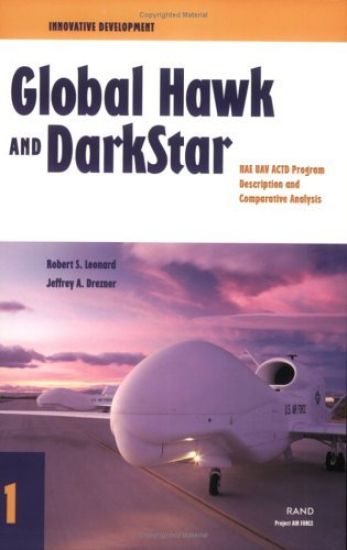
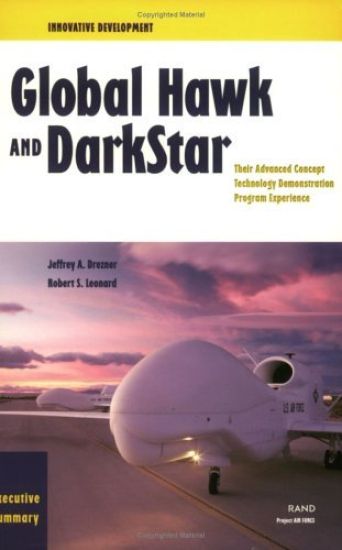
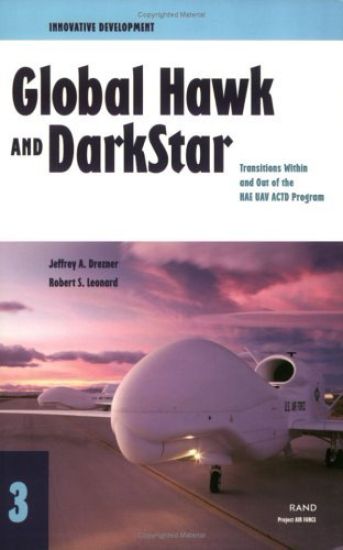
Innovative Development - Global Hawk and DarkStar

Innovative Development - Global Hawk and DarkStar

Robert S. Leonard; Jeffrey A. Drezner; Jeffrey A. Drenzer

RAND
2002
pokkari
An evaluation of new acquisition strategies for the development of unmanned aerial vehicles. Over the past three decades, efforts to develop unmanned aerial vehicles have been severely hampered by escalating costs, slipped schedules, and disappointing operational results. Recently, however, the Defense Advanced Research Projects Agency, in conjunction with the Defense Airborne Reconnaissance Office, launched an initiative -- designated the High-Altitude Endurance Unmanned Aerial Vehicle Advanced Concept Technology Demonstration (HAE UAV ACTD) program -- whose objective was to overcome these deficits through the use of a new and innovative acquisition policy. This report evaluates several key elements of this new strategy toward the goal of determining how they affected the development of two air vehicles: the first a conventional vehicle (Global Hawk) and the second a low-observable configuration (DarkStar). The authors found that the ACTD approach required that the entire development effort be planned at the program's inception, which proved to be a detriment to the effort as a whole.In addition, the program's single requirement -- a 10 million dollar unit flyaway price -- proved unattainable and was eventually abandoned. At the same time, the authors found that the program's designation as an ACTD, its use of Other Transaction Authority, and its delegation of considerable management responsibility to contractors greatly streamlined the oversight process and lent considerable flexibility to the effort. As a direct result of these factors, the Global Hawk program was judged to have successfully and cost-effectively produced a continuous, all-weather, wide-area surveillance capability for future warfighters. The authors thus conclude that although the DarkStar program was canceled before its capabilities could be fully demonstrated, the HAE UAV ACTD program was in aggregate a success. [AF]