Kirjojen hintavertailu. Mukana 12 595 353 kirjaa ja 12 kauppaa.

Kirjailija

Robert S. McPherson

Kirjat ja teokset yhdessä paikassa: 19 kirjaa, julkaisuja vuosilta 1992-2024, suosituimpien joukossa Stories from the Land. Vertaile teosten hintoja ja tarkista saatavuus suomalaisista kirjakaupoista.

19 kirjaa

Kirjojen julkaisuhaarukka 1992-2024.

Power, Prayers, and Protection

Power, Prayers, and Protection

Robert S. McPherson

University Press of Colorado
2024
pokkari
The San Juan River Navajos—residing in the vicinity of Aneth, Montezuma Creek, Bluff, and To´dahidi´ka´anii—have a fascinating history shaped, in part, by the water they lived near and the land they depended on. Circumscribed by sacred narratives and traditional teachings, the Dine´ forged a life in this high desert landscape while facing challenges from the environment as well as their neighbors—Utes, Paiutes, Mormons, cowboys, miners, evangelists, agents, government farmers, military personnel, educators, and entrepreneurs of all kinds. Their life has been one of confrontation, change, and adaptation as they explored new paths into the future. Navajo oral tradition is rich in stories and themes that form the basis for ceremonial performance. Everything that is physical, emotional, or spiritual has been placed in this world by the holy people at the time of creation, a process recognized in these accounts and teachings. Each chapter references sacred narratives that provide power through prayers that bring protection and a path for believers to follow. Topics include life on the river before and during the introduction of the white man, efficacy of the chantways, teachings of medicine people, childhood memories, arrival of trading posts, encounters with the automobile and other technology, livestock reduction and its aftermath, and the development of the Aneth oilfield with its ensuing protests. This is the Navajo elders’ story as seen through their eyes and told in their voice.
Stories from the Land

Stories from the Land

Robert S. McPherson

University Press of Colorado
2024
pokkari
Stories from the Land: A Navajo Reader about Monument Valley provides a traditional Navajo view of this iconic landscape and its people. Couched in the oral tradition of the elders, the reader is invited to view their history and culture through the eyes of those born at the turn of the twentieth century before massive inroads from the dominant culture began to erode the old ways. Each chapter follows a chronological sequence beginning with the creation of the world (specifically Monument Valley), teachings about the Anasazi, then later the Long Walk Period and incarceration at Fort Sumner. Subsequent chapters discuss traditional life and values, trading posts and their ties to the community, the devastation of livestock reduction, the film industry during the John Wayne/John Ford years, Anglo induced cultural change, uranium mining, and reaction to the current explosion of tourism. All of this as seen through the eyes of the Navajo people of Monument Valley and filtered through their unique cultural perspective. For the reader interested in authentic Navajo teachings, these people’s ties to the land, and a very different view of the world and how it functions, Stories from the Land offers fascinating insight that is fast disappearing from our world.
Scouting for the Bluecoats

Scouting for the Bluecoats

Robert S. McPherson

University Press of Colorado
2023
nidottu
"With more than twenty books published about the Navajo people, Robert S. McPherson is one of the most prolific contemporary writers concerning their history and culture. Scouting for the Bluecoats addresses a little-known and, until now, undocumented story of an estimated five hundred Navajos employed by the United States Army, primarily in the campaigns against the Apaches between 1873 and 1886. The author takes us with these scouts as they guide U.S. soldiers into the deserts, canyons, and mountains of New Mexico, Arizona, and Northern Mexico; he also provides a solid context about the origin of the Navajos and Apaches, their intertribal conflicts, and their elements of shared culture. Once again McPherson demonstrates his skill as a master historian, his understanding of these people, and a meaningful context for this long-neglected story of warrior-soldiers whose fieldcraft and dedication proved critical in shaping relations between the military and two Indian tribes in the Southwest." —Kent Powell, Senior historian at Utah Division of State History and editor of Utah State Historical Quarterly (retired) "Scouting for the Bluecoats examines the important role that Navajos played in military operations during the last quarter of the nineteenth and beginning of the twentieth centuries. Unlike the famous Navajo code talkers of World War II, little has been written about these men who served in some of the most challenging and noteworthy struggles against the Apaches. Until now, their story has been forgotten. Navajo skills in understanding and tracking a wily foe across an inhospitable landscape proved to be essential elements in ending the Apache wars. For those interested in the recruitment and deployment of the scouts, measures taken to counter enemy tactics, and the challenge of obtaining recognition for their service, this book is an invaluable source and a must-read for any serious scholar of Navajo history." —Ronald P. Maldonado, Tribal historic preservation officer (retired), Navajo Nation
Traditional Navajo Teachings

Traditional Navajo Teachings

Robert S. McPherson; Perry Juan Robinson

University Press of Colorado
2023
pokkari
"The books should be required reading for anyone who comes to teach, practice medicine or work on the Navajo Nation in any capacity- as well as young Navajos who seek a deeper understanding of their culture." —Cindy Yurth, The Navajo Times "In Sacred Narratives and Ceremonies, the authors lay the foundation of traditional Navajo beliefs and practices. They provide an inside perspective rarely discussed by non-medicine people and share the beauty and power of a system that unites humans to the holy beings—through teachings, rituals, materials, and daily behavior. This book is pure gold. It is full of traditional wisdom available to those wanting to understand Navajo culture as seen through the eyes of its elders. I highly recommend this book as a treasure trove for the Diné people." —Clayton Long, participant/creator of the Navajo Rosetta Stone; Bilingual Education Director (retired), San Juan School District, Utah; and curriculum developer for the Navajo Nation
Traditional Navajo Teachings

Traditional Navajo Teachings

Robert S. McPherson; Perry Juan Robinson

University Press of Colorado
2023
nidottu
"Navajo teachings provide a classic study of a land-based religion that involves every aspect of the physical world in a spiritual universe. Nothing is too big or small—everything holds a power, provides a teaching, and responds through an inner form. Beyond the material life of daily existence, there lies a world of interconnected relations made apparent in Volume II, The Natural World. This book graphically describes elements of life rooted in the Navajo philosophy of hózho´. A unified harmony results. I highly recommend this book as a study in understanding the power of relationships that populate the Diné worldview." —Clayton Long, a participant/creator of the Navajo Rosetta Stone; Bilingual Education Director (retired), San Juan School District, Utah; and curriculum developer for the Navajo Nation. "For days after reading The Natural World, I found myself looking at my surroundings in a different way. The vibrant spirit of the earth and every plant or animal I encountered seemed to glow through a translucent shell. I have always been a nature-lover and gotten a sense of peace from being outdoors, but since reading these beautiful Navajo teachings I am filled with a profound sense of joy and gratitude every time I walk outside." —Cindy Yurth, The Navajo Times
Traditional Navajo Teachings

Traditional Navajo Teachings

Robert S. McPherson; Perry Juan Robinson

University Press of Colorado
2023
pokkari
"The Earth Surface People, the final work in this trilogy, provides teachings about Navajo life from cradleboard to grave. Central to all is achieving “Long Life, Happiness” as one moves through various stages of existence. The second half of this book examines thoughts concerning the organization of the human body, sickness, western medicine, and death, all of which are part of the Pollen Path. How one walks this trail to his or her final destination is measured by one’s ability to live through its teachings. The four sacred directions with their associated powers are essential to earth life as outlined through ceremonies and daily practices. Here, one moves on a journey from teachings of the past to issues of the present. This volume is extremely helpful for youth to understand life values and the importance of identity, as well as acting as a reminder for adults of the enabling power of traditional culture." —Clayton Long, a participant/creator of the Navajo Rosetta Stone; Bilingual Education Director (retired), San Juan School District, Utah; and curriculum developer for the Navajo Nation.
Traders, Agents, and Weavers

Traders, Agents, and Weavers

Robert S. McPherson

UNIVERSITY OF OKLAHOMA PRESS
2022
nidottu
For travelers passing through northern Navajo country, the desert landscape appears desolate. The few remaining Navajo trading posts, once famous for their bustling commerce, seem unimpressive. Yet a closer look at the economic and creative activity in this region, which straddles northeastern Arizona, northwestern New Mexico, and southeastern Utah, belies a far more interesting picture. In Traders, Agents, and Weavers, Robert S. McPherson unveils the fascinating—and at times surprising—history of the merging of cultures and artistic innovation across this land. McPherson, the author of numerous books on Navajo and southwestern history, narrates here the story of Navajo economic and cultural development through the testimonies of traders, government agents, tribal leaders, and accomplished weavers. For the first half of the twentieth century, trading posts dominated the Navajo economy in northwestern New Mexico. McPherson highlights the Two Grey Hills post and its sister posts Toadlena and Newcomb, which encouraged excellence among weavers and sold high-quality rugs and blankets. Parallel to the success of the trading industry was the establishment of the Northern Navajo or Shiprock Agency and Boarding School. The author explains the pivotal influence on the area of the agency’s stern and controversial founder, William T. Shelton, known by Navajos as Tall Leader. Through cooperation with government agents, American settlers, and traders, Navajo weavers not only succeeded financially but also developed their own artistic crafts. Shunning the use of brightly dyed yarn and opting for the natural colors of sheep’s wool, these weavers, primarily women, developed an intricate style that has few rivals. Eventually, economic shifts, including oil drilling and livestock reduction, eroded the traditional Navajo way of life and led to the collapse of the trading post system. Nonetheless, as McPherson emphasizes, Navajo weavers have maintained their distinctive style and method of production to this day.
Mapping the Four Corners

Mapping the Four Corners

Robert S. McPherson; Susan Rhoades Neel

University of Oklahoma Press
2021
nidottu
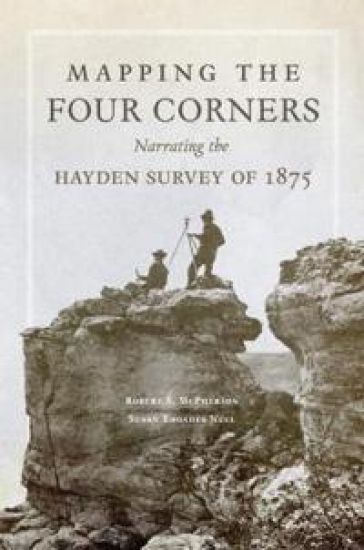
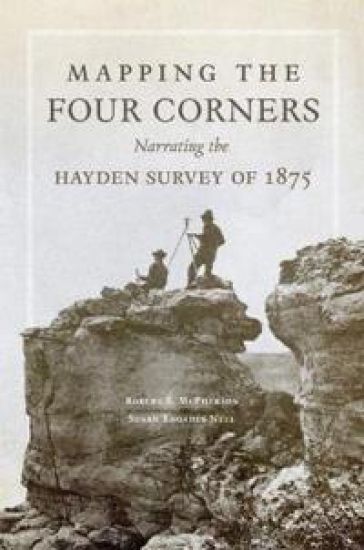
In 1875, a team of cartographers, geologists, and scientists under the direction of Ferdinand V. Hayden entered the Four Corners area for what they thought would be a calm summer’s work completing a previous survey. Their accomplishments would go down in history as one of the great American surveying expeditions of the nineteenth century. By skillfully weaving the surveyors’ diary entries, field notes, and correspondence with newspaper accounts, historians Robert S. McPherson and Susan Rhoades Neel bring the Hayden Survey to life. Mapping the Four Corners provides an entertaining, engaging narrative of the team’s experiences, contextualized with a thoughtful introduction and conclusion. Accompanied by the great photographer William Henry Jackson, Hayden’s team quickly found their trip to be more challenging than expected. The travelers describe wrangling half-wild pack mules, trying to sleep in rain-soaked blankets, and making tea from muddy, alkaline water. Along the way, they encountered diverse peoples, evidence of prehistoric civilizations, and spectacular scenery-Hispanic villages in Colorado and New Mexico; Mesa Verde, Hovenweep, and other Anasazi sites; and the Hopi mesas. Not everyone they met was glad to see them: in southeastern Utah surveyors fought and escaped a band of Utes and Paiutes who recognized that the survey meant dispossession from their homeland. Hayden saw his expedition as a scientific endeavor focused on geology, geographic description, cartographic accuracy, and even ethnography, but the search for economic potential was a significant underlying motive. As this book shows, these pragmatic scientists were on the lookout for gold beneath every rock, grazing lands in every valley, and economic opportunity around each bend in the trail. The Hayden Survey ultimately shaped the American imagination in contradictory ways, solidifying the idea of “progress”-and government funding of its pursuit-while also revealing, via Jackson’s photographs, a landscape with a beauty hitherto unknown and unimagined.
Traders, Agents, and Weavers

Traders, Agents, and Weavers

Robert S. McPherson

University of Oklahoma Press
2020
sidottu
For travelers passing through northern Navajo country, the desert landscape appears desolate. The few remaining Navajo trading posts, once famous for their bustling commerce, seem unimpressive. Yet a closer look at the economic and creative activity in this region, which straddles northeastern Arizona, northwestern New Mexico, and southeastern Utah, belies a far more interesting picture. In Traders, Agents, and Weavers, Robert S. McPherson unveils the fascinating - and at times surprising - history of the merging of cultures and artistic innovation across this land. McPherson, the author of numerous books on Navajo and southwestern history, narrates here the story of Navajo economic and cultural development through the testimonies of traders, government agents, tribal leaders, and accomplished weavers. For the first half of the twentieth century, trading posts dominated the Navajo economy in northwestern New Mexico. McPherson highlights the Two Grey Hills post and its sister posts Toadlena and Newcomb, which encouraged excellence among weavers and sold high-quality rugs and blankets. Parallel to the success of the trading industry was the establishment of the Northern Navajo or Shiprock Agency and Boarding School. The author explains the pivotal influence on the area of the agency's stern and controversial founder, William T. Shelton, known by Navajos as Tall Leader. Through cooperation with government agents, American settlers, and traders, Navajo weavers not only succeeded financially but also developed their own artistic crafts. Shunning the use of brightly dyed yarn and opting for the natural colors of sheep's wool, these weavers, primarily women, developed an intricate style that has few rivals. Eventually, economic shifts, including oil drilling and livestock reduction, eroded the traditional Navajo way of life and led to the collapse of the trading post system. Nonetheless, as McPherson emphasizes, Navajo weavers have maintained their distinctive style and method of production to this day.
Viewing the Ancestors

Viewing the Ancestors

Robert S. McPherson

University of Oklahoma Press
2019
nidottu
The Anaasází people left behind marvelous structures, the ruins of which are preserved at Mesa Verde, Chaco Canyon, and Canyon de Chelly. But what do we know about these people, and how do they relate to Native nations living in the Southwest today? Archaeologists have long studied the American Southwest, but as historian Robert McPherson shows in Viewing the Ancestors, their findings may not tell the whole story. McPherson maintains that combining archaeology with knowledge derived from the oral traditions of the Navajo, Ute, Paiute, and Hopi peoples yields a more complete history. McPherson's approach to oral tradition reveals evidence that, contrary to the archaeological consensus that these groups did not coexist, the Navajos interacted with their Anaasází neighbors. In addition to examining archaeological literature, McPherson has studied traditional teachings and interviewed Native people to obtain accounts of their history and of the relations between the Anaasází and Athapaskan ancestors of today's Hopi, Pueblo, and Navajo peoples. Oral history, McPherson points out, tells why things happened. For example, archaeological findings indicate that the Hopi are descended from the Anaasází, but Hopi oral tradition better explains why the ancient Puebloans may have left the Four Corners region: the drought that may have driven the Anaasází away was a symptom of what had gone wrong within the society - a point that few archaeologists could derive from what is found in the ground. An important text for non-Native scholars as well as Native people committed to retaining traditional knowledge, Viewing the Ancestors exemplifies collaboration between the sciences and oral traditions rather than a contest between the two.
Both Sides of the Bullpen

Both Sides of the Bullpen

Robert S. McPherson

University of Oklahoma Press
2017
sidottu
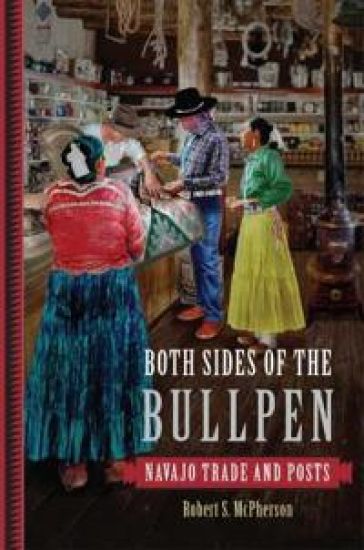
Between 1880 and 1940, Navajo and Ute families and westward-trending Anglos met in the ""bullpens"" of southwestern trading posts to barter for material goods. As the products of the livestock economy of Navajo culture were exchanged for the merchandise of an industrialized nation, a wealth of cultural knowledge also changed hands. In Both Sides of the Bullpen, Robert S. McPherson reveals the ways that Navajo tradition fundamentally reshaped and defined trading practices in the Four Corners area of southeastern Utah and southwestern Colorado. Drawing on oral histories of Native peoples and traders collected over thirty years of research, McPherson explores these interactions from both perspectives, as wool, blankets, and silver crossed the counter in exchange for flour, coffee, and hardware. To succeed, traders had to meet the needs and expectations of their customers, often interpreted through Navajo cultural standards. From the organization of the post building to gift giving, health care and burial services, and a credit system tailored to the Navajo calendar, every feature of the trading post served trader and customer alike. Over time, these posts evolved from ad hoc business ventures or profitable cooperative stores into institutions with a clearly defined set of expectations that followed Navajo traditional practices. Traders spent their days evaluating craft work, learning the financial circumstances of each Native family, following economic trends in the wool and livestock industry back east, and avoiding conflict. In detail and depth, the many voices woven throughout Both Sides of the Bullpen restore an underappreciated era to the history of the American Southwest. They show us that for American Indians and white traders alike in the Four Corners region during the late 1800s and early 1900s, barter was as much a cultural expression as it was an economic necessity.
Mapping the Four Corners

Mapping the Four Corners

Robert S. McPherson; Susan Rhoades Neel

University of Oklahoma Press
2016
sidottu
In 1875, a team of cartographers, geologists, and scientists under the direction of Ferdinand V. Hayden entered the Four Corners area for what they thought would be a calm summer's work completing a previous survey. Their accomplishments would go down in history as one of the great American surveying expeditions of the nineteenth century. By skillfully weaving the surveyors' diary entries, field notes, and correspondence with newspaper accounts, historians Robert S. McPherson and Susan Rhoades Neel bring the Hayden Survey to life. Mapping the Four Corners provides an entertaining, engaging narrative of the team's experiences, contextualized with a thoughtful introduction and conclusion. Accompanied by the great photographer William Henry Jackson, Hayden's team quickly found their trip to be more challenging than expected. The travelers describe wrangling half-wild pack mules, trying to sleep in rain-soaked blankets, and making tea from muddy, alkaline water. Along the way, they encountered diverse peoples, evidence of prehistoric civilizations, and spectacular scenery - Hispanic villages in Colorado and New Mexico; Mesa Verde, Hovenweep, and other Anasazi sites; and the Hopi mesas. Not everyone they met was glad to see them: in southeastern Utah surveyors fought and escaped a band of Utes and Paiutes who recognized that the survey meant dispossession from their homeland. Hayden saw his expedition as a scientific endeavor focused on geology, geographic description, cartographic accuracy, and even ethnography, but the search for economic potential was a significant underlying motive. As this book shows, these pragmatic scientists were on the lookout for gold beneath every rock, grazing lands in every valley, and economic opportunity around each bend in the trail. The Hayden Survey ultimately shaped the American imagination in contradictory ways, solidifying the idea of ""progress"" - and government funding of its pursuit - while also revealing, via Jackson's photographs, a landscape with a beauty hitherto unknown and unimagined.
Life in a Corner

Life in a Corner

Robert S. McPherson

University of Oklahoma Press
2015
nidottu
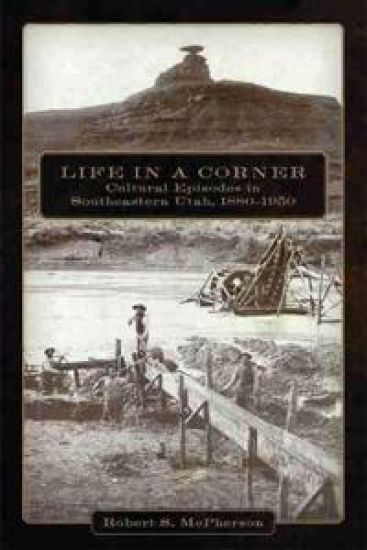
Community building in the Four Corners area of southeastern Utah required specialized knowledge and a good bit of determination on the part of settlers who wrested a livelihood from the Colorado Plateau. Robert S. McPherson, the region's leading historian, draws on oral history and personal archives to write about cowboys and homesteaders, loggers and sawmill operators, law enforcement officers and bootleggers, miners and midwives, trappers and builders. In Life in a Corner, he shapes their stories into a fascinating mosaic of cultural and environmental history unique to this region. McPherson demonstrates that, above all, settlers worked hard in order to succeed in this often forbidding land. A first-person account of erecting a Latter-day Saint tabernacle tells of volunteers using only what was under their feet or came from a nearby mountain. Other chapters give an insider's perspective on cowboying in canyon country, bringing law and order to a virtually lawless land, waging war against wolves and coyotes, and homesteading on some of the last large desert tracts in the continental United States. But the most gripping stories center on the ingenuity of those who lived these personal experiences. Only a veteran trapper would think of burying an alarm clock to attract a coyote. Only a determined bootlegger would devise a saddle made of leather-covered copper equipped with a spigot to dispense moonshine by the cup. Only committed, or desperate, miners would sail with a one-way ""ticket"" to a gold field in a hidden desert chasm. What were midwives being taught at the turn of the century, and how did their practice involve equal parts religious doctrine and medical procedure? What was a qualifying examination like for the first forest rangers? And how did small close-knit communities handle ""slackers"" during World War I? Life in a Corner answers these and many other questions while offering fresh perspectives on past events and current controversies.
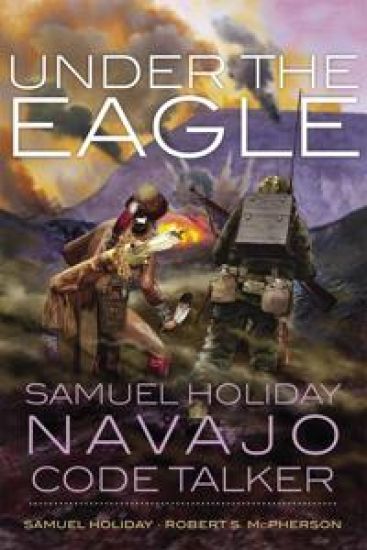
Under the Eagle

Under the Eagle

Samuel Holiday; Robert S. McPherson

University of Oklahoma Press
2013
nidottu
Samuel Holiday was one of a small group of Navajo men enlisted by the Marine Corps during World War II to use their native language to transmit secret communications on the battlefield. Based on extensive interviews with Robert S. McPherson, Under the Eagle is Holiday's vivid account of his own story. It is the only book-length oral history of a Navajo code talker in which the narrator relates his experiences in his own voice and words. Under the Eagle carries the reader from Holiday's childhood years in rural Monument Valley, Utah, into the world of the United States's Pacific campaign against Japan - to such places as Kwajalein, Saipan, Tinian, and Iwo Jima. Central to Holiday's story is his Navajo worldview, which shapes how he views his upbringing in Utah, his time at an Indian boarding school, and his experiences during World War II. Holiday's story, coupled with historical and cultural commentary by McPherson, shows how traditional Navajo practices gave strength and healing to soldiers facing danger and hardship and to veterans during their difficult readjustment to life after the war. The Navajo code talkers have become famous in recent years through books and movies that have dramatized their remarkable story. Their wartime achievements are also a source of national pride for the Navajos. And yet, as McPherson explains, Holiday's own experience was ""as much mental and spiritual as it was physical."" This decorated marine served ""under the eagle"" not only as a soldier but also as a Navajo man deeply aware of his cultural obligations.
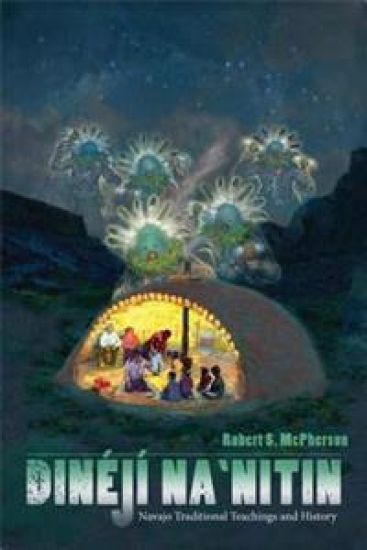
Dinéjí Na`nitin

Dinéjí Na`nitin

Robert S. McPherson

University Press of Colorado
2012
nidottu
Traditional teachings derived from stories and practices passed through generations lie at the core of a well-balanced Navajo life. These teachings are based on a very different perspective of the physical and spiritual world than that found in general American culture. Dinéjí Na`nitin is an introduction to traditional Navajo teachings and history for a non-Navajo audience, providing a glimpse into this unfamiliar domain and illuminating the power and experience of the Navajo worldview.Historian Robert McPherson discusses basic Navajo concepts such as divination, good and evil, prophecy, and metaphorical thought, as well as these topics' relevance in daily life, making these far-ranging ideas accessible to the contemporary reader. He also considers the toll of cultural loss on modern Navajo culture as many traditional values and institutions are confronted by those of dominant society. Using both historical and modern examples, he shows how cultural change has shifted established views and practices and illustrates the challenge younger generations face in maintaining the beliefs and customs their parents and grandparents have shared over generations. This intimate look at Navajo values and customs will appeal not only to students and scholars of Native American studies, ethnic studies, and anthropology but to any reader interested in Navajo culture or changing traditional lifeways.
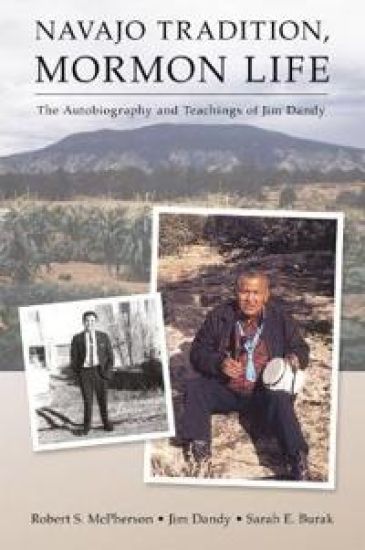
Navajo Tradition, Mormon Life

Navajo Tradition, Mormon Life

Robert S. McPherson; Jim Dandy; Sarah E. Burak

University of Utah Press,U.S.
2012
nidottu
Born in the early 1940s in northern Arizona’s high country desert, Jim Dandy began life imbued with the traditions of the Navajo people. Raised by his father and grandfather—both medicine men—and a grandmother steeped in Navajo practices, he embraced their teachings and followed in their footsteps. But attending the LDS Placement program in northern Utah changed his life’s course when he became a member of the Mormon Church. Following graduation from high school, Jim served an LDS mission among his people, obtained a bachelor’s degree, and entered the work force in southeastern Utah as a career counsellor, teacher, and community advocate who improved educational opportunities on the Navajo Reservation.Jim has led a life of service and teaching. He maintains the traditional philosophy with which he was raised and the Mormon beliefs that he learned and continues to follow; his life reflects the values inherent in these two different worlds. Readers interested in Navajo philosophy will find his blend of these two distinct views fascinating, while others will better understand the effects of the controversial placement program on the life of one individual. However, this is primarily the warm story of a man’s life among his people and his love for them and their culture.
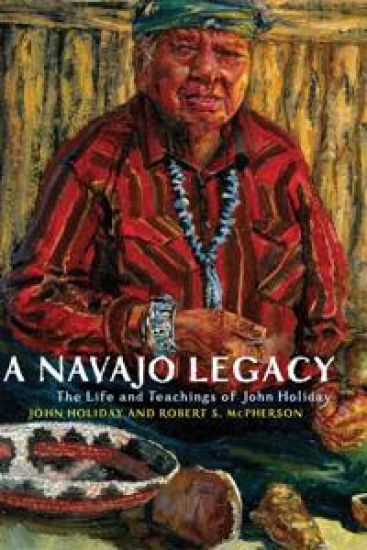
A Navajo Legacy

A Navajo Legacy

John Holiday; Robert S. McPherson

University of Oklahoma Press
2011
nidottu
For almost ninety years, Navajo medicine man John Holiday has watched the sun rise over the rock formations of his home in Monument Valley. Author and scholar Robert S. McPherson interviewed Holiday extensively and in A Navajo Legacy records his full and fascinating life.In the first part of this book, Holiday describes how, at an early age, he began an apprenticeship with his grandfather to learn the Blessingway ceremony. As a youth, Holiday traveled over the desert with family members to find forage for the animals and plants for healing practices. He experienced the invasion of Monument Valley by whites and later participated in the early filmmaking industry. Holiday was employed in the 1930s with the Civilian Conservation Corps and then served a brief stint in the military. During the 1950s he mined in one of the two largest uranium deposits on the Navajo Reservation. He also worked on the railroad in Utah. But he always returned to eke out a living with his livestock and agriculture.In the second part of the book, Holiday details family and tribal teachings. All of Holiday's experiences and teachings reflect the thoughts of a traditional practitioner who has found in life both beauty and lessons for future generations.
Navajo Land, Navajo Culture

Navajo Land, Navajo Culture

Robert S. McPherson

University of Oklahoma Press
2003
nidottu
In Navajo Land, Navajo Culture, Robert S. McPherson presents an intimate history of the Diné, or Navajo people, of southeastern Utah. Moving beyond standard history by incorporating Native voices, the author shows how the Dine's culture and economy have both persisted and changed during the twentieth century.As the dominant white culture increasingly affected their worldview, these Navajos adjusted to change, took what they perceived as beneficial, and shaped or filtered outside influences to preserve traditional values. With guidance from Navajo elders, McPherson describes varied experiences ranging from traditional deer hunting to livestock reduction, from bartering at a trading post to acting in John Ford movies, and from the coming of the automobile to the burgeoning of the tourist industry.Clearly written and richly detailed, this book offers new perspectives on a people who have adapted to new conditions while shaping their own destiny.
Sacred Land, Sacred View

Sacred Land, Sacred View

Robert S. McPherson

University Press of Colorado
1992
nidottu
Dramatic geographical formations tower over the Four Corners country in the southwestern United States. The mountains, cliffs, and sandstone spires, familiar landmarks for anglo travelers, orient Navajos both physically and spiritually. In Sacred Land, Sacred View, Robert McPherson describes the mythological significance of these landmarks. Navajos read their environment as a spiritual text: the gods created the physical world to help, teach, and protect people through an integrated system of beliefs represented in nature. The author observes that the Middle East is of "no greater import to Christians than the Dine's holy land is to Navajos." He continues: "Sacred mountains circumscribe the land, containing the junction of the San Juan River and Mancos Creek, where Born for Water invoked supernatural aid to overcome danger and death and where, at the Bear's Ears formation, good triumphed over evil." The more one learns about the Dine, the more one inevitably admires their way of perceiving and interpreting what lies just beyond the focus of human vision. Their renowned respect for nature and way of living in harmony with the environment derive from their religious traditions.