Kirjailija
Robert Sellers
Kirjat ja teokset yhdessä paikassa: 25 kirjaa, julkaisuja vuosilta 2009-2026, suosituimpien joukossa Hellraisers: The Life and Inebriated Times of Richard Burton, Richard Harris, Peter O'Toole, and Oliver Reed. Vertaile teosten hintoja ja tarkista saatavuus suomalaisista kirjakaupoista.
25 kirjaa
Kirjojen julkaisuhaarukka 2009-2026.
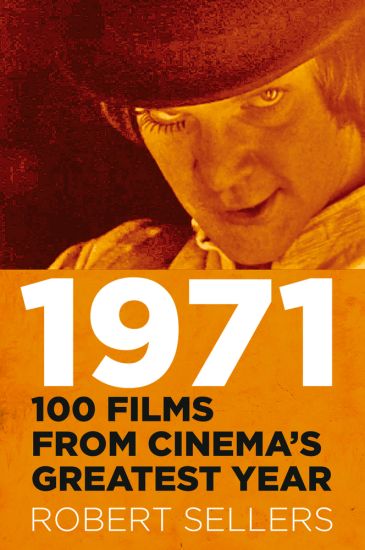
1971 was a great year for cinema. Woody Allen, Robert Altman, Dario Argento, Ingmar Bergman, Stanley Kubrick, Sergio Leone, George Lucas, Sam Peckinpah, Roman Polanski, Nicolas Roeg and Steven Spielberg, among many others, were behind the camera, while the stars were also out in force. Warren Beatty, Marlon Brando, Michael Caine, Julie Christie, Sean Connery, Faye Dunaway, Clint Eastwood, Jane Fonda, Dustin Hoffman, Steve McQueen, Jack Nicholson, Al Pacino and Vanessa Redgrave all featured in films released in 1971.The remarkable artistic flowering that came from the ‘New Hollywood’ of the ’70s was just beginning, while the old guard was fading away and the new guard was taking over. With a decline in box office attendances by the end of the ’60s, along with a genuine inability to come up with a reliable barometer of box office success, studio heads gave unprecedented freedom to young filmmakers to lead the way.Featuring interviews with cast and crew members, bestselling author Robert Sellers explores this landmark year in Hollywood and in Britain, when this new age was at its freshest, and where the transfer of power was felt most exhilaratingly.
Hellraisers: The Life and Inebriated Times of Richard Burton, Richard Harris, Peter O'Toole, and Oliver Reed
Robert Sellers
Thomas Dunne Books
2011
nidottu
The Boozy Biography of the Four Greatest Actors to Ever Walk--Or Stagger--Into a Pub. Richard Burton, Richard Harris, Peter O'Toole, and Oliver Reed: On screen they were stars. Off screen they were legends Hellraisers is the story of drunken binges of near biblical proportions, parties and orgies, broken marriages, riots, and wanton sexual conquests. Indeed, acts so outrageous that if you or I had perpetrated them we could have ended up in jail. Their mercurial acting talent and love from the press and the public allowed them to get away with the kind of behaviour that today's film stars could scarcely dream of. They were truly the last of a breed, the last of the movie hellraisers.This book traces the intertwining lives and careers of Burton, Harris, O'Toole, and Reed, plus an assortment of other movie boozers who crossed their path. It's a celebratory catalogue of their miscreant deeds, a greatest-hits package, as it were, of their most breathtakingly outrageous behavior, told with humor and affection. You can't help but enjoy it--after all, they bloody well did. "God put me on this earth to raise sheer hell."--Richard Burton "I don't have a drink problem. But if that was the case and doctors told me I had to stop I'd like to think that I would be brave enough to drink myself into the grave."--Oliver Reed "I was a sinner. I slugged some people. I hurt many people. And it's true, I never looked back to see the casualties."--Richard Harris "Booze is the most outrageous of drugs, which is why I chose it."--Peter O'Toole
Only Fools and Horses. Blackadder. ‘Allo ‘Allo. Yes Minister. Red Dwarf. Just some of the classic British sitcoms that graced our television screens in the 1980s. The 1980s was an even more divisive and controversial decade than the ‘70s, both culturally and politically. The Conservative government, presided over by Margaret Thatcher, was in power the entire decade, and as a result a lot of sitcoms seemed to be more politically aware and grounded in their tone than they had been previously. Shows such as Bread and Only Fools and Horses are prime examples. The ‘80s also saw the creation of a new channel in Channel 4, which produced more socially conscious programming, including its comedy output. For example, there were two sitcoms that focused on black London culture: No Problem! was about a family of Jamaican heritage, and Desmond’s was an award-winning sitcom revolving around a barbershop in Peckham that lasted 71 episodes. There were certainly more substantial roles for women in the ‘80s sitcom. The Boswells in Bread spring to mind, as does Penelope Keith’s businesswoman in Executive Stress and the powerhouse quartet of comediennes who graced Girls on Top, Jennifer Saunders, Dawn French, Ruby Wax and Tracey Ullman, and of course the strong female lead characters in the enormously popular Birds of a Feather. The 1980s also saw the rise of ‘alternative’ comedy, which saw expression in several sitcoms, most notably The Young Ones and Red Dwarf. Still Laughing explores these famous shows, bringing back a host of memories to readers in the process. It will also place a spotlight on the shows we’ve forgotten, and in most cases for good reason. The failed Adrian Edmonson sitcom Snakes and Ladders, Robert Lindsay as a boxer in Seconds Out, Marjorie and Men, a sitcom that quietly crawled away and died but not without announcing Patricia Routledge as a force to be reckoned with, and Split Ends, a Granada sitcom that was Anita Dobson’s first television project after leaving EastEnders in 1988. This is nostalgia with a capital N, an oral history, the last word, but also a slice of TV history and an affectionate salute to those shows that so many of us grew up with.
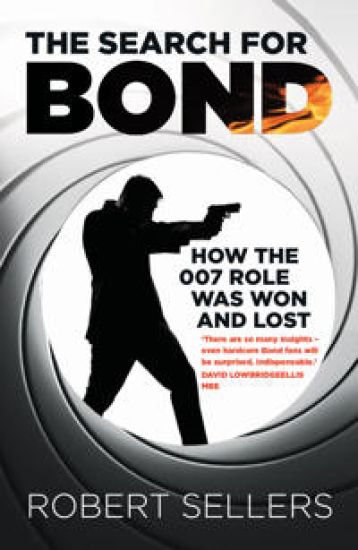
‘There are so many insights – even hardcore Bond fans will be surprised. Indispensable.’ – David Lowbridge-Ellis MBE Only six men can lay claim to wearing the famous Savile Row tuxedo of James Bond; more people have stepped on the Moon. Yet, hundreds more came within an inch of winning the coveted 007 role – the pinnacle for so many actors. For the first time, The Search for Bond tells the extraordinary story of how cinema’s most famous secret agent was cast, featuring exclusive interviews with many of the actors who were at one time considered to play Bond, interviewed for the role, or went as far as to be screen tested. From Sir Ranulph Fiennes to Sam Neill, their memories and stories give a fascinating insiders’ glimpse into the process of how the Bond producers, Broccoli and Saltzman, came up with the right man to play their famous spy.
From Monty Python and Not the Nine O'Clock News to Peep Show, QI and The Great British Bake-Off, alumni of Britain's oldest student sketch comedy troupe have set the tone of cultural eras from the 1960s to today. This book tells the story of the Cambridge Footlights, chronicling its evolution from its creation in the 1880s to the present.This diverting book includes first-hand interviews with former Footlights alumni, and extracts from past Footlights productions. It draws on material from the extensive archives of the Footlight club at the Cambridge University library, which holds records of club admin.The Footlights has long been a potential portal to fame: talent scouts, especially from the BBC, were in the habit of coming up to Cambridge on the lookout for comedy writers and material. This book traces the journeys of its most distinguished alumni, including Germaine Greer, Stephen Fry, Hugh Laurie, Miriam Margolyes, Emma Thompson, Richard Ayoade, David Mitchell and Sue Perkins, among many others among many others, covering how they got into the club, their contribution and subsequent careers.Through examining the impact of the Footlights on British popular culture and comedy over the last 60 years, this book demonstrates how its farces, musical comedies, pantomimes and the famous May Week revues have both reflected the tastes of the times and served as a ‘nursery’ for generations of comic writers and performers. In the world of comedy, it is a unique institution.
For nearly eight decades, the Royal family has been gracing the red carpet to see the most eagerly anticipated film of the year. Since 1946, The Royal Film Performance has been an annual highlight of the entertainment social calendar, where cinema’s most famous icons have come face to face with royalty.With authors Gareth Owen and Robert Sellers, dive into the glitz, glamour and regal encounters of each Royal Film Performance, the memorable moments and the fascinating stories. From Marilyn Monroe’s nervous encounter with Queen Elizabeth II to the cheeky remarks of Jayne Mansfield, witness the intersection of cinema’s luminaries and royalty.As the curtain rises on this cinematic celebration, The Royal Film Performance: A Celebration pays homage to the stars, the royals and the unsung heroes of the industry, sure to delight fans of the royal family and cinema aficionados alike.
1971 was a great year for cinema. Woody Allen, Robert Altman, Dario Argento, Ingmar Bergman, Stanley Kubrick, Sergio Leone, George Lucas, Sam Peckinpah, Roman Polanski, Nicolas Roeg and Steven Spielberg, among many others, were behind the camera, while the stars were also out in force. Warren Beatty, Marlon Brando, Michael Caine, Julie Christie, Sean Connery, Faye Dunaway, Clint Eastwood, Jane Fonda, Dustin Hoffman, Steve McQueen, Jack Nicholson, Al Pacino and Vanessa Redgrave all featured in films released in 1971.The remarkable artistic flowering that came from the ‘New Hollywood’ of the ’70s was just beginning, while the old guard was fading away and the new guard was taking over. With a decline in box office attendances by the end of the ’60s, along with a genuine inability to come up with a reliable barometer of box office success, studio heads gave unprecedented freedom to young filmmakers to lead the way.Featuring interviews with cast and crew members, bestselling author Robert Sellers explores this landmark year in Hollywood and in Britain, when this new age was at its freshest, and where the transfer of power was felt most exhilaratingly.
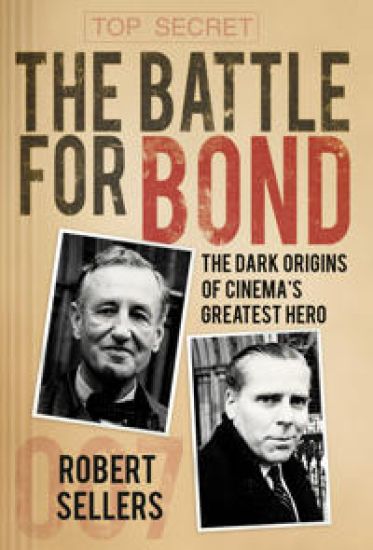
Cinema history was made with the release of Dr. No in 1962. Sean Connery became the face of the suave secret agent 007, and one of film’s most iconic franchises was born.How different might that history have been if, instead, Thunderball was the first Bond film to be released, directed by Alfred Hitchcock and starring Richard Burton as James Bond? It seems absurd, but it almost happened.The Battle for Bond unravels this most controversial part of the James Bond legend using letters and private documents to recount a story in which Ian Fleming found himself in the dock accused of plagiarism, and the events threatened to turn the James Bond film-making world upside down. It is a tale of bitter recriminations, betrayal, multimillion-dollar lawsuits and even death.Regarded within the Bond fan community as one of the most important books ever written about 007, The Battle for Bond was the subject of controversial litigation when it was first published in 2007, and was, for a time, banned in Britain. With this new edition, Robert Sellers revives this fascinating chapter in film history, warts and all.
The Pink Panther series is one of the most enduring and financially successful franchises in movie history, beginning with 1963’s The Pink Panther, which introduced audiences to the iconic Inspector Clouseau, unforgettably played by Peter Sellers. Drawing on previously unseen material and ‘exclusive’ interviews with stars of the films and crew members, along with friends and colleagues of Peter Sellers, Robert Sellers presents, for the very first time, the untold story and some of the secrets behind the Pink Panther films. The original Pink Panther movie proved popular enough to spawn eight sequels. The films also inspired a popular animated TV series based on the pink panther cartoon character that appeared in the film’s credit sequences. There were also spin-off toys, games, clothes, even breakfast cereal. In the 2000s, comedy legend Steve Martin twice stepped into the role of Inspector Clouseau. But behind the laughs, there was madness and darkness, and at the series’ heart was one of cinema’s most tragic figures: Peter Sellers. A comedic genius, Sellers could be temperamental, unprofessional, and unpredictable. Add to that a heart problem Sellers feared could kill him at any moment. This book reveals many of the Pink Panther’s secrets for the first time, shining a spotlight behind the scenes at the making of some of the most beloved comedies of all time, and the extraordinary personalities that brought them to life.
‘There are so many insights – even hardcore Bond fans will be surprised. Indispensable.’ – David Lowbridge-Ellis MBEOnly six men can lay claim to wearing the famous Savile Row tuxedo of James Bond; more people have stepped on the Moon. Yet, hundreds more came within an inch of winning the coveted 007 role – the pinnacle for so many actors.For the first time, The Search for Bond tells the extraordinary story of how cinema’s most famous secret agent was cast, featuring exclusive interviews with many of the actors who were at one time considered to play Bond, interviewed for the role, or went as far as to be screen tested. From Sir Ranulph Fiennes to Sam Neill, their memories and stories give a fascinating insiders’ glimpse into the process of how the Bond producers, Broccoli and Saltzman, came up with the right man to play their famous spy.
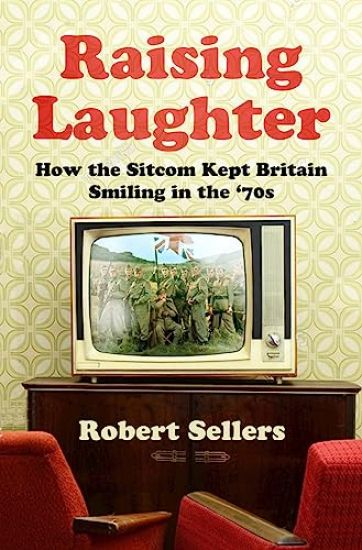
The 1970s were the era of the three-day week, the Troubles in Northern Ireland, the winter of discontent, trade union Bolshevism and wildcat strikes. Through sitcoms, Raising Laughter provides a fresh look at one of our most divisive and controversial decades. Aside from providing entertainment to millions of people, the sitcom is a window into the culture of the day.Many of these sitcoms tapped into the decade’s sense of cynicism, failure and alienation, providing much-needed laughter for the masses. Shows like Rising Damp and Fawlty Towers were classic encapsulations of worn-out, run-down Britain, while the likes of Dad’s Army looked back sentimentally at a romanticised English past.For the first time, the stories behind the making of every sitcom from the 1970s are told by the actors, writers, directors and producers who made them all happen. This is nostalgia with a capital N, an oral history, the last word, and an affectionate salute to the kind of comedy programme that just isn’t made anymore.
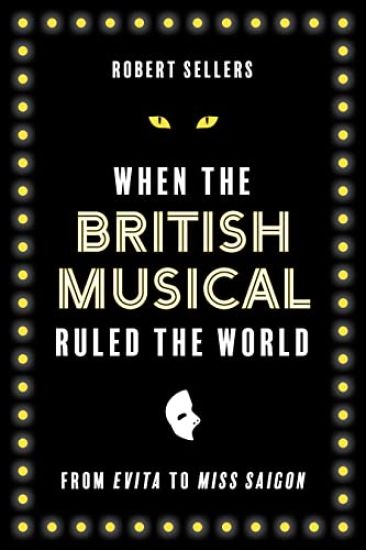
For decades, British stage musicals struggled to compete against the dazzling Broadway productions that came roaring in from across the pond. But that tide was turned at last in 1978, when Tim Rice and Andrew Lloyd Webber’s production of Evita brought the West End back into contention with Broadway. It was just the first of several blockbuster productions that helped Britain dominate musical theater all over the world.In this revealing behind-the-scenes narrative, journalist and author Robert Sellers gives a definitive account of how Evita, Cats, Starlight Express, Les Misérables, Phantom of the Opera, Chess, and Miss Saigon changed the business of musical theater in the 1980s. These mega productions of the were larger than life, colorful, and spectacular. Sellers collects insightful, personal stories from cast members, set designers, musical supervisors, dancers, lighting designers, production managers, singers, and choreographers from the shows that finally put Broadway on its back foot. He also describes the backstage drama, production nightmares, and financial woes that threatened to derail the shows at multiple points. Whatever obstacles they faced, though, these productions swept the world and transformed the face of musical theater in ways that still resound today.
‘Enthralling . . . an essential read, particularly for fans of 007.’ - Cinema Retro‘When Harry Met Cubby is a fitting tribute to two extraordinary men. If you love behind the scenes stories about the making of movies, there’s plenty of drama to sate you here.’ - Entertainment FocusAlbert R. ‘Cubby’ Broccoli and Harry Saltzman remain the most successful producing partnership in movie history. Together they were responsible for the phenomenally successful James Bond series; separately they brought kitchen-sink drama to the screen, made a star out of Michael Caine in the Harry Palmer films and were responsible for the children’s classic Chitty Chitty Bang Bang. But their relationship was fraught almost from the very beginning. With such contrasting personalities, their interactions often span out of control. They managed to drive away their coveted star, Sean Connery, and ultimately each other.Loved and hated in equal measure, respected and feared by their contemporaries, few people have loomed as large over the film industry as Broccoli and Saltzman, yet their lives went in very different directions. Broccoli was feted as Hollywood royalty, whereas Saltzman ended up a forgotten recluse. When Harry Met Cubby charts the changing fortunes and clashing personalities of two titans of the big screen.
The 1970s were the era of the three-day week, the Troubles in Northern Ireland, the winter of discontent, trade union Bolshevism and wildcat strikes. Through sitcoms, Raising Laughter provides a fresh look at one of our most divisive and controversial decades. Aside from providing entertainment to millions of people, the sitcom is a window into the culture of the day.Many of these sitcoms tapped into the decade’s sense of cynicism, failure and alienation, providing much-needed laughter for the masses. Shows like Rising Damp and Fawlty Towers were classic encapsulations of worn-out, run-down Britain, while the likes of Dad’s Army looked back sentimentally at a romanticised English past.For the first time, the stories behind the making of every sitcom from the 1970s are told by the actors, writers, directors and producers who made them all happen. This is nostalgia with a capital N, an oral history, the last word, and an affectionate salute to the kind of comedy programme that just isn’t made anymore.
For most people in Britain in the 1970s and 1980s, Radio 1 provided the soundtrack to their lives. Commanding up to 24 million listeners a week, it was the most popular radio station in the world. An iconic institution and one of the UK's most famous brands, its history and socio-cultural impact is explored in full here for the first time. Robert Sellers draws on archive material and first-hand interviews with DJs and key personnel to capture the extraordinary story of Radio 1, from its beginnings in 1967 through to its controversial reorganisation in the early nineties.
‘Enthralling . . . an essential read, particularly for fans of 007.’ - Cinema Retro‘When Harry Met Cubby is a fitting tribute to two extraordinary men. If you love behind the scenes stories about the making of movies, there’s plenty of drama to sate you here.’ - Entertainment FocusAlbert R. ‘Cubby’ Broccoli and Harry Saltzman remain the most successful producing partnership in movie history. Together they were responsible for the phenomenally successful James Bond series; separately they brought kitchen-sink drama to the screen, made a star out of Michael Caine in the Harry Palmer films and were responsible for the children’s classic Chitty Chitty Bang Bang. But their relationship was fraught almost from the very beginning. With such contrasting personalities, their interactions often span out of control. They managed to drive away their coveted star, Sean Connery, and ultimately each other.Loved and hated in equal measure, respected and feared by their contemporaries, few people have loomed as large over the film industry as Broccoli and Saltzman, yet their lives went in very different directions. Broccoli was feted as Hollywood royalty, whereas Saltzman ended up a forgotten recluse. When Harry Met Cubby charts the changing fortunes and clashing personalities of two titans of the big screen.
He's the man with short fat hairy legs who kept us laughing for decades, his comic timing sparking perfectly with the genius of his partner Eric Morecambe. Yet little has been known about Ernie's amazing story, until now.Little Ern! takes us from Ernie's childhood in Leeds, where he supported his family by performing on stage, to being left to fend for himself in London at thirteen, a star in the making. We see his friendship with the young comic Eric grow when they toured the theatres of war-torn Britain as teenagers, and discover how their double-act evolved. They survived numerous setbacks on the road to television stardom - and we learn the impact fame had on their lives and friendship. Fully exploring the crucial contribution he made to the act, this charming biography reminds us why Ernie Wise deserves his place in the pantheon of comedy greats.
The authorised biography of Oliver Reed, one of Britain's best loved actors.
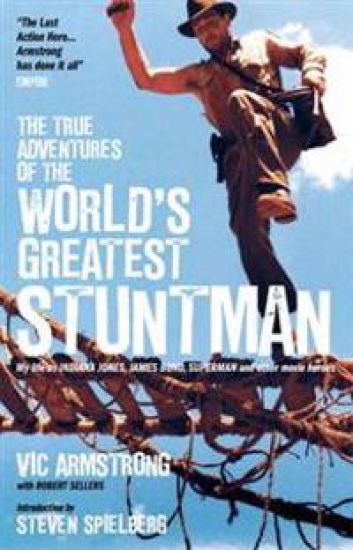
The True Adventures of the World's Greatest Stuntman
Vic Armstrong; Robert Sellers; Steven Spielberg
Titan Books Ltd
2012
pokkari
Think you don't know Vic Armstrong? Wrong! You've seen his work in countless films. He's been stunt double for James Bond, Indiana Jones and Superman, and he's directed action scenes for 3 Bond movies, "Mission Impossible 3", "I Am Legend" and "Thor", to name but a few. He's got a lot of amazing stories to tell, and they're all here in this acclaimed movie memoir, now updated to include Vic's work on "The Amazing Spider-Man".