Kirjojen hintavertailu. Mukana 12 657 676 kirjaa ja 12 kauppaa.

Kirjailija

Robert Silverberg

Kirjat ja teokset yhdessä paikassa: 158 kirjaa, julkaisuja vuosilta 1986-2026, suosituimpien joukossa Galaxy's Edge Magazine. Vertaile teosten hintoja ja tarkista saatavuus suomalaisista kirjakaupoista.

158 kirjaa

Kirjojen julkaisuhaarukka 1986-2026.

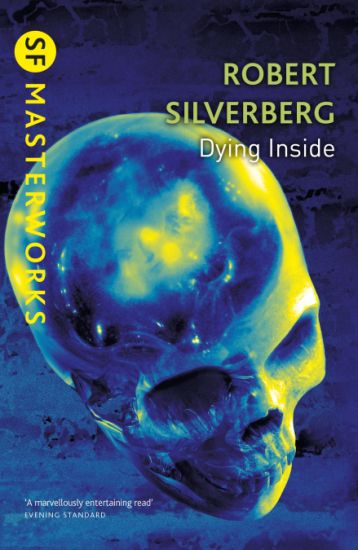
Dying Inside

Dying Inside

Robert Silverberg

Orb Books
2009
nidottu
In 1972, Robert Silverberg, even then an acknowledged leader in the science fiction field, published a book that was immediately hailed as a masterpiece. More than three decades later, Dying Inside has stood the test of time and has been recognized as one of the finest novels the field has ever produced. Never wasting a word, Silverberg persuasively shows us what it would be like to read minds, painting an unforgettable portrait of a man shaped by that unique power; a power he is now inexorably losing. Acclaimed upon first publication by SF critics and mainstream reviewers alike, Dying Inside is overdue for reintroduction to today's SF audience. This is a novel for everyone who appreciates deeply affecting characterization, imaginative power, and the irreplaceable perspective unique to speculative fiction of the highest order.
Starman's Quest by Robert Silverberg, Science Fiction, Adventure, Space Opera
The Lexman Spacedrive gave man the stars -- but at a fantastic price. Interstellar exploration, colonization, and trade became things of reality. The benefits to Earth were enormous. But because of the Fitzgerald Contraction, a man who shipped out to space could never live a normal life on Earth again.Travelling at speeds close to that of light, spacemen lived at an accelerated pace. A nine-year trip to Alpha Centauri and back seemed to take only six weeks to men on a spaceship. When they returned, their friends and relatives had aged enormously in comparison, old customs had changed, even the language was different.Alan was a spacer, just like his whole family -- until, suddenly and without intending to, he in turn jumped ship and remained on Earth There were times he regretted that. Earth was a bewildering and utterly hostile place. To stay alive, he had to play a ruthless game -- and he couldn't even find anyone to tell him the rules. . . .
Shadrach in the Furnace

Shadrach in the Furnace

Robert Silverberg

Bison Books
2008
pokkari
In the twenty-first century, a battered world is ruled by a crafty old tyrant, Genghis II Mao IV Khan. The Khan is ninety-three years old, his life systems sustained by the skill of Mordecai Shadrach, a brilliant young surgeon whose chief function is to replace the Khan's worn-out organs. Within the vast tower-complex, the most advanced equipment is dedicated to three top-priority projects, each designed to keep the Khan immortal. Most sinister of these is Project Avatar, by which the Khan's mind and persona are to be transferred to a younger body.Shadrach makes the unsettling discovery that it is his body that is to be used. His friends beg him to flee, but he refuses to panic. Instead, and with startling composure, he evolves a dangerous plan that could change the face of the earth or, if it backfires, mean the end of life.Shadrach in the Furnace is at once a broad, sweeping novel and a harsh, abrasive, irreverent book about a life-and-death battle between two titans—one the epitome of evil, the other a paragon of idealism—in a society pushed to extremes.
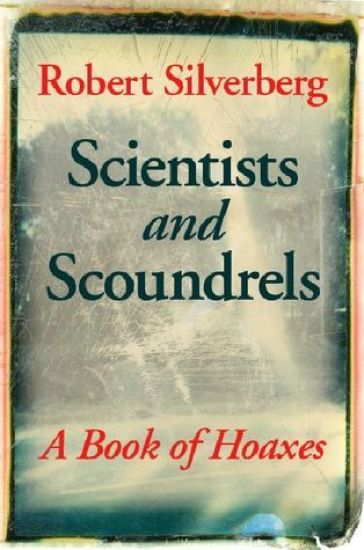
Scientists and Scoundrels

Scientists and Scoundrels

Robert Silverberg

Bison Books
2007
pokkari
As if history and nature had not provided wonders enough, through the ages humans themselves have contrived more marvels to deceive one another. Sometimes they have concocted evidence when none was available to prove pet theories; sometimes their intention has been to impress or defraud; sometimes they have acted merely for sport. Robert Silverberg tells the stories of a baker's dozen of these scientific hoaxers in a lively, good-humored book that ranges through time and across continents. Here are perpetual-motion machines and space rockets, men on the moon and serpents in the sea. The rogues' gallery is a varied one: Dr. Mesmer, who cast his hypnotic spell on eighteenth-century Paris; Charles Dawson, whose Piltdown Man challenged evolution; Dr. Cook, with his tale of "discovering" the North Pole; and many others. These are fascinating stories and more than just entertainment. The author explains the scientific background against which the hoaxes appeared and the detective work that led to their exposure. The schemers teach us to be alert, to challenge the evidence, and to appreciate the healthy skepticism that characterizes the scientific method.
The Longest Voyage

The Longest Voyage

Robert Silverberg

Ohio University Press
1997
pokkari
From the intense and brooding Magellan and the glamorous and dashing Sir Francis Drake; to Thomas Cavendish, who set off to plunder Spain’s American gold and the Dutch circumnavigators, whose numbers included pirates as well as explorers and merchants, Robert Silverberg captures the adventures and seafaring exploits of a bygone era. Over the course of a century, European circumnavigators in small ships charted the coast of the New World and explored the Pacific Ocean. Characterized by fierce nationalism, competitiveness, and bloodshed, The Longest Voyage: Circumnavigators in the Age of Discovery captures the drama, danger, and personalities in the colorful story of the first voyages around the world. These accounts begin with Magellan’s unprecedented 1519–22 circumnavigation, providing an immediate, exciting, and intimate glimpse into that historic venture. The story includes frequent threats of mutiny; the nearly unendurable extremes of heat, cold, hunger, thirst, and fatigue; the fear, tedium, and moments of despair; the discoveries of exotic new peoples and strange new lands; and, finally, Magellan’s own dramatic death during a fanatical attempt to convert native Philippine islanders to Christianity. Capturing the total context of political climate and historical change that made the Age of Discovery one of excitement and drama, Silverberg brings a motley crew of early ocean explorers vividly to life.
The Golden Dream

The Golden Dream

Robert Silverberg

Ohio University Press
1996
pokkari
One of the most persistent legends in the annals of New World exploration is that of the Land of Gold. This mythical site was located over vast areas of South America (and later, North America); the search for it drove some men mad with greed and, as often as not, to their untimely deaths. In this history of quest and adventure, Robert Silverberg traces the fate of Old World explorers lured westward by the myth of El Dorado. From the German conquistadores licensed by the Spanish king to operate out of Venezuela, to the journeys of Gonzalo Pizarro in the Amazon basin, and to the nearly miraculous voyage of Francisco Orellana to the mouth of the Amazon River, encountering the warlike women who gave the river its name, violence and bloodshed accompanied the determined adventurers. Sir Walter Raleigh and a host of other explorers spent small fortunes and many lives trying to locate Manoa, a city that was rumored to be El Dorado-City of Gold. Celebrated science fiction author Robert Silverberg recreates these legendary quests in The Golden Dream: Seekers of El Dorado.
The Realm of Prester John

The Realm of Prester John

Robert Silverberg

Ohio University Press
1996
pokkari
In this modern account of the genesis of a great medieval myth, celebrated science fiction author Robert Silverberg’s explores the mysterious origins of Prester John, the astonishing Christian potentate of the East. Prester John was a legendary figure who cast a powerful spell over Latin Christendom for almost five centuries. Rumors of the warrior-king-prelate’s fabulous realms first reached Europe in the eleventh century and quickly assumed an exalted status alongside such fabled wonders as El Dorado, The Fountain of Youth, and the Holy Grail. The defeat of a Moslem Turkish tribe by a Buddhist Chinese warlord seems to have been the unlikely historical nugget around which the Prester John myth grew, but contributions to this strange saga have also been traced all around the globe to the Apostle Thomas' apocryphal preaching in India, to the actual existence of small colonies of Nestorian schismatics in central Asia, and even to Genghis Khan.
The Pueblo Revolt

The Pueblo Revolt

Robert Silverberg

University of Nebraska Press
1994
pokkari
The peaceable Pueblo Indians seemed an unlikely people to rise emphatically and successfully against the Spanish Empire. For eighty-two years the Pueblos had lived under Spanish domination in the northern part of present-day New Mexico. The Spanish administration had been led not by Coronado's earlier vision of god but by a desire to convert the Indians to Christianity and eke a living from the country north of Mexico. The situation made conflict inevitable, with devastating results. Robert Silverberg writes: "While the missionaries flogged and even hanged the Indians to save their souls, the civil authorities enslaved them, plundered the wealth of their cornfields, forced them to abide by incomprehensible Spanish laws." A long drought beginning in the 1660s and the accelerated raids of nomadic tribes contributed to the spontaneous revolt to the Pueblos in August 1680.How the Pueblos maintained their independence for a dozen years in plain view of the ambitious Spaniards and how they finally expelled the Spanish is the exciting story of The Pueblo Revolt. Robert Silverberg's descriptions yield a rich picture of the Pueblo culture.
Ghost Towns of the American West

Ghost Towns of the American West

Robert Silverberg

Ohio University Press
1990
pokkari
The story of the American mining frontier can be traced through the ghost towns that dot the western landscape to this day, from the camps of California’s forty-niners to the twentieth-century ruins in the Nevada desert. These abandoned towns mark an epoch of high adventure, of quick wealth and quicker poverty, of gambling and gunslinging and hell-raising. Those who have seen the Old West movies sometimes think that the legends of the Wild West were invented by screenwriters. The ghost towns remain, and their battered ruins testify that the legends are true. Behind the tall tales is a history where a fortune could be made in a week and lost over the course of an evening. With a historian’s attention to fact and a novelist’s gift for dramatic storytelling, celebrated science fiction author Robert Silverberg brings these adventures back to life in the rowdy splendor of their heyday in Ghost Towns of the American West. History and travelers’ tales are woven together with clarity and wit to create a lively account of a fascinating era in our history. Lorence Bjorklund’s illustrations, rich in detail, portray the ghost towns in their glory and in their dusty decline.
Det brokiga coctailpartyt

Det brokiga coctailpartyt

Robert Silverberg

Bokförlaget Korpen
1987
nidottu
Robert Silverberg är en författare som skildrar extraordinära eller icke realiserade verkligheter. I "Det brokiga cocktailpartyt" tar han läsaren med på en resa genom tid och rum med besök i exotiska kulturer och förunderliga världar, som dock inte är mer främmande än att vi lätt kan känna oss hemma i dem. Robert Silverberg är en av USA:s mest kända science fiction- och fantasy-författare.
The Mound Builders

The Mound Builders

Robert Silverberg

Ohio University Press
1986
pokkari
In Illinois, the one-hundred-foot Cahokia Mound spreads impressively across sixteen acres, and as many as ten thousand more mounds dot the Ohio River Valley alone. The Mound Builders traces the speculation surrounding these monuments and the scientific excavations which uncovered the history and culture of the ancient Americans who built them. The mounds were constructed for religious and secular purposes some time between 1000 B.C. and 1000 A.D., and they have prompted curiosity and speculation from very early times. European settlers found them evidence of some ancient and glorious people. Even as eminent an American as Thomas Jefferson joined the controversy, though his conclusions-that the mounds were actually cemeteries of ancient Indians-remained unpopular for nearly a century. Only in the late 19th century, as Smithsonian Institution investigators developed careful methodologies and reliable records, did the period of scientific investigation of the mounds and their builders begin. Silverberg follows these excavations and then recounts the story they revealed of the origins, development, and demise of the mound builder culture.