

Kirjailija
Robert Simms
Kirjat ja teokset yhdessä paikassa: 21 kirjaa, julkaisuja vuosilta 2011-2025, suosituimpien joukossa Silver Pen Psalms and Prayers. Vertaile teosten hintoja ja tarkista saatavuus suomalaisista kirjakaupoista.
21 kirjaa
Kirjojen julkaisuhaarukka 2011-2025.

Straight Sense, Vol 3, is a compendium of more views and pronouncements on religion and culture, from a conservative perspective. Simms writes about corruption of language, cultural rot, religious developments, and a smattering of miscellaneous subjects. Leading of this volume is a set of 21 Immutable Truths. Many of the book's articles are based on those truths. Simms says, "Most of the conflict in our 21st century society is due to the failure, or worse, the refusal, of many people to admit the obvious lessons of human experience."

Smith v. Jones is a compilation of two dozen stories of everyday people who go to court over civil disputes. Some of the most interesting drama in any town or county are never in the newspaper and never known to most people except those involved. But they are stories that are often riveting, and either evoking pathos or just entertaining. You can't make this stuff up, but it's going on right under your nose.
A comprehensive study of Bible passages relating to judges and the concept of justice, with personal illustrations from the judicial career of the author.
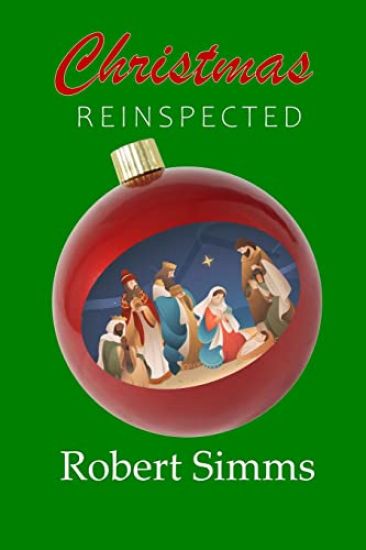
Over the years, the Christian's celebration of Christmas may have lost its luster. Why do we celebrate it, anyway? Could we celebrate in a way that would transform and bless us? The author invites you to reinspect Christmas, rediscover its truths, and reclaim its joys
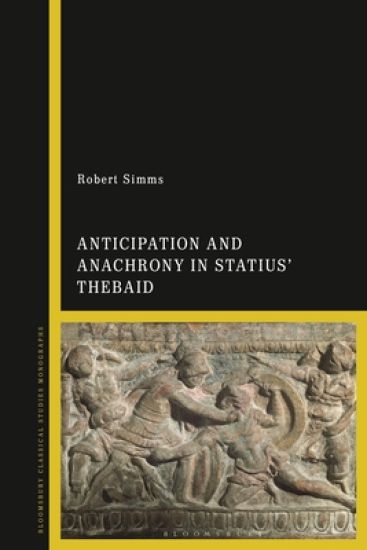
Applying the latest narratological theory and focusing on the use of anachrony (or 'chronological deviation'), this book explores how Statius competes – successfully – for a place within an established literary canon. Given the tremendous pressure on poets to render familiar stories in unfamiliar and novel ways, how did he achieve this? When Statius elected to sing of the quarrelsome sons of Oedipus he was acutely aware that this was a well-trod road, one frequently reproduced in a variety of genres – epic, drama and lyric poetry. Despite this highly varied corpus against which he sought to contend, he boasts that his epic has novelty and proudly declares that he is now counted among the ‘prisca nomina’, or ancient names, that sang of Thebes. And indeed precisely the fact that there were so many story-versions (a greater number survive for comparison than for any other work from antiquity, rivaling even the popularity of the Trojan legend) means that the story is conveniently positioned to offer a unique exploration into how Statius creates a compelling story despite working within a saturated and overly familiar mythic tradition. This book argues that it is chiefly through the use of narrative anachrony, or non-chronological modes of narration, that Statius manipulates states of anticipation, suspense, and even surprise in his audience.
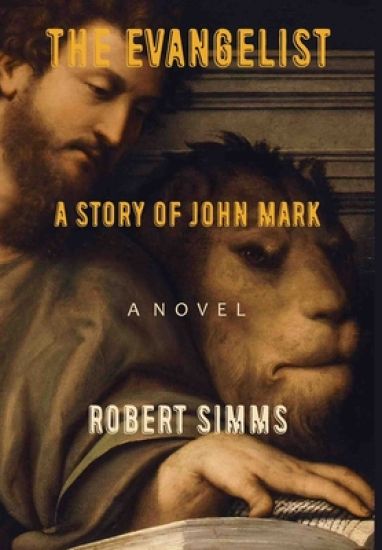
"The Evangelist" is a story of John Mark as it might have happened. What we "know" about John Mark, the author of the Bible's Gospel of Mark, is divided into two sources: canonical (in the Bible) and non-canonical. We can be certain of only the Bible's facts. Some of the other sources for his life are doubtful; some conflict with each other; some are likely true. Author Robert Simms sees in facts, tradition, and conjecture the story of a young man like many others of his time, drawn to the powerful figure of Jesus of Nazareth. Converted at Pentecost, this Mark goes on to be a leader of churches, a missionary, and the author of what was probably the first life story of Jesus: the Gospel According to Mark. Follow this imagining of Mark built around the structure of facts history gives us. Learn how Mark interacted with Paul and Peter and Barnabas. Discover the discipleship of a real, historical person, not a gilded, stylized painting, in this possible story of a boy who grew up in the days of Jesus Christ, became his follower, lived for him faithfully, and died doing his will.
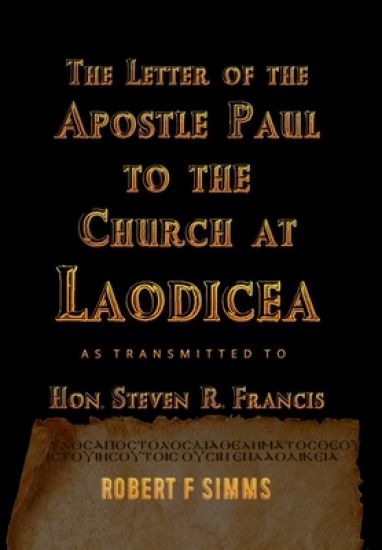
The New Testament says the Apostle Paul wrote a letter to the Church at Laodicea. Apart from some fakes produced later in history, we have no idea what happened to to this letter. What if it simply never got to the church, because somebody didn't want it to be read? From a messenger leaving Rome, to a devious church leader, to musty libraries in cities from Asia to Europe, to the hands of frightened churchmen in England and the States, follow the passage of the letter from obscurity to publication 2,000 years later. Is it the real deal?
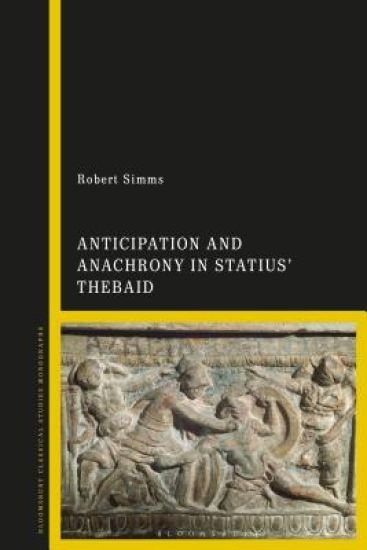
Applying the latest narratological theory and focusing on the use of anachrony (or 'chronological deviation'), this book explores how Statius competes – successfully – for a place within an established literary canon. Given the tremendous pressure on poets to render familiar stories in unfamiliar and novel ways, how did he achieve this? When Statius elected to sing of the quarrelsome sons of Oedipus he was acutely aware that this was a well-trod road, one frequently reproduced in a variety of genres – epic, drama and lyric poetry. Despite this highly varied corpus against which he sought to contend, he boasts that his epic has novelty and proudly declares that he is now counted among the ‘prisca nomina’, or ancient names, that sang of Thebes. And indeed precisely the fact that there were so many story-versions (a greater number survive for comparison than for any other work from antiquity, rivaling even the popularity of the Trojan legend) means that the story is conveniently positioned to offer a unique exploration into how Statius creates a compelling story despite working within a saturated and overly familiar mythic tradition. This book argues that it is chiefly through the use of narrative anachrony, or non-chronological modes of narration, that Statius manipulates states of anticipation, suspense, and even surprise in his audience.
Modern English language has been shaped by English Bibles more than most people realize. Many people not reared in a religious setting are not aware of how many of the expressions they probably use regularly came from the first English Bibles, notably the King James Version, which continues to influence the language powerfully, through both the concepts of Judaism and Christianity and the phrases the English translators of the ancient texts used to render the Hebrew and Greek. "It Comes from the Bible" lists many of these expressions and shows how modern English speakers, whether they know it or not, are repeating the words of the inspired authors of the Bible.
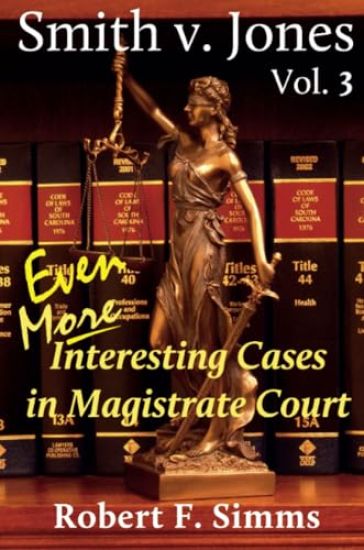
In this third volume of Smith v. Jones Judge Robert Simms decides another two dozen interesting cases from his Magistrate Court in the upstate of South Carolina. Drawn from the actual docket as were the forty-eight other cases in volumes 1 & 2, these stories are little snapshots of people's lives as they come through the Summary Court to have their disputes resolved. Some go away mad or sad, some glad or just relieved. Read about the little dramas that go on around you all the time, and see how Judge Simms renders justice.

Nobody needs to get rich just so you can get slim. This book champions the plain sense concept that it's amounts that count, and that's all. Read to be inspired. No recipes, no counters, no advertisements, no come-ons, no new-fangled theories. Remind yourself of what's obvious: that eating too much got you where you are and eating less will get you where you want to be.
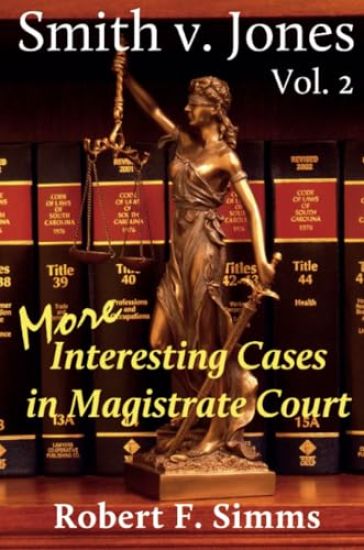
Here's the second volume of Robert Simms's entertaining and informative "Smith v. Jones." Included are two dozen more accounts of real cases in the magistrate or summary court in South Carolina. All the plaintiffs have been re-named Smith and all the defendants Jones, just for a veneer of anonymity: all court proceedings are public anyway. Read more stories about real people who brought their disputes to have them settled by a judge. The people provide the drama every day in the "small claims" courts of South Carolina. Every party is treated with respect and every case is important to the parties involved. Peek into the courtroom and see average citizens, many of whom have never been in court before and hope never to be again.

The Bible offers some fascinating glimpses into the nature of heaven, the place where Christians confidently anticipate being when they die. While most religions have some concept of a heavenly existence, Christians believe the Bible is the authoritative revelation of God himself on the subject. "Heavenly Life" is a study of biblical teaching about heaven. What it says may surprise some; it will be very familiar to those who are real students of the scriptures; it will further excite all believers in Jesus Christ. It may even prompt some who aren't yet Christians to look more closely at who Jesus is. For heaven is reserved for those who heed Jesus' words in John 14:6: "I am the way, the truth and the life. No one comes to the Father but by me."

A young professional returns to his college campus and sees an old girlfriend. A businessman meets a stranger who makes him an offer he can't refuse. A couch potato discovers a one-of-a-kind electronic gadget that could change his life. A disillusioned husband searches for a way out of his dead-end life. A lawyer makes an appeal for a second chance at love. These and others share a special connection in this book: they experience an unexpected twist in life events that surprises them -- sometimes dramatically. In Seven Short Twists, Robert Simms tells the tales of seven men caught up in the passions of their lives. For some of them, their pasts catch up with them. For others, their regrets haunt them. For most of them, lost loves linger in their dreams. Unexpected encounters lead to unanticipated endings. Robert Simms draws on his imagination, classic themes, and some of his own haunting memories to tell seven tales that will touch some chord in every reader's heart.
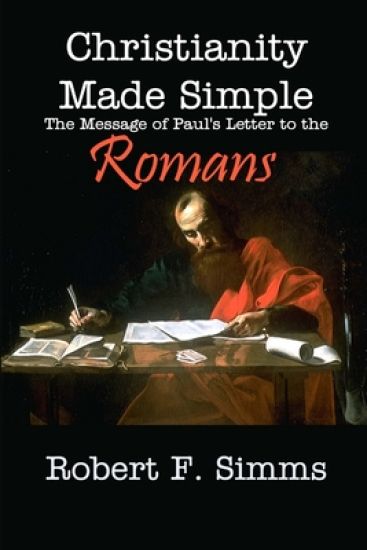
A concise study of Romans designed to communicate its message simply to the average Christian. Sweeps through the New Testament letter without unnecessary outlines or technical discussion. Presents helpful interpretations of Paul's more difficult concepts without getting bogged down in theological debates.