Kirjojen hintavertailu. Mukana 12 595 353 kirjaa ja 12 kauppaa.

Kirjailija

Robert Stackowiak

Kirjat ja teokset yhdessä paikassa: 7 kirjaa, julkaisuja vuosilta 2011-2020, suosituimpien joukossa Architecting the Industrial Internet. Vertaile teosten hintoja ja tarkista saatavuus suomalaisista kirjakaupoista.

7 kirjaa

Kirjojen julkaisuhaarukka 2011-2020.

Design Thinking in Software and AI Projects

Design Thinking in Software and AI Projects

Robert Stackowiak; Tracey Kelly

APress
2020
nidottu
Learn the fundamentals of Design Thinking and how to apply Design Thinking techniques in defining software development and AI solutions. Design Thinking is an approach to innovation which identifies problems and generates solution ideas that can be rapidly proven through prototyping.This book provides a brief history of Design Thinking and an overview of the process. It then drills down into more detail regarding methods and tools used in a Design Thinking workshops leading to useful prototypes. Guidance is provided on: Preparing for a Design Thinking Workshop Uncovering potential business problems that might be solvedPrioritizing potential solutionsIdentifying and characterizing stakeholdersChoosing the right prototypes for developmentLimiting scope and best practices in prototype buildingThe book concludes with a discussion of best practices in operationalizing successful prototypes, and describes change management techniques critical for successful adoption. You can use the knowledge gained from reading this book to incorporate Design Thinking techniques in your software development and AI projects, and assure timely and successful delivery of solutions.What You Will LearnGain foundational knowledge of what Design Thinking is and when to apply the techniqueDiscover preparation and facilitation techniques used in workshopsKnow how ideas are generated and then validated through prototypingUnderstand implementation best practices, including change management considerationsWho This Book Is ForBusiness decision makers and project stakeholders as well as IT project owners who seek a method leading to fast development of successful software and AI prototypes demonstrating real business value. Also for data scientists, developers, and systems integrators who are interested in facilitating or utilizing Design Thinking workshops to drive momentum behind potential software development and AI projects.
Azure Internet of Things Revealed

Azure Internet of Things Revealed

Robert Stackowiak

APress
2019
nidottu
Design, build, and justify an optimal Microsoft IoT footprint to meet your project needs. This book describes common Internet of Things components and architecture and then focuses on Microsoft’s Azure components relevant in deploying these solutions.Microsoft-specific topics addressed include: deploying edge devices and pushing intelligence to the edge; connecting IoT devices to Azure and landing data there, applying Azure Machine Learning, analytics, and Cognitive Services; roles for Microsoft solution accelerators and managed solutions; and integration of the Azure footprint with legacy infrastructure.The book concludes with a discussion of best practices in defining and developing solutions and creating a plan for success.What You Will LearnDesign the right IoT architecture to deliver solutions for a variety of project needsConnect IoT devices to Azure for data collection and delivery of servicesUse Azure Machine Learning and Cognitive Services to deliver intelligence in cloud-based solutions and at the edgeUnderstand the benefits and tradeoffs of Microsoft's solution accelerators and managed solutionsInvestigate new use cases that are described and apply best practices in deployment strategiesIntegrate cutting-edge Azure deployments with existing legacy data sourcesWho This Book Is ForDevelopers and architects new to IoT projects or new to Microsoft Azure IoT components as well as readers interested in best practices used in architecting IoT solutions that utilize the Azure platform
Remaining Relevant in Your Tech Career
Remain relevant in the face of constant change during your career in technology. This book shows you how to proactively plan in anticipation of future changes. Many people find technology careers enticing because of the number of job opportunities, the high compensation, or simply because of fascination with technology itself. Once in those careers, however, there are many challenges to remaining relevant and at one’s peak in the face of constantly shifting competitive and technology landscapes. Incumbents face a constant stream of new skills to learn that are often already known by more recent graduates entering the market at lower compensation rates. There also are time-to-market challenges and the need to keep up with the introduction of automation.This book was written based on the author’s experience gained over 40 years working with and in technology-related fields and companies. It provides practical guidance on remaining relevant as changes are expected to occur in technology at ever faster rates in coming decades.What You'll LearnKnow what companies really wantRealize the importance of alignment with company cultureUnderstand the political landscape and how to use it to advantageDiscover why creating, maintaining, and operating in a diverse environment is beneficialMaster strategies for skills developmentFuture-proof your careerWho This Book Is ForTechnology professionals who want to remain relevant and happy while navigating their current career and university students who are pursuing a STEM career and actively planning their future
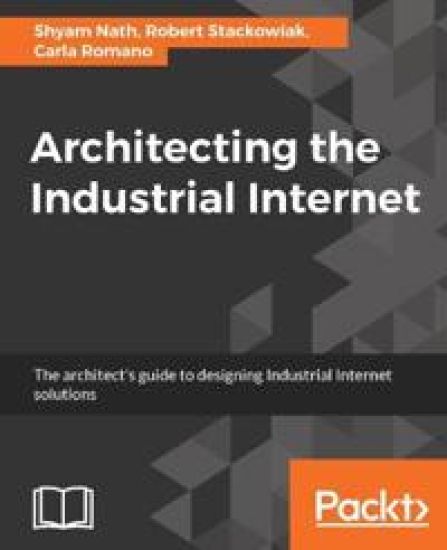
Architecting the Industrial Internet

Architecting the Industrial Internet

Shyam Nath; Robert Stackowiak; Carla Romano

Packt Publishing Limited
2017
nidottu
Learn the ins and outs of the Industrial Internet of Things through subjects ranging from its history and evolution, right up to what the future holds. About This Book • Define solutions that can connect existing systems and newer cloud-based solutions to thousands of thousands of edge devices and industrial machines • Identify, define, and justify Industrial Internet of Things (IIoT) projects, and design an application that can connect to and control thousands of machines • Leverage the power and features of a platform to monitor, perform analytics, and maintain the Industrial Internet Who This Book Is For Architects who are interested in learning how to define solutions for the Industrial Internet will benefit immensely from this book. Relevant architect roles include enterprise architects, business architects, information architects, cloud solution architects, software architects, and others. The content is also relevant for technically inclined line of business leaders investing in these solutions. What You Will Learn • Learn the history of the Industrial Internet and why an architectural approach is needed • Define solutions that can connect to and control thousands of edge devices and machines • Understand the significance of working with line of business leadership and key metrics to be gathered • Connect business requirements to the functional architecture • Gain the right expectation as to the capabilities of Industrial Internet applications and how to assess them • Understand what data and analytics components should be included in your architecture solution • Understand deployment trade-offs, management and security considerations, and the impact of emerging technologies In Detail The Industrial Internet or the IIoT has gained a lot of traction. Many leading companies are driving this revolution by connecting smart edge devices to cloud-based analysis platforms and solving their business challenges in new ways. To ensure a smooth integration of such machines and devices, sound architecture strategies based on accepted principles, best practices, and lessons learned must be applied. This book begins by providing a bird's eye view of what the IIoT is and how the industrial revolution has evolved into embracing this technology. It then describes architectural approaches for success, gathering business requirements, and mapping requirements into functional solutions. In a later chapter, many other potential use cases are introduced including those in manufacturing and specific examples in predictive maintenance, asset tracking and handling, and environmental impact and abatement. The book concludes by exploring evolving technologies that will impact IIoT architecture in the future and discusses possible societal implications of the Industrial Internet and perceptions regarding these projects. By the end of this book, you will be better equipped to embrace the benefits of the burgeoning IIoT. Style and approach This book takes a comprehensive approach to the Industrial Internet, thoroughly acquainting the reader with the concepts and philosophy of the IIoT. It provides a basis for defining an IIoT solution in a thoughtful manner and creating what will be viewed as a successful project.
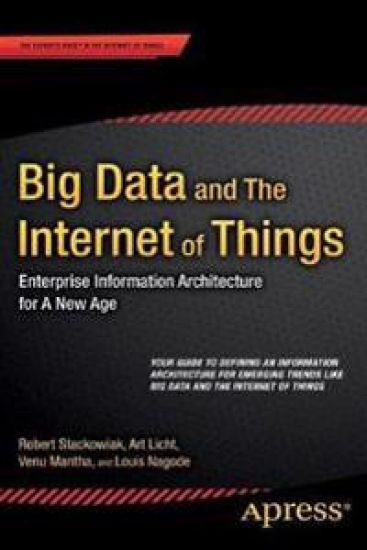
Big Data and The Internet of Things

Big Data and The Internet of Things

Robert Stackowiak; Art Licht; Venu Mantha; Louis Nagode

APress
2015
nidottu
Enterprise Information Architecture for a New Age: Big Data and The Internet of Things, provides guidance in designing an information architecture to accommodate increasingly large amounts of data, massively large amounts of data, not only from traditional sources, but also from novel sources such everyday objects that are fast becoming wired into global Internet. No business can afford to be caught out by missing the value to be mined from the increasingly large amounts of available data generated by everyday devices.The text provides background as to how analytical solutions and enterprise architecture methodologies and concepts have evolved (including the roles of data warehouses, business intelligence tools, predictive analytics, data discovery, Big Data, and the impact of the Internet of Things). Then you’re taken through a series of steps by which to define a future state architecture and create a plan for how to reach that future state. Enterprise Information Architecture for a New Age: Big Data and The Internet of Things helps you gain an understanding of the following:Implications of Big Data from a variety of new data sources (including data from sensors that are part of the Internet of Things) upon an information architectureHow establishing a vision for data usage by defining a roadmap that aligns IT with line-of-business needs is a key early stepThe importance and details of taking a step-by-step approach when dealing with shifting business challenges and changing technology capabilitiesHow to mitigate risk when evaluating existing infrastructure and designing and deploying new infrastructureEnterprise Information Architecture for a New Age: Big Data and The Internet of Things combines practical advice with technical considerations. Author Robert Stackowiak and his team are recognized worldwide for their expertise in large data solutions, including analytics. Don’t miss your chance to read this book and gain the benefit of their advice as you look forward in thinking through your own choices and designing your own architecture to accommodate the burgeoning explosion in data that can be analyzed and converted into valuable information to drive your business forward toward success.
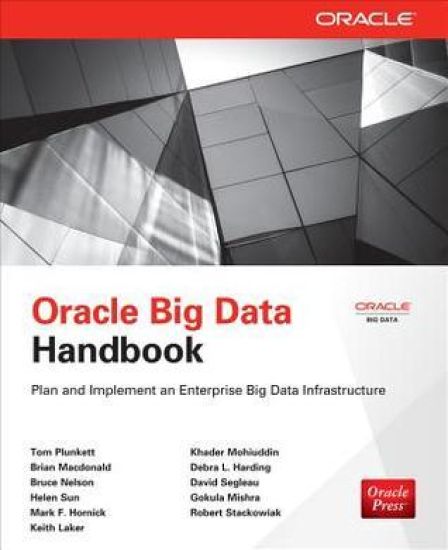
Oracle Big Data Handbook

Oracle Big Data Handbook

Tom Plunkett; Brian Macdonald; Bruce Nelson; Mark Hornick; Helen Sun; Khader Mohiuddin; Debra Harding; Gokula Mishra; Robert Stackowiak; Keith Laker; David Segleau

McGraw-Hill Professional
2013
nidottu
Publisher's Note: Products purchased from Third Party sellers are not guaranteed by the publisher for quality, authenticity, or access to any online entitlements included with the product.Transform Big Data into Insight"In this book, some of Oracle's best engineers and architects explain how you can make use of big data. They'll tell you how you can integrate your existing Oracle solutions with big data systems, using each where appropriate and moving data between them as needed." -- Doug Cutting, co-creator of Apache HadoopCowritten by members of Oracle's big data team, Oracle Big Data Handbook provides complete coverage of Oracle's comprehensive, integrated set of products for acquiring, organizing, analyzing, and leveraging unstructured data. The book discusses the strategies and technologies essential for a successful big data implementation, including Apache Hadoop, Oracle Big Data Appliance, Oracle Big Data Connectors, Oracle NoSQL Database, Oracle Endeca, Oracle Advanced Analytics, and Oracle's open source R offerings. Best practices formigrating from legacy systems and integrating existing data warehousing and analytics solutions into an enterprise big data infrastructure are also included inthis Oracle Press guide.Understand the value of a comprehensive big data strategyMaximize the distributed processing power of the Apache Hadoop platformDiscover the advantages of using Oracle Big Data Appliance as an engineered system for Hadoop andOracle NoSQL DatabaseConfigure, deploy, and monitor Hadoop and Oracle NoSQL Database using Oracle Big Data ApplianceIntegrate your existing data warehousing and analytics infrastructure into a big data architectureShare data among Hadoop and relational databases using Oracle Big Data ConnectorsUnderstand how Oracle NoSQL Database integrates into the Oracle Big Data architectureDeliver faster time to value using in-database analyticsAnalyze data with Oracle Advanced Analytics (Oracle R Enterprise and Oracle Data Mining), Oracle R Distribution, ROracle, and Oracle R Connector for HadoopAnalyze disparate data with Oracle Endeca Information DiscoveryPlan and implement a big data governance strategy and develop an architecture and roadmap
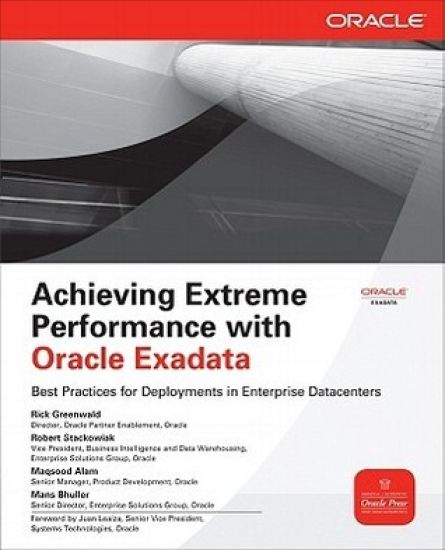
Achieving Extreme Performance with Oracle Exadata

Achieving Extreme Performance with Oracle Exadata

Rick Greenwald; Robert Stackowiak; Maqsood Alam; Mans Bhuller

McGraw-Hill Professional
2011
nidottu
Publisher's Note: Products purchased from Third Party sellers are not guaranteed by the publisher for quality, authenticity, or access to any online entitlements included with the product.Maximize Oracle Exadata CapabilitiesLeverage all of the powerful features available in the Oracle Exadata Database Machine using the proven techniques inside this Oracle Press guide. Written by Oracle experts, Achieving Extreme Performance with Oracle Exadata shows you how to take full advantage of this complete, optimized package of software, servers, and storage. Best practices for enterprise deployments, high availability, administration, backup and recovery, data warehousing, online transaction processing, consolidation, and migration are included in this authoritative resource.Take advantage of the tightly integrated hardware and software in the Oracle Exadata Database MachineWork with Oracle Exadata software features, including Smart Scans, Oracle Exadata Hybrid Columnar Compression, storage indexes, Oracle Exadata Smart Flash Cache, and I/O Resource ManagerUnderstand Oracle Exadata Database Machine balanced hardware architectureArchitect, administer, and monitor Oracle Exadata Storage ServersDeploy data warehouses on the Oracle Exadata Database MachineRun online transaction processing (OLTP) workloads on the Oracle Exadata Database MachineConsolidate databases with and migrate databases to the Oracle Exadata Database Machine