Kirjojen hintavertailu. Mukana 12 390 323 kirjaa ja 12 kauppaa.

Kirjailija

Robert Stawell Ball

Kirjat ja teokset yhdessä paikassa: 36 kirjaa, julkaisuja vuosilta 1889-2025, suosituimpien joukossa Great Astronomers. Vertaile teosten hintoja ja tarkista saatavuus suomalaisista kirjakaupoista.

36 kirjaa

Kirjojen julkaisuhaarukka 1889-2025.

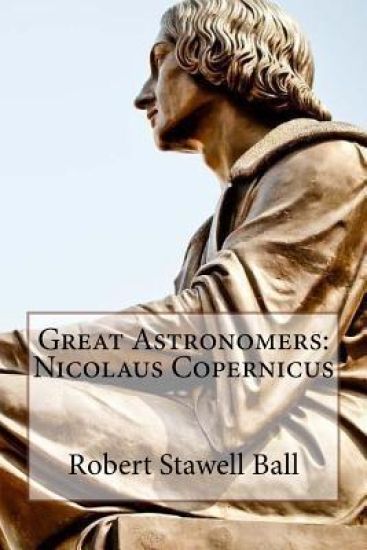
Great Astronomers: Nicolaus Copernicus Robert Stawell Ball

Great Astronomers: Nicolaus Copernicus Robert Stawell Ball

Robert Stawell Ball

Createspace Independent Publishing Platform
2017
nidottu
Nicolaus Copernicus (1473-1543) was a mathematician and astronomer who formulated a comprehensive heliocentric model which placed the Sun, rather than the Earth, at the center of the universe, contrary to the prevailing thought at his time which placed the Earth at the center. The publication of Copernicus' book, De revolutionibus orbium coelestium (On the Revolutions of the Celestial Spheres), just before his death in 1543, is considered a major event in the history of science.
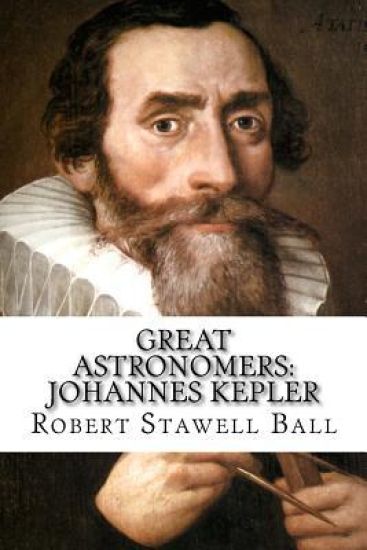
Great Astronomers: Johannes Kepler Robert Stawell Ball

Great Astronomers: Johannes Kepler Robert Stawell Ball

Robert Stawell Ball

Createspace Independent Publishing Platform
2017
nidottu
German astronomer Johannes Kepler (1571-1630) derived his mathematical laws of planetary motion from astronomical data meticulously collected by Tycho Brahe, who, as he was dying, beseeched young Kepler to use the data to discover the laws of motion of the planets. Based upon Kepler's laws, Sir Isaac Newton later developed his law of gravity. This is a chapter from Sir Robert Stawell Ball's Great Astronomers (2nd ed. 1907). Ball traces Kepler's life from birth in 1571 to death at age 59 in 1630. "Though Kepler had not those personal characteristics which have made his great predecessor, Tycho Brahe, such a romantic figure, yet a picturesque element in Kepler's character is not wanting. It was, however, of an intellectual kind. His imagination, as well as his reasoning faculties, always worked together. He was incessantly prompted by the most extraordinary speculations. The great majority of them were in a high degree wild and chimerical, but every now and then one of his fancies struck right to the heart of nature, and an immortal truth was brought to light."
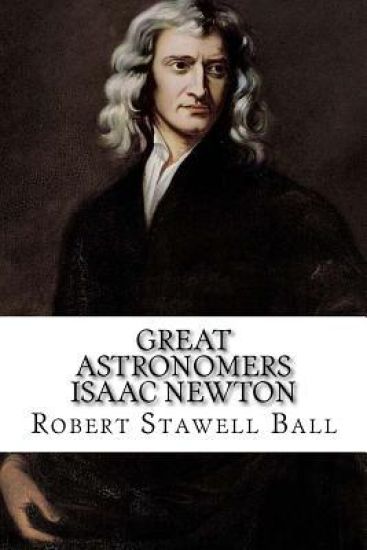
Great Astronomers Isaac Newton Robert Stawell Ball

Great Astronomers Isaac Newton Robert Stawell Ball

Robert Stawell Ball

Createspace Independent Publishing Platform
2016
nidottu
Sir Isaac Newton (1642-1726) was an English physicist, mathematician, astronomer, natural philosopher, alchemist and theologian who has been considered by many to be the greatest and most influential scientist who ever lived. His monograph Philosophi Naturalis Principia Mathematica, published in 1687, laid the foundations for most of classical mechanics. In this work, Newton described universal gravitation and the three laws of motion, which dominated the scientific view of the physical universe for the next three centuries. Newton showed that the motion of objects on Earth and that of celestial bodies is governed by the same set of natural laws: by demonstrating the consistency between Kepler's laws of planetary motion and his theory of gravitation he removed the last doubts about heliocentrism and advanced the scientific revolution. The Principia is generally considered to be one of the most important scientific books ever written, both due to the specific physical laws the work successfully described, and for its style, which assisted in setting standards for scientific publication down to the present time.This eBook is taken from a chapter in Sir Robert Stawell Ball's Great Astronomers (2nd edition, 1907).
Great Astronomers: Isaac Newton

Great Astronomers: Isaac Newton

Robert Stawell Ball

Createspace Independent Publishing Platform
2014
nidottu
Sir Isaac Newton (1642-1726) was an English physicist, mathematician, astronomer, natural philosopher, alchemist and theologian who has been considered by many to be the greatest and most influential scientist who ever lived. His monograph Philosophi Naturalis Principia Mathematica, published in 1687, laid the foundations for most of classical mechanics. In this work, Newton described universal gravitation and the three laws of motion, which dominated the scientific view of the physical universe for the next three centuries. Newton showed that the motion of objects on Earth and that of celestial bodies is governed by the same set of natural laws: by demonstrating the consistency between Kepler's laws of planetary motion and his theory of gravitation he removed the last doubts about heliocentrism and advanced the scientific revolution. The Principia is generally considered to be one of the most important scientific books ever written, both due to the specific physical laws the work successfully described, and for its style, which assisted in setting standards for scientific publication down to the present time.
A Popular Guide to the Heavens

A Popular Guide to the Heavens

Robert Stawell Ball

Cambridge University Press
2013
pokkari
A talented mathematician trained at Trinity College, Dublin, Sir Robert Stawell Ball (1840–1913) was best known in the early twentieth century for his immensely popular books on astronomy. He also gave the Royal Institution's Christmas Lectures on five occasions. First published in 1905, this concise guide to the basics of astronomy assumes almost no prior knowledge of the subject. Beginning with simple phenomena such as the seasons and the effects of atmospheric refraction, Ball expands quickly into month-by-month indexes of the night sky, star charts, and explanations of some of the lesser-known stellar and solar features, from the paths of sunspots to details of the major nebulae. Including over eighty pages of meticulous charts and illustrations, his book remains an excellent resource for students in the history of science, and interested laypeople. Also reissued in this series are The Story of the Heavens (1885) and Star-Land (1889), alongside Ball's more technical Treatise on Spherical Astronomy (1908).
A Treatise on Spherical Astronomy

A Treatise on Spherical Astronomy

Robert Stawell Ball

Cambridge University Press
2013
pokkari
Spherical or positional astronomy is used primarily to map objects on the celestial sphere. In this technical work, first published in 1908 and intended for advanced students, Sir Robert Stawell Ball (1840–1913) breaks down the field into distinct areas of study. Assuming a good level of geometry and trigonometry, he begins with fundamental formulae before moving into the determination of coordinates, atmospheric refraction, the theory of cartography, and more. Each section contains exercises derived from a variety of sources, including contemporary Cambridge examinations. The coverage ranges from the calculation of stellar parallax to the geometrical principles behind the Mercator projection. Testifying to the knowledge expected of university students in the early twentieth century, Ball's book remains instructive to their modern counterparts. More accessible to the general reader, The Story of the Heavens (1885), Star-Land (1889) and A Popular Guide to the Heavens (1905) are also reissued in this series.
Star-Land

Star-Land

Robert Stawell Ball

Cambridge University Press
2010
pokkari
Sir Robert Stawell Ball's Star-Land of 1889 is based on some of his Christmas Lectures at the Royal Institution during his time as royal astronomer of Ireland, a post he held from 1874 to 1892. These lectures were aimed at a young audience in order to introduce them to the subject, and fire their interest in the wonders of the universe. This volume includes lectures on the sun, the moon, the inner and giant planets, comets and shooting stars, and stars. It also contains a chapter on the observation and naming of stars. Ball was a renowned public lecturer, with commissions across Britain, Ireland and the United States, where his anecdotal and conversational style won him much popularity. The author of several frequently reprinted science books, he was knighted in 1886 and in 1892 became Lowendean professor of astronomy at Cambridge and the director of the university observatory.
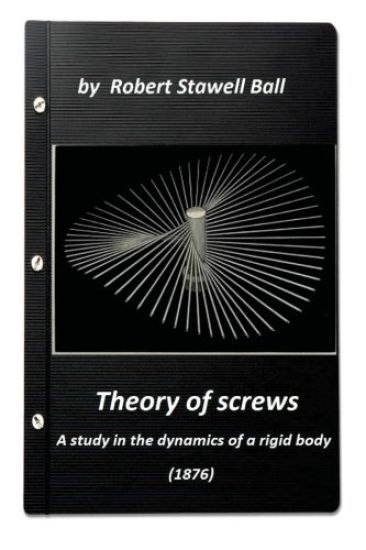
A Treatise on the Theory of Screws

A Treatise on the Theory of Screws

Robert Stawell Ball

Cambridge University Press
1998
pokkari
Originally published by Cambridge University Press in 1900, A Treatise on the Theory of Screws is the definitive reference on screw theory. It gives a very complete geometrical treatment of the problems of small movements in rigid dynamics. In recent years the theory of screws has emerged as a novel mathematical resource for addressing complex engineering problems, with important applications to robotics, multibody dynamics, mechanical design, computational kinematics, and hybrid automatic control. The author, Sir Robert Stawell Ball, was born in Dublin in 1840 and studied at Trinity College, Dublin. When the Royal College of Science was founded in Dublin in 1867, Ball became the first professor of applied mathematics and mechanism. In 1874 he was appointed Royal Astronomer of Ireland, and in 1892 he assumed the Lowndean Chair of Astronomy and Geometry and the Directorship of the University Observatory at Cambridge, where he remained until his death in 1913.