Kirjojen hintavertailu. Mukana 12 595 353 kirjaa ja 12 kauppaa.

Kirjailija

Robert T. Carter

Kirjat ja teokset yhdessä paikassa: 13 kirjaa, julkaisuja vuosilta 1998-2025, suosituimpien joukossa Black American’s Strengths-Based Cultural Practices. Vertaile teosten hintoja ja tarkista saatavuus suomalaisista kirjakaupoista.

13 kirjaa

Kirjojen julkaisuhaarukka 1998-2025.

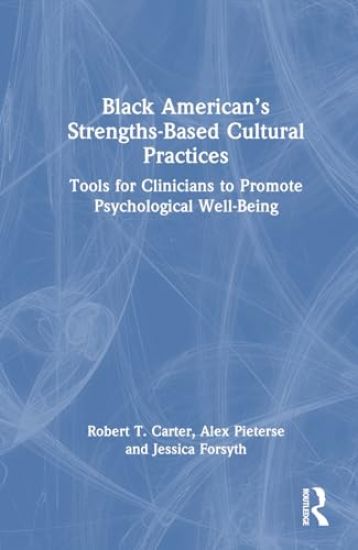
Black American’s Strengths-Based Cultural Practices

Black American’s Strengths-Based Cultural Practices

Robert T. Carter; Alex Pieterse; Jessica Forsyth

TAYLOR FRANCIS LTD
2025
sidottu
Black Americans' Strengths-Based Cultural Practices: Tools for Clinicians to Promote Psychological Well-Being uses historical, social, scientific, and psychological research to detail how mental health professionals can use the cultural practices of Black Americans and communities to promote positive psychosocial health.Building on experiences of racial oppression and cultural values, Dr’s. Carter, Pieterse, and Forsyth offer an evidence-based framework for recognizing and enhancing strengths-based cultural practices of Black American clients and families in mental health interventions. This volume will broaden the base of work on the mental health treatment of Black Americans and provide an approach to understanding the unique cultural influences of Black people as they relate to psychological health.The book is suitable for a wide range of professionals, including social workers, mental health practitioners, nurses, teachers and sociologists at various levels of education and training.

Black American’s Strengths-Based Cultural Practices

Black American’s Strengths-Based Cultural Practices

Robert T. Carter; Alex Pieterse; Jessica Forsyth

TAYLOR FRANCIS LTD
2025
nidottu
Black Americans' Strengths-Based Cultural Practices: Tools for Clinicians to Promote Psychological Well-Being uses historical, social, scientific, and psychological research to detail how mental health professionals can use the cultural practices of Black Americans and communities to promote positive psychosocial health.Building on experiences of racial oppression and cultural values, Dr’s. Carter, Pieterse, and Forsyth offer an evidence-based framework for recognizing and enhancing strengths-based cultural practices of Black American clients and families in mental health interventions. This volume will broaden the base of work on the mental health treatment of Black Americans and provide an approach to understanding the unique cultural influences of Black people as they relate to psychological health.The book is suitable for a wide range of professionals, including social workers, mental health practitioners, nurses, teachers and sociologists at various levels of education and training.
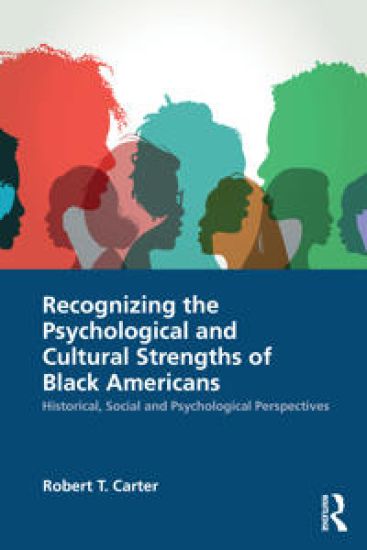
Recognizing the Psychological and Cultural Strengths of Black Americans
This book examines the cultural beliefs and practices of Black folks in relation to psychological strength.Divided into four parts, the book begins with a discussion on the history of African civilizations, including an analysis of faiths, architecture, and cultural diversity of the continent, followed by a meaningful dialogue on the history of slavery and plantations in North America. The later sections are a study on the contribution of the African American community towards America’s prosperity. The book explores cultural values as a source of power, and uses historical, social, and psychological research to construct a framework of Black cultural values and psychological resolve. The author offers practical applications and interventions to demonstrate how this framework can be applied to training and policy matters on both individual and systemic levels.Recognizing the Psychological and Cultural Strengths of Black Americans is essential reading for students and academics in the fields of Psychology, Sociology, Critical Race Theory, Political Science, and other related disciplines. It will also be a useful resource for professionals including policy makers, psychologist, counsellors, educators, and social workers.
Recognizing the Psychological and Cultural Strengths of Black Americans
This book examines the cultural beliefs and practices of Black folks in relation to psychological strength.Divided into four parts, the book begins with a discussion on the history of African civilizations, including an analysis of faiths, architecture, and cultural diversity of the continent, followed by a meaningful dialogue on the history of slavery and plantations in North America. The later sections are a study on the contribution of the African American community towards America’s prosperity. The book explores cultural values as a source of power, and uses historical, social, and psychological research to construct a framework of Black cultural values and psychological resolve. The author offers practical applications and interventions to demonstrate how this framework can be applied to training and policy matters on both individual and systemic levels.Recognizing the Psychological and Cultural Strengths of Black Americans is essential reading for students and academics in the fields of Psychology, Sociology, Critical Race Theory, Political Science, and other related disciplines. It will also be a useful resource for professionals including policy makers, psychologist, counsellors, educators, and social workers.
Measuring the Effects of Racism

Measuring the Effects of Racism

Robert T. Carter; Alex L. Pieterse

Columbia University Press
2020
pokkari
A large body of research has established a causal relationship between experiences of racial discrimination and adverse effects on mental and physical health. In Measuring the Effects of Racism, Robert T. Carter and Alex L. Pieterse offer a manual for mental health professionals on how to understand, assess, and treat the effects of racism as a psychological injury.Carter and Pieterse provide guidance on how to recognize the psychological effects of racism and racial discrimination. They propose an approach to understanding racism that connects particular experiences and incidents with a person’s individual psychological and emotional response. They detail how to evaluate the specific effects of race-based encounters that produce psychological distress and possibly impairment or trauma. Carter and Pieterse outline therapeutic interventions for use with individuals and groups who have experienced racial trauma, and they draw attention to the importance of racial awareness for practitioners. The book features a racial-trauma assessment toolkit, including a race-based traumatic-stress symptoms scale and interview schedule. Useful for both scholars and practitioners, including social workers, educators, and counselors, Measuring the Effects of Racism offers a new framework of race-based traumatic stress that helps legitimize psychological reactions to experiences of racism.
Measuring the Effects of Racism

Measuring the Effects of Racism

Robert T. Carter; Alex L. Pieterse

Columbia University Press
2020
sidottu
A large body of research has established a causal relationship between experiences of racial discrimination and adverse effects on mental and physical health. In Measuring the Effects of Racism, Robert T. Carter and Alex L. Pieterse offer a manual for mental health professionals on how to understand, assess, and treat the effects of racism as a psychological injury.Carter and Pieterse provide guidance on how to recognize the psychological effects of racism and racial discrimination. They propose an approach to understanding racism that connects particular experiences and incidents with a person’s individual psychological and emotional response. They detail how to evaluate the specific effects of race-based encounters that produce psychological distress and possibly impairment or trauma. Carter and Pieterse outline therapeutic interventions for use with individuals and groups who have experienced racial trauma, and they draw attention to the importance of racial awareness for practitioners. The book features a racial-trauma assessment toolkit, including a race-based traumatic-stress symptoms scale and interview schedule. Useful for both scholars and practitioners, including social workers, educators, and counselors, Measuring the Effects of Racism offers a new framework of race-based traumatic stress that helps legitimize psychological reactions to experiences of racism.
Confronting Racism

Confronting Racism

Robert T. Carter; Thomas D. Scheuermann

Routledge
2019
nidottu
This book proposes a comprehensive approach to confronting racism through a foundational framework as well as practical strategies to correct and reverse the course of the past and catalyze the stalled efforts of the present. It will do so by focusing on those specific aspects of law and legal theory that intersect with psychological research and practice. In Part I, the historical and current underpinnings of racial injustice and the obstacles to combating racism are introduced. Part II examines the documented psychological and emotional effects of racism, including race-based traumatic stress. In Part III, the authors analyze the application of forensic mental health assessment in addressing race-related experiences and present a legal and policy framework for reforming institutional and organizational policies. Finally, in part IV the authors advocate for a close, collaborative approach among legal and mental health professionals and their clients to seek redress for racial discrimination. Confronting Racism provides a framework for legal, mental health, and other related social science professionals and leaders to acknowledge and act on the harmful aspects of our societal systems.
Confronting Racism

Confronting Racism

Robert T. Carter; Thomas D. Scheuermann

Routledge
2019
sidottu
This book proposes a comprehensive approach to confronting racism through a foundational framework as well as practical strategies to correct and reverse the course of the past and catalyze the stalled efforts of the present. It will do so by focusing on those specific aspects of law and legal theory that intersect with psychological research and practice. In Part I, the historical and current underpinnings of racial injustice and the obstacles to combating racism are introduced. Part II examines the documented psychological and emotional effects of racism, including race-based traumatic stress. In Part III, the authors analyze the application of forensic mental health assessment in addressing race-related experiences and present a legal and policy framework for reforming institutional and organizational policies. Finally, in part IV the authors advocate for a close, collaborative approach among legal and mental health professionals and their clients to seek redress for racial discrimination. Confronting Racism provides a framework for legal, mental health, and other related social science professionals and leaders to acknowledge and act on the harmful aspects of our societal systems.
Understanding and Dealing With Violence

Understanding and Dealing With Violence

Barbara C Wallace; Robert T. Carter

SAGE Publications Inc
2003
nidottu
How are we to deal with personal and social violence? Given the global reality of daily homicide, rape, torture, and war, more individuals may be considering this question than ever before. Understanding and Dealing with Violence: A Multicultural Approach situates violence within a social, cultural, and historical context. Edited by distinguished scholars Barbara C. Wallace and Robert T. Carter, this unique volume explores historical factors, socialization influences, and the historical and contemporary dynamics between the oppressed and the oppressor. State-of-the-art research guides a diverse group of psychologists, educators, policy-makers, religious leaders, community members, victims, and perpetrators in finding viable solutions to violence. This timely guide examines many forms of violence including International violence from war and tortureSchool and urban violenceThe rape experience of womenViolence against gays, lesbians, and bisexualsHate crimes against Blacks, Latinos, and AsiansSystemic violence against people with disabilities Understanding and Dealing with Violence: A Multicultural Approach offers a comprehensive theory of violence as a psychology of oppression, liberation, and identity development. Readers will understand how invisible violence may precede visible violence, and how the oppressed are transformed into oppressors. Blending scholarly and personal perspectives on ethnic cleansing, physical and sexual assault, terrorism, and police brutality, an inclusive group of contributors fuel hope that humanity can break the cycle of violence. An indispensable resource for psychologists, educators, researchers, and mental health clinicians, Understanding and Dealing with Violence: A Multicultural Approach is also an ideal primer for undergraduate and graduate students in courses on violence, peace studies, and conflict resolution.
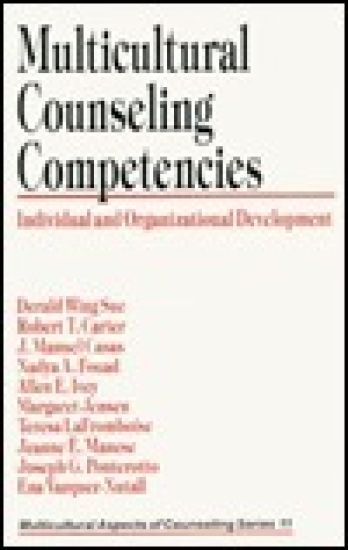
Multicultural Counseling Competencies

Multicultural Counseling Competencies

Derald Wing Sue; Robert T. Carter; J. Manuel Casas; Nadya A. Fouad; Allen E. Ivey; Margaret Jensen; Teresa LaFromboise; Jeanne E. Manese; Joseph G. Ponterotto; Ena Vazquez-Nuttall

SAGE Publications Inc
1998
nidottu
Multicultural Counseling Competencies is a state-of-the-art book integrating the literature and work on multicultural counseling competencies. It draws out implications for individual, professional, and institutional development by identifying the characteristics related to culturally competent mental health care. As such, it has relevance for practitioners who will increasingly encounter client populations who differ from them in terms of race, culture, and ethnicity; it suggests how the mental health profession needs to alter its practices to fit the needs of the culturally different in our society; and it advocates changes in mental health policy, programs, and organization. In a very systematic manner, the text provides a working definition of "multiculturalism" from which counselors, therapists, and social workers can ground their awareness, knowledge, and skills. It presents a new concept called "ethnocentric monoculturalism" and traces how it has inundated our society and the mental health professions. Written by leaders in the field of multicultural counseling, Multicultural Counseling Competencies is a landmark volume in clinical and counseling psychology, educational psychology, gender studies, nursing, social work, psychology, health services, interpersonal violence, and ethnic studies.
Multicultural Counseling Competencies

Multicultural Counseling Competencies

Derald Wing Sue; Robert T. Carter; J. Manuel Casas; Nadya A. Fouad; Allen E. Ivey; Margaret Jensen; Teresa LaFromboise; Jeanne E. Manese; Joseph G. Ponterotto; Ena Vazquez-Nuttall

SAGE Publications Inc
1998
sidottu
Multicultural Counseling Competencies is a state-of-the-art book integrating the literature and work on multicultural counseling competencies. It draws out implications for individual, professional, and institutional development by identifying the characteristics related to culturally competent mental health care. As such, it has relevance for practitioners who will increasingly encounter client populations who differ from them in terms of race, culture, and ethnicity; it suggests how the mental health profession needs to alter its practices to fit the needs of the culturally different in our society; and it advocates changes in mental health policy, programs, and organization. In a very systematic manner, the text provides a working definition of "multiculturalism" from which counselors, therapists, and social workers can ground their awareness, knowledge, and skills. It presents a new concept called "ethnocentric monoculturalism" and traces how it has inundated our society and the mental health professions. Written by leaders in the field of multicultural counseling, Multicultural Counseling Competencies is a landmark volume in clinical and counseling psychology, educational psychology, gender studies, nursing, social work, psychology, health services, interpersonal violence, and ethnic studies.
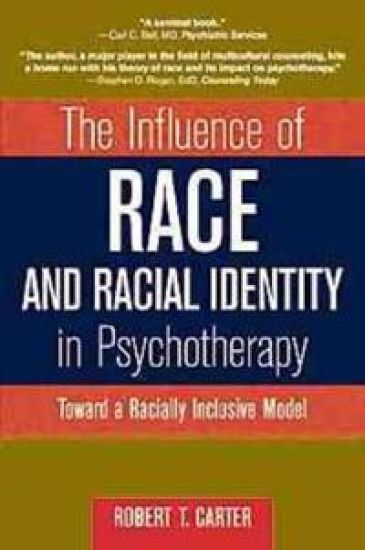
The Influence of Race and Racial Identity in Psychotherapy
A revolutionary theory, a clinical watershed, a masterful text The Influence of Race and Racial Identity in Psychotherapy, Robert T. Carter changes the course of a century of psychological theory, practice, and education. He debunks the traditional belief that race has a marginal impact on personality development and, with compelling empirical evidence, demonstrates that race is the defining factor above other experiences of living in the United States and a crucial ingredient in the therapeutic process. Carter presents models of racial identity for all racial groups and offers numerous case studies of various psychosocial resolutions within racial groups. He constructs the first racially inclusive model of psychotherapy—a rigorous conceptual framework that affords clinicians a deeper awareness of how racial issues affect their dealings with patients—and creates a means of integrating that knowledge into their practices. The Influence of Race and Racial Identity in Psychotherapy: *Defines the decisive role of racial identity in personality development *Presents a racially inclusive model of psychotherapy *Describes how this model is applied in a clinical context *Proposes new counselor training programs based on this model. This immensely valuable text helps students in multicultural counseling and psychotherapy develop an awareness of their own levels of racial identity as well as those of their patients. For practicing therapists, it opens new vistas in the therapeutic process and provides new avenues through which to better understand and serve their patients.