Kirjojen hintavertailu. Mukana 12 595 353 kirjaa ja 12 kauppaa.
Kirjailija
Robert W. Button
Kirjat ja teokset yhdessä paikassa: 13 kirjaa, julkaisuja vuosilta 2002-2020, suosituimpien joukossa Domestic Trends in the United States, China, and Iran. Vertaile teosten hintoja ja tarkista saatavuus suomalaisista kirjakaupoista.
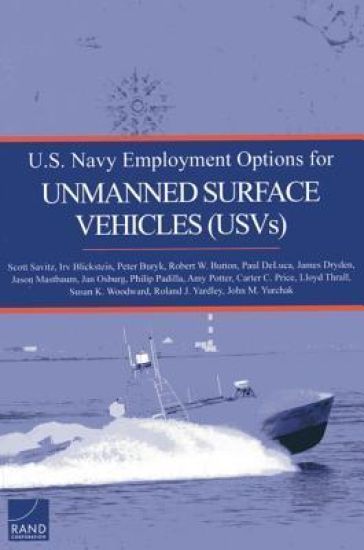
Scott Savitz; Irv Blickstein; Peter Buryk; Robert W. Button; Paul DeLuca; James Dryden; Jason Mastbaum; Jan Osburg; Philip Padilla; Amy Potter; Carter C. Price; Lloyd Thrall; Susan K. Woodward; Roland J. Yardley; John M. Yurchak
This report assesses in what ways and to what degree unmanned surface vehicles (USVs) are suitable for supporting U.S. Navy missions and functions. It briefly characterizes the current and emerging USV marketplaces to provide a baseline for near-term capabilities, describes USV concepts of employment to support diverse U.S. Navy missions and functions, and evaluates these concepts of employment to identify specific missions and functions for which they are highly suitable.
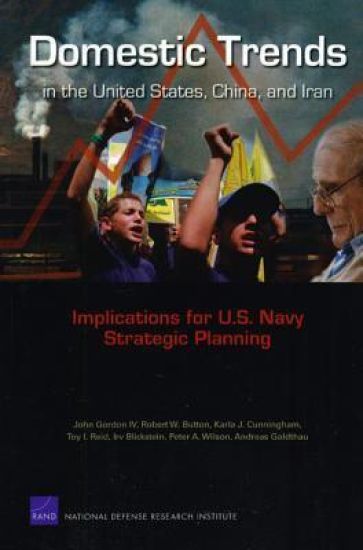
The U.S. Navy faces uncertainty about the degree to which it will have to prepare for a high-end future conflict versus the so-called Long War. To help the Navy understand how critical near-, mid-, and far-term trends in the United States, China, and Iran might influence U.S. security decisions in general and the Navy's investments in particular, RAND examined emerging domestic and regional nonmilitary trends in each of the three countries.
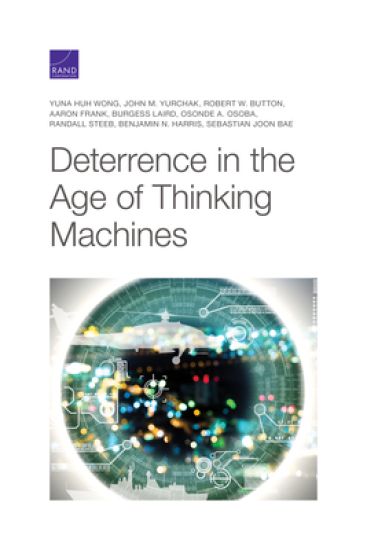
What happens to deterrence and escalation when decisions can be made at machine speeds and when states can put fewer human lives at risk? What are potential areas for miscalculation and unintended consequences, and unwanted escalation in particular? This exploratory report provides an initial examination of how artificial intelligence and autonomous systems could affect deterrence and escalation in conventional crises and conflicts.
Defense planning faces significant uncertainties. This report applies robust decision making (RDM) to the air-delivered munitions mix challenge. RDM is quantitative, decision support methodology designed to inform decisions under conditions of deep uncertainty and complexity. This proof-of-concept demonstration suggests that RDM could help defense planners make plans more robust to a wide range of hard-to-predict futures.
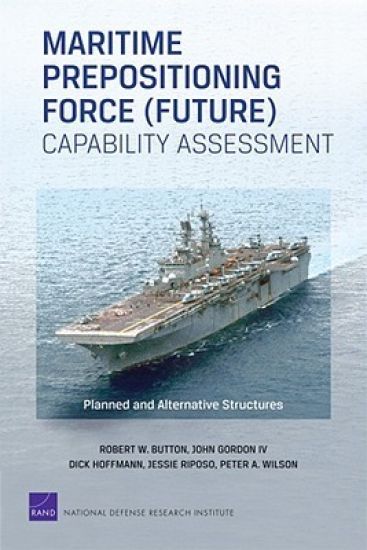
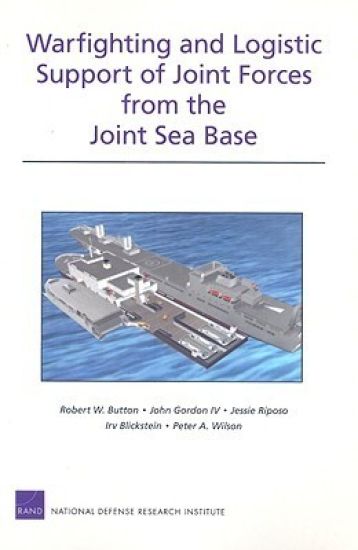
Navy and Marine Corps Sea Basing concepts envision the rapid deployment, assembly, command, projection, reconstitution, and re-employment of expeditionary forces from the sea. RAND researchers assessed alternative structures for the proposed Maritime Prepositioning Force (Future), or MPF(F), squadron and their effects on operational support. For example, eliminating large-deck ships could be offset by substituting CH-53K helicopters for MV-22s.
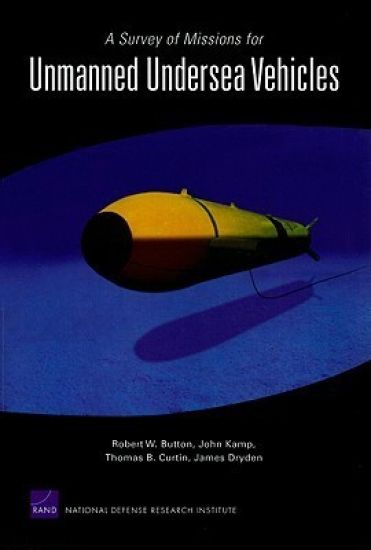
RAND identifies seven military missions for unmanned undersea vehicles (UUVs)--mine countermeasures, deployment of leave-behind surveillance sensors or sensor arrays, near-land and harbor monitoring, oceanography, monitoring undersea infrastructure, anti-submarine warfare tracking, and inspection/identification--that appear most promising to pursue in terms of military need, operational and technical risks, non-UUV alternatives, and cost.
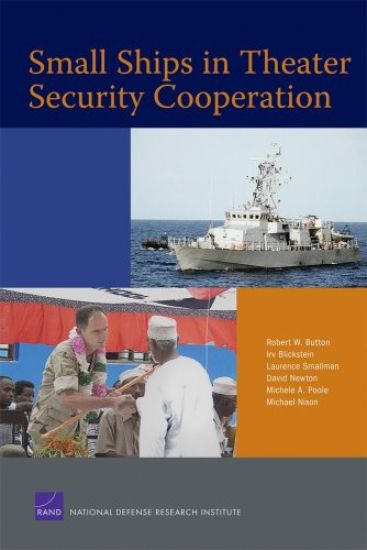
The authors evaluate the use of small ships in theater security cooperation (TSC). They provide the U.S. Navy with a concept of operation for small ships in TSC, necessary small ship characteristics, a survey of suitable ships, and recommendations for increasing the effectiveness of TSC operations conducted with a small vessel. The report concludes that, with a mothership, the PC-1 Cyclone Class would be fully capable for use in TSC.The authors evaluate roles for small ships in theater security cooperation, present a concept of operations for employing such ships, describe necessary ship and crew characteristics, and survey classes of suitable vessels.
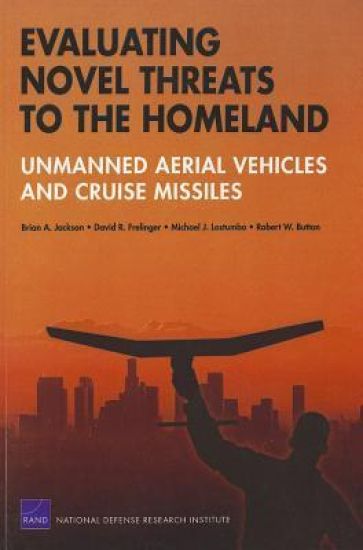
Develops approaches for assessing asymmetric attacks using cruise missiles or unmanned aerial vehicles, a novel potential threat to homeland targets, in the context of other options available to terrorist actors and for identifying the factors that might make these technologies attractive to adversaries. These approaches provide the basis for exploring defensive options.
Sea Basing, a concept fundamental to the U.S. Navy's operational vision for the 21st century, is intended to use the flexibility and protection provided by the sea base while minimizing the presence of forces ashore. This study analyzed the feasibility of simultaneously sustaining Marine Corps and Army elements ashore from a sea base or of moving an Army element in a reasonable period while sustaining a Marine Corps ground element already ashore.
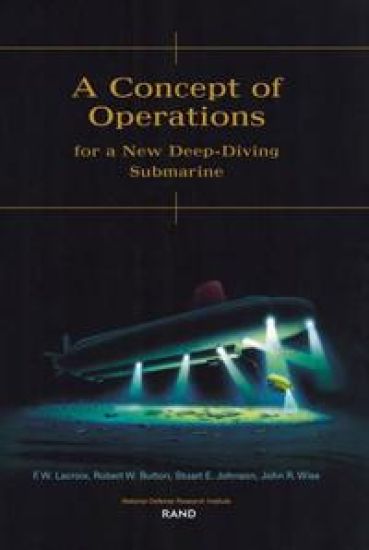
The authors worked with panels of qualified scientists, defense experts, and naval officers to develop a concept of operation for a possible replacement platform, analyzing which military and scientific missions should have the highest priorities for their deep-diving research submarines.