

Kirjailija
Robert W Jones
Kirjat ja teokset yhdessä paikassa: 7 kirjaa, julkaisuja vuosilta 1998-2024, suosituimpien joukossa Bloodied Banners: Martial Display on the Medieval Battlefield. Vertaile teosten hintoja ja tarkista saatavuus suomalaisista kirjakaupoista.
Mukana myös kirjoitusasut: Robert W. Jones
7 kirjaa
Kirjojen julkaisuhaarukka 1998-2024.
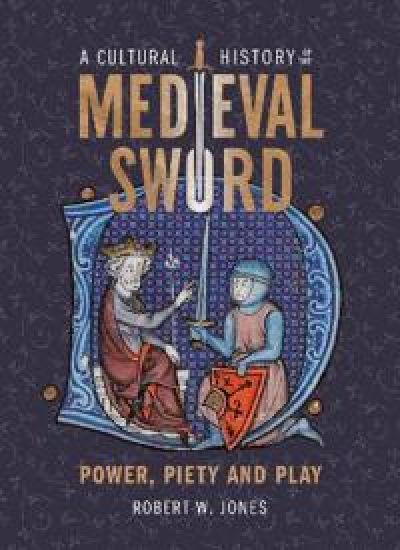
The sword is an important and multi-faceted symbol of military power, royal and communal authority, religion and mysticism. This study takes the sword beyond its functional role as a tool for killing, considering it as a cultural artefact, and the broader meaning and significance it had to its bearer. It should be on the bookshelf of anybody who claims to be interested in the importance of the sword in medieval life and thought and their cultural significance in the past - and present. Robert Woosnam-Savage, Royal Armouries. We see the sword as an object of nobility and status, a mystical artefact, imbued with power and symbolism. It is Roland's Durendal, Arthur's Excalibur, Aragorn's Narsil. A thing of beauty, its blade flashes in the sun, and its hilt gleams with opulent decoration. Yet this beauty belies a bloody function, for it is also a weapon that appears crude and brutal, requiring great strength to wield: cleaving armour, flesh, and bone. This wide-ranging book uncovers the breadth of the sword's place within the culture of high medieval Europe. Encompassing swords both real and imagined, physical, and in art and literature, it shows them as a powerful symbol of authority and legitimacy. It looks at the practicalities of the sword, including its production, as well as challenging our preconceptions about when and where it was used. In doing so, it reveals a far less familiar culture of swordsmanship, beyond the elite, in which swordplay was an entertainment, taught in the fencing school by masters such as Lichtenauer, Talhoffer, and Fiore, and codified in fencing manuals, or fechtbücher. The book also considers how our modern attempts to reconstruct medieval swordsmanship on screen, and in re-enactment and Historical European Martial Arts (or HEMA), shape, and have been shaped by, our preconceptions of the sword. As a whole, the weapon is shown to be at once far more mundane, and yet just as special, as we imagine it.

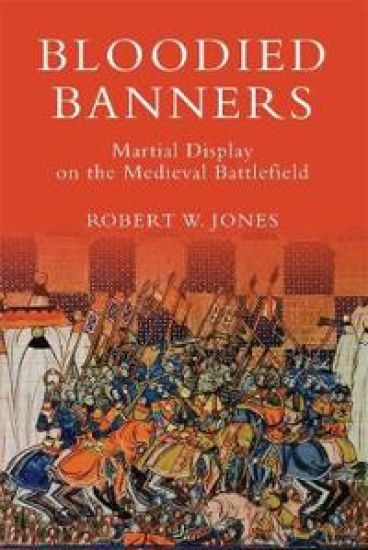
Bloodied Banners: Martial Display on the Medieval Battlefield
Robert W Jones
The Boydell Press
2015
pokkari
Groundbreaking reassessment of the role played by armour, weapons and heraldry in medieval warfare, showing their cultural as well as military significance. A penetrating investigation of medieval martial display... The reader is struck by its originality, and by its sophisticated and critical interpretative engagement with historical and literary sources. Particularly notable is theauthor's subtle exploration of the function of armour: not only its practical role, but as a form of display... A refreshingly different approach to the world of the medieval combatant and his place within that `host of many colours' that was a medieval army, it adds a new dimension to our understanding of medieval warfare. ANDREW AYTON, University of Hull The medieval battlefield was a place of spectacle and splendour. The fully-armed knight,bedecked in his vivid heraldic colours, riding out beneath his brightly-painted banner, is a stock image of war and the warrior in the middle ages. Yet too often the significance of such display has been ignored or dismissed as the empty preening of a militaristic social elite. Drawing on a broad range of source material and using innovative historical approaches, this book completely re-evaluates the way that such men and their weapons were viewed,showing that martial display was a vital part of the way in which war was waged in the middle ages. It maintains that heraldry and livery served not only to advertise a warrior's family and social ties, but also announced his presence on the battlefield and right to wage war. It also considers the physiological and psychological effect of wearing armour, both on the wearer and those facing him in combat, arguing that the need for display in battle was deeper than any medieval cultural construct and was based in the fundamental biological drives of threat and warning. Dr ROBERT W. JONES teaches Medieval History at Advanced Studies in England, a branch campus of Franklinand Marshall College, in Bath. He was formerly a Visiting Research Fellow at the University of Leeds, and an Associate Lecturer at Cardiff University.
Bloodied Banners: Martial Display on the Medieval Battlefield
Robert W Jones
The Boydell Press
2010
sidottu
Groundbreaking reassessment of the role played by armour, weapons and heraldry in medieval warfare, showing their cultural as well as military significance. `A penetrating investigation of medieval martial display... The reader is struck by its originality, and by its sophisticated and critical interpretative engagement with historical and literary sources. Particularly notable is the author's subtle exploration of the function of armour: not only its practical role, but as a form of display... A refreshingly different approach to the world of the medieval combatant and his place within that "host of many colours" that was a medieval army, it adds a new dimension to our understanding of medieval warfare.' Dr ANDREW AYTON, Senior Lecturer in History, University of Hull The medieval battlefield was a place of spectacle and splendour. The fully-armed knight, bedecked in his vivid heraldic colours, mounted on his great charger, riding out beneath his brightly-painted banner, is a stock image of war and the warrior in the middle ages. Yet too often the significance of such display has been ignored or dismissed as the empty preening of a militaristic social elite. Drawing on a broad range of source material and using innovative historical approaches, this book completely re-evaluates the way that such men and their weapons were viewed, showing that martial display was a vital part of the way in which war was waged in the middle ages. It maintains that heraldry and livery served not only to advertise a warrior's family and social ties, but also announced his presence on the battlefield and right to wage war. It also considers the physiological and psychological effect of wearing armour, both on the wearer and those facing him in combat, arguing that the need for display in battle was deeper than any medieval cultural construct and was based in the fundamental biological drives of threat and warning. ROBERT W. JONES gained his PhD from Cardiff University.
Gender and the Formation of Taste in Eighteenth-Century Britain
Robert W. Jones
Cambridge University Press
2009
pokkari
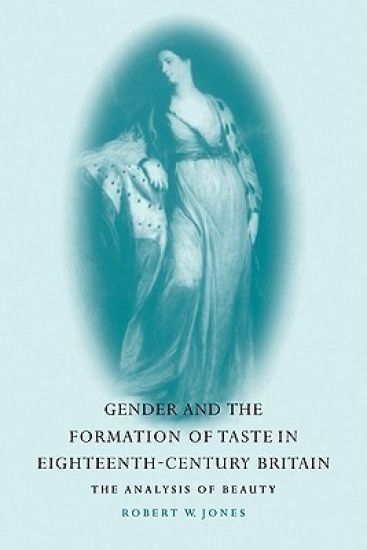
Beauty is one of the most important and intriguing ideas in eighteenth-century culture. In Gender and the Formation of Taste in Eighteenth-Century Britain Robert Jones provides a fresh understanding of how emergent critical discourses negotiated with earlier accounts of taste and beauty in order to redefine culture in line with the polite virtues of the urban middle classes. Crucially, the ability to form opinions on questions of beauty, and the capacity to enter into debates on its nature, was thought to characterise those able to participate in cultural discourse. Furthermore, the term 'beauty' was frequently invoked, in various and contradictory ways, to determine acceptable behaviour for women. In his book, Jones discusses a wide range of material, including philosophical texts by William Hogarth and Edmund Burke and Joshua Reynolds, novels by Charlotte Lennox and Sarah Scott, and the many representations of the celebrated beauty Elizabeth Gunning.

Gender and the Formation of Taste in Eighteenth-Century Britain
Robert W. Jones
Cambridge University Press
1998
sidottu
Beauty is one of the most important and intriguing ideas in eighteenth-century culture. In Gender and the Formation of Taste in Eighteenth-Century Britain Robert Jones provides a fresh understanding of how emergent critical discourses negotiated with earlier accounts of taste and beauty in order to redefine culture in line with the polite virtues of the urban middle classes. Crucially, the ability to form opinions on questions of beauty, and the capacity to enter into debates on its nature, was thought to characterise those able to participate in cultural discourse. Furthermore, the term 'beauty' was frequently invoked, in various and contradictory ways, to determine acceptable behaviour for women. In his book, Jones discusses a wide range of material, including philosophical texts by William Hogarth and Edmund Burke and Joshua Reynolds, novels by Charlotte Lennox and Sarah Scott, and the many representations of the celebrated beauty Elizabeth Gunning.