
Kirjailija
Robert Wexelblatt
Kirjat ja teokset yhdessä paikassa: 14 kirjaa, julkaisuja vuosilta 2010-2026, suosituimpien joukossa Writ In Water. Vertaile teosten hintoja ja tarkista saatavuus suomalaisista kirjakaupoista.
14 kirjaa
Kirjojen julkaisuhaarukka 2010-2026.


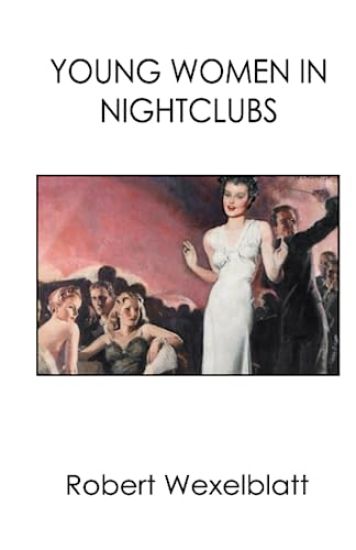
The author effectively conveys the strict segregation prevalent during that time, highlighting the disparity between white patrons and non-white talent. While acknowledging the limitations and inequalities of the era, the passage also emphasizes the sense of democracy that existed within the confines of these clubs, where individuals from different backgrounds and professions mingled and interacted. The portrayal of the female staff, from photographers capturing memories to waitresses serving drinks and taking coats, provides a glimpse into the diverse roles and aspirations of women during that period. The passage delves into the aspirations, conversations, and challenges faced by these young women, who relied on their looks and tips to make a living. The narrative then introduces the character of Meredith Turner, offering a personal story of adversity and resilience. The contrast between her privileged upbringing and the sudden downfall of her family adds a layer of depth and sets the stage for her journey into the world of nightclubs.

"So why did you put the tomato paste in this cabinet and the tomato sauce in that one? I've told you about that a hundred times. . . . Just look in this dishwasher. You shoved my good glasses up against each other again. This one's cracked. Oh, Jesus, the knives. The knives go point up or they block the tray and scratch the door. For God's sake."
The chief interest of these poems is the employment of imagery with extraordinary effectiveness. Particularly impressive is attractive diction and admirable phrasing. The style of these poems exhibits crispness and energy devoid of any obscurity. These poems reveal a passionate concreteness of imagery and a rich allusiveness. All the poetic qualities that touch the human heart are here. Liveliness is the most characteristic quality of these poems that show intense emotion and vivid imagination.
Praises of Robert Wexelblatt's writing: ". . . loaded with wit, bristling with irony, draped in erudition and studded with metaphysics." - Zofia Smardz, review of The Decline of Our Neighborhood, New York Times Book Review"Wexelblatt first collection of short fiction must be admired for its academic brilliance and sophisticated wit..." - Review of Life in the Temperate Zone, Publishers Weekly"Wexelblatt's book is laden with wit, with wry observations, gentle sarcasm, and wicked ironies. It always has just enough laughter to keep its characters (and the reader) from spinning off into the abysses." - Fred Marchant, review of Life in the Temperate Zone in Harvard Book Review"A writer of great wit and superb imagination, Wexelblatt's worlds are welcoming and all-encompassing." - Review of The Decline of Our Neighborhood in BooklistRobert Wexelblatt is professor of humanities at Boston University's College of General Studies. He has published six fiction collections, Life in the Temperate Zone, The Decline of Our Neighborhood, The Artist Wears Rough Clothing, Heiberg's Twitch, Intuition of the News, and Petites Suites; two books of essays, Professors at Play and The Posthumous Papers of Sidney Fein; two short novels, Losses and The Derangement of Jules Torquemal; essays, stories, and poems in a variety of scholarly and literary journals, and the novel Zublinka Among Women, awarded the Indie Book Awards first prize for fiction. Hsi-wei Tales, a collection of Chinese stories, and book of verse, Fifty Poems, are forthcoming.

The imaginary author/teacher/father Sidney Fein (1942-1984) was born in Philadelphia, Pennsylvania. His family's fortune came from the business of clothing women of modest means. He attended elementary school in Philadelphia. When he was twelve, his family moved to New York City. He earned a bachelors' degree from Columbia University, where he concentrated in the study of languages and literature. He went on to study at the University of Pennsylvania, from which he received a doctorate in philosophy in 1964. Fein was married in 1966. His daughter, Maya Nunfi Fein, was born in 1967. He and his wife separated in 1973 and divorced shortly thereafter. Fein raised Maya on his own. Thanks to an inheritance, he had independent means which allowed him to write and also to accept occasional teaching appointments.Fein published three books: Diptych on Terrestrial Representation (1973), Want, Desire, and Need (1977), and Aristocratic Democracy (1983). In addition to his books, Fein produced a quantity of verse and fiction, much of it unpublished and some published under pseudonyms. Pseudonymity is just one of the themes of the collection but its scope is wide and unpredictable. Among the thirty-five pieces are a keynote address, short stories, poems, essays on a variety of philosophical and literary subjects, including the work of other imaginary authors. Each piece is accompanied by remarks from the scholar who, at the behest of his daughter, has edited the papers left behind by Fein on his death at the age of forty-two. The book includes a preface from the actual author and a postscript that includes a retrospective essay on Fein's work by an imaginary critic along with notes for the new book Fein was just beginning when he died.

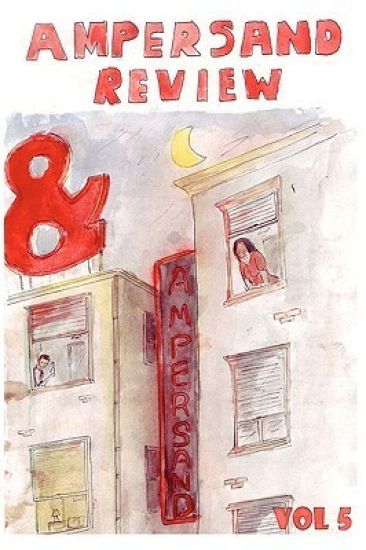
Ampersand Review
Caroline Picard; Emma Ramey; Robert Wexelblatt
Createspace Independent Publishing Platform
2010
nidottu