Kirjojen hintavertailu. Mukana 12 289 986 kirjaa ja 12 kauppaa.

Kirjailija

Robert Wiesenberger

Kirjat ja teokset yhdessä paikassa: 4 kirjaa, julkaisuja vuosilta 2017-2023, suosituimpien joukossa Lin May Saeed. Vertaile teosten hintoja ja tarkista saatavuus suomalaisista kirjakaupoista.

4 kirjaa

Kirjojen julkaisuhaarukka 2017-2023.

Lin May Saeed

Lin May Saeed

Robert Wiesenberger

Yale University Press
2020
pokkari
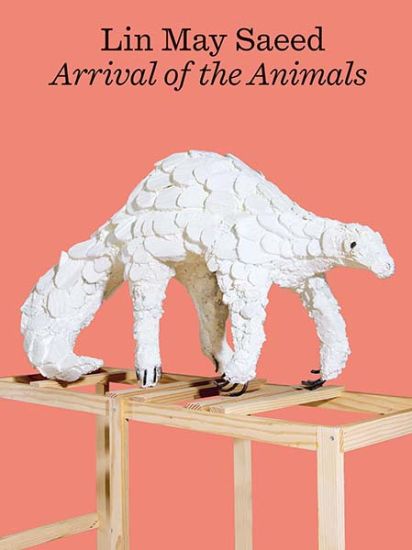
A contemporary artist explores relationships among humans and animals, real and mythical German artist Lin May Saeed (b. 1973) grapples with the complex entanglements of humans and animals. Her work centers on the nonhuman animal and revisits, revises, or outright invents stories of animal subjugation, liberation, and harmonious cohabitation with humans, combining historical, mythical, and theological narratives with materials such as paper, steel, and Styrofoam. This last material—easy to acquire and work, yet environmentally destructive—receives particularly sustained attention. Empathy, humor, and lightness of touch combine with a radical reimagining of everyday life and a sense of how animality is intertwined with otherness. The catalogue surveys Saeed’s work and thinking, positioning them within a broader discourse on animals and animality in art and culture. Its title suggests the appearance of animals in humans’ modern moral consciousness, simultaneous with their departure in the current era of mass extinction; and its design places special emphasis on typography and lush close-up photography.Distributed for the Clark Art InstituteExhibition Schedule:Clark Art Institute, Williamstown, MA (July 21–October 25, 2020)
Muriel Cooper

Muriel Cooper

David Reinfurt; Robert Wiesenberger; Nicholas Negroponte; Lisa Strausfeld

MIT Press
2017
sidottu
The career of the pioneering designer Muriel Cooper, whose work spanned media from printed book to software interface; generously illustrated in color.Muriel Cooper (1925-1994) was the pioneering designer who created the iconic MIT Press colophon (or logo)-seven bars that represent the lowercase letters "mitp" as abstracted books on a shelf. She designed a modernist monument, the encyclopedic volume The Bauhaus (1969), and the graphically dazzling and controversial first edition of Learning from Las Vegas (1972). She used an offset press as an artistic tool, worked with a large-format Polaroid camera, and had an early vision of e-books. Cooper was the first design director of the MIT Press, the cofounder of the Visible Language Workshop at MIT, and the first woman to be granted tenure at MIT's Media Lab, where she developed software interfaces and taught a new generation of designers. She began her four-decade career at MIT by designing vibrant printed flyers for the Office of Publications; her final projects were digital. This lavishly illustrated volume documents Cooper's career in abundant detail, with prints, sketches, book covers, posters, mechanicals, student projects, and photographs, from her work in design, teaching, and research at MIT.A humanist among scientists, Cooper embraced dynamism, simultaneity, transparency, and expressiveness across all the media she worked in. More than two decades after her career came to a premature end, Muriel Cooper's legacy is still unfolding. This beautiful slip-cased volume, designed by Yasuyo Iguchi, looks back at a body of work that is as contemporary now as it was when Cooper was experimenting with IBM Selectric typewriters. She designed design's future.
Portals

Portals

Robert Wiesenberger; Raphael Koenig

YALE UNIVERSITY PRESS
2023
pokkari
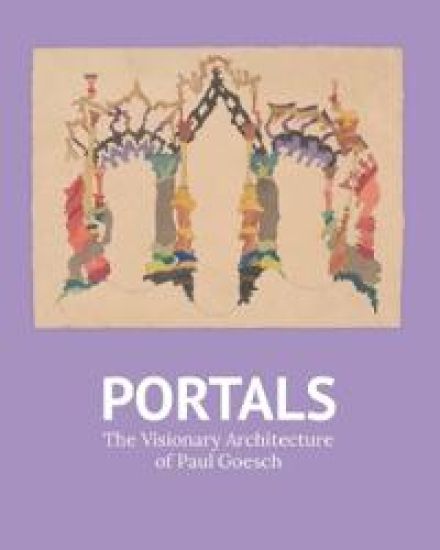
The first monographic publication in English on German Expressionist artist and architect Paul Goesch, who long struggled with—and was persecuted and ultimately murdered for—his schizophrenia Paul Goesch (1885–1940) produced one of the most inventive, peculiar, and poignant bodies of work to emerge from Weimar Germany. An artist and architect, he made both fanciful figurative drawings and visionary architectural designs. The latter, from the extensive holdings of the Centre for Canadian Architecture in Montreal, are the focus of this publication, the first in English dedicated to Goesch. Amid the aftermath of First World War, a generation of young architects sketched their visions for utopia. Goesch stands out among them for his formal range, his kaleidoscopic color sense, and his playful and pluralistic embrace of architectural history, as well as for his long struggles with schizophrenia, a condition for which he was institutionalized and ultimately murdered by the Nazis. This publication highlights the decorative portals and archways that predominate in Goesch’s work. These represent the artist’s metaphysical passages, as a spiritualist steeped in diverse religious and esoteric beliefs, and his altered psychological states. They also suggest Goesch’s liminal status between art and architecture, “sanity” and “madness,” the trained insider and the institutionalized “outsider.” Celebrated in his time and since forgotten, Goesch is presented here in the context of period discussions on art, architecture, and mental health. Distributed for the Clark Art institute Exhibition Schedule:Clark Art Institute, Williamstown, MA (March 18–June 11, 2023)
Transitional Moments

Transitional Moments

Robert Wiesenberger

August Editions
2019
sidottu
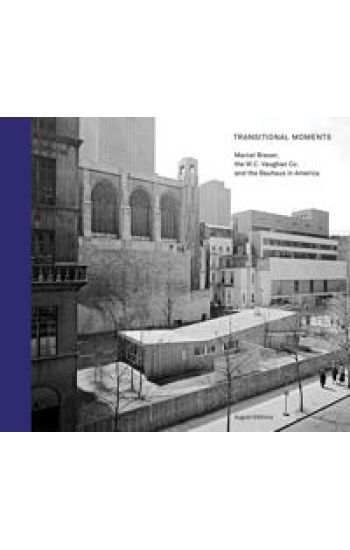
Architect Marcel Breuer’s House in the Museum Garden, now considered one of the most influential architecture exhibitions of the 20th century, was commissioned by the Museum of Modern Art and built in their garden in 1949. Exhibited to record attendance, the house featured the updated Bauhaus prescriptions for modern living—an airy, informal combination living room/dining room and a pass-through kitchen—and was intended to inspire the future of American housing. The project featured custom hardware produced by W.C. Vaughan in collaboration with Breuer, which included everything from mahogany door knobs to cabinet hinges. Vaughan also supplied hardware for Breuer’s iconic Frank House, the Geller House, Breuer’s own houses in Massachusetts and Connecticut plus houses by Walter Gropius, Philip Johnson and other modernist masters. An essay by historian Robert Wiesenberger, historical black-and-white and color photographs by Ezra Stoller plus shop drawings by Vaughan of the hardware complete this deeply engaging and important architectural publication.