Kirjojen hintavertailu. Mukana 12 390 323 kirjaa ja 12 kauppaa.

Kirjailija

Robert Zwijnenberg

Kirjat ja teokset yhdessä paikassa: 4 kirjaa, julkaisuja vuosilta 2003-2024, suosituimpien joukossa Contemporary Culture. Vertaile teosten hintoja ja tarkista saatavuus suomalaisista kirjakaupoista.

4 kirjaa

Kirjojen julkaisuhaarukka 2003-2024.

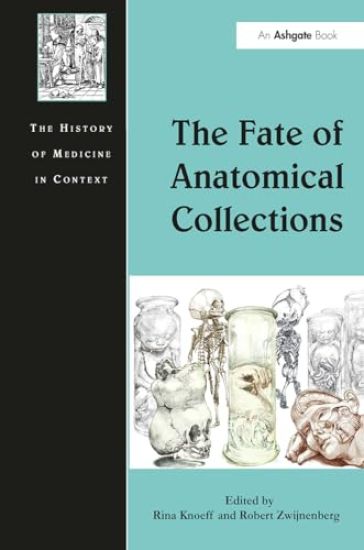
The Fate of Anatomical Collections

The Fate of Anatomical Collections

Rina Knoeff; Robert Zwijnenberg

TAYLOR FRANCIS LTD
2024
nidottu
Almost every medical faculty possesses anatomical and/or pathological collections: human and animal preparations, wax- and other models, as well as drawings, photographs, documents and archives relating to them. In many institutions these collections are well-preserved, but in others they are poorly maintained and rendered inaccessible to medical and other audiences. This volume explores the changing status of anatomical collections from the early modern period to date. It is argued that anatomical and pathological collections are medically relevant not only for future generations of medical faculty and future research, but they are also important in the history of medicine, the history of the institutions to which they belong, and to the wider understanding of the cultural history of the body. Moreover, anatomical collections are crucial to new scholarly inter-disciplinary studies that investigate the interaction between arts and sciences, especially medicine, and offer a venue for the study of interactions between anatomists, scientists, anatomical artists and other groups, as well as the display and presentation of natural history and medical cabinets. In considering the fate of anatomical collections - and the importance of the keeper’s decisions with respect to collections - this volume will make an important methodological contribution to the study of collections and to discussions on how to preserve universities’ academic heritage.
The Fate of Anatomical Collections

The Fate of Anatomical Collections

Rina Knoeff; Robert Zwijnenberg

Ashgate Publishing Limited
2015
sidottu
Almost every medical faculty possesses anatomical and/or pathological collections: human and animal preparations, wax- and other models, as well as drawings, photographs, documents and archives relating to them. In many institutions these collections are well-preserved, but in others they are poorly maintained and rendered inaccessible to medical and other audiences. This volume explores the changing status of anatomical collections from the early modern period to date. It is argued that anatomical and pathological collections are medically relevant not only for future generations of medical faculty and future research, but they are also important in the history of medicine, the history of the institutions to which they belong, and to the wider understanding of the cultural history of the body. Moreover, anatomical collections are crucial to new scholarly inter-disciplinary studies that investigate the interaction between arts and sciences, especially medicine, and offer a venue for the study of interactions between anatomists, scientists, anatomical artists and other groups, as well as the display and presentation of natural history and medical cabinets. In considering the fate of anatomical collections - and the importance of the keeper’s decisions with respect to collections - this volume will make an important methodological contribution to the study of collections and to discussions on how to preserve universities’ academic heritage.
Contemporary Culture

Contemporary Culture

Robert Zwijnenberg; Kitty Zijlmans

Amsterdam University Press
2013
nidottu
Are the humanities still relevant in the twenty-first century? In the context of pervasive economic liberalism and shrinking budgets due to a deep and prolonged recession, the exigency of humanities research for society is increasingly put into question. This volume claims that the humanities do indeed matter by offering empirically-grounded critical reflections on contemporary cultural practices, thereby opening up new ways of understanding social life and new directions in humanities scholarship.
Bodily Extremities

Bodily Extremities

Florike Egmond; Robert Zwijnenberg

Ashgate Publishing Limited
2003
sidottu
A strong preoccupation with the human body - often manifested in startling ways - is a characteristic shared by early modern Europeans and their present-day counterparts. Whilst modern manifestations of this interest include body piercing, tattoos, plastic surgery and eating disorders, early modern preoccupations encompassed such diverse phenomena as monstrous births and physical deformity, body snatching, public dissection, flagellation, judicial torture and public punishment. This volume explores such extreme manifestations of early modern bodily obsessions and fascinations, and their wider cultural significance. Agreeing that an interest in physical boundaries, extreme physical manifestations and situations developed and grew stronger during the early modern period, the essays in this volume investigate whether this interest can be traced in a wider range of cultural phenomena, and should therefore be given a prominent place in any future characterization of the early modern period. Taken as a whole, the volume can be read as an attempt to create a new context in which to explore the cultural history of the human body, as well as the metaphors of research and investigation themselves.