Kirjojen hintavertailu. Mukana 12 595 353 kirjaa ja 12 kauppaa.

Kirjailija

Roberta Pearson

Kirjat ja teokset yhdessä paikassa: 5 kirjaa, julkaisuja vuosilta 1992-2019, suosituimpien joukossa Transatlantic Television Drama. Vertaile teosten hintoja ja tarkista saatavuus suomalaisista kirjakaupoista.

5 kirjaa

Kirjojen julkaisuhaarukka 1992-2019.

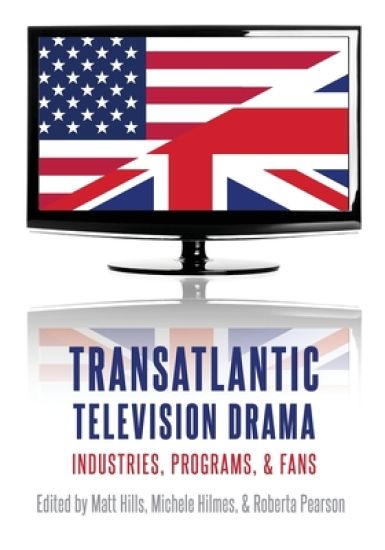
Transatlantic Television Drama

Transatlantic Television Drama

Michele Hilmes; Matt Hills; Roberta Pearson

Oxford University Press Inc
2019
nidottu
In 2014, the UK science-fiction television series Black Mirror was released on Netflix worldwide, quickly becoming a hit with US audiences. Like other beloved British imports, this series piqued Americans' interest with hints of dark comedy, clever plotlines, and six-episode seasons that left audiences frantic for more. In Transatlantic Television Drama, volume editors Michele Hilmes, Matt Hills, and Roberta Pearson team up with leading scholars in TV studies and transnational television to look at how serial dramas like Black Mirror captivate US audiences, and what this reveals about the ways Americans and Brits relate to each other on and off the screen. Focusing on production strategies, performance styles, and audience reception, chapters delve into some of the most widely-discussed programs on the transatlantic circuit, from ongoing series like Game of Thrones, Downton Abbey, Orphan Black, and Sherlock, to those with long histories of transnational circulation like Masterpiece and Doctor Who, to others whose transnational success speaks to the process of exchange, adaptation, and cooperation such as Rome, Parade's End, Broadchurch, and Gracepoint. The book's first section investigates the platforms that support British/American exchange, from distribution partnerships and satellite providers to streaming services. The second section concentrates on the shift in meaning across cultural contexts, such as invocations of heritage, genre shifts in adaptation, performance styles, and, in the case of Episodes, actual dramatized depiction of the process of transatlantic television production. In section three, attention turns to contexts of audience reception, ranging from fan conventions and fiction to television criticism, the effects of national branding on audiences, and the role of social media in de- or re-contextualizing fans' response to transnational programs.
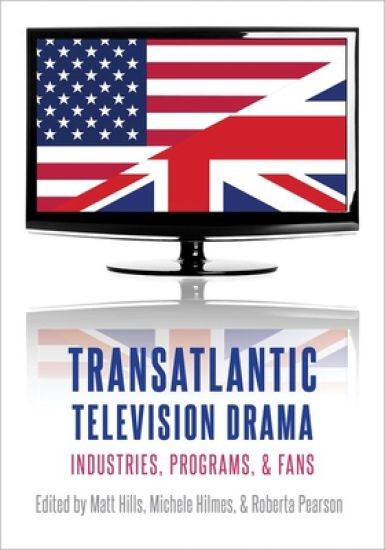
Transatlantic Television Drama

Transatlantic Television Drama

Michele Hilmes; Matt Hills; Roberta Pearson

Oxford University Press Inc
2019
sidottu
In 2014, the UK science-fiction television series Black Mirror was released on Netflix worldwide, quickly becoming a hit with US audiences. Like other beloved British imports, this series piqued Americans' interest with hints of dark comedy, clever plotlines, and six-episode seasons that left audiences frantic for more. In Transatlantic Television Drama, volume editors Michele Hilmes, Matt Hills, and Roberta Pearson team up with leading scholars in TV studies and transnational television to look at how serial dramas like Black Mirror captivate US audiences, and what this reveals about the ways Americans and Brits relate to each other on and off the screen. Focusing on production strategies, performance styles, and audience reception, chapters delve into some of the most widely-discussed programs on the transatlantic circuit, from ongoing series like Game of Thrones, Downton Abbey, Orphan Black, and Sherlock, to those with long histories of transnational circulation like Masterpiece and Doctor Who, to others whose transnational success speaks to the process of exchange, adaptation, and cooperation such as Rome, Parade's End, Broadchurch, and Gracepoint. The book's first section investigates the platforms that support British/American exchange, from distribution partnerships and satellite providers to streaming services. The second section concentrates on the shift in meaning across cultural contexts, such as invocations of heritage, genre shifts in adaptation, performance styles, and, in the case of Episodes, actual dramatized depiction of the process of transatlantic television production. In section three, attention turns to contexts of audience reception, ranging from fan conventions and fiction to television criticism, the effects of national branding on audiences, and the role of social media in de- or re-contextualizing fans' response to transnational programs.
Star Trek and American Television

Star Trek and American Television

Roberta Pearson; Máire Messenger Davies; Patrick Stewart

University of California Press
2014
pokkari
At the heart of one of the most successful transmedia franchises of all time, Star Trek, lies an initially unsuccessful 1960s television production, Star Trek: The Original Series. In Star Trek and American Television, Pearson and Messenger Davies, take their cue from the words of the program's first captain, William Shatner, in an interview with the authors: "It's a television show." In focusing on Star Trek as a television show, the authors argue that the program has to be seen in the context of the changing economic conditions of American television throughout the more than four decades of Star Trek's existence as a transmedia phenomenon that includes several films as well as the various television series. The book is organized into three sections, dealing with firstly, the context of production, the history and economics of Star Trek from the original series (1966-1969) to its final television incarnation in Enterprise (2002-2005). Secondly, it focuses on the interrelationships between different levels of production and production workers, drawing on uniquely original material, including interviews with star captains William Shatner and Sir Patrick Stewart, and with production workers ranging from set-builders to executive producers, to examine the tensions between commercial constraints and creative autonomy. These interviews were primarily carried out in Hollywood during the making of the film Nemesis (2002) and the first series of Star Trek: Enterprise. Thirdly, the authors employ textual analysis to study the narrative "storyworld" of the Star Trek television corpus and also to discuss the concept and importance of character in television drama. The book is a deft historical and critical study that is bound to appeal to television and media studies scholars, students, and Star Trek fans the world over. With a foreword by Sir Patrick Stewart, Captain Jean-Luc Picard in Star Trek: The Next Generation.
Star Trek and American Television

Star Trek and American Television

Roberta Pearson; Máire Messenger Davies; Patrick Stewart

University of California Press
2014
sidottu
At the heart of one of the most successful transmedia franchises of all time, Star Trek, lies an initially unsuccessful 1960s television production, Star Trek: The Original Series. In Star Trek and American Television, Pearson and Messenger Davies, take their cue from the words of the program's first captain, William Shatner, in an interview with the authors: "It's a television show." In focusing on Star Trek as a television show, the authors argue that the program has to be seen in the context of the changing economic conditions of American television throughout the more than four decades of Star Trek's existence as a transmedia phenomenon that includes several films as well as the various television series. The book is organized into three sections, dealing with firstly, the context of production, the history and economics of Star Trek from the original series (1966-1969) to its final television incarnation in Enterprise (2002-2005). Secondly, it focuses on the interrelationships between different levels of production and production workers, drawing on uniquely original material, including interviews with star captains William Shatner and Sir Patrick Stewart, and with production workers ranging from set-builders to executive producers, to examine the tensions between commercial constraints and creative autonomy. These interviews were primarily carried out in Hollywood during the making of the film Nemesis (2002) and the first series of Star Trek: Enterprise. Thirdly, the authors employ textual analysis to study the narrative "storyworld" of the Star Trek television corpus and also to discuss the concept and importance of character in television drama. The book is a deft historical and critical study that is bound to appeal to television and media studies scholars, students, and Star Trek fans the world over. With a foreword by Sir Patrick Stewart, Captain Jean-Luc Picard in Star Trek: The Next Generation.
Eloquent Gestures

Eloquent Gestures

Roberta Pearson

University of California Press
1992
pokkari
Between 1908 and 1913, D. W. Griffith played a key role in the reformulating of film's narrative techniques, thus contributing to the creation of what we now think of as the classical Hollywood cinema. This book is the only extensive treatment of a critical period in the history of film acting: the emergence of the realistic "verisimilar" style in Griffith's biograph films. Roberta Pearson shows how Griffith gradually abandoned the deliberately affected "histrionic" acting style derived from the nineteenth-century stage. No longer did actors mime distress by raising their arms to heaven or clutching their heads--a subtle facial expression, a slight change in posture would convey a character's extreme emotions instead. Pearson makes detailed comparisons of certain Biograph films and brings a freshness to her analysis by closely examining contemporary journalistic writing, acting manuals, and the recollections of actors of the time. Her work is important for anyone interested in early cinema and performance, and it will enliven the study of American cultural history and mass communications.