Kirjailija
Roberto Calasso
Kirjat ja teokset yhdessä paikassa: 31 kirjaa, julkaisuja vuosilta 1994-2026, suosituimpien joukossa K.. Vertaile teosten hintoja ja tarkista saatavuus suomalaisista kirjakaupoista.
31 kirjaa
Kirjojen julkaisuhaarukka 1994-2026.
What are Kafka's stories about? Are they dreams? Allegories? Symbols? Things that happen every day? But where and when?In this remarkable book, Roberto Calasso sets out not to dispel the mystery but to let it be illuminated by its own light. With his unique vision, imagination, and intellectual acumen, Calasso attempts to enter the flow, the tortuous movement, the physiology of the stories to discover what they are meant to signify and to delve into the most basic question: Who is K.?
Liberties Journal of Culture and Politics
Anthony Julius; Nicholas Lemann; Alfred Brendel; Paul Berman; Jorie Graham; Fouad Ajami; Jack Goldsmith; Edward Luttwak; Roberto Calasso; Ishion Hutchinson; Walter Sheidel; Helen Vendler; Robert Alter; Daryl Michael Scott; Rosanna Warren; Alastair Macaulay; David Greenberg
Liberties Journal Foundation
2021
pokkari
Liberties – A Journal of Culture and Politics features original essays and poetry from some of today’s best writers and artists to inspire and impact the intellectual and creative lifeblood of culture and politics. This issue of Liberties includes: Anthony Julius on censorship of the arts; Nicholas Lemann on rescuing capitalism; Alfred Brendel on playing Beethoven; Paul Berman on the George Floyd uprising; Fouad Ajami’s story of an honor killing; Jack Goldsmith on conservatives and the courts; Edward Luttwak on understanding China; Roberto Calasso on when journals mattered; Walter Scheidel on life after covid; Helen Vendler on the poet Robert Hayden; Robert Alter on Lolita today; Daryl Michael Scott on the 13th Amendment; Alastair Macaulay on Balanchine; David Greenberg on renaming our heritage; new poetry from Jorie Graham, Ishion Hutchinson, and Rosanna Warren; and, Leon Wieseltier (editor) and Celeste Marcus (managing editor).
'To read Ka is to experience a giddy invasion of stories - brilliant, enigmatic, troubling, outrageous, erotic, beautiful' The New York Times'Who?' - or 'ka' - is the question that runs through Roberto Calasso's retelling of the stories of the minds and gods of India; the primordial question that continues to haunt human existence. From the Rigveda to the Upanishads, the Mahabharata to the life of Buddha, this book delves into the corpus of classical Sanskrit literature to re-imagine the ancient Indian myths and how they resonate through space and time.'The very best book about Hindu mythology that anyone has ever written' Wendy Doniger'Dazzling, complex, utterly original ... Ka is his masterpiece' Sunday Times
The author of The Marriage of Cadmus and Harmony presents an original interpretation of the work of Franz Kafka in a series of essays that looks at the meaning of Kafka's stories and what they reveal about the enigmatic author himself. Reprint.
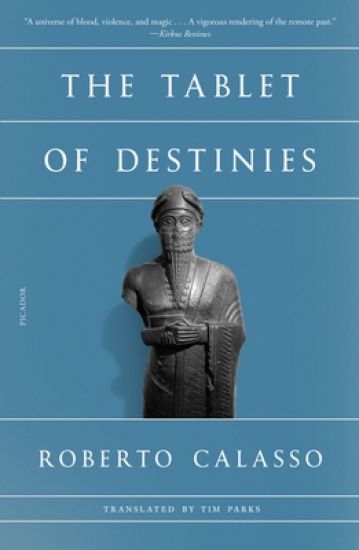
An immersive and mesmerizing narrative that reimagines the Mesopotamian myth of the Great FloodA long time ago, the gods grew tired of humans and decided to send a flood to destroy them. But Ea, the god of fresh underground water, didn't agree. He advised one of his devotees, Utnapishtim, to build a quadrangular boat to house humans and animals, and saved these living creatures from the Flood.Rather than punish Utnapishtim for his disobedience, Enlil, King of the gods, granted the mortal eternal life and banished him to the island of Dilmun. Thousands of years later, when Sinbad the Sailor is shipwrecked and arrives on that very same island, the two begin a conversation about courage, loss, salvation and sacrifice.
Roberto Calasso, "a literary institution of one" (The Paris Review), tells the story of the eternal life of Utnapishtim, the savior of man, in the eleventh part of his great literary project. A long time ago, the gods grew tired of humans, who were making too much noise and disturbing their sleep, and they decided to send a Flood to destroy them. But Ea, the god of fresh underground water, didn't agree and advised one of his favorite mortals, Utnapishtim, to build a quadrangular boat to house humans and animals. So Utnapishtim saved living creatures from the Flood. Rather than punish Utnapishtim, Enlil, king of the gods, granted him eternal life and banished him to the island of Dilmun. Thousands of years later, Sindbad the Sailor is shipwrecked on that very same island, and the two begin a conversation about courage, loss, salvation, and sacrifice. What Utnapishtim tells Sindbad is the subject of this book, the eleventh part of Roberto Calasso's great opus that began in 1983 with The Ruin of Kasch. The Tablet of Destinies, a continuous narrative from beginning to end, delves into our earliest mythologies and records the origin stories of human civilization.
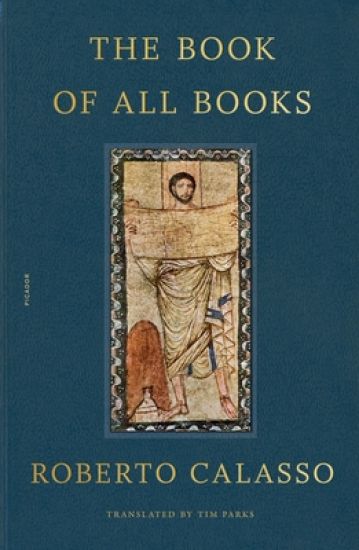
'Beautiful, intellectually thrilling . . . unlike anything else' TelegraphPromise and separation. Grace and guilt. The chosen and the damned. Roberto Calasso's captivating retelling of key stories from the bible evokes the dramatic world of the Old Testament and casts one of the founding texts of Western civilization in an astonishing - and disquieting - new light. The Book of All Books is the culmination of a lifetime's work and the tenth part of a series that began with The Ruin of Kasch.'Engaging . . . enlightening' Financial Times'Surprising . . . vivid' Spectator
A book that begins before Adam and ends after us. In this magisterial work by the Italian intellectual superstar Roberto Calasso, figures of the Bible and its whole outline emerge in a new light: one that is often astonishing and disquieting, as indeed--more than any other--is the book from which they originate. Roberto Calasso's The Book of All Books is a narration that moves through the Bible as if through a forest, where every branch--every verse--may offer some revelation. Where a man named Saul becomes the first king of a people because his father sent him off to search for some donkeys that had gone astray. Where, in answer to an invitation from Jerusalem's king, the queen of a remote African realm spends three years leading a long caravan of young men, girls dressed in purple, and animals, and with large quantities of spices, to ask the king certain questions. And where a man named Abraham hears these words from a divine voice: "Go away from your land, from your country and from the house of your father toward the land that I will show you"--words that reverberate throughout the Bible, a story about a separation and a promise followed by many other separations and promises. The Book of All Books, the tenth part of a series, parallels in many ways the second part, The Marriage of Cadmus and Harmony. There, gods and heroes of the Greek myths revealed new physiognomies, whereas here the age-old figures and stories of the Bible are illuminated anew.
A book that begins before Adam and ends after us. In this magisterial work by the Italian intellectual superstar Roberto Calasso, figures of the Bible and its whole outline emerge in a new light: one that is often astonishing and disquieting, as indeed--more than any other--is the book from which they originate Roberto Calasso's The Book of All Books is a narration that moves through the Bible as if through a forest, where every branch--every verse--may offer some revelation. Where a man named Saul becomes the first king of a people because his father sent him off to search for some donkeys that had gone astray. Where, in answer to an invitation from Jerusalem's king, the queen of a remote African realm spends three years leading a long caravan of young men, girls dressed in purple, and animals, and with large quantities of spices, to ask the king certain questions. And where a man named Abraham hears these words from a divine voice: "Go away from your land, from your country and from the house of your father toward the land that I will show you"--words that reverberate throughout the Bible, a story about a separation and a promise followed by many other separations and promises. The Book of All Books, the tenth part of a series, parallels in many ways the second part, The Marriage of Cadmus and Harmony. There, gods and heroes of the Greek myths revealed new physiognomies, whereas here many figures of the Bible and its whole outline emerge in a new light: one that is often astonishing and disquieting, as indeed is the book--more so than any other--from which they originate.
Baudelaire s'est trouve vivre au carrefour de la Grande Ville, qui etait le carrefour de Paris, qui etait le carrefour de l'Europe, qui etait le carrefour du XIXe siecle, qui etait le carrefour d'aujourd'hui. Ce n'est qu'a travers lui que nous en prenons conscience. On se demande pourquoi. C'est a cause du formidable ecart entre son intelligence et ce qui l'entourait. Une intelligence d'un nouveau genre, fondee sur les nerfs. Mis a nu, les nerfs etaient le nouveau sensorium, le dernier fond - labile - sur lequel s'appuyer. En meme temps que le regard. Le regard de Baudelaire n'a pas subi les outrages du temps. Il n'a pas ete terni, rien ne l'obscurcit. Pour ceux qui le suivent, comme une lueur intermittente, se revelent des barrieres de corail, des tunnels sans fin, des reseaux de ruelles. Ils constituent le paysage de ses annees, qui continue de s'etendre jusqu'a aujourd'hui - et au-dela. Roberto Calasso Cet essai resulte des decennies de frequentation de l'oeuvre de Baudelaire par le grand lettre qu'est Roberto Calasso. Au travers d'une lecture intime du texte, mais aussi de la connaissance des multiples recits, correspondances de l'auteur, Roberto Calasso a atteint une expertise peu egalee de l'oeuvre de Baudelaire. Pour celebrer le bicentenaire de la naissance du poete, a l'invitation du musee d'Orsay et des Belles Lettres, il s'est replonge dans ses lectures, pour en extraire des lecons sur ce qui fait la radicale irreductibilite de l'oeuvre de Baudelaire, de sa sensibilite et de sa conception du monde.
A New York Times Book Review Editors' Choice" Calasso's] flow of associations leaves you feeling not out of your depth, but smarter and better read." --The New York Times Book ReviewThe eighth part of Roberto Calasso's monumental series on the primal forces of civilization The eighth part of Roberto Calasso's singular work in progress that began in 1983 with The Ruin of Kasch, The Celestial Hunter is an inspired and provocative exploration of mankind's relationship with myth, the divine, and the idea of transformation. There was a time, even before prehistory, when man was simply a defenseless animal. The gods he worshiped took the form of other beasts or were the patterns of the stars he saw above him each night in the sky, which he transformed into figures and around which he created stories. Soon, however, man learned to imitate the animals that attacked him and he became a hunter. This transformation, Calasso posits, from defenseless victim to hunter was a key moment, the first step on man's ascendance to power. Suddenly the notion of the hunter became fundamental. It would be developed over thousands of years through the figures that became central to Greek mythology, including the constellations. Among them was Orion, the celestial hunter, and his dog, Sirius. Vivid and strikingly original, and expertly translated from the Italian by Richard Dixon, The Celestial Hunter traces how man created the divine myths that would become the cornerstones of Western civilization. As Calasso demonstrates, the repercussions of these ideas would echo through history, from Paleolithic to modern times. And they would be the product of one thing: the human mind.
A decisive key to help grasp some of the essential points of what is happening around us. The ninth part of Roberto Calasso's masterwork, The Unnamable Present, is closely connected with themes of the first book, The Ruin of Kasch (originally published in 1983, and reissued by FSG in a new translation). But while Kasch is an enlightened exploration of modernity, The Unnamable Present propels us into the twenty first century. Tourists, terrorists, secularists, fundamentalists, hackers, transhumanists, algorithmicians: these are all tribes that inhabit the unnamable present and act on its nervous system. This is a world that seems to have no living past, but was foreshadowed in the period between 1933 and 1945, when everything appeared bent on self-annihilation. The Unnamable Present is a meditation on the obscure and ubiquitous process of transformation happening today in all societies, which makes so many previous names either inadequate or misleading or a parody of what they used to mean. Translated with sensitivity by Calasso's longtime translator, Richard Dixon, The Unnamable Present is a strikingly original and provocative vision of our times, from the writer The Paris Review called "a literary institution of one."
'Tiepolo: the last breath of happiness in Europe'The eighteenth-century Venetian painter Giambattista Tiepolo spent his life creating frescoes that are among the glories of Western art, yet he remains shrouded in mystery. Who was he? And what was the significance of the dark, bizarre etchings depicting sacrifice and magic, which he created alongside his heavenly works? Roberto Calasso explores Tiepolo as the last artist of the ancien régime and at the same time the first example of the "painter of modern life" evoked by Baudelaire. He was the incarnation of that peculiar Italian virtue sprezzatura: the art of not seeming artful.Translated by Alastair McEwen'A brilliant, eccentric, provocative . . . and thoroughly splendid celebration of a great painter' John Banville, The New Republic'Calasso is a myth-maker ... a book that treats paintings as a kind of sorcery' Peter Conrad, Observer
Tourists, terrorists, secularists, hackers, fundamentalists, transhumanists, algorithmicians: in this book Roberto Calasso considers the tribes that inhabit and inform the world today. A world that feels more elusive than ever before.This book, the ninth part of a work in progress, is a meditation on the obscure and ubiquitous process of transformation happening in societies today, where distant echoes of Auden's The Age of Anxiety give way to something altogether more unsettling.
'It will be read and re-read not as a treatise but as a story: one of the most extraordinary that has ever been written of the origins of Western self-consciousness' Simon SchamaThe marriage of Cadmus and Harmony was the last time the gods of Olympus feasted alongside mortals. What happened in the distant ages preceding it, and in the generations that followed, form the timeless tales of ancient Greek mythology. In this masterful retelling of the myths we think we know, Roberto Calasso illuminates the deepest questions of our existence.'The kind of book one comes across only once or twice in one's lifetime' Joseph Brodsky'A perfect work like no other' Gore Vidal