Kirjojen hintavertailu. Mukana 12 595 353 kirjaa ja 12 kauppaa.

Kirjailija

Roberto Esposito

Kirjat ja teokset yhdessä paikassa: 39 kirjaa, julkaisuja vuosilta 1999-2026, suosituimpien joukossa Al diavolo il target!. Vertaile teosten hintoja ja tarkista saatavuus suomalaisista kirjakaupoista.

39 kirjaa

Kirjojen julkaisuhaarukka 1999-2026.

Al diavolo il target!

Al diavolo il target!

Roberto Esposito

Albatros
2017
nidottu
Sono molti i saggi che trattano del lavoro in azienda e che si interrogano sulle nevrosi del nostro tempo, frutto di una societ dedita al profitto. Molti i saggi che intendono riportare al centro l'uomo, finalizzati alla riscoperta dell'io. Mancava per un libro come questo, che alla "saggezza" del saggio unisse il piacere di una storia, amara e divertente insieme, e che indagasse con acutezza e ironia le falle del sistema azienda, dove vanno proliferando frustrazioni, incomprensioni e solitudini. Un racconto che pu permettersi il lusso di inveire contro lo stramaledetto target, un grido in cui confluiscono le unanime voci di uomini e donne assai diversi tra loro, vittime pi o meno consapevoli di una realt che pu diventare alienante.Roberto Esposito attinge al suo vissuto di direttore Risorse Umane e Coach-Formatore per spalancarci le porte di una multinazionale "modello" e regalarci uno spaccato di vita grottesco e credibile. Una lettura accessibile a tutti, che non mancher di seminare nella coscienza di ciascuno interrogativi impossibili da eludere.

The Third Person

The Third Person

Roberto Esposito

Polity Press
2012
sidottu
All discourses aimed at asserting the value of human life as such—whether philosophical, ethical, or political—assume the notion of personhood as their indispensable point of departure. This is all the more true today. In bioethics, for example, Catholic and secular thinkers may disagree on what constitutes a person and its genesis, but they certainly agree on its decisive importance: human life is considered to be untouchable only when based on personhood. In the legal sphere as well the enjoyment of subjective rights continues to be increasingly linked to the qualification of personhood, which appears to be the only one capable of bridging the gap between human being and citizen, right and life, and soul and body opened up at the very origins of Western civilization. The radical and alarming thesis put forward in this book is that the notion of person is unable to bridge this gap because it is precisely what creates this breach. Its primary effect is to create a separation in both the human race and the individual between a rational, voluntary part endowed with particular value and another, purely biological part that is thrust by the first into the inferior dimension of the animal or the thing. In opposition to the performative power of the person, whose dual origins can be traced back to ancient Rome and Christianity, Esposito pursues his strikingly original and innovative philosophical inquiry by inviting reflection on the category of the impersonal: the third person, in removing itself from the exclusionary mechanism of the person, points toward the orginary unity of the living being.
The Faces of the Adversary

The Faces of the Adversary

Roberto Esposito

JOHN WILEY AND SONS LTD
2026
nidottu
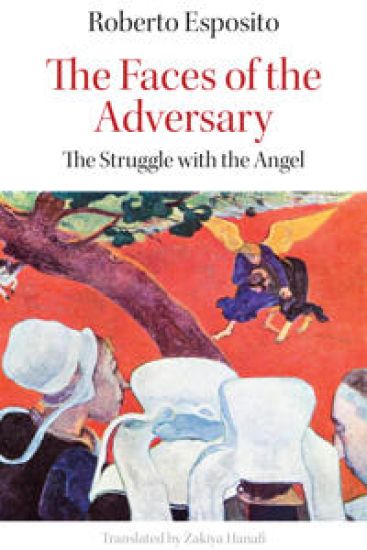
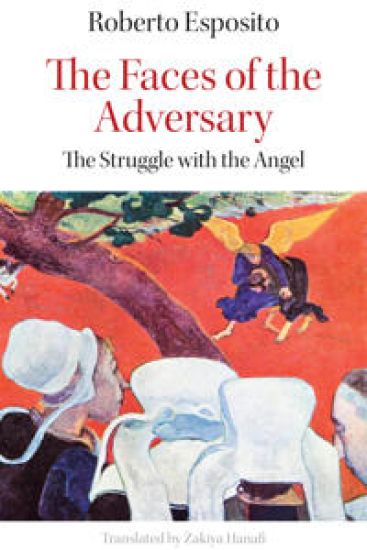
Roberto Esposito's poetic and historically layered new book draws on a famous, and famously opaque, passage from the Old Testament to shed light on the vision of self and domination that has profoundly shaped Western identity and left its mark on Western culture. These ten lines from Genesis tell the tale of Jacob wrestling with a mysterious adversary on a riverbank. But who exactly is Jacob wrestling with – the divine? Evil personified? Absolute otherness? Or the deepest, most subconscious self? Who, in other words, is the adversary? The angel's identity is shrouded in mystery until we realise that the challenge it presents arrives from Jacob's unconscious depths, repressed and projected. Interchangeable and yet never resolved, these entwined adversaries speak to our great desire to come face to face with personal truth, even if only for an instant, while coming to terms with its fleeting impermanence. Casting a wide net, Esposito connects his reading of Jacob and the Angel to the fundamental relationship between self and adversary inherited by the modern West and explores the extraordinary influence this story has had on Western culture, from philosophy and theology to literature, politics and art.
The Faces of the Adversary

The Faces of the Adversary

Roberto Esposito

JOHN WILEY AND SONS LTD
2026
sidottu
Roberto Esposito's poetic and historically layered new book draws on a famous, and famously opaque, passage from the Old Testament to shed light on the vision of self and domination that has profoundly shaped Western identity and left its mark on Western culture. These ten lines from Genesis tell the tale of Jacob wrestling with a mysterious adversary on a riverbank. But who exactly is Jacob wrestling with – the divine? Evil personified? Absolute otherness? Or the deepest, most subconscious self? Who, in other words, is the adversary? The angel's identity is shrouded in mystery until we realise that the challenge it presents arrives from Jacob's unconscious depths, repressed and projected. Interchangeable and yet never resolved, these entwined adversaries speak to our great desire to come face to face with personal truth, even if only for an instant, while coming to terms with its fleeting impermanence. Casting a wide net, Esposito connects his reading of Jacob and the Angel to the fundamental relationship between self and adversary inherited by the modern West and explores the extraordinary influence this story has had on Western culture, from philosophy and theology to literature, politics and art.
Vitam Instituere

Vitam Instituere

Roberto Esposito

JOHN WILEY AND SONS LTD
2025
sidottu
In this book Roberto Esposito continues his philosophical exploration of the relation between institutions and human life. Starting from the enigmatic Latin term vitam instituere, he charts its early emergence in modern philosophy and its development along a path that culminates in a novel understanding of the relationship between politics and life. Although the concept of institutio vitae originated in Roman law, it was Machiavelli who first conceived of politics as an instituent force. After Spinoza endowed the social imaginary with the capacity to institute relational life, Hegel was the first to view the ‘objective spirit’ as the space in which society and state are structured by institutional dynamics. However, in the Hegelian system it is the same dialectic – as an infinite process in which ideas materialise in reality – that expresses instituent power. Only by drawing from these modern roots, argues Esposito, can contemporary thought recognise the movement of institutions as the strategic nexus where the languages of philosophy, anthropology, and politics intersect on a new horizon of meaning. This book completes the inquiry that Esposito began with Instituting Thought and Institution, offering a fresh view of the philosophical tradition from an instituent perspective. It will appeal to students and academics in philosophy and the humanities generally, and to anyone interested in contemporary philosophy and cultural theory.
Vitam Instituere

Vitam Instituere

Roberto Esposito

JOHN WILEY AND SONS LTD
2025
nidottu
In this book Roberto Esposito continues his philosophical exploration of the relation between institutions and human life. Starting from the enigmatic Latin term vitam instituere, he charts its early emergence in modern philosophy and its development along a path that culminates in a novel understanding of the relationship between politics and life. Although the concept of institutio vitae originated in Roman law, it was Machiavelli who first conceived of politics as an instituent force. After Spinoza endowed the social imaginary with the capacity to institute relational life, Hegel was the first to view the ‘objective spirit’ as the space in which society and state are structured by institutional dynamics. However, in the Hegelian system it is the same dialectic – as an infinite process in which ideas materialise in reality – that expresses instituent power. Only by drawing from these modern roots, argues Esposito, can contemporary thought recognise the movement of institutions as the strategic nexus where the languages of philosophy, anthropology, and politics intersect on a new horizon of meaning. This book completes the inquiry that Esposito began with Instituting Thought and Institution, offering a fresh view of the philosophical tradition from an instituent perspective. It will appeal to students and academics in philosophy and the humanities generally, and to anyone interested in contemporary philosophy and cultural theory.
The Illegitimate Age

The Illegitimate Age

Federico Vercellone; Roberto Esposito

MCGILL-QUEEN'S UNIVERSITY PRESS
2025
nidottu
Our age – saturated with media images and ever-present political crises – traces back to the beginning of Christianity and its messianic vision of the world. In the twentieth and twenty-first centuries, our sense of time and history has become apocalyptic.In The Illegitimate Age Federico Vercellone explains contemporary affinities for both apocalypse and media imagery from the perspective of political theology, drawing from St Paul’s mysterious figure of the katechon – the withholding power that prevents the arrival of the Antichrist and the end of times while also delaying the Messiah, therefore containing the very evil it restrains. Vercellone highlights representation as a crucial aspect of the katechon myth, finding within it the roots of current political and aesthetic forms. In the context of contemporary populism, charismatic leaders build their power on presumed prestige, mimicry of sacred figures, and pandering invocations of kitsch, all recurrent aspects of the katechon and Antichrist trope in Western art and history. Political power, Vercellone argues, has been deeply aestheticized, and the path that led us here was laid long before mass media, mass consumption, and our society of the spectacle.A new interpretation of the political and aesthetic categories first suggested by Carl Schmitt, Walter Benjamin, and Jean Baudrillard, The Illegitimate Age turns a fresh lens on the legitimacy of political power, the appeal of populism, and the role of the image in our society.
Common Immunity

Common Immunity

Roberto Esposito

JOHN WILEY AND SONS LTD
2023
sidottu
After two years of global pandemic, it is no surprise that immunization is now at the center of our experience. From the medicalization of politics to the disciplining of individuals, from lockdowns to mass vaccination programs, contemporary societies seem to be firmly embedded in a syndrome of immunity. To understand the ambivalent effects of this development, it is necessary to go back to its modern genesis, when the languages of law, politics, and medicine began to merge into the biopolitical regime we have been living under for some time. This regime places a high priority on immunization and security: no security is more important than health security. The Covid-19 pandemic has taken the dynamic of immunization to a new level: for the first time in history, we see societies seeking to achieve generalized immunity in their entire populations through vaccination. This allows us to glimpse the possibility of a “common immunity” that strengthens the relation between community and immunity. The dramatic tensions we have experienced in recent years between security and freedom, norm and exception, power and existence, all refer to the complex relationship between community and immunity, the decisive features of which are reconstructed in this book. Building on the prescient argument originally developed two decades ago in Immunitas, Roberto Esposito demonstrates in this new book how the pandemic and our responses to it have brought into sharp relief the fundamental biopolitical conditions of our contemporary societies.
Common Immunity

Common Immunity

Roberto Esposito

JOHN WILEY AND SONS LTD
2023
nidottu
After two years of global pandemic, it is no surprise that immunization is now at the center of our experience. From the medicalization of politics to the disciplining of individuals, from lockdowns to mass vaccination programs, contemporary societies seem to be firmly embedded in a syndrome of immunity. To understand the ambivalent effects of this development, it is necessary to go back to its modern genesis, when the languages of law, politics, and medicine began to merge into the biopolitical regime we have been living under for some time. This regime places a high priority on immunization and security: no security is more important than health security. The Covid-19 pandemic has taken the dynamic of immunization to a new level: for the first time in history, we see societies seeking to achieve generalized immunity in their entire populations through vaccination. This allows us to glimpse the possibility of a “common immunity” that strengthens the relation between community and immunity. The dramatic tensions we have experienced in recent years between security and freedom, norm and exception, power and existence, all refer to the complex relationship between community and immunity, the decisive features of which are reconstructed in this book. Building on the prescient argument originally developed two decades ago in Immunitas, Roberto Esposito demonstrates in this new book how the pandemic and our responses to it have brought into sharp relief the fundamental biopolitical conditions of our contemporary societies.
Institution

Institution

Roberto Esposito

JOHN WILEY AND SONS LTD
2022
sidottu
The pandemic has brought into sharp relief the fundamental relationship between institution and human life: at the very moment when the virus was threatening to destroy life, human beings called upon institutions – on governments, on health systems, on new norms of behavior – to combat the virus and preserve life. Drawing on this and other examples, Roberto Esposito argues that institutions and human life are not opposed to one another but rather two sides of a single figure that, together, delineate the vital character of institutions and the instituting power of life. What else is life, after all, if not a continuous institution, a capacity for self-regeneration along new and unexplored paths? No human life is reducible to pure survival, to “bare life.” There is always a point at which life reaches out beyond primary needs, entering into the realm of desires and choices, passions and projects, and at that point human life becomes instituted: it becomes part of the web of relations that constitute social, political, and cultural life.
Institution

Institution

Roberto Esposito

JOHN WILEY AND SONS LTD
2022
nidottu
The pandemic has brought into sharp relief the fundamental relationship between institution and human life: at the very moment when the virus was threatening to destroy life, human beings called upon institutions – on governments, on health systems, on new norms of behavior – to combat the virus and preserve life. Drawing on this and other examples, Roberto Esposito argues that institutions and human life are not opposed to one another but rather two sides of a single figure that, together, delineate the vital character of institutions and the instituting power of life. What else is life, after all, if not a continuous institution, a capacity for self-regeneration along new and unexplored paths? No human life is reducible to pure survival, to “bare life.” There is always a point at which life reaches out beyond primary needs, entering into the realm of desires and choices, passions and projects, and at that point human life becomes instituted: it becomes part of the web of relations that constitute social, political, and cultural life.
Instituting Thought

Instituting Thought

Roberto Esposito

Polity Press
2021
nidottu
This new book by the Italian philosopher Roberto Esposito addresses the profound crisis of contemporary politics and examines some of the philosophical approaches that have been used to try to understand and go beyond this crisis. Two approaches have been particularly influential – one indebted to the thought of Martin Heidegger, the other indebted to Gilles Deleuze. While opposed in their political thrust and orientation, both approaches remain trapped within the political ontology that has framed our conceptual language for some time. In order to move beyond this political ontology, Esposito turns to a third approach that he characterizes as ‘instituting thought’. Indebted to the work of the French political philosopher Claude Lefort, this third approach recognizes that the road to reconstructing a productive relation between ontology and politics, one that is both realistic and innovative, lies in instituting praxis. Building on this insight, Esposito conceptualizes social being as neither univocal nor plurivocal but as cross-cut by the dual semantics of political conflict. This new book by one of the most original European philosophers writing today will be of great interest to students and scholars in philosophy, social and political theory and the humanities generally.
Instituting Thought

Instituting Thought

Roberto Esposito

Polity Press
2021
sidottu
This new book by the Italian philosopher Roberto Esposito addresses the profound crisis of contemporary politics and examines some of the philosophical approaches that have been used to try to understand and go beyond this crisis. Two approaches have been particularly influential – one indebted to the thought of Martin Heidegger, the other indebted to Gilles Deleuze. While opposed in their political thrust and orientation, both approaches remain trapped within the political ontology that has framed our conceptual language for some time. In order to move beyond this political ontology, Esposito turns to a third approach that he characterizes as ‘instituting thought’. Indebted to the work of the French political philosopher Claude Lefort, this third approach recognizes that the road to reconstructing a productive relation between ontology and politics, one that is both realistic and innovative, lies in instituting praxis. Building on this insight, Esposito conceptualizes social being as neither univocal nor plurivocal but as cross-cut by the dual semantics of political conflict. This new book by one of the most original European philosophers writing today will be of great interest to students and scholars in philosophy, social and political theory and the humanities generally.
Politics and Negation

Politics and Negation

Roberto Esposito

Polity Press
2019
sidottu
For some while we have been witnessing a series of destructive phenomena which seem to indicate a full-fledged return to the negative on the world stage – from terrorism and armed conflict to the threat of environmental catastrophe. At the same time, politics seems increasingly impotent in the face of these threats. In this book, the leading Italian philosopher Roberto Esposito reconstructs the genealogy of the reciprocal intertwining of politics and negation. He retraces the intensification of negation in the thought of various thinkers, from Schmitt and Freud to Heidegger, and examines the negative slant of some of our fundamental political categories, such as sovereignty, property and freedom. Against the centrality of negation, Esposito proposes an affirmative philosophy that does not negate or repress negation but radically rethinks it in the positive cipher of difference, determination and opposition. The result is a rigorous and original pathway which, in the tension between affirmation and negation, recognizes the disturbing traumas of our time, as well as the harbingers of what awaits at its limits. This highly original and timely book will be of great value to students and scholars in philosophy, cultural theory and the humanities more generally, and to anyone interested in contemporary European thought.
Politics and Negation

Politics and Negation

Roberto Esposito

Polity Press
2019
nidottu
For some while we have been witnessing a series of destructive phenomena which seem to indicate a full-fledged return to the negative on the world stage – from terrorism and armed conflict to the threat of environmental catastrophe. At the same time, politics seems increasingly impotent in the face of these threats. In this book, the leading Italian philosopher Roberto Esposito reconstructs the genealogy of the reciprocal intertwining of politics and negation. He retraces the intensification of negation in the thought of various thinkers, from Schmitt and Freud to Heidegger, and examines the negative slant of some of our fundamental political categories, such as sovereignty, property and freedom. Against the centrality of negation, Esposito proposes an affirmative philosophy that does not negate or repress negation but radically rethinks it in the positive cipher of difference, determination and opposition. The result is a rigorous and original pathway which, in the tension between affirmation and negation, recognizes the disturbing traumas of our time, as well as the harbingers of what awaits at its limits. This highly original and timely book will be of great value to students and scholars in philosophy, cultural theory and the humanities more generally, and to anyone interested in contemporary European thought.
Communitas

Communitas

Roberto Esposito

Forlaget THP
2019
pokkari
”Intet synes mere aktuelt end en fællesskabets tænkning: mere efterspurgt, påkrævet, bebudet af en situation, som i én epokal knude forbinder samtlige kommunismers nederlag med de nye individualismers elendighed. Og alligevel er intet sværere at få øje på. Intet så fjernt, fortrængt, henvist til en endnu ikke oprunden tid, til en fjern og gådefuld horisont.” Gennem originale fortolkninger af Hobbes, Rousseau, Kant, Heidegger og Bataille, men også Hölderlin, Nietzsche, Canetti, Arendt og Sartre søger Roberto Esposito efter en ny tilgang til og forståelse af fællesskabet. Resultatet af hans ekstraordinære filosofiske og etymologiske analyser er en radikal omvæltning af de fortolkninger af fællesskabet, som hidtil har domineret den vestlige tænkning. Roberto Esposito (f. 1950) er italiensk filosof. Han har opnået stor international anerkendelse for sit arbejde med biopolitik og fællesskab. Communitas - Fællesskabets oprindelse og skæbne er hans første bog på dansk.
A Philosophy for Europe

A Philosophy for Europe

Roberto Esposito

Polity Press
2018
sidottu
Amid a devastating economic crisis, two tragic events coming from the outside – the wave of immigration and Islamic terrorism – have radically changed the profile and significance of the space we call Europe. Given a paradigm leap of this sort, philosophical reflection is in a position to exert its creative power more than other types of knowledge. But this can only happen if it is able to go beyond its own lexical boundaries, by turning its gaze outside itself. Here the leading Italian philosopher Roberto Esposito looks at how various strands of German, French, and Italian thought have achieved this outward turn and successfully captured international attention by breaking with the language of early nineteenth-century crisis philosophies. When analyzed from this novel perspective, the great texts of Adorno, Derrida, Foucault, and Deleuze, as well as works by the latest Italian thinkers, are cast in a new light. From the relationship and tension between them, reconstructed here with extraordinary theoretical sensitivity, a form of thought can arise that is equal to the challenges faced by Europe today. This erudite and wide-ranging analysis of European thought in the light of the crises facing the continent today will appeal to students and scholars of philosophy, critical theory, and beyond.
A Philosophy for Europe

A Philosophy for Europe

Roberto Esposito

Polity Press
2018
nidottu
Amid a devastating economic crisis, two tragic events coming from the outside – the wave of immigration and Islamic terrorism – have radically changed the profile and significance of the space we call Europe. Given a paradigm leap of this sort, philosophical reflection is in a position to exert its creative power more than other types of knowledge. But this can only happen if it is able to go beyond its own lexical boundaries, by turning its gaze outside itself. Here the leading Italian philosopher Roberto Esposito looks at how various strands of German, French, and Italian thought have achieved this outward turn and successfully captured international attention by breaking with the language of early nineteenth-century crisis philosophies. When analyzed from this novel perspective, the great texts of Adorno, Derrida, Foucault, and Deleuze, as well as works by the latest Italian thinkers, are cast in a new light. From the relationship and tension between them, reconstructed here with extraordinary theoretical sensitivity, a form of thought can arise that is equal to the challenges faced by Europe today. This erudite and wide-ranging analysis of European thought in the light of the crises facing the continent today will appeal to students and scholars of philosophy, critical theory, and beyond.
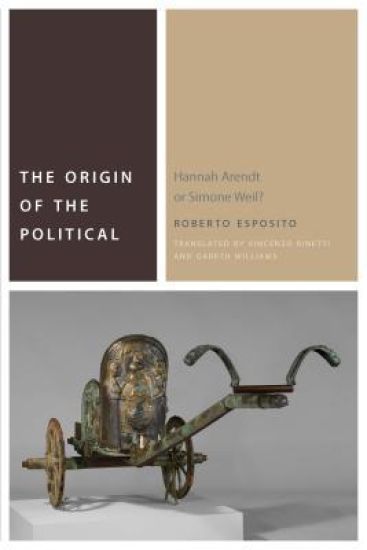
The Origin of the Political

The Origin of the Political

Roberto Esposito

Fordham University Press
2017
pokkari
In this book Roberto Esposito explores the conceptual trajectories of two of the twentieth century's most vital thinkers of the political: Hannah Arendt and Simone Weil. Taking Homer's Iliad—that "great prism through which every gesture has the possibility of becoming public, precisely by being observed by others"— as the common origin and point of departure for our understanding of Western philosophical and political traditions, Esposito examines the foundational relation between war and the political. Drawing actively and extensively on Arendt's and Weil's voluminous writings, but also sparring with thinkers from Marx to Heidegger, The Origin of the Political traverses the relation between polemos and polis, between Greece, Rome, God, force, technicity, evil, and the extension of the Christian imperial tradition, while at the same time delineating the conceptual and hermeneutic ground for the development of Esposito's notion and practice of "the impolitical." In Esposito's account Arendt and Weil emerge "in the inverse of the other's thought, in the shadow of the other's light," to "think what the thought of the other excludes not as something that is foreign, but rather as something that appears unthinkable and, for that very reason, remains to be thought." Moving slowly toward their conceptualizations of love and heroism, Esposito unravels the West's illusory metaphysical dream of peace, obliging us to reevaluate ceaselessly what it means to be responsible in the wake of past and contemporary forms of war.